Internal Operations of the NBTHK Review Committee — Examiner Selection, the Flow of Review Sessions, and the Grade Determination Process
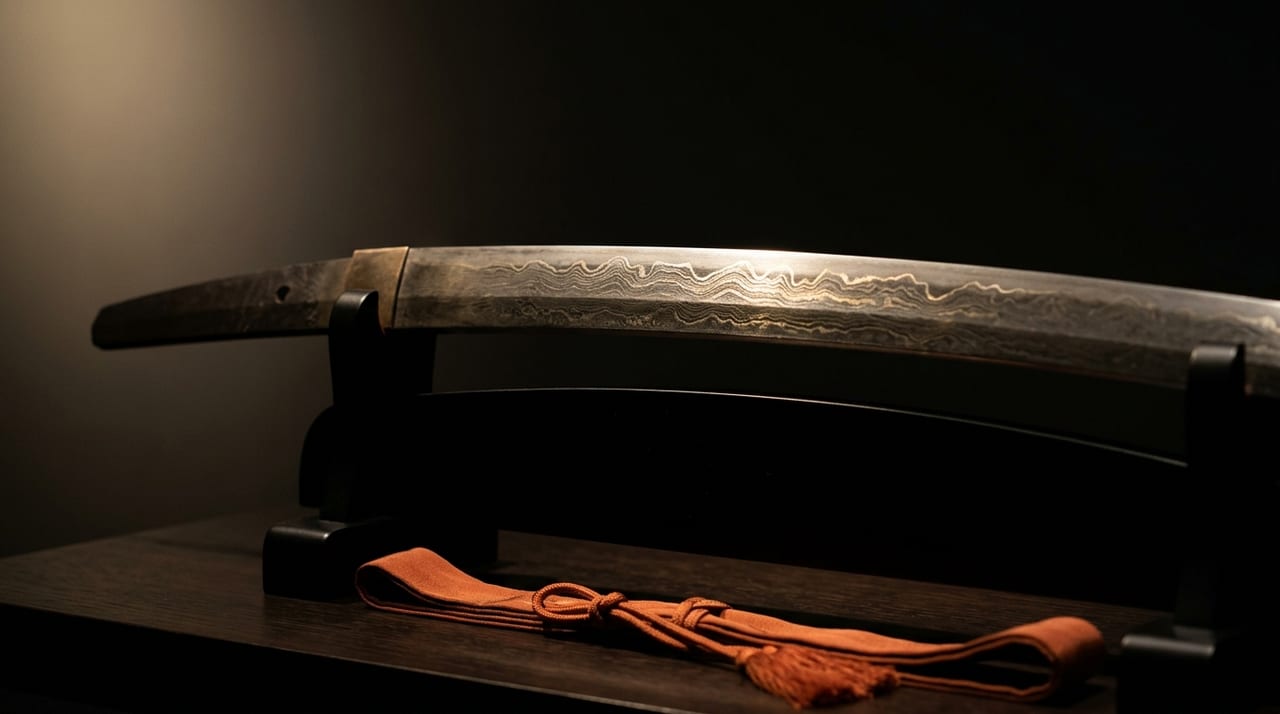 * Image is for illustrative purposes only.
Table of Contents
What Is the NBTHK — The Central Institution for Japanese Sword Appraisal
NBTHK (Nihon Bijutsu Tōken Hozon Kyōkai) is a public-interest incorporated foundation dedicated to the preservation, research, and promotion of Japanese swords. Founded in 1948 (Shōwa 23). It is widely recognized as the most authoritative appraisal institution in the sword industry, and the kanteisho issued by NBTHK function as proof of a sword's value in both domestic and international markets.
Surprisingly few people have a detailed understanding of how NBTHK examines swords and determines grades — that is, its internal processes. This article explains the mechanics of the shinsa from the practical perspective of the industry.
NBTHK Examination Grades — Four Types of Kanteisho
The kanteisho issued by NBTHK come in four grades, listed here from highest to lowest.
Tokubetsu Jūyō Tōken The highest rank. Works of particular excellence among Jūyō Tōken. Examination is held once a year (special review session). The number designated is strictly limited, to several dozen swords per year.
Jūyō Tōken Works of particularly high value among Hozon Tōken. Examined at review sessions held one to two times per year. Receive the highest evaluation at domestic and international auctions as swords "with Jūyō certification."
Tokubetsu Hozon Tōken Higher-grade pieces for which authenticity and condition have been confirmed. Upgrade applications from Hozon Tōken are possible.
Hozon Tōken Swords whose authenticity has been confirmed and whose condition of preservation meets a certain standard. The entry-level grade of NBTHK.
Selection of Review Committee Members (Examiners)
The "examiners" (shinsa-iin) who carry out NBTHK reviews are selected according to the following criteria.
Selection Criteria
Track record in sword appraisal: Specialists with years of experience in sword research and appraisal. Candidates are primarily drawn from appraisers in the tradition of the Hon'ami family, sword researchers, and veteran sword dealers.
Specialization in school knowledge: The committee is composed by combining specialists well-versed in particular eras, regions, and schools. It is necessary to have committee members capable of handling each tradition, such as Bizen-den specialists, Sōshū-den specialists, and Yamato-den specialists.
Ongoing relationship with NBTHK: A long-standing relationship of trust with the association is a prerequisite. Examiners are often appointed without public disclosure, and open recruitment from outside is not conducted.
Terms and Changes in Committee Membership
There are no fixed terms for review committee members, and the same individuals often serve for many years. When a member retires due to age or health reasons, a successor is brought in. Full public disclosure of member names is not conducted as a matter of NBTHK policy, and this remains tacit knowledge within the industry.
Format of Review Sessions
Advance Application and Reception
The owner of a sword wishing to undergo examination submits application documents (a copy of the registration certificate and basic information about the sword) along with the examination fee to NBTHK. Fees vary by grade and type of sword, ranging from several thousand to several tens of thousands of yen for Hozon examination, and more for Jūyō examination.
After applying, the sword is brought in person (or sent by post) to the designated location at the designated date and time.
The Flow of the Day of Examination
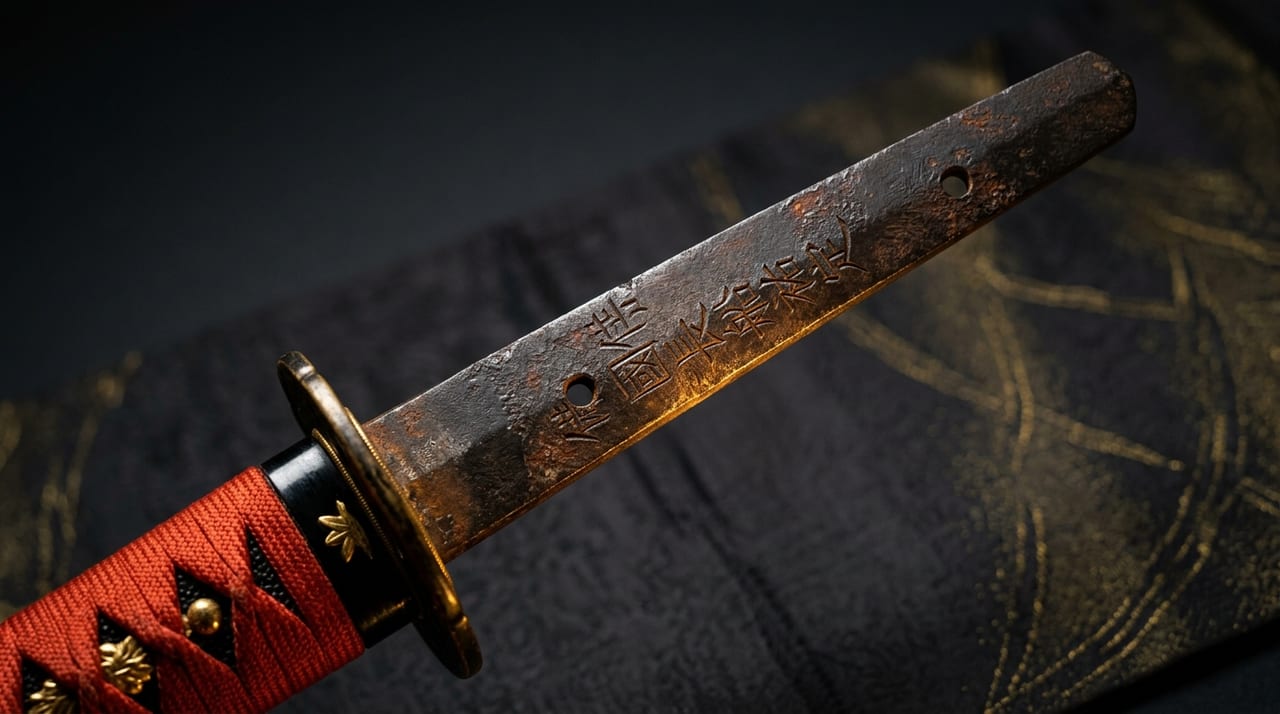
Medōshi (sword viewing): Examiners take the sword in hand and examine it in turn. This "medōshi" is the core of the examination. Examiners first approach the sword as mumei (unsigned: maker unknown), and independently judge the maker, era, and school from the characteristics of the hamon, jigane, form, and nakago.
Opinion formation: After each examiner has individually viewed the sword, opinions are formed. To prevent preconceptions and undue influence from others' views, discussion among committee members is kept to a minimum at this stage.
Opinion comparison and discussion: After all committee members have completed their medōshi, opinions are compared. When they agree, a conclusion is reached quickly. When opinions are divided, discussion is held, and a conclusion is reached by majority vote or consensus.
Cross-checking with the mei: The mei of the sword (the name engraved by the maker on the nakago) is confirmed, and its consistency with the "estimated maker, era, and school" independently determined by the examiners is verified. Even for swords that bear a mei, the authenticity of the mei (genuine mei, later-added mei, inlaid mei, etc.) is examined.
Grade determination: As the result of the examination, a decision is made to certify, reject, or downgrade from the applied-for grade.
Certification Criteria by Grade
Certification Criteria for Hozon Tōken
- Authenticity: the sword must be genuine
- Condition: polishing condition must be at a certain standard or above (no severe rust or defects)
- Consistency with the registration certificate: the basic information recorded on the registration certificate must match the sword
A relatively large number of swords can receive Hozon Tōken certification. However, swords in poor condition or judged to be forgeries are rejected.
Certification Criteria for Jūyō Tōken
For examination from Hozon Tōken to Jūyō Tōken, the following criteria must be met.
- Excellence of deki (quality): In all elements — hamon, jigane, and form — the sword must be at a particularly outstanding level for its tōkō, era, and school.
- Good condition: no major flaws, rust, or togi wear
- Academic value: the sword must possess characteristics that are informative to the study of sword history and school research
When designated as Jūyō Tōken, the sword is listed in the Jūyō Tōken Illustrated Catalog.
Certification Criteria for Tokubetsu Jūyō Tōken
Works among Jūyō Tōken that have been judged to be "of value comparable to a kokuhō (National Treasure) or jūyō bunkazai (Important Cultural Property)." The criteria are extremely strict, and all of the following must be met.
- Provenance and history must be clearly documented.
- The sword must be widely recognized within the industry as a representative work of its tōkō.
- Condition must be extremely good (minimal togi wear, flaws, or rust).
- The sword's value must have been discussed in prior appraisals, research papers, and similar sources.
Issuance and Use of Examination Results
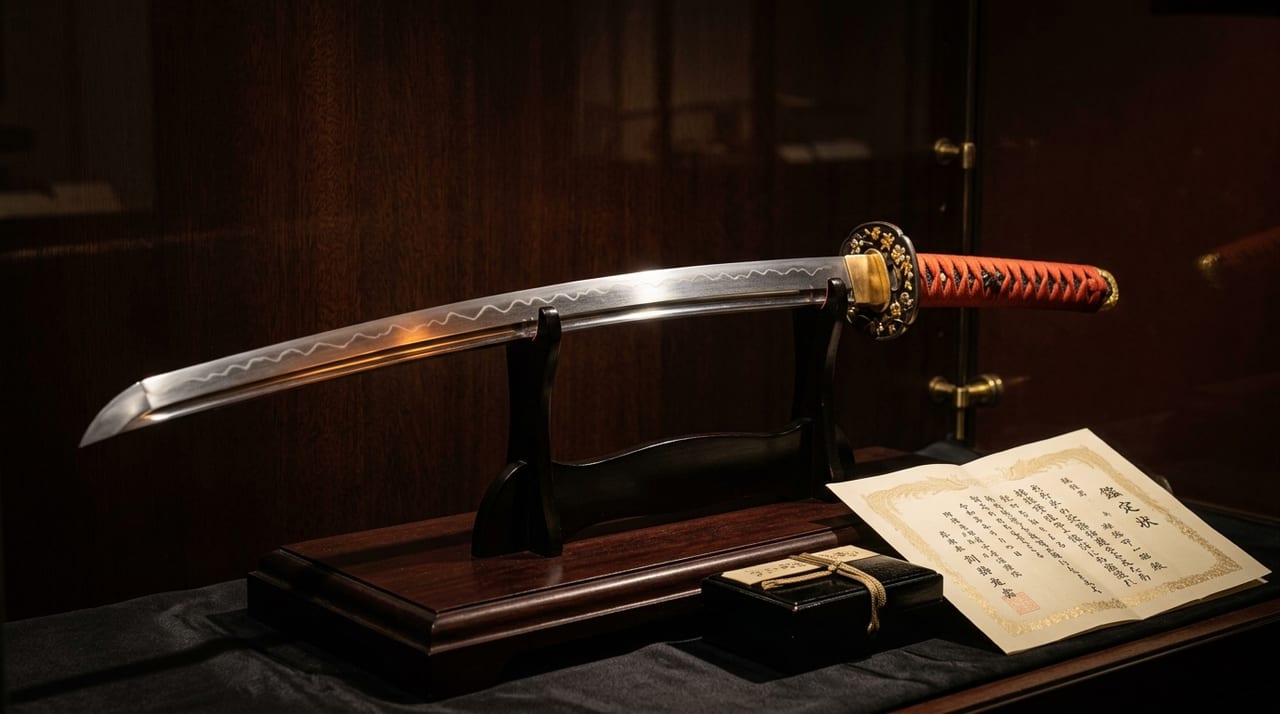
For swords that have completed examination, NBTHK issues a "kanteisho (appraisal card)." The kanteisho records the following.
- Certified grade (Tokubetsu Jūyō, Jūyō, Tokubetsu Hozon, or Hozon)
- Estimated maker (tōkō name, school, and place of origin)
- Estimated era
- Basic dimensions of the sword (nagasa, sori, motohaba, sakihaba, etc.)
- Year of examination (traditional Japanese calendar)
Use in the market: Swords accompanied by an NBTHK kanteisho are treated as "guaranteed" at domestic and international auctions and sword dealer storefronts. The higher the grade, the greater the price premium. In the TOUKENZA online catalog as well, the kanteisho grade is listed as an important evaluation indicator for swords on offer.
Possibility of reapplication: Even for swords that have been rejected, reapplication may be possible after improving the sword's condition through polishing and other means.
Limitations of the Examination and Industry Debate
It is recognized within the industry that NBTHK examinations are not entirely infallible.
Examiner subjectivity: Sword appraisal is not an objective science and depends on the experience and discerning eye of the review committee members. Evaluations may change over time (such as cases where a sword was once designated Jūyō but was later reconsidered).
Review mechanism: NBTHK has an internal system for reviewing designations, but it is not employed frequently.
Comparison with overseas institutions: Evaluations may differ from those of overseas appraisal institutions, and market valuations occasionally diverge.
Conclusion — NBTHK Examination as "the Crystallization of Comprehensive Discernment"
NBTHK sword examination is conducted through "collective wisdom" that combines the discerning eyes of specialists with many years of experience. The process by which each examiner individually views the sword and then compares and discusses opinions is a rational mechanism for minimizing personal bias.
It is more accurate to regard the kanteisho not as "complete objective proof" but as "the judgment rendered at the present time by an authoritative body of industry specialists." Even so, the authority and market influence carried by an NBTHK kanteisho remains irreplaceable in the modern Japanese sword industry.