400-Year History of the Honami Family's Appraisal Enterprise — The System of Official Appraisers to the Shogunate, the Shōshin-gaki, and Iemoto Succession
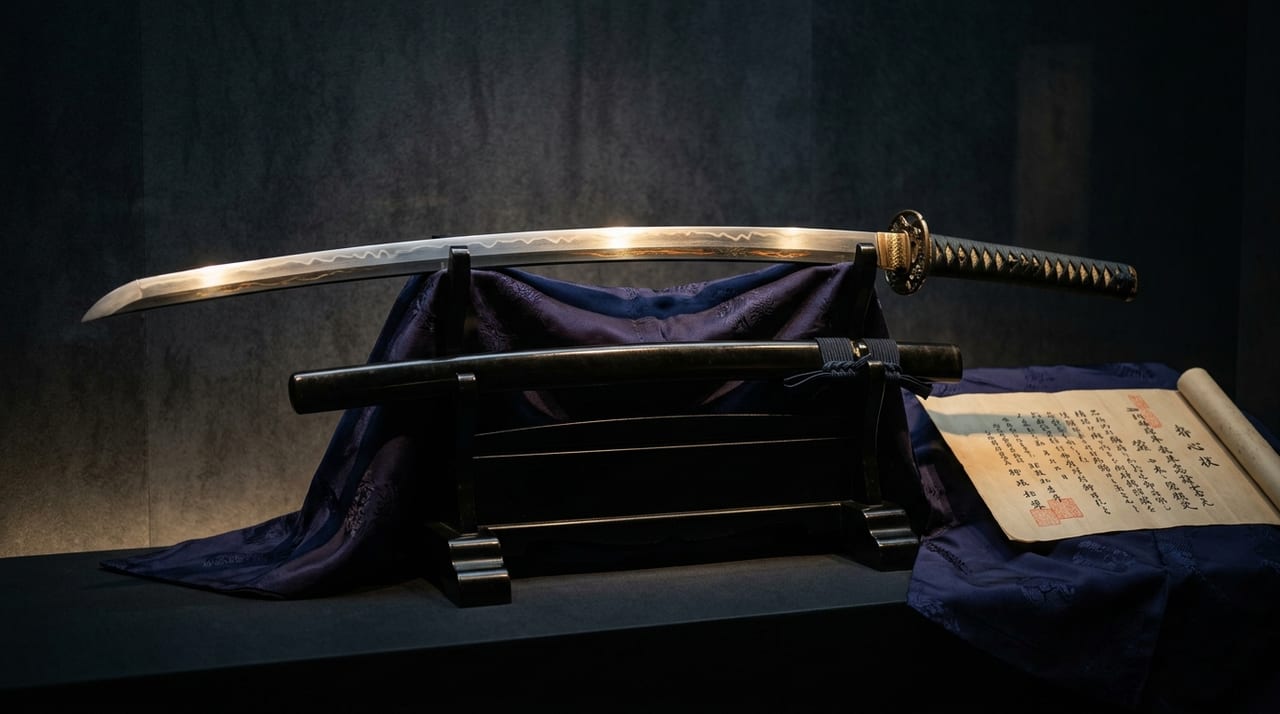 * Image is for illustrative purposes only.
Table of Contents
What Is the Honami Family? — The Iemoto System of Sword Appraisal
The Honami family (Honami-ke) was a clan of official craftsmen in warrior society who specialized in the polishing, wiping, and appraisal of Japanese swords. They rose in the mid-Muromachi period (15th century), flourished throughout the Edo period as official appraisers to the Tokugawa shogunate, and reigned over the sword world for more than 400 years as "the absolute authority that determined the value of Japanese swords."
The Honami family is a collective name for the entire lineage; in practice, there were multiple branches — the main house (Honami) and branch houses (the Kōetsu family, the Motoyanagi family, the Tokiwa family, and others). Among them, the name Kōetsu is widely known as an artist, but behind that lies the family trade of the Honami family as "mekiki (connoisseurs) who dealt in swords."
The Birth of Official Appraisers — From the Muromachi Shogunate to the Tokugawa Shogunate
The Honami family's position as official appraisers is said to have been established in the mid-Muromachi period (15th century) (some theories identify this with the era of Ashikaga Yoshimitsu, but there is insufficient primary evidence to pinpoint the period with certainty). At the time, the shogunate collected and managed many famous swords, and needed specialists to officially evaluate the authenticity and value of blades. The Honami family responded to that need and functioned as an officially recognized institution responsible for "appraising swords received as grants," "rating items to be bestowed as gifts," and "recording and managing famous swords."
The Honami family's position did not waver after the establishment of the Tokugawa regime. The Edo shogunate positioned swords as the soul of the samurai and a symbol of authority, and famous swords frequently passed back and forth as gifts between the shogun and daimyo. The Honami family took exclusive charge of the appraisals required on these occasions — "what is this sword worth?" and "whose work is it?"
The compensation paid by the shogunate to the Honami family was called "fuchi," a stipend, and records remain showing that the family was granted a kokudaka (rice-yield rating) as an official appraisal institution of the shogunate. This means the Honami family was not merely a private sword appraisal business but was incorporated as public infrastructure within warrior society.
The Shōshin-gaki System — How the Appraisal Certificate Determined Value
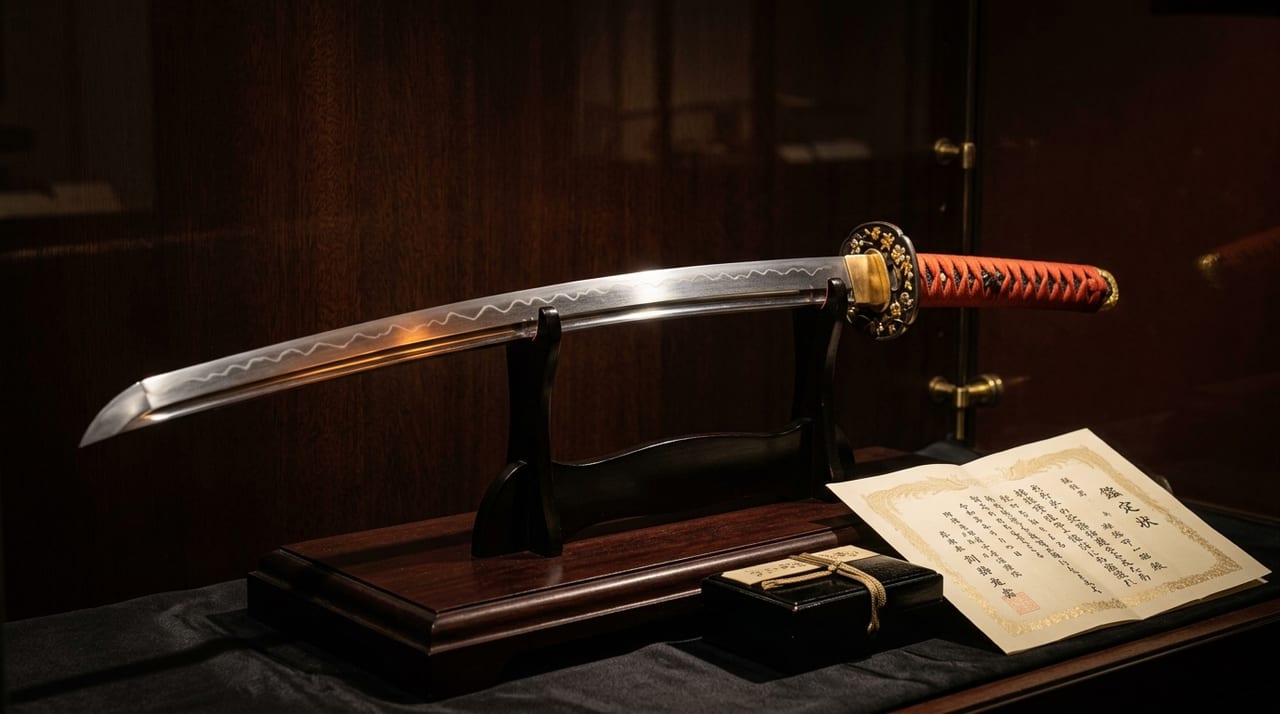
The core of the Honami family's appraisal system lies in a document called the "shōshin-gaki." The shōshin-gaki was a kanteisho issued by the Honami family — an official document recording "whose work this sword is and what its value is."
The following were recorded in a shōshin-gaki:
- The maker (tōkō name, school, period)
- Assessed value (dai: a unit of monetary denomination)
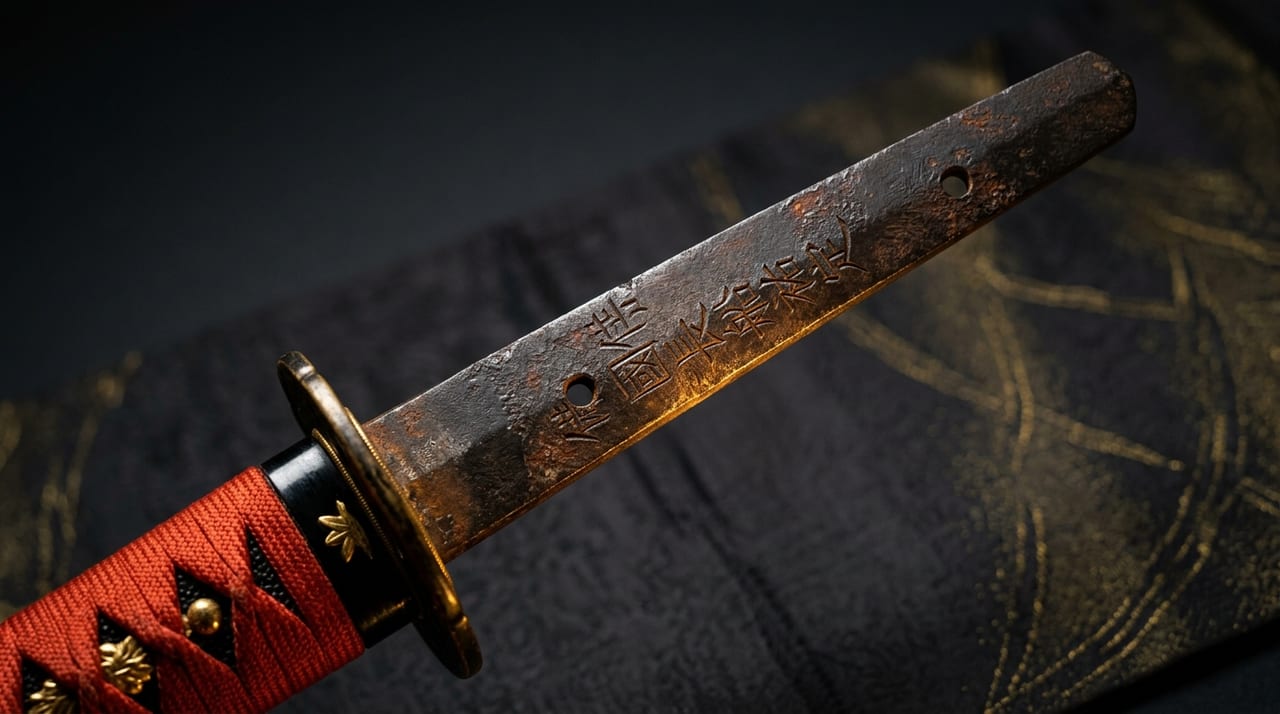
- Description of the shape and mei
- Date of issue, and the signature and seal of the Honami family
Particularly important was the notation of the assessed value, called "dai." In Edo-period transactions involving famous swords, "how many dai the Honami had evaluated it at" served as the price benchmark. For example, a sword described in its shōshin-gaki as "dai of 300 gold pieces" was traded on the market with reference to that assessment. This system functioned the same way as an authoritative appraisal certificate in the modern art world, and carried the power to effectively control the market price.
The shōshin-gaki was preserved and passed down together with the sword, and also served as evidence of provenance (raireki). The expression "Honami no origami" (the Honami's origami) survives even today as an idiomatic phrase meaning "a reliable guarantee," testifying to the great social influence of Honami appraisals.
Technical Succession Through the Iemoto System — Training to Sharpen the Appraiser's Eye
Technical succession in the Honami family was carried out through the "iemoto-sei" (iemoto system). Appraisal techniques were transmitted from master to disciple through oral instruction and hands-on guidance, and leakage to outsiders was strictly forbidden.
Those entering training with the Honami family began with "togi" (polishing). Through the work of polishing a sword, they learned the quality of the steel, the texture of the jigane, and the characteristics of the hamon with their hands and eyes. They then mastered "nugui" (wiping) — the removal of oil and surface observation — and finally advanced to "mikiwame" (appraisal).
This course of training required anywhere from several years to more than a decade. Since the scientific analytical instruments of the modern era did not exist at the time, "the seeing eye," "the touching hand," and "the smelling nose" were the only tools. The ability to judge school, period, and maker by synthesizing the nuances of the hamon, the tone of the jigane, the subtle position of the shinogi ridge, and the color of the rust on the nakago — this ability was formed only through the accumulation of years of experience.
Honami Kōetsu and Sword Appraisal
Honami Kōetsu (1558–1637) is known as an artist distinguished in calligraphy, ceramics, lacquerwork, and maki-e, but his foundation was as a sword appraiser of the Honami family. Kōetsu received a grant of land at Takagamine in the northwestern hills of Kyoto from Tokugawa Ieyasu and established an artists' village (the Kōetsu Village), but this too had as its background the family business of sword appraisal. One could say that Kōetsu's artistic eye was an extension of the mekiki's gaze that discerned the "beauty" of swords.
The Honami Family After the Modern Era and Its Influence on Contemporary Appraisal
With the dismantling of warrior society following the Meiji Restoration and the Sword Abolishment Edict (Haitōrei) of 1876, the Honami family's official status as appraisers to the shogunate disappeared. However, the family trade did not die out but continued, and together with the movement to re-evaluate swords as works of art, the appraisal authority of the Honami family remained effective in the private market.
The NBTHK (Society for the Preservation of Japanese Art Swords), the modern sword appraisal institution established in 1948, strongly reflects the Honami tradition in its appraisal philosophy and methodology. The examination system for designations such as Jūyō Tōken and Tokubetsu Jūyō Tōken can be seen as a modern-day succession of the grading that the Honami family had carried out. Even as of 2026, the appraisal philosophy of the Honami family remains an indispensable frame of reference when discussing the provenance and evaluation of swords.
Conclusion — What "Origami-tsuki" Says About the Honami Family's 400 Years
Just as the expression "origami-tsuki" (meaning "guaranteed") has become established in modern parlance, the concept that the Honami family built over 400 years — "evaluation of swords by an authoritative third party" — continues to live on as a fundamental value in the modern sword market.
The history of the Honami family is not merely a record of a clan of craftsmen. It is a 400-year history embodying the universal truth that for a sword to have "value" and circulate on a "market," an authority capable of evaluating and guaranteeing it is necessary.