The Culture and Industry of Oshigata — The History of the Technique for Recording Japanese Swords on Paper and Its Role in Appraisal
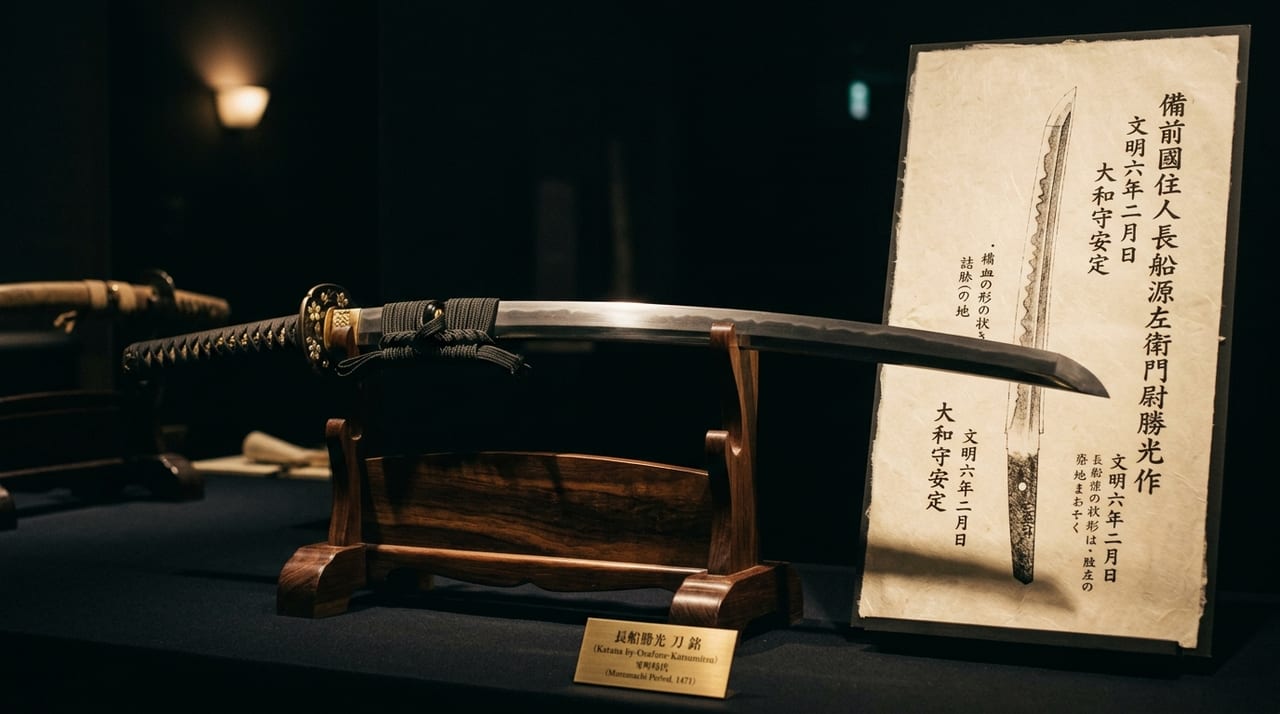 * Image is for illustrative purposes only.
Table of Contents
What Is Oshigata — The Technique of "Copying" Swords
Oshigata is a recording technique in which thin washi paper is placed against the blade of a Japanese sword and the outline, hamon, jigane surface texture, mei inscription, and other features are transferred onto the paper using ink or charcoal. Even without having the actual sword, oshigata allows one to accurately grasp its characteristics and pass them on to future generations, making it a meticulous documentation method born of Japan's unique sword culture.
The history of oshigata is long; it is said that sword appraisers were already using it as a means of recording famous swords in the late Muromachi period. However, it was not until the Edo period that the technique became systematized and widely disseminated. The Hon'ami family, renowned as sword appraisers, actively used oshigata as a means of precisely recording the swords of the shogunal house and daimyo households, and this made the technique a central documentation method in sword culture.
Creating oshigata requires skilled technique. The procedure is as follows.
- Completely wipe away any oil from the blade surface and bring it to a clean state.
- Gently attach thin washi paper (tengujō-shi and similar papers are preferred) to the blade and carefully trace the wave pattern of the hamon and the surface texture of the jigane with ink.
- Transfer the mei section with particular care, recording the shape of the characters, the depth of their engraving, and the pattern of the yasurime.
- The completed oshigata is annotated with the tōkō's name, year of production, owner, and the name of the person who made the oshigata, and served as a kind of kanteisho.
Oshigata Culture in the Edo Period — The Fusion of Recording and Appraisal
The Edo period can be called the golden age of oshigata culture. Under the stable rule of the Tokugawa shogunate, the practical value of swords declined relatively while their value as works of art and craft objects soared. Daimyo and wealthy merchants competed to collect famous swords, and the demand for authenticity appraisal and record-keeping surged.
The collection of oshigata compiled by the Hon'ami family, known as Hon'ami Oshigata, is still regarded as a foundational resource for sword research today, and the provenance of many famous swords produced during the Edo period can be confirmed through these records. The tōkō of each domain also used oshigata to record their own works. Collections of oshigata of swords made by a domain's retained tōkō were preserved in the domain's archives and functioned as official records attesting to the achievements of the tōkō's school.
From the mid-Edo period onward, the creation and collection of oshigata-chō spread as a hobby among literati and samurai who loved swords. A book carefully compiling oshigata of one's own swords served both as a catalogue of one's collection and as proof of one's cultivation demonstrated through a deep understanding and appreciation of swords. Notable examples include the Suifu Oshigata, in which Mito domain samurai recorded famous swords within the domain.
The Technique of Creating Oshigata — Precise Copies Produced by the Eye and Hand of the Craftsman
The quality of an oshigata is greatly influenced by the skill and insight of the person who makes it. While simply transferring the outline is relatively straightforward, accurately conveying the essential value of a sword requires reproducing all of the following elements on paper without omission.
- The fine variations of the hamon
- The types of jigane surface texture (itame, mokume, ayasugi-hada, etc.)
- The clarity of the "nioi-guchi," the boundary line of yaki-ire (quenching)
- The characteristics of the mei engraving
A skilled oshigata-shi can express through ink gradations alone the difference in texture between nie and nioi, conveying even the brightness and transparency of the jigane. Reproducing on oshigata the white, misty pattern that appears in the jigane — known as utsuri — is extremely difficult, and how well this element is rendered greatly determines the quality of an oshigata.
Even today, creating oshigata requires specialized training, and even among sword researchers and qualified appraisers, those capable of producing precise oshigata are limited in number. In NBTHK examinations as well, oshigata is used as important supplementary material for conveying the characteristics of a sword.
The Role of Oshigata in the Modern Japanese Sword Market
Even in the modern sword trading market, oshigata continues to play an important role. In transactions involving expensive famous swords in particular, the presence of an oshigata and its quality can affect valuations. Swords for which ko-oshigata made by renowned appraisers of the Edo, Meiji, and Taisho periods survive are highly regarded on the grounds that their provenance is clear.
For overseas sword collectors, oshigata functions as supplementary material that allows them to grasp the characteristics of a sword even without reading ability in Japanese. The number of cases in which major Western auction houses include precise oshigata together with the kanteisho when listing Japanese swords is also increasing.
With advances in digital technology, 3D scanning and high-resolution photography are becoming mainstream methods of sword documentation, but many experts consider oshigata to contain "information of hand technique" that is difficult to reproduce with digital technology. The view is that the act of making oshigata is itself part of the appraisal process of communing with a sword, and that the appraiser's accumulated knowledge is condensed on paper.
The Transmission of Oshigata Culture and Future Challenges
The greatest challenge facing oshigata today is the transmission of the technique. The number of craftsmen and researchers capable of producing precise oshigata is declining year by year, and some voices say that the day when this technique becomes merely a historical legacy is not far off.
At the same time, movements to protect and promote oshigata production as a traditional culture have also emerged. Some sword museums offer hands-on programs for creating oshigata, providing younger generations with opportunities to engage directly with Japanese swords. Among sword researchers, there are also those advancing efforts to digitize Edo-period ko-oshigata, build databases, and make them widely available.
Oshigata is a recording medium that conveys the beauty and history of the Japanese sword as a work of art in the most faithful way possible, filtered through human sensibility. As of 2026, its cultural and industrial significance has not been lost, and it remains an important key to deepening one's understanding of the world of swords.