Types and Structure of the Naginata — A Complete Overview of a Weapon Passed Down by Female Martial Artists
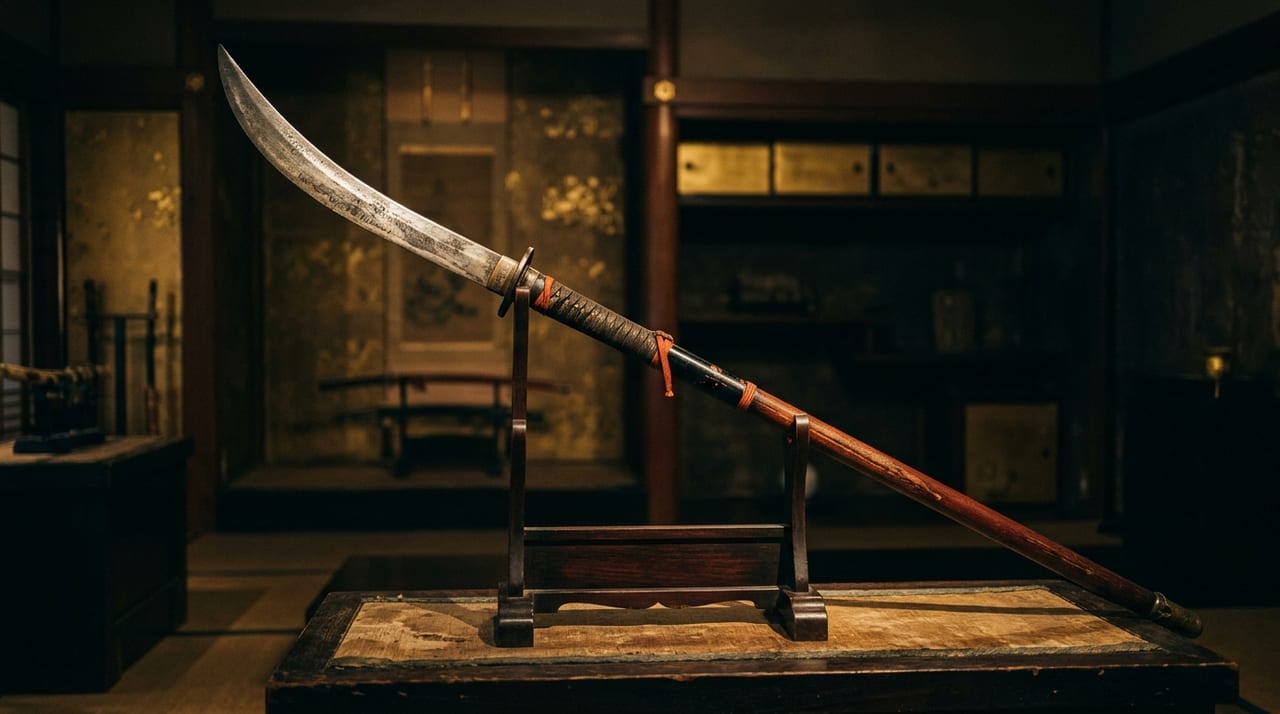 * Image is for illustrative purposes only.
Table of Contents
What Is the Naginata — Its Place in the Classification of Japanese Bladed Weapons
The naginata is a type of Japanese bladed weapon in which a curved blade is attached to the tip of a long shaft, forming an integrated pole arm comprising blade and shaft. The name "naginata" is said to derive either from "nagu" — a broadly sweeping cutting motion — or from a corruption of the archaic term "nagatana" (long sword).
In the classification of bladed weapons, the naginata belongs to the category of "long-hafted weapons (nagae-buki)" and is distinguished from "sidearms (haitō)" such as the tachi and uchigatana. Today the characters for "naginata" and "chōtō (long sword)" are sometimes used interchangeably, but strictly speaking "chōtō" can also refer literally to a long sword in the sense of its written characters.
Structure of the Naginata — Blade, Shaft, and Ishizuki
The main components of the naginata are as follows.
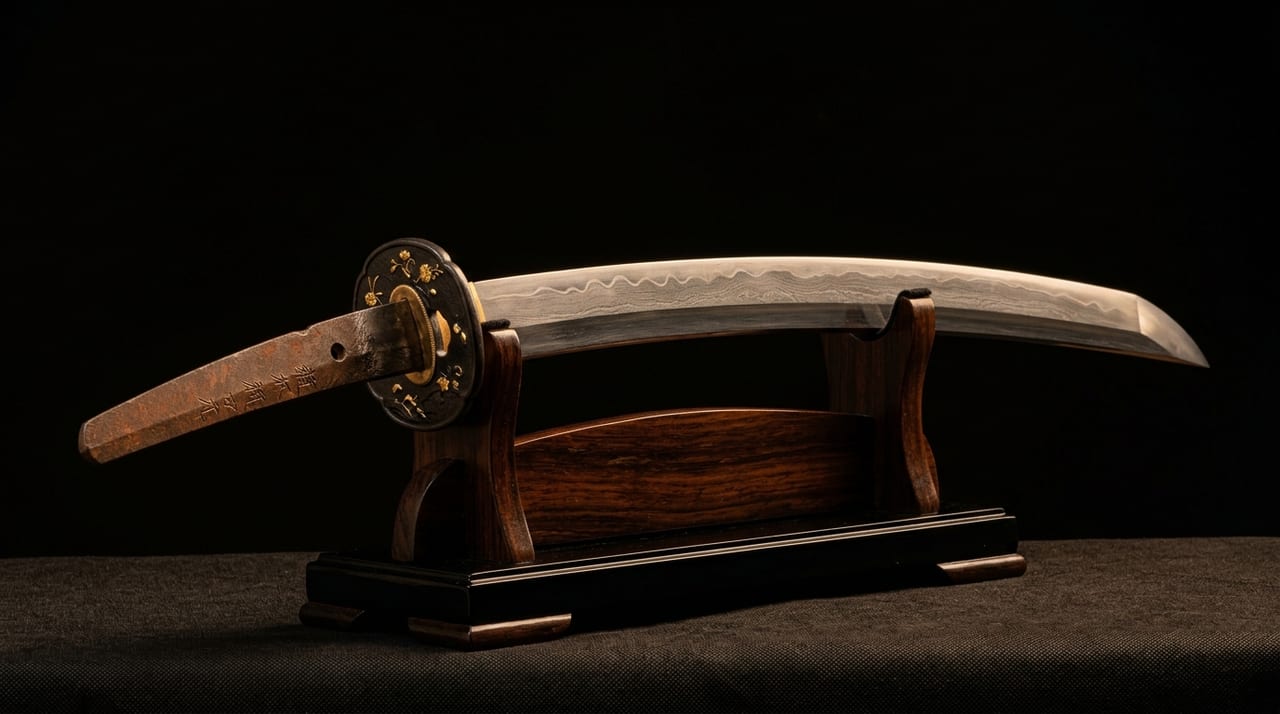
- Blade: A curved single-edged blade, generally 1 to 2 shaku (approximately 30–60 cm) in length. It has a mune (back of the blade) and a ha (cutting edge), and the sori (curvature) varies by period and school. The nakago (tang) is inserted into the shaft and secured with mekugi. Blade shapes range from the gracefully curved "nade-naginata" to the nearly straight "sugu-naginata."
- Shaft (e): Made of wood, with an oval cross-section as standard. On a typical naginata, the shaft length ranges from 5 to 8 shaku (approximately 150–240 cm). Unlike the tsuka (hilt) of a tachi or uchigatana, the grip portion is often left unwrapped with cloth or leather, though this varies by school.
- Ishizuki: A metal fitting attached to the butt end of the shaft. It is used to protect the shaft when thrust into the ground and to respond to attacks from the rear.
- Hantachi and habaki (blade collar): The naginata also has a fastening fitting corresponding to the habaki, which reinforces the joint between the blade and the shaft.
Historical Development of the Naginata — From Heian to Edo
The origins of the naginata are said to date back to the late Heian period, with the earliest records of its use appearing in sources documenting sōhei (warrior monks). Written sources record that armed monks of the great temples of Nara and Mount Hiei used long-hafted weapons to counter mounted warriors.
During the Kamakura and Nanbokuchō periods, the naginata was widely used on the battlefield as the primary weapon of infantry. It excelled at the "nagu" sweeping motion — cutting down the legs of mounted warriors — and was also well suited for massed use in close-quarters combat. During the tumult of the Nanbokuchō period (14th century), the blades grew larger, giving rise to the "ō-naginata."
When the Muromachi period began, the spear (yari) gradually replaced the naginata's role on the battlefield. The yari was easier to manufacture and could exceed the naginata in length, making it better suited for massed use in organized military formations. Accordingly, the naginata ceded its status as the primary battlefield weapon to the yari.
In the Edo period, the naginata established a cultural status as "the woman's weapon" — one that women of the warrior class learned for self-defense and martial training. Naginata practice spread as part of the bridal accomplishments of daughters of samurai households, and the notion that "the naginata is a woman's weapon" became fixed in society.
Types of Naginata — Classification by Shape and School
Naginata can be classified into multiple types according to their shape and the school using them.
- Nade-naginata: A type with a gracefully curved blade, common in old naginata from before the Muromachi period. The sori (curvature) of the blade is large, making it well suited for sweeping cuts.
- Shōbu-zukuri naginata: A type with a blade cross-section in the shinogi-zukuri style resembling an iris leaf, achieving both strength and sharpness. Commonly seen as a practical weapon of samurai households.
- Sue-kotō and shintō period naginata: Naginata produced by tōshō (swordsmiths), some of which achieve a blade quality on par with tachi and uchigatana. Most surviving naginata as art objects are from this period.
- Modern naginata (for training): Training equipment specialized for modern naginatadō competition. Bamboo or wooden "bokutō-naginata" are used in practice, and in matches the wearing of protective armor is standard.
The tomoe-gata naginata and the shizuka-gata naginata are cited together as the two major forms of naginata.
| Form | Characteristics | Origin |
|---|---|---|
| Tomoe-gata naginata | Large sori (curvature) in the blade, powerful form | Said to derive from Tomoe Gozen, the female warrior who won fame in the Genpei War |
| Shizuka-gata naginata | Elegant construction with restrained sori | Named after Shizuka Gozen, the beloved consort of Yoshitsune |
In the classical schools, the two major school divisions of the Tomoe school and the Shizuka school correspond to this difference in shape, and the degree of sori in the blade has long served as a guide for identifying the lineage of a school.
Modern Naginatadō — Continuation as a Female Martial Art
In the modern era, the naginata has been carried on as a systematized martial sport called "naginatadō." The All Japan Naginata Federation (established 1955) oversees it, and practice takes place at schools and martial arts halls throughout the country.
A notable feature of naginatadō is that over 90% of its competitive practitioners are women. This is the result of the cultural tradition of "the female martial art" dating back to the Edo period being carried through to the present day. In recent years, however, male practitioners have also increased, and mixed-gender competition is gradually being organized.
The ranking system is certified by the All Japan Naginata Federation, with an established system of ranks from first dan to eighth dan and the titles of renshi, kyōshi, and hanshi. International competitions are also held, and efforts to spread the art to Europe, America, and Asia are actively conducted.
The preservation and study of old naginata as art objects is carried out by organizations such as NBTHK, and several naginata have been designated as jūyō bunkazai (Important Cultural Properties). For sword collectors, the same aesthetic evaluation criteria as for tachi and uchigatana are applied.
The competitive population is estimated at approximately 50,000 by the All Japan Naginata Federation's count, making it one of the largest female-dominated martial sports in Japan. Among classical schools, Jikishinkage-ryū and Masaki-ryū continue to transmit the tradition of naginata-jutsu to this day, forming the technical foundation of modern naginatadō. Internationally, the International Naginata Federation oversees organizations in various countries, and competitive and promotional activities are conducted in multiple countries including those in Europe, America, and Asia.