The Difference Between Naginata and Nagamaki — A Comparative Study of Slashing Weapon Forms and Their Battlefield Applications
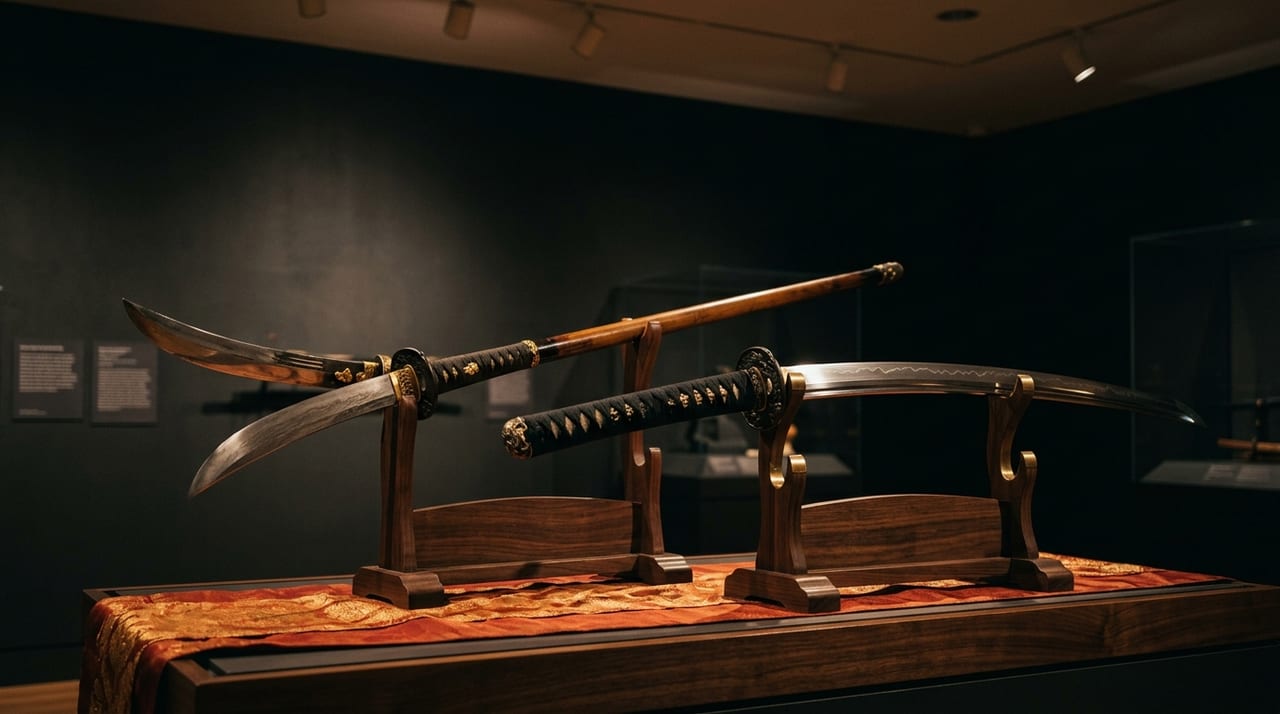 * Image is for illustrative purposes only.
Table of Contents
Naginata and Nagamaki — What Is the Difference Between These Seemingly Similar Polearms
Naginata and nagamaki are both polearms with a blade attached to a long shaft, and because they look similar, they are easily confused. However, they differ clearly in blade shape, shaft length, method of use, and the historical context in which they developed, and from the perspective of arms history they are classified as distinct weapons.
Cross-referencing historical documents, picture scrolls, and surviving weapons, the most plainly expressed difference between the two is in the "ratio of blade to shaft." The naginata has a long shaft and a shorter blade (shaft 6–7 : blade 3–4), while the nagamaki typically has a nagasa of about 3 shaku (90 cm) with a shaft of about 3–4 shaku as well, the shaft being equal to or somewhat longer than the blade (shaft ≥ blade). There is, however, considerable individual variation depending on period, region, and maker, and classification based on dimensions alone is not always straightforward.
The Form and Origins of the Naginata — Development from the Late Heian Period
The prototype of the naginata dates back to the late Heian period (11th–12th centuries). The "naginata," with its shape of an elongated tachi blade, was initially used by mounted warriors as a weapon to sweep away foot soldiers. Its name comes from the weapon's primary motion of "nagu (sweeping at an angle)."
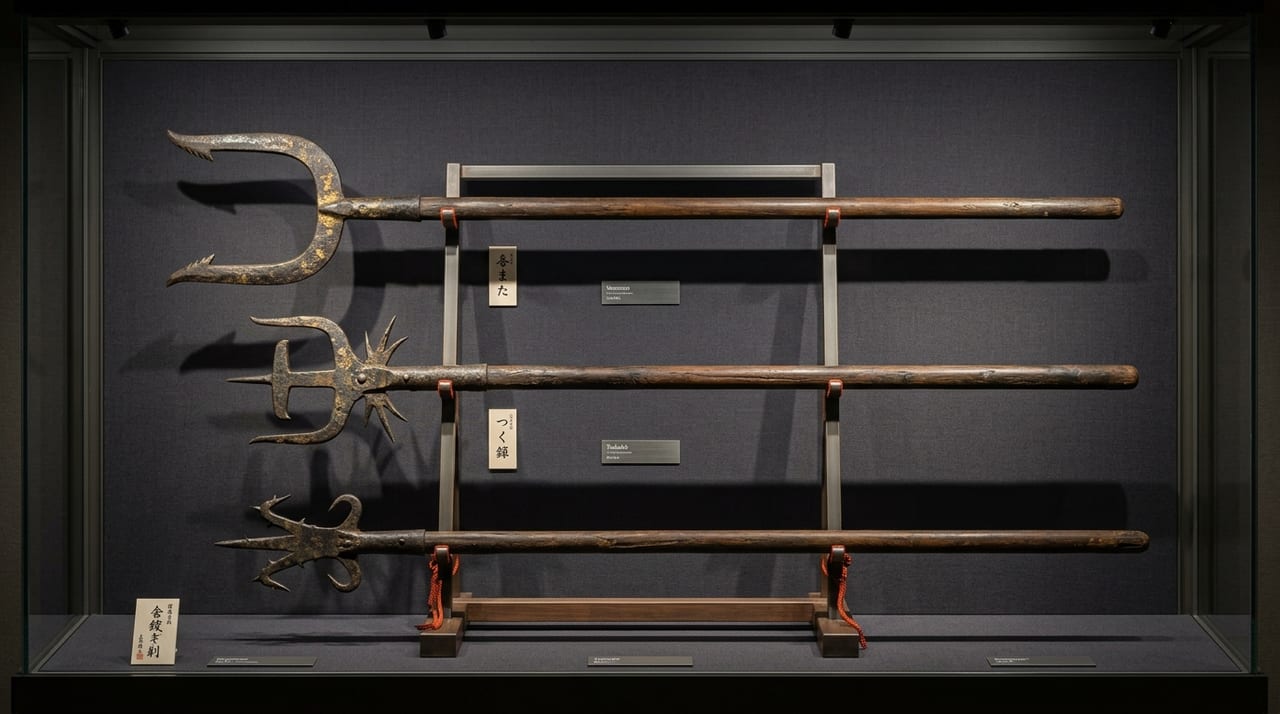
The blade has a pronounced sori (ranging from motosori to nakasori), and the kissaki — the bōshi — is relatively small and rounded. The blade is single-edged, and the mune is made thick to ensure strength. The shaft is made of oval-section wood wrapped in lacquer and leather, with an ishizuki fitted at the end so that it could also function as a thrusting weapon.
By the Kamakura and Nanbokuchō periods, the naginata had developed into one of the principal weapons of foot soldiers, and warriors carrying naginata are depicted in the picture scroll Mōko Shūrai Ekotoba. After that, as long spears rose to prominence in the late Muromachi through Sengoku periods, the naginata's battlefield role declined; but in the Edo period "naginatajutsu" was established as a self-defense art for female warriors, and it was passed down into the modern martial art "naginatadō."
The Form of the Nagamaki and Its Role in Actual Combat
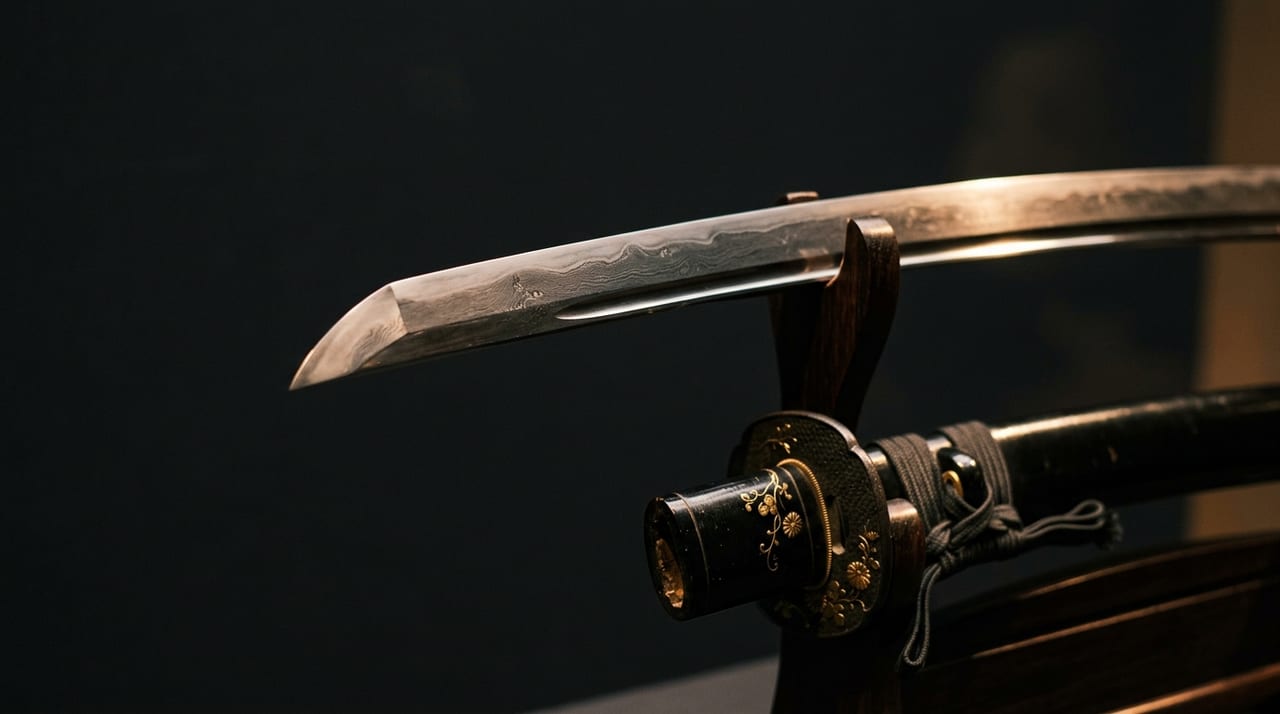
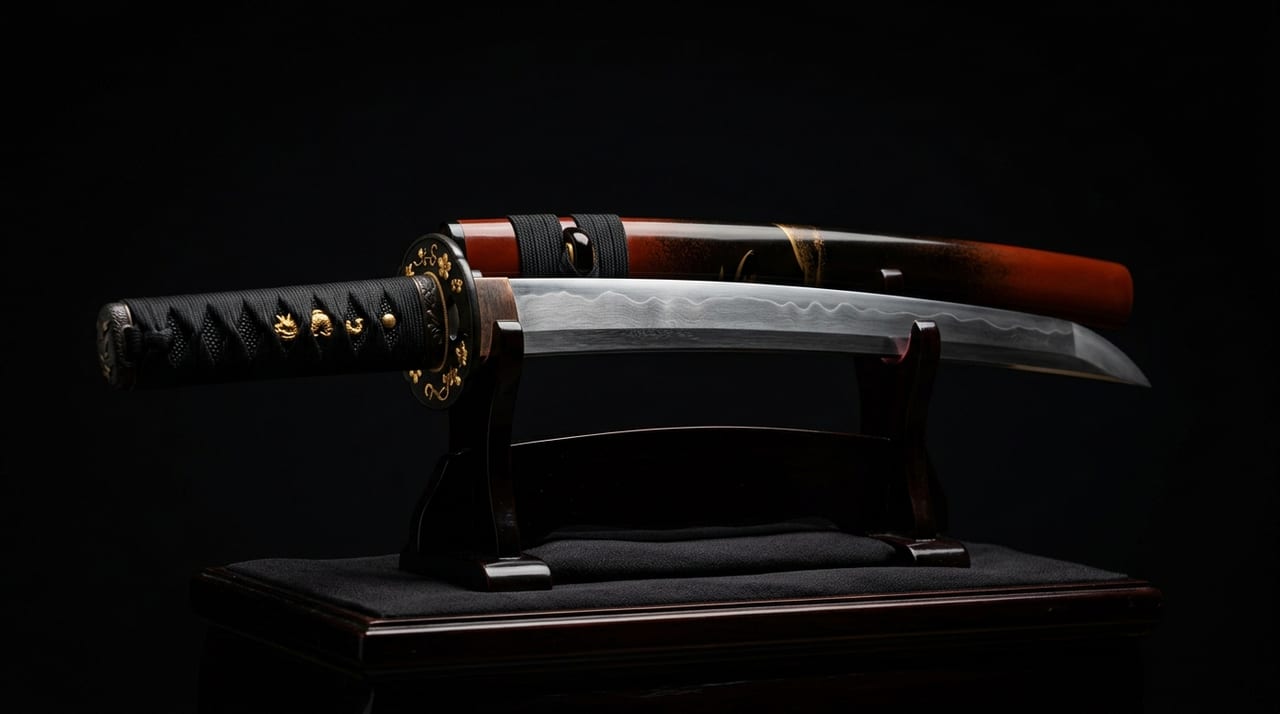
The nagamaki is a weapon that developed during the Nanbokuchō through Muromachi periods (14th–16th centuries); its blade is long (with a nagasa ranging from 60 to over 90 cm in some examples), and the overall length can surpass that of a naginata because the shaft is also long. The hamon and jigane are akin to those of a sword, and high-quality blades produced with the skills of a sword kaji are characteristic.
Stemming from its origins as "a weapon with an extended tachi hilt," the shaft of the nagamaki often uses materials from the same tradition as tachi koshirae. Some nagamaki were also designed so that by detaching the blade and replacing it with a shorter shaft, the same blade could be used as an ordinary tachi, and repurposing of the same blade for different uses was practiced.
The reason the nagamaki was prized lies in the advantage of "blade length and distance management" in combat against cavalry and other polearms. Whereas the naginata specializes in sweeping cuts, the nagamaki could be used for a diverse range of techniques including thrusting, downward cutting, and sweeping. Records from the Nanbokuchō battles document fierce warriors called "ōdachi users" who distinguished themselves wielding the nagamaki.
Battlefield Applications — Differences in Use and Formation
The use of naginata and nagamaki differed according to battlefield conditions, formation, and opponent.
Situations where the naginata was effective
- Repelling massed infantry (foot soldiers): a tactic of sweeping in a horizontal line
- Horizontal sweeps in confined spaces such as castle gates and corridors
- Anti-cavalry tactics of sweeping at the legs of mounted warriors' horses
Situations where the nagamaki was effective
- Single-combat-style fighting in open field battles
- Distance contests against other polearms (long naginata, spears)
- Situations calling for the fullest expression of individual martial skill
While the nagamaki developed against the backdrop of the intense individual combat of the Nanbokuchō period, in the collective battle tactics of the Sengoku period spears and bows were valued over individual weapons, so the nagamaki fell into relative decline, and the naginata too shifted into the realm of women's martial arts. This change demonstrates that the evolution of weapons is inseparably tied to changes in tactics.
Naginata and Nagamaki Today — Their Positioning as Martial Arts and Art Objects
Today, the naginata has been passed down as "naginatadō," a martial arts competition centered on women, with school martial arts programs and a rank system organized under the All-Japan Naginata Federation. The nagamaki has no corresponding established modern martial art and is most often encountered in the context of martial arts research and reconstructed training in classical martial arts.
As art objects and collection pieces, original examples of both naginata and nagamaki survive in the Japanese Sword Museum, provincial samurai residences, and old family collections, and some have been designated jūyō bunkazai by the national government. Because fewer examples exist than swords, circulation in the collector market is limited; but high-quality nagamaki from the Nanbokuchō period are highly rare, and there are auction records of hammer prices exceeding several million to over ten million yen.
The difference between naginata and nagamaki goes beyond a mere difference in weapon form; it reflects differences in the style of warfare, the spirit of the age, and the class of users in which each developed. Comparing the two provides a perspective from which to survey the history of Japanese arms, samurai culture, and the evolution of martial arts. Those looking for swords and weapons related to naginata or nagamaki are encouraged to browse the online selection.
The Nagamaki as an Art Object and Its Market Value
Surviving nagamaki are even fewer in number than naginata, and the finest examples from the Nanbokuchō period are held almost entirely by museums or passed down in old families. When appreciating the hamon and jigane of the blade, the same approach used for tachi is effective, and the shape of the nakago and the mei can also reveal the background of the piece's production. The ratio of shaft to blade in a nagamaki — the formal characteristic of shaft ≥ blade — is the first point to check if one has the opportunity to handle an actual example.