Kissaki Types and Period Authentication—Morphological Comparison and Authentication Practice of Inokubi, Ko-kissaki, Chu-kissaki, and O-kissaki
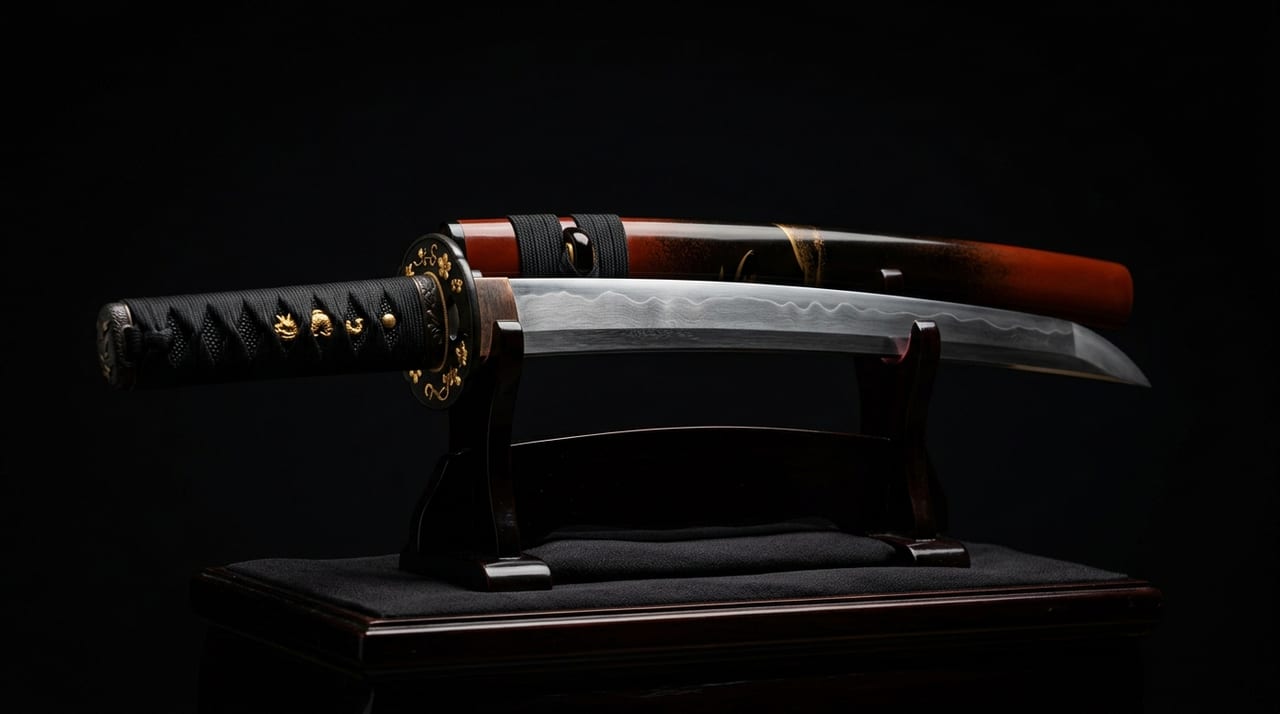
 * Image is for illustrative purposes only.
Table of Contents
What is Kissaki—The "Face" of the Japanese Sword
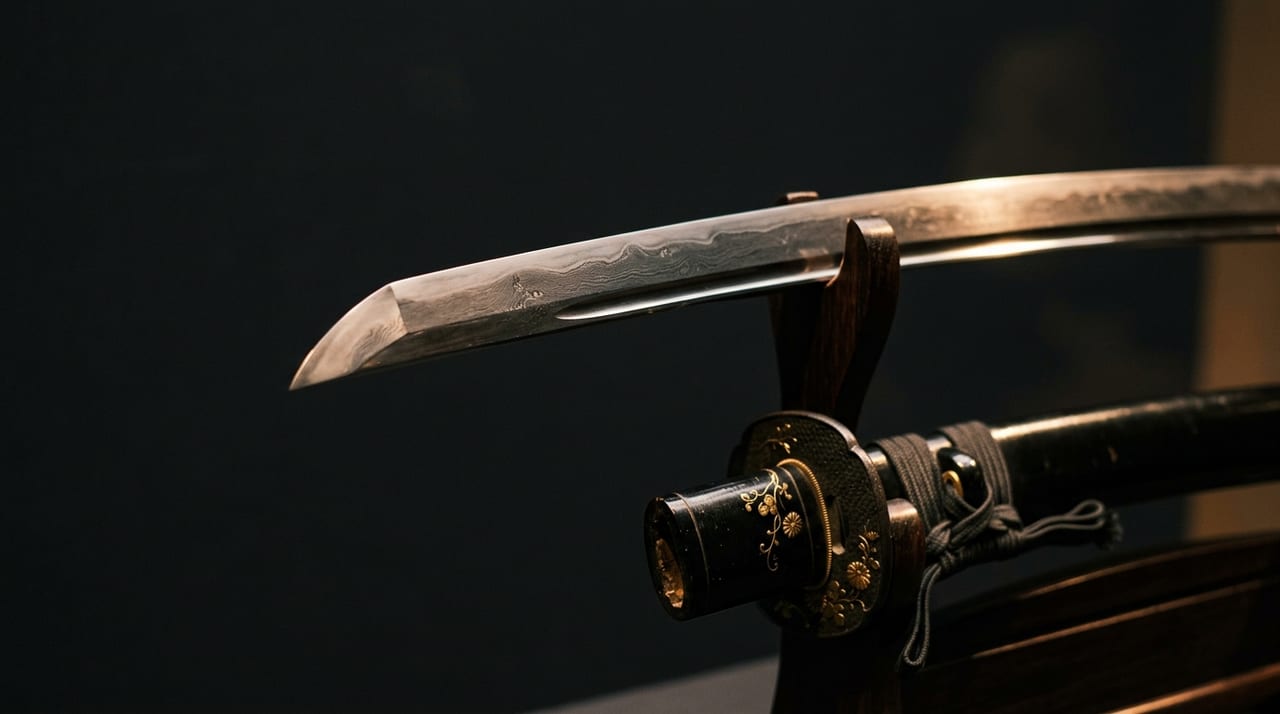
The kissaki (blade tip) is the terminal section of the blade, and together with the blade pattern and steel grain, it is one of the most important elements in "reading" a sword. By examining the kissaki's form alone, an authenticator can narrow down the approximate period, origin, and school. The kissaki is not merely a design choice but a functional form that condenses the combat style, intended use, and aesthetic sensibility of the smith of that era.
The size of the kissaki is evaluated by the protrusion of the "fukura" (the rounded section of the kissaki) and the length from the "yokote" (the transition point from the blade edge to the kissaki). Broadly speaking, it can be classified into four forms: "inokubi kissaki," "ko-kissaki," "chu-kissaki," and "o-kissaki."
Inokubi Kissaki—A Special Form from the Late Heian through Mid-Kamakura Periods
The inokubi kissaki is an unusual form in which the blade tip is extremely short and stubby, resembling a wild boar's neck. It belongs to the shortest category, dropping sharply from the yokote to the kissaki. It is commonly seen on kotachi (old long swords) produced from the late Heian through the mid-Kamakura periods. After the Mongol invasions (1274 and 1281), battlefield experience exposed the disadvantages of the short kissaki, and it fell out of favor by the late Kamakura period.
Functionally, the short, stubby kissaki was difficult to break and is believed to have been well-suited for kumiwaza (grappling combat on horseback). However, it lacked cutting power and was unsuitable for thrusting attacks. As an artwork, it is highly valued, with several examples of inokubi kissaki found among designated Important Cultural Properties.
Ko-kissaki—The Typical Form of Early Kamakura and the Beauty of Subtlety
The ko-kissaki is a refined blade tip with a slender fukura and a short length from the yokote. It is the typical kissaki form from the late Heian through early Kamakura periods and is also common on celebrated swords of the Kamakura period (masterpieces of the Ichimonji, Awataguchioji, and Raiden schools). It harmonizes beautifully with the sword's overall elegant form, and many of the celebrated swords called "treasures of the earth" possess this shape.
The appeal of the ko-kissaki lies in the visual effect that makes the entire blade appear supple and graceful. Because the kissaki is modest, the center of gravity tends to sit in the middle of the blade, making it well-suited for iaido and the drawing-cut techniques of traditional Japanese swordmanship. The celebrated Bizen Ichimonji masterpiece "Yamatorige" is a typical example of ko-kissaki, and its refined tip has drawn admiration from authenticators.
Chu-kissaki—The Most Balanced Standard Form
The chu-kissaki is the standard kissaki form most commonly adopted on modern swords. Both its length from the yokote and the protrusion of the fukura are "moderate," balancing practical utility with aesthetic appeal. The chu-kissaki became widespread as swords transitioned from tachi (worn with blade edge down) to uchigatana (worn with blade edge up) beginning in the Nanboku-Chō period. During the Sengoku period, swordsmiths prioritized practical utility and adopted the chu-kissaki, slightly longer than the inokubi or ko-kissaki, as the standard. With the Edo period, the role of the sword as formal wear for the samurai became more prominent, and individual smiths began to express their own aesthetic through variations in the fukura's protrusion and the kissaki's length within the chu-kissaki category.
O-kissaki—The "Bold Beauty" of Nanboku-Chō through Sengoku Periods
The o-kissaki is a bold blade tip with a long length from the yokote and a dramatically protruding fukura. It is frequently found on large tachi from the Nanboku-Chō period and imposing uchigatana from the Sengoku period. Because the kissaki expands proportionally with the blade's overall length, it creates a striking visual impact.
Functionally, the o-kissaki excels at thrusting. In combat techniques targeting gaps in armor, a sharp, elongated kissaki provides a distinct advantage. However, it has the drawback of being prone to breaking, making boldness and fragility two sides of the same coin. As artworks, typical examples are found on the large tachi from the Nanboku-Chō period known as "Enbunji-uchi," and the dramatic unity of blade size and o-kissaki boldness is unparalleled in other periods.
The Evolution of Kissaki Across Periods and Schools
Summarizing the evolution of kissaki, there is roughly the following historical progression:
From the late Heian through early Kamakura periods, the ko-kissaki was typical, characterized by an elegant form predicated on mounted combat. The inokubi kissaki also appeared from the late Heian period through the mid-Kamakura period, but fell out of use by the late Kamakura period following the Mongol invasions. By the mid- to late Kamakura period, under the influence of the Bizen Ichimonji and Raiden schools, refined forms of ko-kissaki through chu-kissaki emerged, with emphasis on unity between the kissaki and the sword's overall form. During the Nanboku-Chō period, the o-kissaki rose in prominence in response to demand for large tachi, embodying the bold aesthetic of the era. During the Sengoku period, the chu-kissaki became standard again due to emphasis on practical utility, and slender chu-kissaki were fashionable among the "Kanbun shinnou" (new swords of the Kanbun era) in early Edo. In the shinshintou (new new swords) of the late Edo period, some smiths, driven by antiquarian interests, consciously restored the ko-kissaki of the Kamakura period.
Inseparably related to the kissaki's form is the boushi (temper pattern at the tip). The boushi is the continuation of the blade pattern at the kissaki, and the form that appears varies depending on the kissaki's size. The major boushi forms are shown in the table below.
| Boushi Name | Characteristics | Major Periods/Schools |
|---|---|---|
| Ko-maru | Tip curves back small and round | Kamakura through Edo periods |
| Dai-maru | Curves back with large roundness | Kamakura Bizen, shinshintou |
| Togari | Tip terminates in an acute angle | Soshu tradition, Nanboku-Chō |
| Midare-boushi | Follows the blade pattern with irregularity | Shizu, Kanesji, etc. |
| Flame boushi | Flames irregularly in a wild pattern | First generation Kunihiro, etc. |
The ko-kissaki tends to pair with ko-maru or dai-maru, while the o-kissaki tends to show togari or deep curves, making the boushi a reinforcing authentication element for determining kissaki type.
The Practice of Authenticating Through Reading the Kissaki
The kissaki's form is a powerful clue for "process of elimination" authentication in estimating a sword's period and origin. For example, the combination "o-kissaki + large-grained steel + wavy blade pattern" indicates Yamato or Bizen of the Nanboku-Chō period, while "ko-kissaki + small-grained steel + clove-shaped blade pattern" is a signature of Kamakura Bizen Ichimonji.
When modern swordsmiths determine kissaki form, they comprehensively consider five elements: ① the school and period being emulated, ② the balance of the overall blade (proportion of curve and width), ③ intended use (iaido, test cutting, artistic appreciation), ④ the patron's preferences, and ⑤ the smith's own aesthetic philosophy. There is no single answer to the question of which kissaki is superior; the ultimate criterion is harmony with the sword's overall form.
When examining an actual sword, you can broadly determine the kissaki type by first confirming two points: "where is the yokote" and "how pronounced is the fukura's protrusion." The kissaki is a location where both the smith's era-specific sensibility and individual aesthetic are expressed simultaneously, and it is the "face" that tells the story of a single sword.