The Kanbun Shinto Era: Blade Shape Revolution and Samurai Sword Aesthetics in Early Edo
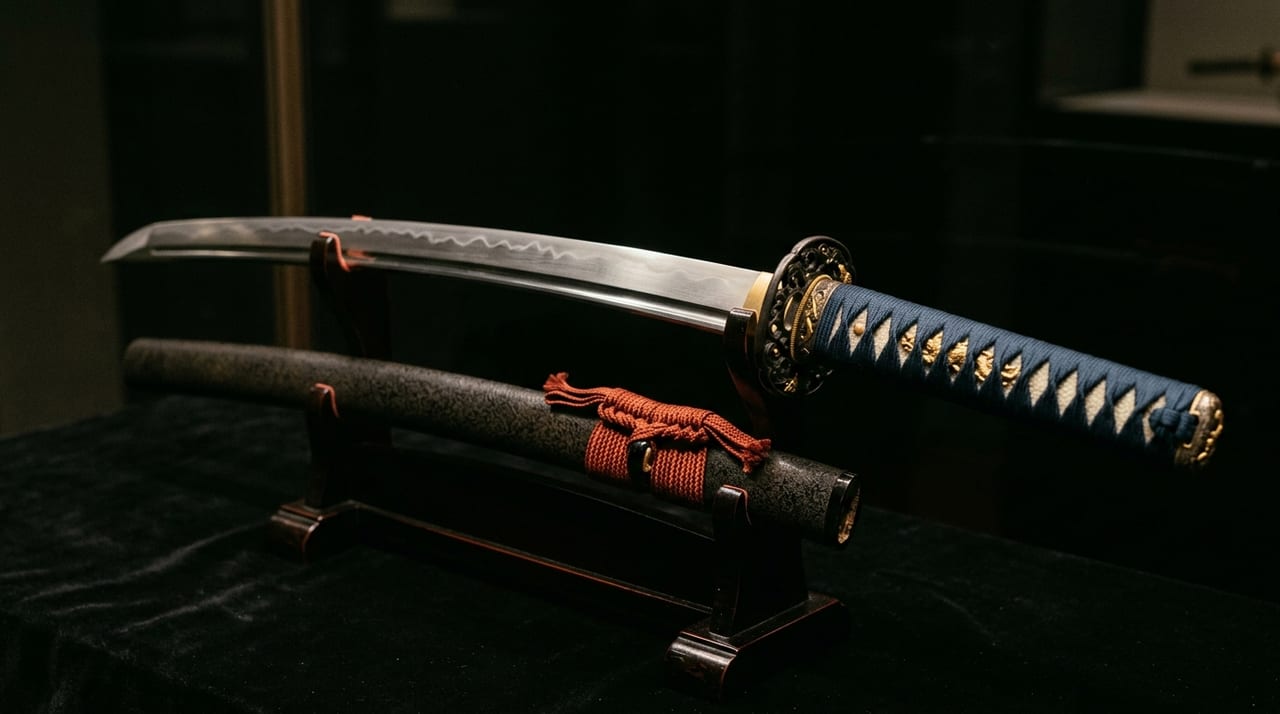 * Image is for illustrative purposes only.
Table of Contents
Beginning of the Shintō Period and the Position of "Kanbun Shintō"
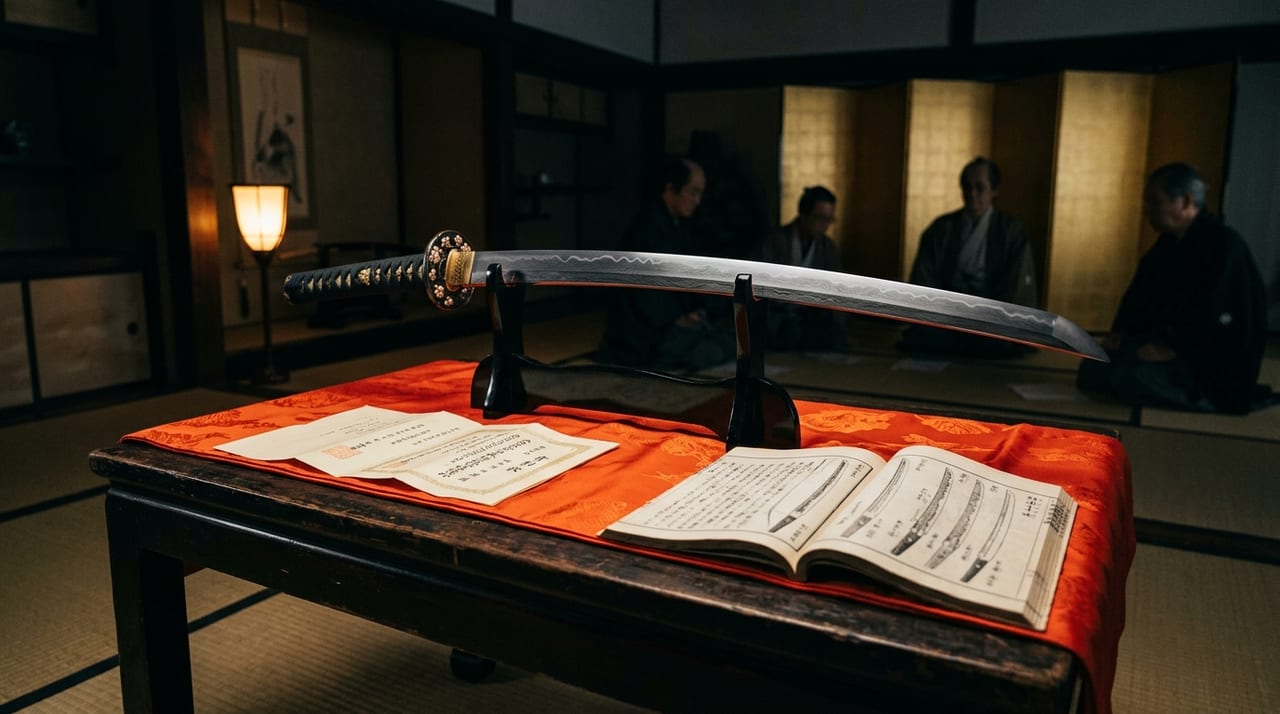
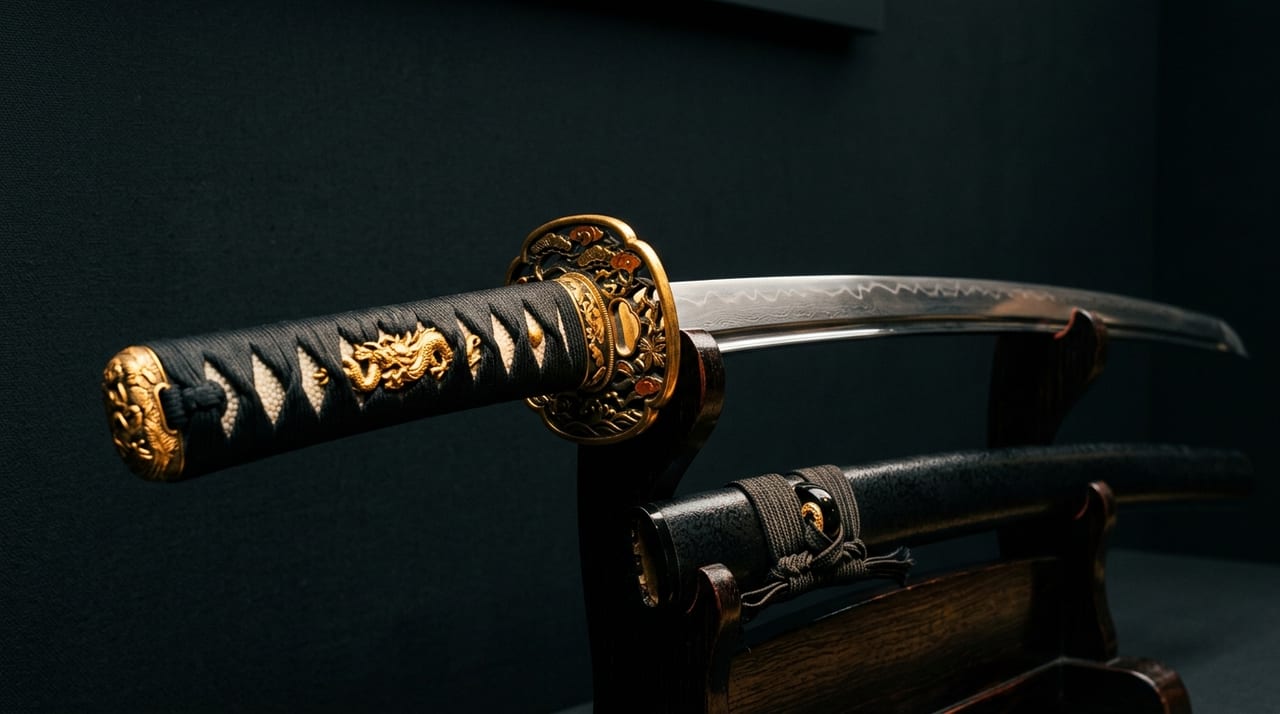
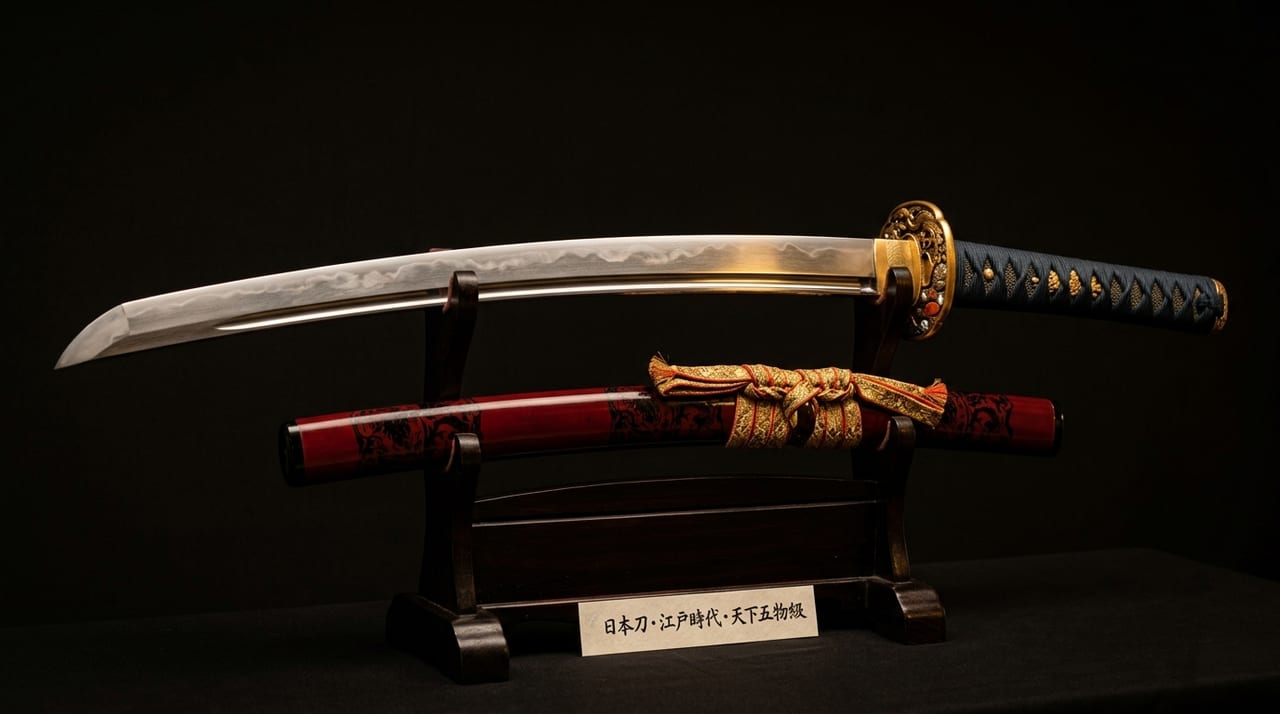
In the history of Japanese swords, the period from Keicho (1596-1615) to Genroku (1688-1704) is classified as "Shintō" (new swords). Among these, the Kanbun era (1661-1673) is spoken of especially by the name "Kanbun Shintō" as a period when major transformations occurred in sword shape, hamon, and jihada.
Behind this transformation lay major political and social shifts. The age of warfare came to an end, and samurai moved away from actual combat, taking on roles as "samurai of peace," serving as administrators and managers. The sword, too, changed character from a tool of battle to a samurai's "status symbol" and "formal attire," and as a result, sword shape shifted its center of gravity from function-first to aesthetics-first.
Even today, from the perspective of appreciating and collecting swords, understanding this historical periodization is significant. This is because depending on whether a particular sword displays the "form of the Keicho-Genna period" or the "form of the Kanbun period," one can infer the samurai's way of life and patterns of demand underlying its creation, and the depth of appreciation changes significantly.
The Revolution in Sword Shape—From the Genki-Tensho Style to the Kanbun Style
Swords from the Keicho-Genna period retained strong design elements with late Sengoku battles in mind, characterized by a large difference between base width and tip width, and a relatively broad, heavy blade. In contrast, Kanbun Shintō shows the following changes.
Narrowing of blade width: The difference between base width and tip width becomes smaller (the tip width approaches the base width), and the entire sword appears slender. Extension of the kissaki: A shift from the traditional small kissaki and medium kissaki to the "large kissaki (ō-kissaki)." With the extension of the kissaki, the center of gravity moved forward, creating a design that enhanced the cutting power of a single stroke. Change in curve: A transition from mid-curve to base-curve is observed, approaching a shape suited to quick drawing and sword-drawing techniques.
These changes were not mere trends, but rather functional evolution responding to the lifestyle of samurai in mid-Edo period—where walking iaijutsu and sword-drawing techniques became dominant over mounted combat and grappling. When actually holding and appreciating a sword, simply comparing three points—the ratio of base width to tip width, the length and shape of the kissaki, and where the center of the curve lies—allows one to roughly discern which era's style a particular sword is closest to.
Representative Bladesmiths of Kanbun Shintō—Development in Edo, Osaka, and Provinces
Among the bladesmiths who established the Kanbun Shintō style, particularly renowned is Kotetsu of Edo, whose full name was Nagasone Kotetsu Okinori. Kotetsu, said to have originally been an armor maker, changed careers to sword-making in his fifties and established his own distinctive sword form. His hamon patterns, called "Kotetsu's random blade," featuring gunome and ko-midare patterns, and the dense, rich quality of his jihada were highly praised, making him immensely popular among Edo's samurai class. It is said that during the late Edo period, Kondō Isami, commander of the Shinsengumi, was fond of Kotetsu's swords, a legacy that has been passed down to posterity.
In Osaka, Tsuda Echizen no Kami Sukehiro created the "tōranba" hamon. The complex hamon pattern, resembling waves layering upon each other, is among the most ornate and complex within Kanbun Shintō, and is said to reflect the aesthetic sensibility of Osaka merchant culture.
In the provinces, "Dewa no Kami Yoshitsugu," based in the Shonai domain of Dewa, is known. As an example of the Kanbun style, which spread nationwide, being reinterpreted at a local level and fused with regionally unique sword culture, this illustrates the widespread adoption of Kanbun Shintō. While the works of these bladesmiths from Edo, Osaka, and the provinces show stylistic differences, they all share in common the skeletal framework of Kanbun Shintō: narrow blade width, large kissaki, and base-curve. Even though the signatures and hamon patterns differ from workshop to workshop, the fact that a shared temporal language emerges in the "skeletal" aspect of sword shape serves as a key to understanding Kanbun Shintō.
Transformation of Sword Aesthetic in Samurai Society—The Importance of "Koshirae" and "Signatures"
From the Kanbun era onward, significant changes occurred in samurai attitudes toward swords. The social and aesthetic context of "who forged it (the signature)" and "what kind of koshirae does it have" began to surpass the functional value of "how well does it cut." The Tokugawa shogun family and high-ranking samurai of the various domains established the practice of exchanging swords bearing the signatures of master craftsmen as gifts and offerings, and the sword became a diplomatic tool that visualized "authority, relationships, and formality."
The selection of the "otemoto-katana" (sword worn at the shogun's side) involved sword magistrates and heads of aesthetic affairs, and refined judgment regarding aesthetic appraisal came to be demanded as a mark of samurai cultivation. This shift in values also affected the status of sword-makers. The status of sword-makers as artists and craftsmen rose relatively, and examples of influential bladesmiths becoming exclusive to domains or receiving honorary titles from the shogunate family increased. The idea that signatures and provenance determine a sword's value lies on a continuum with the value system of samurai society from the Kanbun era onward, and connects with the fundamental perspective of modern sword appreciation and collecting.
The Influence of Kanbun Shintō on Contemporary Sword Appreciation
In contemporary sword appraisal, Kanbun Shintō is highly valued as the "perfected form of Shintō." In particular, works by Kotetsu and Sukehiro form the core of collections in museums and galleries both domestically and internationally, and maintain high market values second only to kotou (swords from the Heian to Muromachi periods).
Furthermore, the Kanbun Shintō sword form—characterized by a slender blade, large kissaki, and mid-curve—has exerted great influence on contemporary swords (those forged from the Showa period onward), and most modern swords displayed at new master-sword exhibitions bear designs conscious of the Kanbun style. The fact that this style, established in the early Edo period, has been transmitted down to the present as one of the "ideal Japanese sword forms" demonstrates how fundamental the sword transformation of the Kanbun era was.
Key Perspectives for Appreciating and Collecting Kanbun Shintō
When actually holding and appreciating Kanbun Shintō swords or considering purchase, verifying the following points will deepen understanding.
- The three elements of sword shape: the difference between base width and tip width, the length of the kissaki, and the position of the curve. Comparing these three points serves as a key to judging how closely a particular sword adheres to the Kanbun Shintō style.
- The quality of jihada and hamon: As exemplified by Kotetsu and Sukehiro, each bladesmith of the Kanbun Shintō period possessed distinctive characteristics in jihada and hamon. Beyond mere signatures, careful observation of the quality of the jihada and edge is fundamental to appreciation.
- Provenance and authentication: Just as samurai society from the Kanbun era onward valued signatures and provenance, in contemporary appreciation and collecting, confirming the era and maker through authentication by specialist organizations provides the foundation for confidently engaging with swords.
By focusing on both the "form" aspect of changes in sword shape and the "context" aspect of signatures, koshirae, and provenance, one should be able to understand the Kanbun Shintō era style more comprehensively.