Tokugawa Ieyasu's Sword Policy: The Reorganization of Swordsmiths and the Tenka Omono Collection in Early Edo
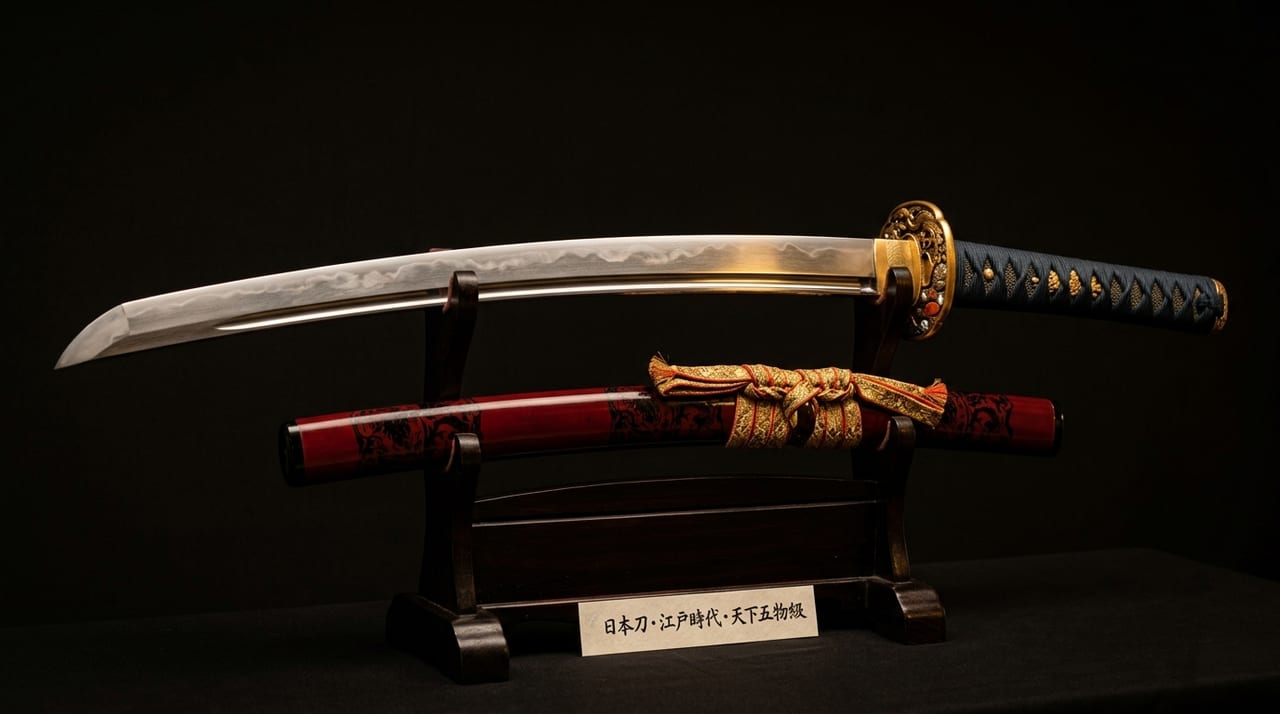 * Image is for illustrative purposes only.
Table of Contents
Tokugawa Ieyasu (徳川家康), who won the Battle of Sekigahara in 1600 (Keichō 5) and became Shogun in 1603 (Keichō 8), laid the foundation for the Edo shogunate that would last 265 years. However, it is not widely known that Ieyasu was not only a "political genius" but also a "major policy architect for Japanese swords." This article examines how Tokugawa Ieyasu's sword policies—the recruitment of sword makers to Edo, the official appointment of the Honami family, and the collection of renowned blades—shaped the sword order of the Edo period.
Ieyasu's Passion for Swords—The Reality of Collection and Appreciation
Tokugawa Ieyasu's interest in swords went beyond mere practical interest as a military commander. Multiple historical sources confirm that throughout his life Ieyasu actively collected renowned blades and maintained a deep interest in sword appraisal.
The Sunpu-ki (records from Ieyasu's final years at Sumpu Castle) contains numerous descriptions of Ieyasu conducting sword appraisal and appreciation as a daily activity. Ieyasu repeatedly summoned Honami Kōtoku to Sumpu to seek his opinions on sword appraisal. Honami Kōtoku was the foremost sword appraiser of his time, and his close relationship with Ieyasu became the foundation for the long-term relationship between the Tokugawa family and the Honami family.
Among the swords Ieyasu collected, particularly renowned are those called "tenka gomotsu" (treasures of the realm), supreme first-rate treasures. After the collapse of the Toyotomi regime, many of the renowned blades owned by Oda Nobunaga and Toyotomi Hideyoshi passed into Tokugawa Ieyasu's hands. Historical sources such as the Tōsei Taihei-ki contain descriptions of Ieyasu acquiring numerous renowned blades when he confiscated the treasures of the Toyotomi family.
The Official Appointment of the Honami Family—Institutionalizing the Shogunate's Sword Appraisal Authority
One of the most institutionally important decisions in Tokugawa Ieyasu's sword policy was the "official appointment of the Honami family." The Honami family had been a professional group specializing in sword polishing, appraisal, and maintenance (jōshiki—care work) since the Muromachi period, but Ieyasu positioned this family as the official sword authority of the Edo shogunate.
The public functions of the Honami family can be divided into three major categories.
- Sword appraisal and issuance of origami (certificates)—The "origami (certificates of appraisal)" issued by the Honami family were documents that officially guaranteed a sword's provenance, maker, and value, serving as "authoritative certificates" in Edo-period sword transactions.
- Sword polishing and management for the shogunal and daimyo families—Polishing and maintenance of swords for the shogunal family, the three great houses, and other top-ranking warrior houses became the exclusive responsibility of the Honami family.
- Appraisal assistance for tribute swords—When daimyo presented swords to the shogun, the Honami family took on the role of appraising their quality and value and reporting to the shogun.
Through this official appointment of the Honami family, sword appraisal in the Edo period became "systematized and bureaucratized." The Honami family's "origami" functioned not as merely one appraiser's opinion but as official evaluation recognized by the shogunate. This became the spiritual predecessor to the later appraisal system of the Nippon Bijutsu Tōken Hozon Kyōkai (NBTHK).
Recruitment of Sword Makers to Edo and the "Official Sword Maker" System
Another important sword policy of Tokugawa Ieyasu was the "recruitment of excellent sword makers to Edo and Sumpu." Ieyasu called on renowned sword makers from throughout the country to relocate to Edo or Sumpu, placing them under shogunal patronage as "official sword makers."
As a representative of recruited sword makers, Echizen Yasutsugu can be cited. Yasutsugu was a sword maker from Shimosaka, Sakata District, Ōmi Province (present-day Nagahama, Shiga Prefecture), who worked in Echizen Province before being recognized by Tokugawa Ieyasu and summoned to Edo. He was granted the character "Yasu" (康) from Ieyasu's own name and was permitted to take the name "Echizen Yasutsugu"—this was the highest level of honor a lord could bestow on a retainer by giving a character from his own name. Yasutsugu served as official sword maker for the Tokugawa shogunal family and established a long-term sword maker family line that was recognized by later shoguns.
Moreover, the disciples of Horikawa Kunihiro also produced numerous sword makers who were active in Edo and Sumpu during Ieyasu's time. Kunihiro himself had a track record of providing swords to Toyotomi Hideyoshi and was recognized as a top-tier sword maker meeting the demands of the realm's rulers.
The shogunate's "official sword maker system" later spread to individual domains, and as each domain established its own "domain official sword makers," a foundation for a nationwide sword maker protection system was formed. This supported both local diversity in sword-making techniques and the maintenance of standards throughout the Edo period.
Management of Tenka Gomotsu—Shogunal Authority and Renowned Blades
The "tenka gomotsu" that Ieyasu collected and managed functioned not merely as a private collection but as a political symbol demonstrating the authority of Tokugawa rule.
As a particularly important tenka gomotsu, Dōjigiri Yasutsuna can be cited. This sword is a work of Yasutsuna, a renowned master craftsman of the Heian period, and carries the legend of being "the sword with which Minamoto no Yorimitsu slew the demon Shuten Dōji." Counted as one of the "Five Swords Under Heaven" since the Muromachi period, it is a supreme first-rate renowned blade. By acquiring it, Ieyasu made visible his position as "one who rules the symbols of Japan's martial spirit."
The ownership and management of such renowned swords was inherited by subsequent shoguns. The second shogun Hidetada and third shogun Iemitsu also continued sword policies, and the "list of shogunal swords" was maintained and updated from generation to generation. Many of the renowned blades managed by the shogunal family are currently housed in the Tokyo National Museum, where they continue to exist in forms viewable by modern people.
The Buke Shohatto and Sword Regulation—Control of Daimyo Sword Holdings
Ieyasu's sword policy also had a "regulatory" aspect. The "Buke Shohatto (Laws for the Military Houses)" issued in 1615 (Genna 1) contained provisions limiting daimyo military power, and the shogunate's effective control authority over sword manufacturing and distribution was established.
Specifically, even when daimyo possessed "official sword makers," they were placed under shogunal approval and oversight. Moreover, "large-scale export of swords to other domains" effectively became a regulated matter, and the sword market was integrated into an order managed by the shogunate.
This regulatory policy promoted a transition from the "competitive free-market sword trade" of the Sengoku period to an "orderly sword industry under shogunal management." Sword makers gained stable positions as official retainers of individual domains, while the opportunities for independent sword makers to freely participate in the market became more limited.
Conclusion—The "Edo Sword Order" Designed by Ieyasu
Tokugawa Ieyasu's sword policies—the official appointment of the Honami family, recruitment of sword makers, management of tenka gomotsu, and regulation through the Buke Shohatto—designed the sword order of the Edo period that lasted 265 years.
Under this order, swords underwent a complete transformation from "weapons" to "ceremonial regalia and artworks demonstrating samurai status." With the establishment of an appraisal system, "objective evaluation of authenticity and quality" became possible, and a stable foundation for sword market development was formed. Many of the mechanisms for modern Japanese sword appraisal, preservation, and distribution exist as extensions of the institutional framework designed during Ieyasu's era.
When appreciating swords from the Edo period, being aware of the policy design by Ieyasu in the background should deepen your understanding of questions such as "Why does this sword have a Honami origami?" and "Why is this sword maker an official retainer of XX domain?"