Ashikaga Takauji's Kenmu Shikimoku and Sword Policy — The Foundations of Warrior-Class Sword Order in the Early Muromachi Shogunate and the Emergence of the Goban Kaji System
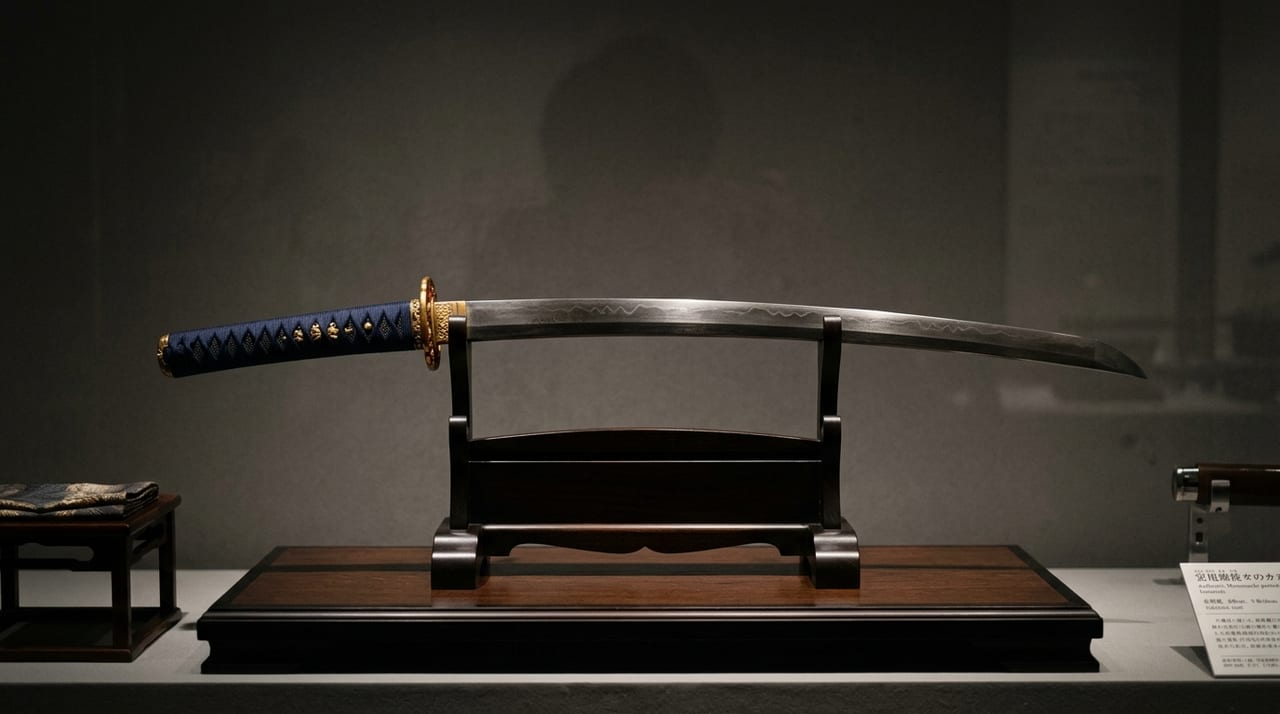 * Image is for illustrative purposes only.
Table of Contents
The Collapse of the Kenmu Restoration and the Rise of Ashikaga Takauji
Emperor Go-Daigo, who destroyed the Kamakura shogunate in 1333, launched the "Kenmu Restoration," but unable to meet the expectations of the warrior class, it moved toward collapse in just approximately two and a half years. In 1336, Ashikaga Takauji enthroned Emperor Kōmyō to establish the foundations of the Muromachi shogunate, and in the same year promulgated the "Kenmu Shikimoku." This formulary was the shogunate's fundamental legal code, establishing norms for warrior society, and its provisions relating to swords also carry important significance.
The promulgation of the Kenmu Shikimoku was not merely a declaration of governance norms. In an era when sword production had surged dramatically following the turmoil of the Nanbokuchō period, it was also an expression of warrior authority's will to manage the production, distribution, and wearing of swords.
As a warrior government's attempt to demonstrate order through written law, the Kenmu Shikimoku was a document that symbolized the character of the early Muromachi shogunate. To unite the regional warrior bands, mechanisms were needed to demonstrate not only military strength but also propriety and norms, and swords as weapons would also come to be incorporated into that system of order.
The Oversupply of Swords During the Nanbokuchō Upheaval
The Nanbokuchō period (1336–1392), extending until Ashikaga Takauji established his regime, was one of history's most prolific eras of sword mass production. Lengthy ōdachi and nodachi became widespread, and tōkō (swordsmiths) of Bizen, Sōshū, and Mino continued to increase production to meet battlefield demand. The mass supply of this era also affected sword quality, to the extent that the assessment "the oversized and crude swords of the Nanbokuchō period" became established in later generations.
For Takauji's shogunate, how to manage this oversupply of swords was a governance challenge. As the warfare moved toward a conclusion, regulating the wearing of swords and grasping and controlling skilled tōshō (swordsmiths) became urgent priorities.
Against this backdrop of mass production, there is considerable variation in quality and preservation even among swords from the same Nanbokuchō period. Many tachi and ōdachi from the Nanbokuchō period that survive today have undergone suriage (the recutting of the nakago (tang) to a shorter length) in later generations, and works that survive with their original nakago intact are considered precious for that reason alone.
The Place of Weapons and Swords in the Kenmu Shikimoku
While sword regulations are not explicitly set out in the direct articles of the Kenmu Shikimoku, the formulary's principles — "the establishment of warrior propriety and order" — also spread to sword culture. After the promulgation of the formulary, the shogunate gradually put in place rules for warriors' manner of wearing swords, accumulating regulations prohibiting sword-wearing in specific places and situations.
At Takauji's stage things were still being put in order, but records remain showing that "restrictions on wearing swords in the city" in Kyoto and "prohibition of sword use within shrines and temples" were being aimed at. This can be regarded as one of the starting points in the long history of sword control that would later lead to the "sword hunt" (katanagari) of Toyotomi Hideyoshi.
The seeds of sword-wearing regulations would be carried on in the high notices (kōsatsu) and town ordinances (machifure) the later Muromachi shogunate issued repeatedly. The stance of seeking to control the carrying and use of swords in Kyoto, the shogun's own backyard, was the very process by which the warrior government aimed at a monopoly on force, and can be positioned as a lineage extending all the way to the Edo-period concept of sword-bearing status.
The Takauji Regime and the Beginning of Tōkō Protection
Among the sword policies Takauji carried out, noteworthy is the movement to protect and utilize certain tōkō as the shogunate's "goyo" (official purveyors). Records from the Nanbokuchō period contain cases of prominent tōkō from Bizen and Sōshū receiving commissions from the Takauji regime to forge swords. This can be understood as the emergence of what would become the "Goban Kaji system" (the arrangement by which the shogunal family summoned tōkō to Kyoto to produce official swords).
Although the Goban Kaji system would not be formally established as a system until the era of the third shogun, Ashikaga Yoshimitsu, and beyond, the concept underlying it — "the shogunate's absorption and preferential treatment of tōkō" — had already begun to take root during the Takauji regime's era. Because swords were symbols of martial prowess, and for those in power to possess and present fine swords as gifts was the very expression of political authority.
The Goban Kaji system was not merely a matter of providing stipends to tōkō, but was also a mechanism for having tōkō embody the style and quality the shogunal family sought. Tōkō who had gained the shogun's trust received demand and honor under the name of goyo, while the shogunate had the advantage of being able to use fine swords as political gifts. Although it had not yet been established as a formal system in Takauji's era, the relationship itself in which prominent tōkō and warrior authority were individually connected is considered to have already been visible from this period.
Takauji's Own View of Swords and Surviving Examples
Ashikaga Takauji is said to have personally held a deep interest in swords. Among surviving documents are records of Takauji commissioning certain tōkō to forge swords and of his presenting fine swords to shrines and temples. Given that the Muromachi shogunate's power base depended on the bonds of the warrior class mediated through swords, this was a natural interest.
Moreover, the "Portrait of a Mounted Warrior" known as a portrait of Takauji depicts a sword, showing how much the sword was a tool of self-expression for warriors of that era.
The act of a warrior household head directly commissioning a tōkō to forge a sword, or presenting swords to shrines and temples, went beyond mere personal interest and carried the ritual significance of demonstrating the legitimacy of authority. To pray for the protection of gods and buddhas by offering fine swords while simultaneously demonstrating one's martial prowess and piety to all — the anecdotes surrounding Takauji and swords symbolize the position of swords in the warrior class of this era.
The Influence of the Early Muromachi Sword Order on Later Generations
The "order of sword production, distribution, and wearing centered on the shogunate" that Takauji sought to establish was gradually institutionalized as the shogunate passed from Ashikaga Yoshimitsu to Yoshimochi to Yoshinori. The development of the Goban Kaji system, the collection of fine swords as tenka gyobutsu, and the regulation of sword-wearing in the city — all of these were the flowering of the warrior sword policies that had taken root in Takauji's era.
How to control the swords mass-produced during the war-torn Nanbokuchō period and reorganize sword culture within a peaceful order — the regime of the early Muromachi shogunate led by Ashikaga Takauji was the first to confront this challenge head-on. That struggle went on to form the institutional foundations of Japan's later sword culture.
Perspectives for Appreciating and Collecting Swords from the Nanbokuchō and Early Muromachi Periods
Today, when appreciating or collecting swords that have been attributed to the Nanbokuchō period or the early Muromachi period, several perspectives are useful.
- Check the condition of the nakago (tang): As mentioned above, many ōdachi from this era have undergone suriage in later generations, and works that survive with their original nakago intact are considered all the more rare.
- Check the provenance and history of transmission: Swords whose history of having been presented to shrines and temples or passed down as family heirlooms of warrior households can be verified possess historical background that transcends mere works of art.
- Check the contents of the kanteisho (appraisal certificate): The identification of era and tōkō is based on assessment by specialist institutions, and the kanteisho issued by bodies such as NBTHK (Society for the Preservation of Japanese Art Swords) contain opinions on era, province, and tōkō.
These perspectives are universally useful both for understanding the turning point in sword history that was the Nanbokuchō and early Muromachi periods, and for actually engaging with a single sword in person.