Sōshū-den vs. Bizen-den — A Complete Comparison of the Two Greatest Schools of the Japanese Sword
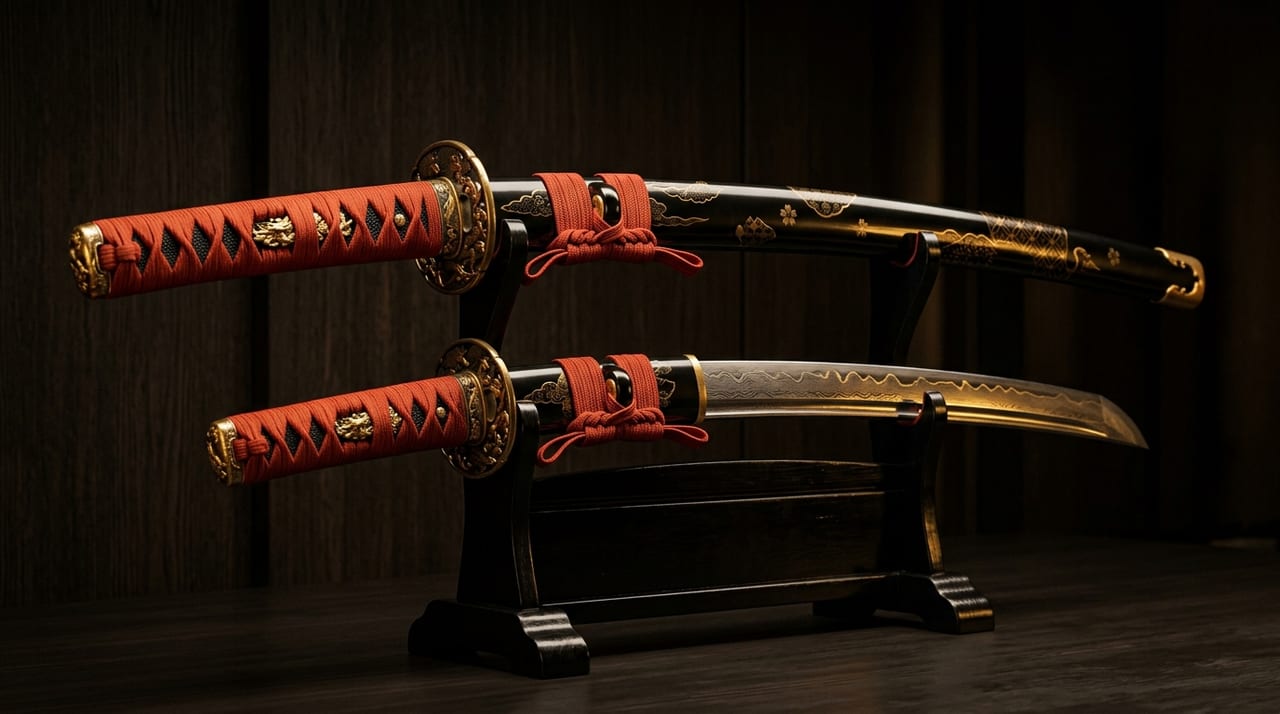 * Image is for illustrative purposes only.
Table of Contents
Why the Comparison Between Sōshū-den and Bizen-den Matters
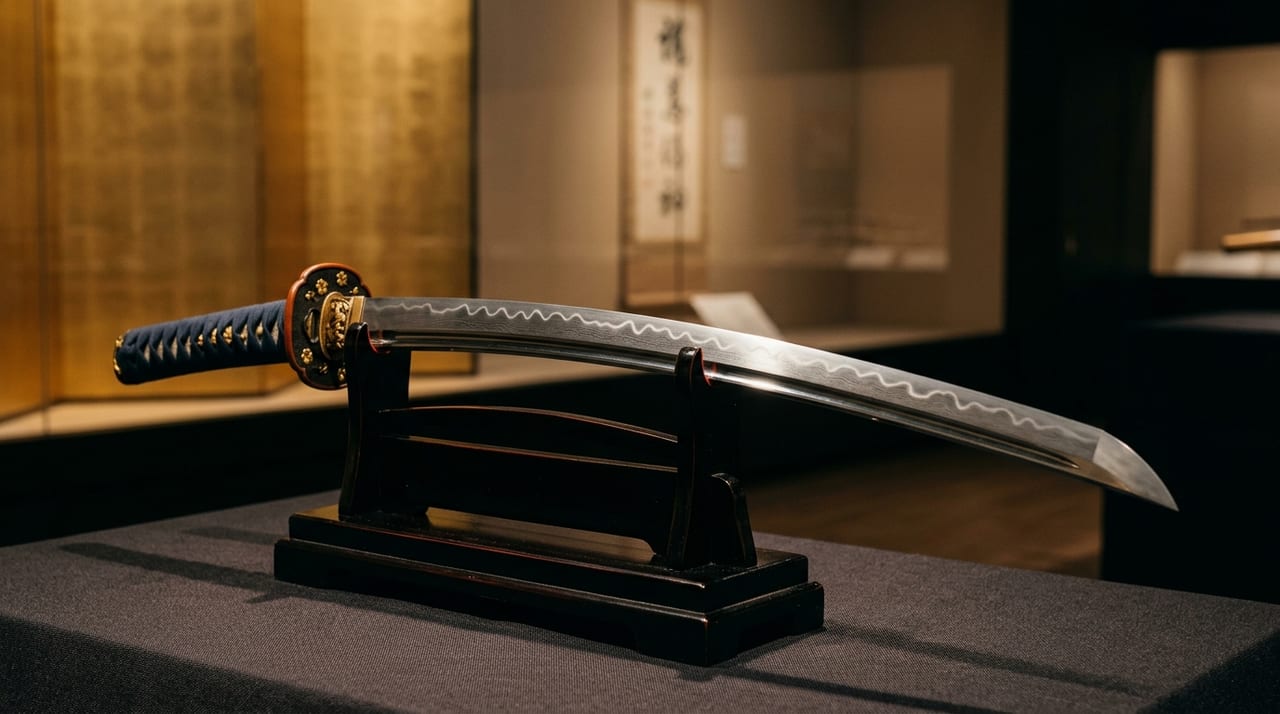
The Japanese sword has five grand traditions known as the Gokaden (Yamato, Yamashiro, Bizen, Sōshū, and Mino), and among them Sōshū-den and Bizen-den are the two schools that embody the most contrasting aesthetics.
Sōshū-den is the "sword of war," born in Kamakura, the military heart of the Kamakura shogunate. Bizen-den is the sword of "harmony between quantity and quality," centered on Osafune in Okayama. A deep understanding of both traditions is indispensable for grasping the aesthetic standards of the Japanese sword as a whole.
Comparison of Jigane (Steel of the Blade Surface)
Jigane is the texture of the steel in the flat of the blade, and it is the first thing one examines when appreciating a sword.
Jigane of Sōshū-den:
- Characterized by nagare-itame, in which large o-itame flows broadly
- Nie appears abundantly in the jigane, with silver-glinting granular crystals scattered across the entire surface
- A lightning-like pattern known as chikei frequently appears
- The overall impression is powerful, with a bold, unpretentious beauty
- The jigane tends toward a darkish hue, conveying a wild energy
Jigane of Bizen-den:
- Characterized by a "closely packed hada," in which fine ko-itame to medium itame is densely and precisely compacted
- A distinctive, lustrous jigane known as Bizen-hada is formed
- Fine undulations float in the clear jigane, giving an impression like an intricate textile
- The color of the jigane tends toward a brownish, warm hue, with a welcoming beauty
- Utsuri is a hallmark of Bizen-den: a faint, haze-like white shadow appears alongside the hamon
In summary: If Sōshū-den represents "boldness of power and nie," then Bizen-den represents "the refinement of intricate hada and utsuri."
Comparison of Hamon (Temper Line)
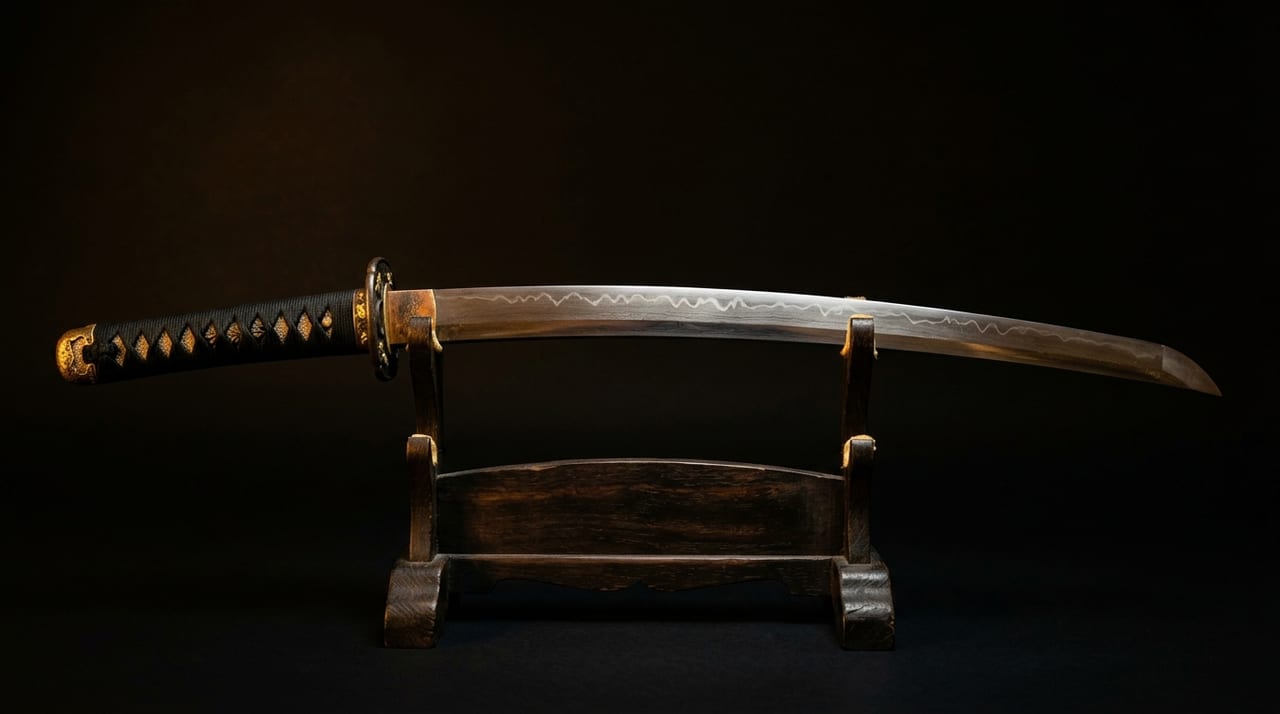
The hamon is the most visually striking element of the Japanese sword, and the part where the character of a school is most clearly expressed.
Hamon of Sōshū-den:
- O-midare, hitatsura, and nie-deki are representative styles
- Masamune's "Sōshū-midare" features a hamon that waves broadly, with nie flying violently in a wild and spectacular display
- The hamon and the ji blend into one, with nie causing the outline of the hamon to dissolve ambiguously
- The yaki-haba is wide, and the hamon may extend almost to the center of the blade
- The hamon may be accompanied by "activity," tobihi, and muneyaki
Hamon of Bizen-den:
- Chōji, chōji-midare, and gunome are representative styles
- The chōji hamon has shapes resembling the chōji flower repeated in succession, with an elegant, well-balanced beauty
- Based on nioi-deki, the outline of the hamon is clear and delicate
- The yaki-haba is more consistent than in Sōshū-den, forming a distinctive aesthetic of "orderly irregularity"
- The "movement" of the hamon has a calculated rhythm, with a musical order that draws the viewer in
In summary: If Sōshū-den is "an unbridled and fierce storm of nie," then Bizen-den is "an elegant and ordered dance of chōji."
Comparison of Shape (Sugata)
The overall shape (sugata) of the sword also differs between the two traditions.
Sugata of Sōshū-den:
- Sōshū-den of the Kamakura period features many large, imposing tachi
- Sōshū-den of the Nanbokuchō period frequently displays extremely large forms such as ōdachi and long-bladed tachi
- The kissaki is large (o-kissaki), giving a powerful impression
- The kasane is thick, emphasizing the character of a sturdy combat sword
Sugata of Bizen-den:
- Bizen-den of the tachi period features many elegant tachi with deep koshi-zori
- The balance of nagasa and mihaba is well proportioned, forming the archetype of "the Japanese sword as a Japanese sword"
- The kissaki is often of the ikubi to medium type, modest and refined
- The kasane is moderate, giving a sense of lightness that combines practicality and beauty
Comparison of Representative Swordsmiths
Representative tōkō of Sōshū-den:
| Tōkō | Period | Characteristics |
|---|---|---|
| Shintōgo Kunimitsu | Mid-Kamakura | Established the foundations of Sōshū-den |
| Masamune | Late Kamakura | The pinnacle of Sōshū-den; one of the Tenka-sansaku |
| Sadamune | Late Kamakura – Nanbokuchō | Said to be Masamune's son (or adopted son); graceful Sōshū-den |
| Hiromitsu | Nanbokuchō | Perfected the o-midare of Sōshū-den |
| Akihiro | Nanbokuchō | Master of hitatsura |
Representative tōkō of Bizen-den:
| Tōkō | Period | Characteristics |
|---|---|---|
| Mitsutada | Mid-Kamakura | Founder of the Bizen Osafune school |
| Nagamitsu | Mid-Kamakura | Son of Mitsutada; master of chōji-midare |
| Kagemitsu | Late Kamakura | The pinnacle of Kamakura Bizen alongside Motoshige |
| Morimitsu | Early Muromachi | Representative of Ōei Bizen |
| Sukesada | Muromachi – Sengoku | Mass-produced practical swords of the Sengoku period |
Comparison in Terms of Connoisseurship and Collecting
Value trends:
- The finest works of Sōshū-den, with Masamune at the pinnacle, command the highest prices in the world for Japanese swords
- Bizen-den does not reach the peak individual prices of Masamune, but a larger number survive and the market supply is plentiful
- A "fine Bizen" is in many cases worth more than an "ordinary Sōshū"
Difficulty of attribution:
- The heavily nie-laden hamon of Sōshū-den is difficult to fake, and misattributions in authentication are uncommon
- In Bizen-den, a vast number of tōkō of the Osafune school produced similar works, and spurious mei and mumei examples are numerous
Accessibility for newcomers:
- Sōshū-den pieces are scarce in the market and expensive, making them unsuitable as a starting point for collectors
- Bizen-den (especially mumei swords from the Muromachi to Sengoku period) are available from relatively affordable price ranges
Both traditions embody the opposing poles of the beauty of the Japanese sword, and the true starting point for genuine appreciation of nihonto lies not in asking which is "superior" but in deeply understanding and savoring the individuality of each.