A Guide to Real Swords from Touken Ranbu—The History and Appreciation Points of Mikazuki Munechika, Tsurumaru Kuninaga, and Yamanbagiri Kunihiro
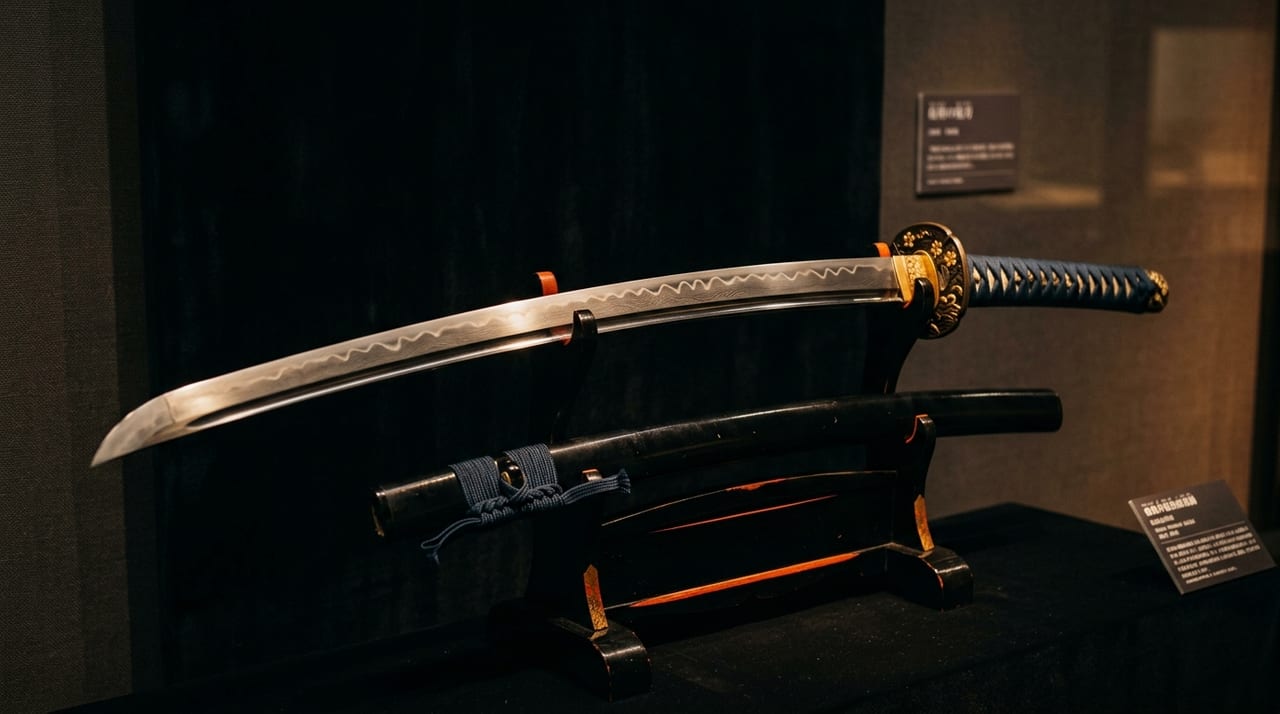 * Image is for illustrative purposes only.
Table of Contents
"Touken Ranbu" (Sword Lovers Dancing) is a browser game co-developed by DMM GAMES and Nitroplus in 2015, featuring personified Japanese sword characters called "touken danshi" (sword warriors). The game's explosive popularity quickly spread interest in "real famous swords"—previously known only to sword enthusiasts—among younger generations, women, and overseas fans. In this article, we select particularly famous real swords that appear in the game and explain their provenance, current location, and viewing points from an expert's perspective.
Mikazuki Munechika—The Pinnacle of the Five Heavenly Swords
Mikazuki Munechika is a tachi that has been treasured since ancient times as one of the "Tenka Goken" (Five Heavenly Swords). It is attributed to Sanjo Munechika, a master swordsmith of the Heian period. The name "Mikazuki" (crescent moon) comes from the numerous crescent-shaped landscapes called uchino-ke visible on the blade.
The form follows the Heian style with a slender blade, modest curvature, and small kissaki, with a blade length of approximately 80 cm. The jihada is densely packed with small itame and is finely worked; the hamon is based on a slender suguha with uchino-ke appearing in places. In the Edo period, it became a treasure of the Tokugawa shogunate, and is currently a national treasure held by the Tokyo National Museum.
In the game, it is affectionately known as the "old master sword," reflecting its status as one of the oldest surviving famous swords. The actual blade is rarely on permanent display throughout the year and is often shown at special sword exhibitions, so it is advisable to check the Tokyo National Museum's display schedule in advance.
Tsurumaru Kuninaga—The Phantom Return Blade
Tsurumaru Kuninaga is a tachi attributed to Gojo Kuninaga, a Yamashiro swordsmith of the late Heian period, characterized by a bright white jihada and large choji hamon. With a blade length of approximately 78 cm, the slender and elegant form is said to have been named "Tsurumaru" (crane circle) because it appears to dance like a crane.
What makes this sword noteworthy is its history of disappearing after the Meiji Restoration upheaval and being called the "phantom famous sword" for years. Following its appearance in Touken Ranbu and as fans' voices grew asking to see the real blade, the Imperial Household Agency officially announced its holdings in 2019. Its display at the special exhibition "Imperial Treasures" that year garnered attention from many fans.
The most striking viewing points are "the beauty of the bright white jihada" and "the lively movement of the choji hamon." The finely packed itame characteristic of the Rai school and the nioiguchi with little nie possess an elegant beauty that stands in sharp contrast to the roughness of Soshu tradition.
Yamamba-giri Kunihiro—The Copy and the Original
Yamamba-giri Kunihiro is a katana forged by swordsmith Horikawa Kunihiro in the 18th year of Tensho (1590), with a blade length of approximately 70 cm. It was originally created as a "copy" of an old famous sword called "Yamamba-giri" (from the Rai or Soshu tradition)—in other words, it was made as an imitation of a famous sword.
Its provenance is unique. The original sword is missing and its survival has not been confirmed, making it known as a paradoxical existence where "the copy became more famous than the original." Its maker, Horikawa Kunihiro, was active during the Sengoku and Azuchi-Momoyama periods and established a workshop in Kyoto's Horikawa district as a swordsmith of the Keicho era. Kunihiro's works are highly valued as "pioneers of shintō swords."
It is currently owned by Ashikaga City and housed and displayed at the Ashikaga City Museum of Art (Ashikaga City, Tochigi Prefecture), making it one of the sacred sites for Touken Ranbu fans. The museum regularly displays Yamamba-giri Kunihiro, and viewing points include differences in how nie emerges depending on the direction of the blade face, and Kunihiro's distinctive "angular bōshi" (the hamon within the kissaki).
Yamato-no-kami Yasusada—The Real Battle Blade of the Shinsengumi
Yamato-no-kami Yasusada is a katana made by a swordsmith known as Yamato-no-kami Yasusada from the early to middle Edo period. It is known as the beloved sword of Hijikata Toshizo, vice-commander of the Shinsengumi, and is a standard katana with a blade length of approximately 2 shaku 3 sun (about 70 cm).
Hijikata Toshizo is said to have valued practical "sharpness" and "durability," and Yamato-no-kami Yasusada was chosen as a sword meeting those requirements. Its use in late Edo period combat scenes, including the Ikeda-ya Incident (1864), is documented, and some examples show records of battle wear—chips near the tsuba and polishing wear—as a practical sword.
Existing examples are scattered between private collections and museum holdings, and are sometimes displayed at history museums and special exhibitions related to the late Edo period. Its appearance in Touken Ranbu further increased its fame as "Hijikata's sword," and there is a record of trading prices rising among sword dealers.
Shokudaikiri Mitsutada—A Story of Destruction and Rediscovery
Shokudaikiri Mitsutada is a tachi made by Bizen Osafune Mitsutada, attributed to the Kamakura period. The name "Shokudaikiri" (candlestick cutter) comes from a legend that Date Masamune struck it down along with a lantern when executing a retainer.
The greatest drama of this sword lies in "destruction and rediscovery." It was damaged and lost during the Great Kanto Earthquake (1923), but its survival was confirmed in 2015. It is currently held and being studied by the Tokugawa Museum (Mito City, Ibaraki Prefecture).
This story of "discovery" at roughly the same time as its appearance in Touken Ranbu drew broad attention from fans, media, and researchers. The Tokugawa Museum displays and exhibits it regularly, and when viewing, it is good to note the "small midare hamon mixed with choji characteristic of Mitsutada's work" and "flowing itame jihada."
Practical Guide to Viewing the Real Swords
To summarize the key points for actually viewing the real swords featured in Touken Ranbu, let us first organize the current holdings and viewing points of the five swords introduced so far.
| Sword Name | Current Holder | Viewing Points |
|---|---|---|
| Mikazuki Munechika | Tokyo National Museum | Uchino-ke (crescent-shaped landscape), hamon based on slender suguha |
| Tsurumaru Kuninaga | Imperial Household Agency | Bright white jihada, lively movement of choji hamon |
| Yamamba-giri Kunihiro | Ashikaga City Museum of Art (Ashikaga City-owned) | Differences in nie appearance depending on blade direction, angular bōshi |
| Yamato-no-kami Yasusada | Mixed private and museum holdings | Battle wear such as chips near the tsuba and polishing wear |
| Shokudaikiri Mitsutada | Tokugawa Museum | Small midare hamon mixed with choji, flowing itame jihada |
Permanent Display vs. Special Exhibitions
National treasures and important cultural properties of sword class are limited in their opportunity for permanent display in order to prevent deterioration from light and humidity. It is important to follow sword display information on the official websites of institutions such as the Tokyo National Museum, Tokugawa Museum, and Ashikaga City Museum of Art, and to regularly check their public schedules.
Points to Observe
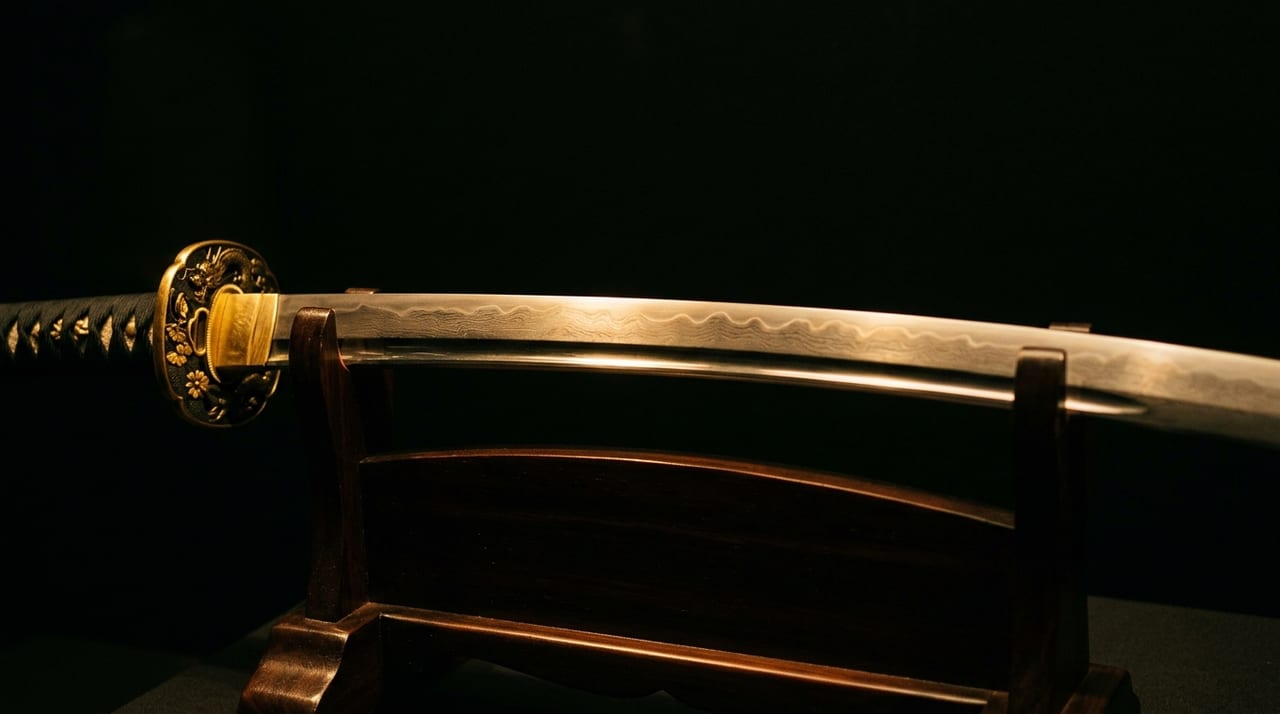
When viewing swords, special attention should be paid to the following four points.
- Jihada skin
- The shape and movement of the hamon
- The state of nie and nioi within the hamon
- The shape of the kissaki
The appearance changes significantly depending on the angle of the display case and the direction of the lighting, so we recommend carefully observing from multiple angles.
Using Exhibition Catalogs and Specialist Magazines
Exhibition catalogs often include high-resolution black and white photographs (oshigata) and are useful for confirming details. Back issues of "Touken Bijutsu" (Sword Art) magazine, issued by the NBTHK (the Society for the Preservation of Japanese Art Swords), also allow reference to detailed research papers on major famous swords.
Conclusion—The Door Games Opened to "Real Swords"
Touken Ranbu has become a gateway where affection for "game characters" deepens into "respect for real famous swords." This is an epochal phenomenon in the history of Japanese sword culture. The emotion of actually seeing a sword you became familiar with in the game at a museum—the experience of "here is the real thing"—promotes a deeper understanding of sword culture than any textbook explanation.
By knowing each sword's provenance, forging method, and current location, viewing in the museum transforms from simple "observation" to "dialogue." Starting with swords known through Touken Ranbu, we hope you will directly experience the beauty and history hidden within these real famous swords. For those interested in swords, please also visit toukenza's online selection.