A Comparison of Japanese Sword Appraisal Organizations — The Role and Reliability of NBTHK, Hon'ami, and Nittoho Tatara
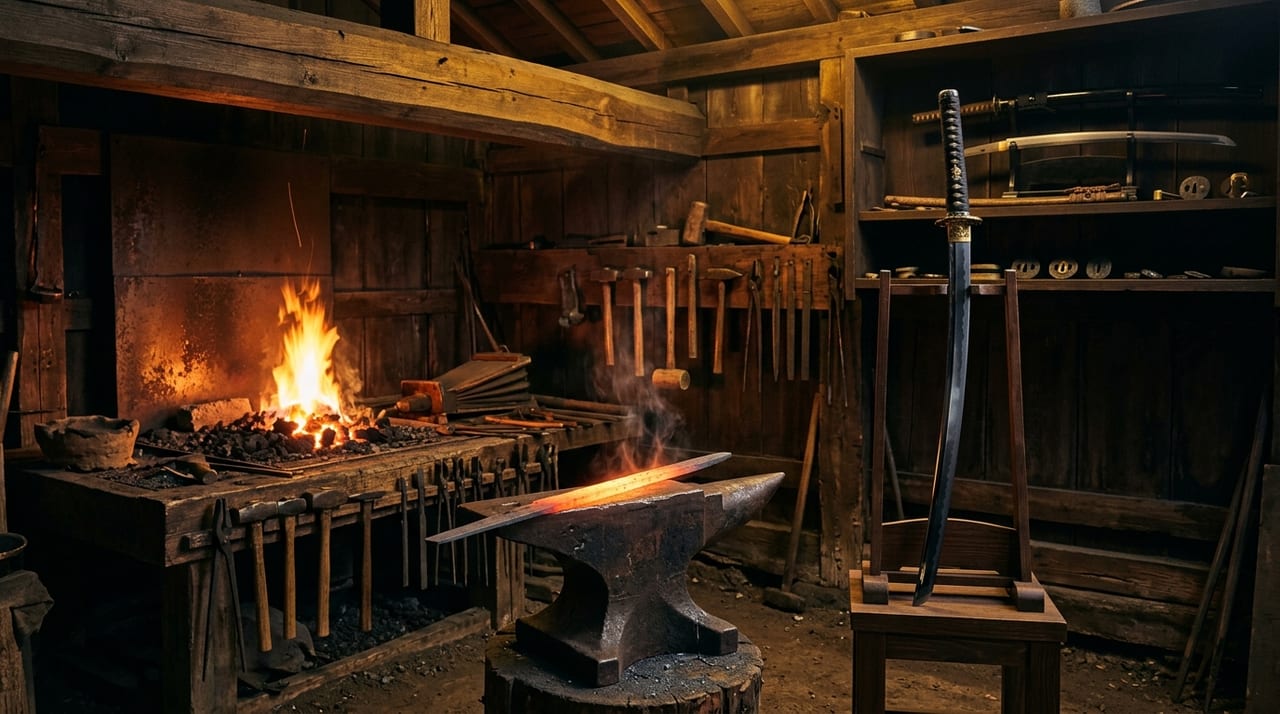 * Image is for illustrative purposes only.
Table of Contents
Why a Kanteisho Determines the Value of a Sword
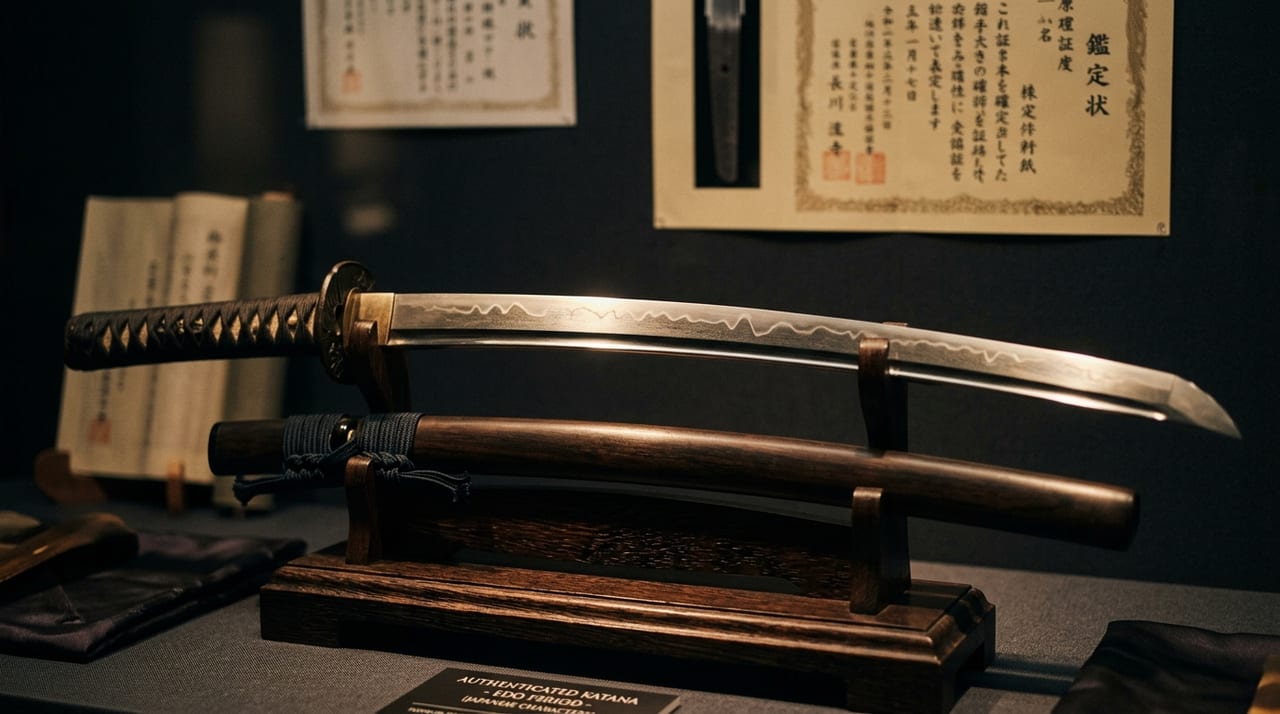
In the world of nihontō, a kanteisho (also called a kantei-jō or origami) is not merely an accessory but a definitive document that objectively certifies the value of a sword. Even for the same sword, the presence or absence of a kanteisho, the issuing organization, and the rank can cause market prices to differ by several times to more than ten times.
There are three reasons a kanteisho is required.
- A nihontō is difficult to assess for authenticity, period, and maker from appearance alone, and an accurate evaluation cannot be made without expert appraisal.
- It functions as a guarantee of trust in overseas export and domestic transactions.
- For the possession of bladed weapons regulated under the Act for Controlling the Possession of Firearms or Swords and Other Such Weapons (Jūtōhō), the combination of a registration certificate and a kanteisho serves as a practical "passport for the sword."
The convergence of these three points allows the kanteisho to function as the institutional infrastructure that underpins the nihontō market.
The NBTHK's Appraisal Ranking System — A Four-Tier Evaluation Structure
The NBTHK (Society for the Preservation of Japanese Art Swords) is the most authoritative nihontō appraisal organization in existence. Since its founding in 1948, it has played a central role in preserving nihontō culture through training craftspeople, conservation activities, and appraisal services.
NBTHK appraisals are divided into four tiers.
| Rank | Characteristics |
|---|---|
| Hozon Tōken | The most basic rank, certifying that a sword is a "genuine nihontō worthy of preservation." It confirms that the sword has not been altered or falsified after the fact and is a true nihontō; the examination fee is relatively low. Examination sessions are held several times a year at locations throughout the country, making this an accessible entry-level rank. |
| Tokubetsu Hozon Tōken | Awarded to works among Hozon Tōken that are of superior quality. The condition is that all three elements — hamon, jigane, and form — are at a high standard, and it is desirable that the maker can be identified. This is the rank that collectors use as a benchmark when considering a purchase, and from this rank upward market value rises markedly. |
| Jūyō Tōken | A high rank awarded only to swords whose quality is on a par with candidates for designation as kokuhō (National Treasure) or jūyō bunkazai (Important Cultural Property). Representative works by renowned tōkō and canonical masterpieces of a school or region are found here. Examinations are limited to once or twice a year, and the panel of examiners is composed of the highest-level specialists. |
| Tokubetsu Jūyō Tōken | The highest designation awarded by the NBTHK, covering only those works that are particularly outstanding even among Jūyō Tōken. It is conferred on swords that, while not designated kokuhō or jūyō bunkazai, are considered to possess equivalent value. The number of designations is only about 1–2% of the total, and the rank enjoys the highest trust from collectors around the world. |
The Hon'ami Family's Appraisals — The Authority and Limits of a 700-Year Trade
The Hon'ami family has practiced sword appraisal as a family profession for over 700 years since the Muromachi period and is Japan's oldest dynasty of sword appraisers. As official appraisers to the Tokugawa shogunate, they took sole charge of appraising, polishing, and registering swords for daimyo throughout the country, issuing appraisal certificates known as origami.
Edo-period "Hon'ami origami" are still highly valued in the antique market today and are prized as documents from which the prices of the time can be read through entries such as "such-and-such number of gold pieces." Today, descendants of the Hon'ami family continue appraisal work and maintain their own independent evaluation system distinct from that of the NBTHK.
However, modern Hon'ami family kanteisho rely largely on the authority of an individual and a single family rather than on an organized examination system. In overseas markets, NBTHK kanteisho are more widely recognized, and in many cases NBTHK certification has become the de facto standard in actual transactions. It is important to evaluate swords with an understanding of both historical authority and modern institutional frameworks.
The Role of Nittoho — Custodian of Cultural Property Preservation
"Nittoho tatara" is a traditional iron-smelting enterprise operated by the NBTHK that produces tamahagane through tatara (traditional smelting) and supplies it to modern tōshō. The "Nihontō Hozonkai (NTHK)" is a separate organization from the NBTHK and is unrelated to Nittoho tatara.
Nittoho tatara produces tamahagane through one smelting operation per year and distributes it to modern tōshō via the NBTHK. In the sense that without this activity tamahagane — the very foundation of traditional nihontō production — would become difficult to obtain, the NBTHK can be said to be an organization that supports the entire sword industry from both the appraisal and materials-supply sides. The continuity of nihontō culture is maintained through the mutual complementarity of these different functions: appraisal and evaluation on one hand, and materials supply on the other.
Practical Guidelines for Choosing a Kanteisho — Perspectives for Buyers and Sellers
- When purchasing as a collector: As a rule, seek swords accompanied by a Tokubetsu Hozon or higher kanteisho. Swords with Jūyō Tōken or Tokubetsu Jūyō Tōken certification command higher prices, but they also tend to hold their value better over long-term ownership. It is also possible to verify the date and issue number of the kanteisho with the NBTHK to confirm it has not been forged.
- When selling as a sword dealer: Trading swords without NBTHK certification is possible, but recommending submission for appraisal in order to ensure transparency of market value is commercially important as a matter of business ethics. Explaining the appraisal costs and examination period (a wait of several months) to the customer in advance leads to long-term trust-building.
- When exporting overseas: The NBTHK's grades are a private appraisal and do not in themselves constitute grounds for export restrictions under the Act on Protection of Cultural Properties. The Agency for Cultural Affairs' antique export examination certificate obtained at the time of export is proof that the item has not been designated as kokuhō or jūyō bunkazai and does not fall under jūyō bijutsuhin (Important Art Object) designation (Agency for Cultural Affairs, "Antique Export Examination Certificate").
Conclusion — The Kanteisho as a Certificate of Trust Connecting Sword and Buyer
A nihontō kanteisho is a "certificate of trust" in which the skill of past craftsmen and the eye of the modern appraiser are united. The NBTHK, the Hon'ami family, and Nittoho tatara each play different roles, supporting the nihontō market along three axes: appraisal, evaluation, and materials supply. For both collectors and dealers, engaging with nihontō on the basis of an accurate understanding of the character of each organization and the meaning of a kanteisho leads to the sound development of the industry as a whole.