From Collector to Sword Dealer — Practical Steps for Enthusiasts Entering the Trade
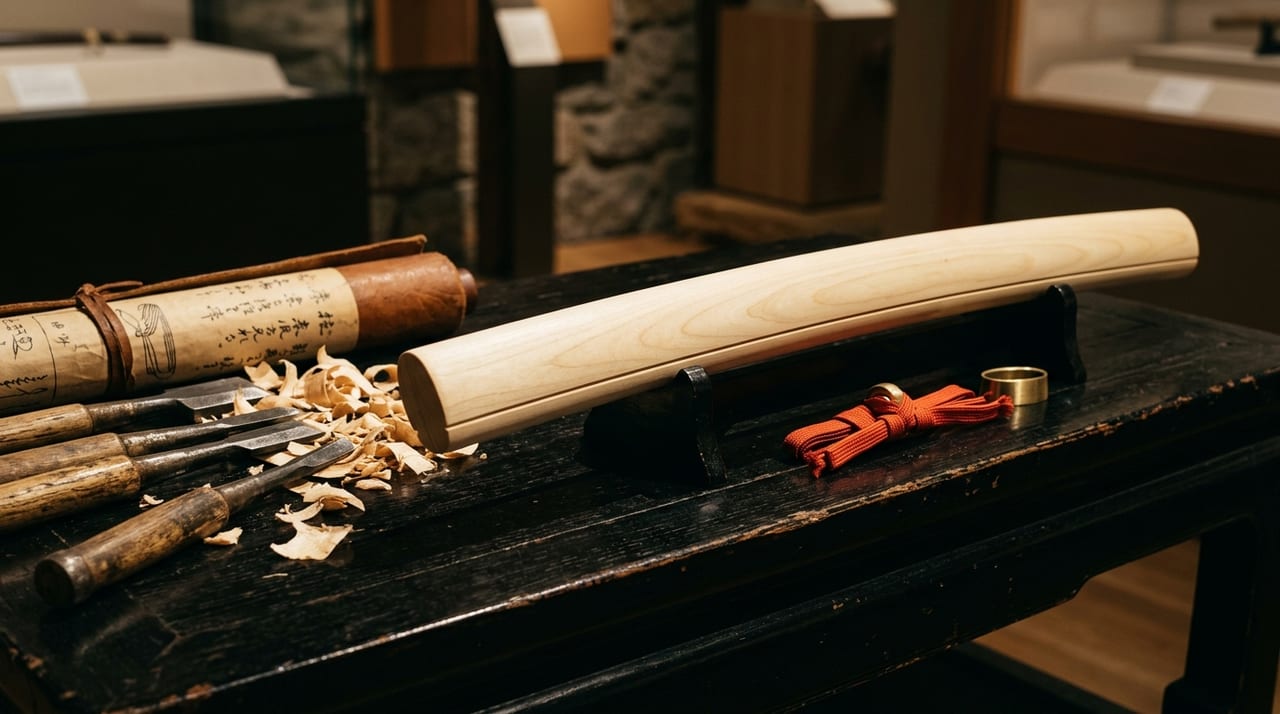 * Image is for illustrative purposes only.
Table of Contents
When a Collector Moves to "the Selling Side"
A collector who has become deeply immersed in the world of nihontō may at some point begin to think, "I want to make a living selling swords myself." The eye for quality cultivated through years of collecting, the connections built within the enthusiast community, and a deep love for swords — all of these are important assets for succeeding as a sword dealer.
However, between buying swords as an enthusiast and trading them as a merchant, there are legal and practical hurdles that must be cleared. Those hurdles are by no means low, but if preparations are made in the right order, they can be steadily overcome. This article explains the practical steps for making the transition from collector to sword dealer, including pitfalls that are easily overlooked.
Step 1: Obtaining a Secondhand Dealer License
To engage in the commercial buying and selling of swords, a secondhand dealer license under the Secondhand Articles Dealer Act is absolutely required. Repeatedly buying and selling swords without one is subject to criminal penalties (imprisonment of up to three years or a fine of up to 1,000,000 yen).
Applications are submitted to the nearest police station via the prefectural Public Safety Commission of one's place of residence. The required documents are as follows.
- Application form
- Resident registration certificate
- Certificate of identity (including registered domicile)
- Personal history statement
- Pledge
- Lease agreement for the place of business or a certified copy of the register for one's home, etc.
In the case of a corporation, articles of incorporation, a certificate of registered matters, and documents for all officers are additionally required. The process from application to approval takes approximately 40 days, and the cost is 19,000 yen (application fee). Once obtained, renewal is not required, but prompt notification is mandatory when relocating or changing the place of business.
A secondhand dealer license is also required for sales via websites and social media, and there is a legal obligation to display the license number on the site. If an individual continuously lists swords on online auctions, this will be deemed to require a license if there is a pattern of repetition and continuity. It should be noted that even under the pretext of "disposing of a hobby collection," one may be subject to prosecution depending on frequency, quantity, and the amount of profit.
In addition, since swords fall under the Act for Controlling the Possession of Firearms or Swords and Other Such Weapons (Jūtōhō), it is necessary to become proficient in verifying and managing registration certificates with the prefectural Board of Education as part of one's business operations.
Step 2: Systematically Acquiring Appraisal Knowledge
Experience as a collector forms the foundation of appraisal ability, but to sell as a merchant, a level of appraisal skill that allows one to "buy at a procurement price and sell with an appropriate profit" is required. Thinking "this is a fine sword" as a hobby and accurately judging "how much can this sword sell for" as a business are entirely different skills.
The most effective learning route is to participate in the appraisal study sessions, examination observation events, and sword research meetings hosted by NBTHK (Society for the Preservation of Japanese Art Swords). At research meetings held regularly at branches throughout the country, one can handle actual swords and listen to commentary from specialists. By repeatedly observing actual examples of Tokubetsu Jūyō Tōken, Jūyō Tōken, and Tokubetsu Hozon Tōken, one develops an intuitive sense of the evaluation criteria.
"Apprenticeship-style involvement" with a long-established local sword dealer is also an extremely practical learning opportunity. By starting out helping without seeking compensation and being allowed to sit in on business negotiations, one can learn in a living way how market prices and appraisal interconnect. This experience makes a significant difference in later procurement decisions.
In terms of books, it is recommended to read thoroughly works such as 『Nihontō Taikan』, 『Shintō Taikan』, and 『Nihontō Meikan』 as constant references, while also accumulating photographic materials of blade bodies, jigane, and hamon, and building one's own appraisal database.
Step 3: Securing Diverse Procurement Channels
The most difficult aspect of being a sword dealer is securing continuous, high-quality procurement channels. No matter how strong one's sales ability, a business cannot function without stable procurement.
- Utilizing Fine Art Club Auctions: It is important to obtain the qualification (membership in each club) to participate in the major fine art auctions in Tokyo, Kyoto, and Osaka. In many cases, membership requires a recommendation from an existing member, and the personal connections built during one's collector years come directly into play here. Initially, it is a priority to get into the habit of attending even just to preview items, recording and analyzing realized bid prices.
- Networks for Estate Clearance and Inheritance Items: By distributing business cards to local real estate agents, lawyers, tax accountants, and funeral homes with the message "please introduce me if you come across any swords," opportunities arise to encounter high-quality swords released as inherited goods. Particularly in rural areas, there are cases where notable swords that never reach the general market lie dormant, and a locally embedded information network becomes a major competitive advantage.
- Direct Relationships with Tōkō and Togishi: By building good relationships with gendaitō tōkō and togishi, opportunities arise to purchase freshly polished pieces or some items held for repair at appropriate prices. Gendaitō have high price transparency, which also makes them suitable as practice for initial procurement.
- Reverse Import Channels from Overseas Collectors: By continuously communicating in Japanese and English on social media to overseas collectors — "if you want to sell back to a trusted, licensed dealer in Japan, please consult us" — a reverse procurement channel can be built whereby swords that have flowed out overseas return to Japan. The appeal lies in the fact that it becomes a position with few competitors and strong differentiation.
Step 4: Incrementally Building a Sales Network
- Building Credibility by Starting Offline: The standard approach is to begin by exhibiting at local sword exhibitions, antique fairs, and antique markets. Setting "getting people to remember your face" as the initial goal rather than sales, one should focus on building relationships with fellow dealers, enthusiasts, and collectors. The sword trade is a narrow world where word of mouth and referrals function effectively, and once the reputation of being "an honest dealer" is established, a virtuous cycle of referrals leading to more referrals emerges.
- Establishing Online Sales: Building a multilingual e-commerce site, listing on Yahoo Auctions and sword-specific platforms, and for international customers, utilizing eBay, Etsy, and similar platforms are all worth considering. Since photo quality directly affects revenue, one must not skimp on the initial investment in setting up a dedicated photography environment. The habit of accurately photographing each part — nakago, hamon, jigane, and bōshi — and recording dimensions, weight, sori, the presence or absence of a kanteisho, and condition without omission generates long-term trust.
- Continuing to Disseminate Information on Social Media: Continuously sharing information on Instagram, X (formerly Twitter), and YouTube functions beyond mere audience acquisition as "building recognition as an expert." Content centered on providing value rather than selling — such as commentary on purchased swords, trivia about sword culture, and exhibition reports — leads to long-term customer acquisition.
Step 5: Financial Management and Preparation for Risk
Being a sword dealer is a business that carries inventory. Raising procurement funds, managing inventory turnover, and hedging the risk of dead stock are management challenges that cannot be covered by experience as an enthusiast.
For the first few years, the total procurement amount should be strictly limited to the range of disposable funds, and one should avoid procuring high-value swords through unreasonable borrowing. A misjudgment in authenticating a sword carries the risk of destabilizing the business in a single blow. It is also important to make the decision, during the initial stage, to pass on any sword one is uncertain about appraising — except for those accompanied by an existing authoritative kanteisho (Tokubetsu Hozon Tōken or Jūyō Tōken).
Regarding insurance, it is important to consider taking out moveable property insurance on inventory swords at an early stage. Losses from fire and theft become difficult to recover from without appropriate insurance. As is common with businesses that carry inventory, securing liquidity on hand and dispersing loss risk are the foundations of operational stability.
Conclusion — Affection and Integrity Are a Sword Dealer's Greatest Capital
When the elements necessary for the transition from collector to sword dealer are organized, they come down to the following five.
- "Obtaining a secondhand dealer license"
- "Systematic appraisal knowledge"
- "Stable procurement channels"
- "A trust-based sales network"
- "Sound financial management"
However, what ultimately determines long-term success is none other than a genuine affection for swords — which underlies all of those elements — and honest dealings with customers. A sword dealer is not merely a buyer and seller, but also a guardian who connects nihontō, those irreplaceable cultural artifacts, to future generations. Entering the trade with the sense of mission of "delivering this sword to the right person" will be the surest first step toward enduring trust, and ultimately, long-term success.