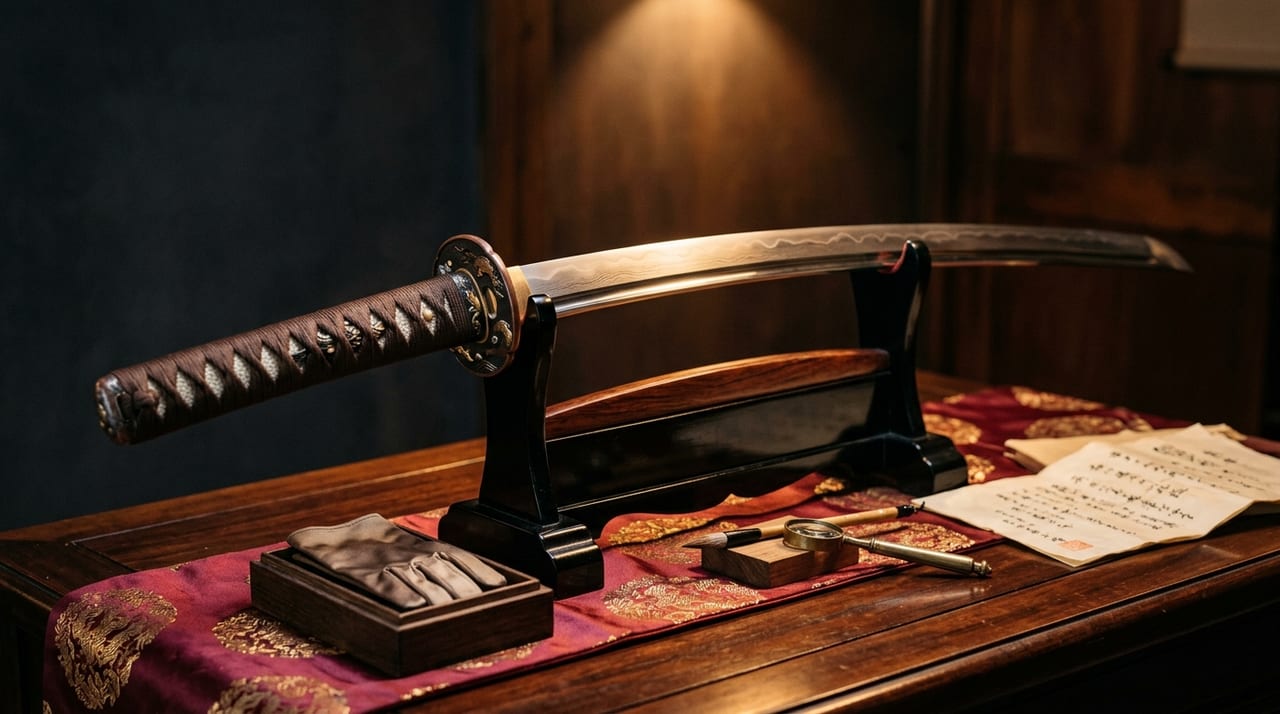
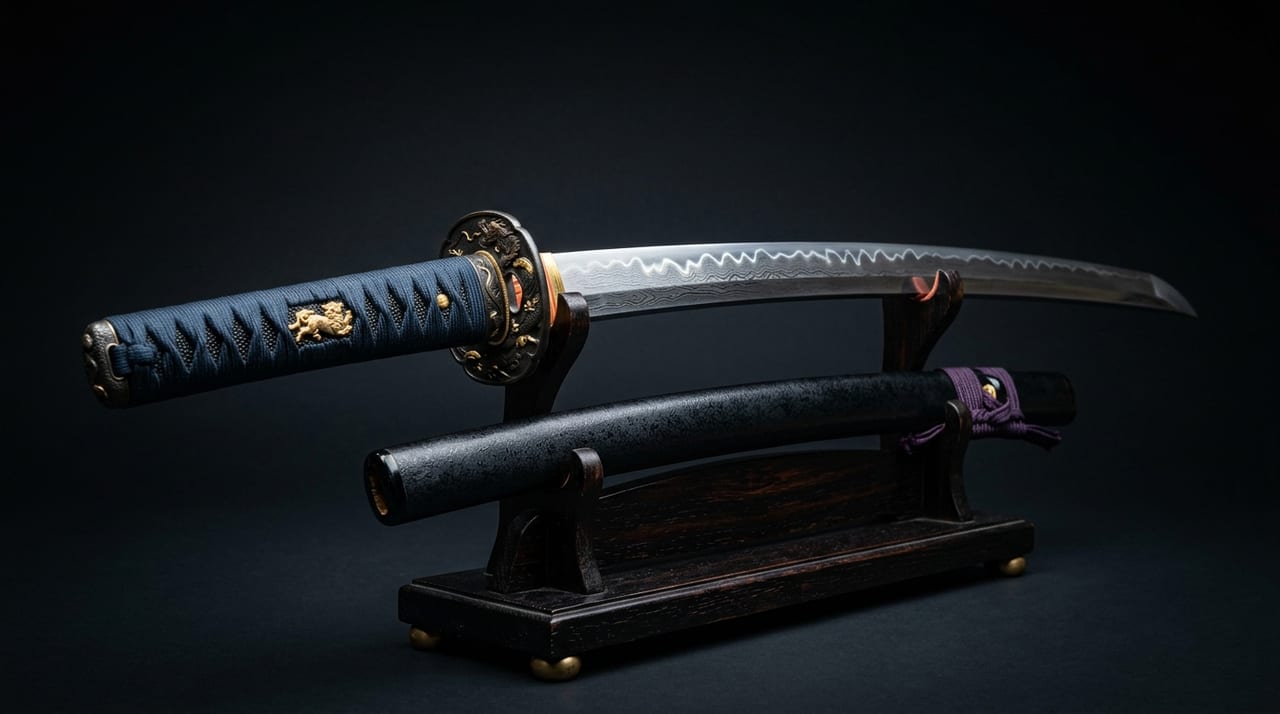
Weak Yen × Platform Revolution: The Cutting Edge of Nihontō Exports in 2026
 * Image is for illustrative purposes only.
Table of Contents
The New Wave of Nihontō Exports in 2026
As internet infrastructure matures and digital payments become widespread, overseas sales of nihontō are undergoing a major turning point. Swords (tōken) — born of the kaji craft that has continued since the Edo period — were once considered items possessed only by a select group of specialist collectors and museums, but have now become global cultural artifacts and collectors' items traded on auction platforms worldwide.
To export nihontō, it is necessary to obtain the Agency for Cultural Affairs' Export Inspection Certificate for Antique Art Objects. This is a procedure that certifies that the sword to be exported is not designated as a kokuhō (National Treasure) or jūyō bunkazai (Important Cultural Property) and does not qualify as a jūyō bijutsuhin (Important Art Object), and is a requirement common to all nihontō exports (Agency for Cultural Affairs "Export Inspection Certificate for Antique Art Objects"). Note that the export of swords designated as kokuhō, jūyō bunkazai, jūyō bijutsuhin, etc. is in principle prohibited under the Act on Protection of Cultural Properties and other laws. Furthermore, after export, there is an obligation to return the registration certificate to the Board of Education of the prefecture where the sword was registered (Tokyo Metropolitan Board of Education "When Exporting Firearms and Swords"). Selecting the appropriate platform after meeting these legal requirements is the key to success in international transactions.
A Thorough Comparison of Major Platforms
The major sales channels for nihontō each have different characteristics, fees, and target customer bases.
| Platform | Key Features | Estimated Fees | Strengths / Target Audience |
|---|---|---|---|
| eBay | A general-purpose auction and fixed-price platform operating in over 190 countries worldwide. Listing in the "Collectibles" or "Antique Arms & Armor" category is possible | Selling fee + payment fee (rates vary by category and plan) | Highest transaction volume. However, shipping of uchigatana and tachi to the UK, Germany, and Australia may be restricted |
| Catawiki | An auction service headquartered in the Netherlands, specializing in collectibles, antiques, and art. Expert review before listing is mandatory | Seller fee (confirm rate in terms of service) | Direct reach to collectors in France, Germany, and the Benelux countries. Inferior to eBay for acquiring buyers from Asia |
| Specialist Nihontō EC Sites | Specialist sites operated by long-established Japanese sword dealers and Western nihontō dealers. Direct transactions are the primary mode | Suited for a customer base that avoids platform fees | Strong with serious buyers, martial artists, and researchers |
eBay: The World's Largest General-Purpose Marketplace
eBay is a general-purpose auction and fixed-price platform operating in over 190 countries worldwide, and boasts the highest transaction volume in the international trade of nihontō as well. Nihontō accompanied by a registration certificate (issued by the prefectural Board of Education) may be listed in the "Collectibles" or "Antique Arms & Armor" category.
However, policies regarding weapons are complex, and restrictions vary depending on the destination region settings and the buyer's location. In particular, shipping of uchigatana and tachi with long blades to the UK, Germany, and Australia may be restricted. Fees consist of selling fees and payment fees, and as rates vary by plan and category, confirm them in the terms of service before listing. English is the standard listing language, and a careful condition description, the presence or absence of a kanteisho (appraisal certificate), and an accurate notation of the tōkō's name (mei) significantly affect the final sale price.
Catawiki: A Premium Collectibles Auction from Europe
Catawiki, headquartered in the Netherlands, is an auction service specializing in collectibles, antiques, and art, and in some cases surpasses eBay in terms of reach to European buyers. Expert (specialist appraiser) review is mandatory before listing, and this quality curation is well-suited to items that require specialized knowledge, such as nihontō. A seller fee based on the final sale price is charged, but the ability to reach collectors directly in France, Germany, and the Benelux countries is a major advantage. European art enthusiasts have a high interest in Japanese arms and swords, and quality works tend to command commensurate prices. On the other hand, it is inferior to eBay in acquiring buyers from Asia, so separate channels are needed for the US and East Asian markets.
Specialist Nihontō EC Sites: Deep Expertise and Credibility
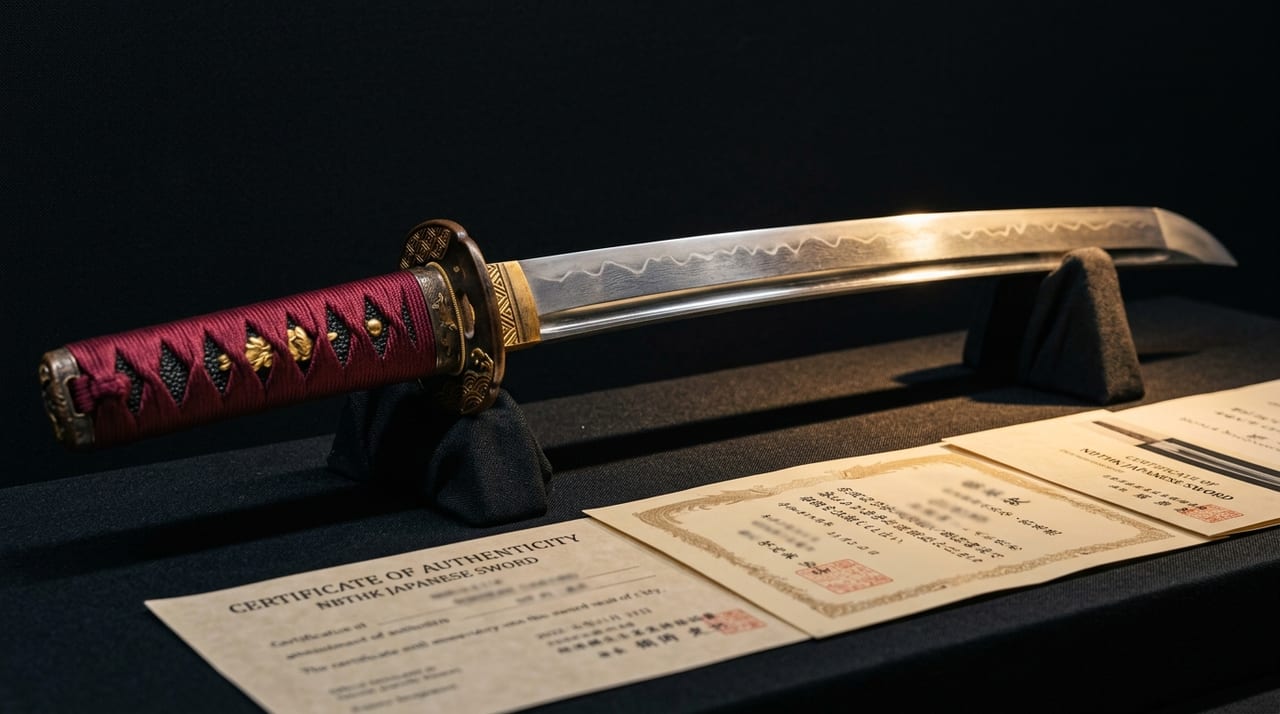
Web shops that long-established Japanese sword dealers have established online, and specialist sites operated by Western nihontō dealers, reach a different customer base from eBay and Catawiki. Serious buyers with long collecting histories, martial artists, and researchers — those with specialist knowledge — tend to place importance on detailed descriptions, provenance, and appraisal information, and tend to avoid platform fees. Superior pieces accompanied by NBTHK (Society for the Preservation of Japanese Art Swords) Hozon Tōken or Tokubetsu Hozon Tōken-class kanteisho are well-suited to direct transactions on specialist sites.
How the Weak Yen Boosts Overseas Buyers' Purchasing Power
The weak-yen trend that has continued since 2022 has brought structural change to Japan's cultural property and craft market. Nihontō is becoming established among foreign buyers as "a luxury item with a sense of value." In a weak-yen environment, the yen-equivalent price range of swords that can be purchased with the same foreign currency budget has expanded significantly.
This "weak-yen premium" has noticeably pushed up demand for mid- and high-grade pieces. The phenomenon continues of superior pieces from the early Edo period — which were previously absorbed by the domestic market — and outstanding works by contemporary tōshō (gendaitō) flowing into overseas premium collector markets. On the other hand, there is also the problem of domestic collectors being disadvantaged in bidding against foreign buyers, and policy discussions on how to prevent the outflow of domestic cultural properties are ongoing as of 2026.
As measures against currency risk, the following approaches are recommended in practice.
- Setting the export price in yen and applying the exchange rate at the time of transaction
- Including a buffer of several percent in a fixed foreign-currency price
Utilizing platforms with escrow services or rate-lock functions at payment completion is also effective.
Import Regulations by Country: Latest Developments and Practical Responses
Import regulations for nihontō differ significantly by country and region.
| Region | Key Points of Regulation |
|---|---|
| United States | There are essentially no federal-level regulations specific to nihontō. Items manufactured more than 100 years ago (tariff classification HTS 9706) may be imported duty-free. However, each state's knife laws (Knife Laws) apply separately |
| EU (European Union) | Blade regulations differ by member state. Germany prohibits the carrying of weapons for slashing and stabbing (Hieb- und Stoßwaffen) and fixed-blade knives with a blade length exceeding 12 cm, except when transported in a closed container (Waffengesetz §42a). In the UK, curved blades with a blade length of 50 cm or more are subject to regulation regarding manufacture, sale, import, etc.; antiques made more than 100 years ago are exempt, and it is not an offense if one can demonstrate the sword was made before 1954 or was handmade using traditional methods (legislation.gov.uk "The Criminal Justice Act 1988 (Offensive Weapons) Order 1988" Schedule) |
| China (People's Republic of China) | One of the countries with the strictest regulations on bladed items in the world. Personal import without special permission from the Ministry of Public Security is practically impossible, and direct sales to individual collectors are not realistic |
| Taiwan | Import of swords requires a permit under the Controlling Guns, Ammunition, and Knives Act, but applications as cultural property or antiques are often approved. Demand for guntō from the Japanese colonial period (1895–1945) and outstanding works by contemporary tōshō is strong |
United States
In the United States, there are essentially no federal-level regulations specific to nihontō, and items manufactured more than 100 years ago (tariff classification HTS 9706) are permitted for duty-free import. If Japanese-side documents such as copies of the registration certificate and the Export Inspection Certificate for Antique Art Objects are properly prepared, customs problems are unlikely to arise. However, each state's knife laws (Knife Laws) apply separately, and there are differences by state. For commercial exports, appropriate HS code classification as cultural property collectibles and the preparation of an English-language invoice are essential.
EU (European Union)
While the EU is a single market, blade regulations differ by member state. In Germany, the carrying of weapons for slashing and stabbing (Hieb- und Stoßwaffen) and fixed-blade knives with a blade length exceeding 12 cm is prohibited, except when transported in a closed container or when there is a legitimate interest (Waffengesetz §42a). For other member states such as France, confirm conditions for possession and import on a country-by-country basis. In the UK, curved blades with a blade length of 50 cm or more are subject to regulation regarding manufacture, sale, import, etc.; antiques made more than 100 years ago are exempt, and it is not an offense if one can demonstrate the sword was made before 1954 or was handmade using traditional methods (legislation.gov.uk "The Criminal Justice Act 1988 (Offensive Weapons) Order 1988" Schedule). However, in practice, much depends on the judgment of customs officials, and thorough preparation of documentation is indispensable.
China (People's Republic of China)
China is one of the countries with the strictest regulations on bladed items in the world, and personal import of swords without special permission from the Ministry of Public Security is practically impossible. As a legitimate route, organizations with legal standing such as museums and research institutions may apply for permission, but direct sales to individual collectors are not realistic. It is prudent to exclude China from the practical target market when formulating export strategy.
Taiwan
In contrast to China, Taiwan has a comparatively open collecting culture. Import of swords requires a permit under the Controlling Guns, Ammunition, and Knives Act, but applications as cultural property or antiques are often approved. The Taiwanese nihontō collector community is small but active, and demand is strong particularly for guntō from the Japanese colonial period (1895–1945) and outstanding works by contemporary tōshō.
Practical Guidelines for Platform Selection and Successful Exports
- Prioritize documentation above all. In addition to the original and copies of the registration certificate, obtaining a kanteisho from NBTHK or the Nihon Token Hozon Kai (NTHK) contributes both to improving the final sale price and to customs certification. Attaching an English-language summary to the kanteisho helps give buyers peace of mind.
- Choose your platform based on the target market. For North America, eBay and specialist EC sites are effective; for Europe, Catawiki and European specialist dealers; for Southeast Asia and Taiwan, individual dealer networks. Rather than relying on a single platform, parallel use of multiple channels leads to a stable sales network.
- Specialize in logistics and packaging. Apply appropriate packaging using a sword box, a tsuka bag, and a habaki securing fixture, and always include shipping insurance. Adding notations such as "Caution: Edged Weapon / Traditional Japanese Art Sword" to international shipping labels is important to prevent misunderstanding by customs officials.
Conclusion: Toward a New Era of Export-Led Growth
In 2026, the nihontō market has three converging factors — a weak yen, maturing digital platforms, and a growing population of overseas collectors — creating an environment more favorable to exports than ever before. However, troubles arising from the risk of confiscation due to incomplete documentation and ignorance of each country's import regulations remain unceasing. By making appropriate platform choices and completing legal preparations, nihontō — a craft of rare distinction — will reach the hands of enthusiasts worldwide and become an ambassador spreading Japan's traditional culture to the next generation. A single sword bearing a craftsman's soul is passed down across borders — that is the cutting edge of nihontō exports in 2026.