Thinking of Nihontō as an Asset: A Beginner's Guide to Sword Investment in 2026
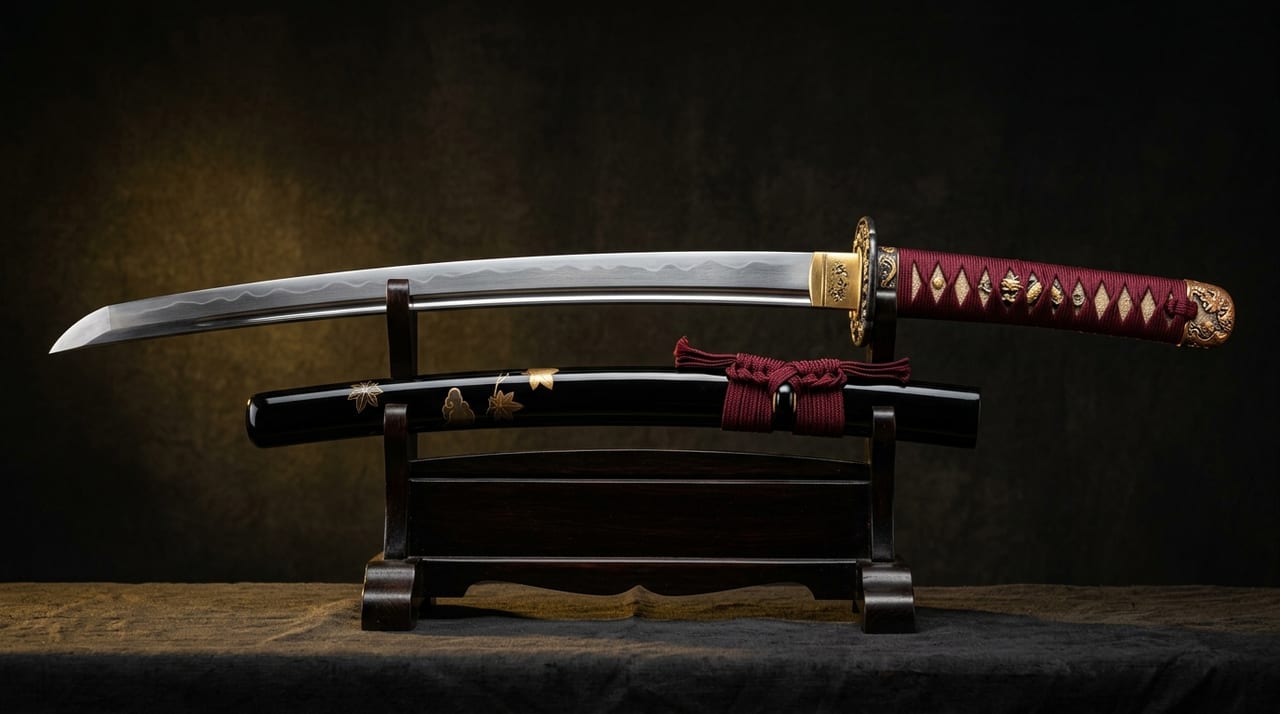 * Image is for illustrative purposes only.
Table of Contents
The Current State of the Nihontō Market: From Traditional Craft to Investment Asset
The nihontō was once a symbol of the samurai's soul and a practical weapon on the battlefield. In the modern era, however, its outstanding craft techniques and historical and cultural value have been internationally reassessed, and it has come to attract attention as an alternative investment destination for the wealthy. Particularly since the 2020s, amid a trend toward asset diversification, interest in tangible assets has grown, and new investment money has begun flowing into the nihontō market as well.
As of 2026, domestic and international auction houses regularly hold dedicated sword sales, and wealthy collectors from Europe and America as well as investors from East Asia are actively participating. International auction houses such as Christie's and Bonhams also hold regular nihontō sales, and demand for high-quality pieces remains steadily firm. Domestically, antique dealers specializing in art swords and sword markets operate actively throughout the year, and moves to sell or make investment use of swords inherited as estate assets are also becoming more active.
However, sword investment has a fundamentally different nature from common financial assets such as stocks and real estate. Accurately understanding its appeal and risks is a prerequisite for sound investment judgment.
Price Trends over the Past Ten Years: The Realities the Market Reveals
Nihontō market prices have shown a gradual upward trend throughout the 2010s, centered on top-class works. A rising interest in Japanese culture in overseas markets, the release of high-quality pieces to the market as domestic collectors age, and an increase in demand for tangible assets are all acting in combination.
The approximate price ranges are as follows.
| Category | Approximate Price Range |
|---|---|
| Mumei uchigatana in good condition | Approximately 500,000–3,000,000 yen |
| Zaimei wakizashi or tachi by a renowned tōkō | 5,000,000 yen to tens of millions of yen |
| Jūyō Tōken class with kanteisho | Cases exceeding 100,000,000 yen are not uncommon |
Opportunities for authenticated works by master tōkō of the Kamakura period to appear on the market are extremely rare, and when they do, transactions reach the scale of hundreds of millions of yen.
Although there was a temporary stagnation in transactions in the early stages of the 2020 pandemic, the market subsequently became more active along with growing demand for tangible assets. As of 2026 this trend continues, with concentration of demand particularly noticeable for works with kanteisho and by renowned tōkō.
The important point is that price appreciation does not apply uniformly to all swords. Market evaluations vary greatly by quality, period, school, and appraisal content, and lower-class mumei pieces and those in poor condition tend to be slow to appreciate in price over the long term.
Asset Value by School and Period: What Commands High Prices
The greatest factor governing the asset value of a nihontō is the reputation of the tōkō and the rarity of the school and period.
Kamakura to Nanbokuchō Period (the pinnacle of kotō) Works by master tōkō of the Kamakura period, such as the Yamashiro-den Awataguchiha (Yoshimitsu), the Yamato-den Senjuin School, and the Bizen-den Osafune school, hold the highest asset value. Masamune of the Sōshū-den is considered the greatest figure in the history of swords, and authenticated genuine works are designated as kokuhō (National Treasure) or jūyō bunkazai (Important Cultural Property), making them virtually absent from market circulation. The imposing ōdachi of the Nanbokuchō period are particularly popular with overseas collectors for their historical impact.
Muromachi to Azuchi-Momoyama Period Late works of the Bizen Osafune school and the Mino-den Seki school have relatively high circulation volume and have aspects that make them suitable for investment in the mid-price range. However, disparities between tōkō within the same school are considerable, and one must be careful that it does not simply follow that "same school means same value."
Edo Period (shintō and shinshintō) Works from the Edo period are classified as shintō or shinshintō and tend to be priced lower than kotō. However, works by particular master tōkō such as Nagasone Okisato (Kotetsu) and Minamoto Kiyomaro are in a class apart, and fierce competition arises among collectors. Swords from the Edo period have abundant records and are easier to appraise, so they are considered to carry relatively lower risk as an entry point for beginners.
The Effect of Kanteisho (NBTHK and NTHK) on Price
In nihontō investment, the presence or absence of a kanteisho from an official institution is one of the most critical factors that greatly influences price.
NBTHK (Society for the Preservation of Japanese Art Swords) Appraisal Ranks NBTHK appraisal is divided into the following four levels.
- Hozon Tōken
- Tokubetsu Hozon Tōken
- Jūyō Tōken
- Tokubetsu Jūyō Tōken
Works that have received Tokubetsu Jūyō Tōken certification command market prices significantly higher than comparable pieces. For those considering acquisition for investment purposes, at least the Tokubetsu Hozon Tōken class is considered the practical benchmark.
The Role of NTHK (Japanese Sword Culture Promotion Association) Alongside NBTHK, NTHK is also widely recognized overseas as an authoritative appraisal institution. The kanteisho of NTHK-NPO in particular is highly regarded as a guarantee of reliability in circulation within European and American markets, and plays an important role in international transactions.
Since kanteisho carry a risk of forgery, it is essential to cross-reference the kanteisho number against a database at the time of purchase, and to conduct transactions through reliable specialist dealers or certified auction houses. Furthermore, since value drops significantly if the blade sustains scratches or rust after the kanteisho is obtained, the quality of storage and management is directly linked to the maintenance of asset value.
Insurance, Storage Costs, and Liquidity Risk
Storage and Maintenance Costs An appropriate storage environment (humidity 40–60%, avoiding sudden temperature changes) is essential for nihontō, and ongoing maintenance is required, including storage in a dedicated shirasaya (plain storage scabbard) and periodic maintenance with uchiko and oil application. For museum-class swords, a dedicated constant-temperature and constant-humidity case and periodic condition checks by specialists are recommended. Annual storage and maintenance costs should be budgeted at approximately 0.5–1% of the appraised value of the swords held.
Insurance In many cases nihontō are not covered under general household insurance, making enrollment in personal property insurance dedicated to artworks and valuables (fine art insurance) effectively essential. Insurance premiums are approximately 0.3–0.8% per year of the assessed current value, but vary greatly depending on the storage location, security facilities, and scope of coverage.
Liquidity Risk Unlike stocks or gold ETFs, nihontō are extremely difficult to sell and convert to cash immediately. Domestic specialist auctions are limited to a few times per year, and it is not uncommon for several months to pass from the decision to sell to receipt of payment. Since it is not possible to meet sudden funding needs, the common view among many experts is to keep holdings within 5–10% of the overall portfolio.
Comparison as an Alternative Asset: The Position of Sword Investment
Compared with gold, nihontō are greatly inferior in liquidity, but there is a possibility that a long-term asset preservation function based on cultural rarity value and a collector's premium arising from the smallness of the market will be added on top. Compared with wine, nihontō are superior in that they resist deterioration if managed appropriately (excepting rust), and asset preservation on the scale of hundreds of years is possible.
Compared with the contemporary art market, the nihontō market is smaller in scale, but because historical assessments are already established, there is less excessive speculative fluctuation and there is a stability suitable for long-term holding. On the other hand, the smallness of the market size also directly leads to difficulty with exit strategies, so the fact that the absolute number of buyers is limited is a disadvantage.
As of 2026, against a backdrop of growing interest in cultural heritage preservation and ESG investing, demand from the perspective of "nihontō as cultural property" is also increasing. In particular, cases of overseas art foundations and individual collectors purchasing for the purpose of long-term holding are increasing, and this is also becoming a stable factor supporting prices.
If considering sword investment, the following three principles form the basis.
- Select works with a kanteisho of NBTHK Tokubetsu Hozon Tōken or higher
- Conduct transactions through reliable specialist dealers or certified auction houses
- Hold diversified, keeping within 10% of total assets
The nihontō is not a mere financial product but a crystallization of Japan's spiritual culture and artisanal techniques. A deep understanding of its intrinsic value will, in the end, lead to the best investment judgment.