The Pacific War and Swords — Were Japanese Swords Actually Used on the Battlefield? A Historical Examination
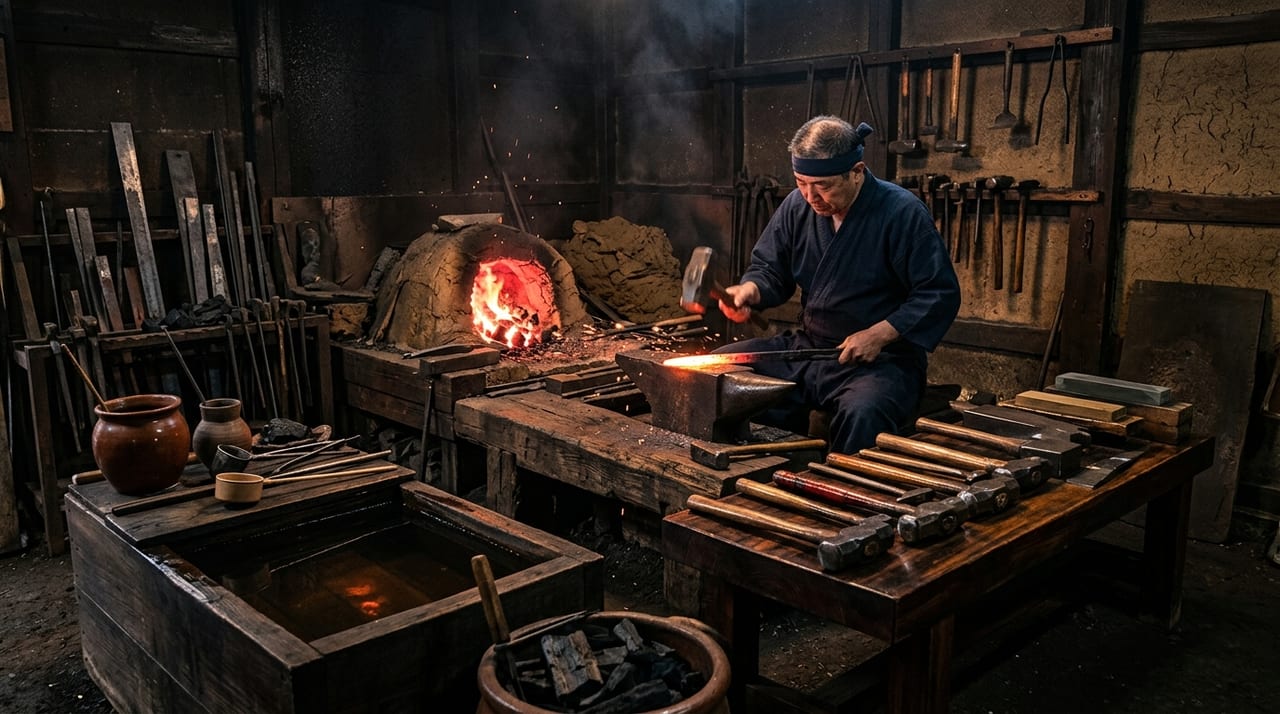 * Image is for illustrative purposes only.
Table of Contents
The Myth and Reality of "Combat with the Guntō"
Films and novels depicting the Pacific War repeatedly feature scenes in which Imperial Japanese Army officers raise their guntō high and lead charges into battle. But does this reflect historical fact? The answer is "partly yes, but no in many respects."
According to modern military history research, the primary means of engagement in the Pacific War were rifles, machine guns, mortars, and artillery, and cases in which the guntō decided the outcome of combat were extremely rare. The battlefields of the 1940s were already dominated by industrialized weapons of mass killing, and the impact of hand-to-hand swordfighting on the overall course of battle was limited. Officers carrying a guntō did so mainly for its significance as "proof of identity as a commander" and as a "spiritual symbol."
Types of Guntō — The Conflict Between Modernization and Tradition
The swords carried by Imperial Japanese Army officers during the Pacific War can be broadly divided into two types.
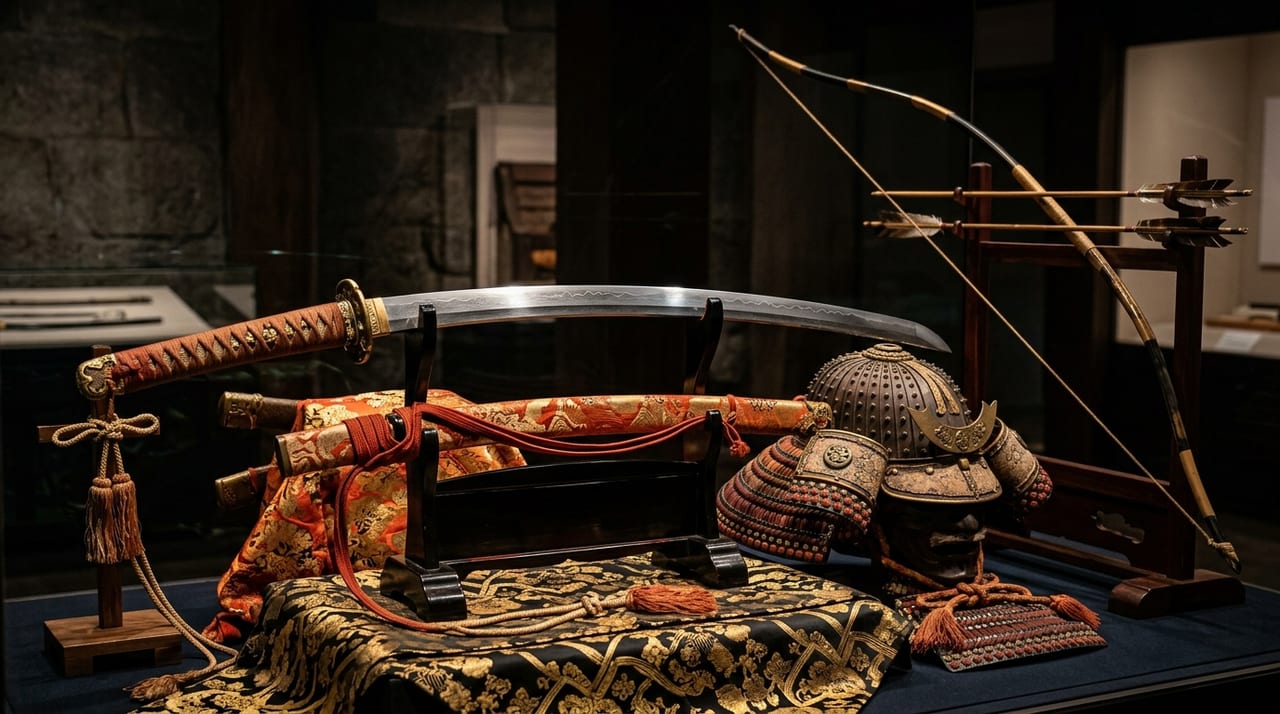
One type was the regulation-issue guntō known as the "guntō koshirae (mounting)," of which the Type 94 and Type 98 guntō were the leading examples. These placed Japanese sword blades inside Western-style saber-type fittings, and it was common for officers to source blades privately and fit them into the guntō koshirae. Non-commissioned officers were issued the Type 95 guntō, whose blades were also mass-produced in factories and thus stood apart from traditional sword-forging techniques. The state of swords in this period, known as the Shōwa-tō (Guntō Era), is characterized by the coexistence of mass-produced blades and blades forged by traditional tanren (forging).
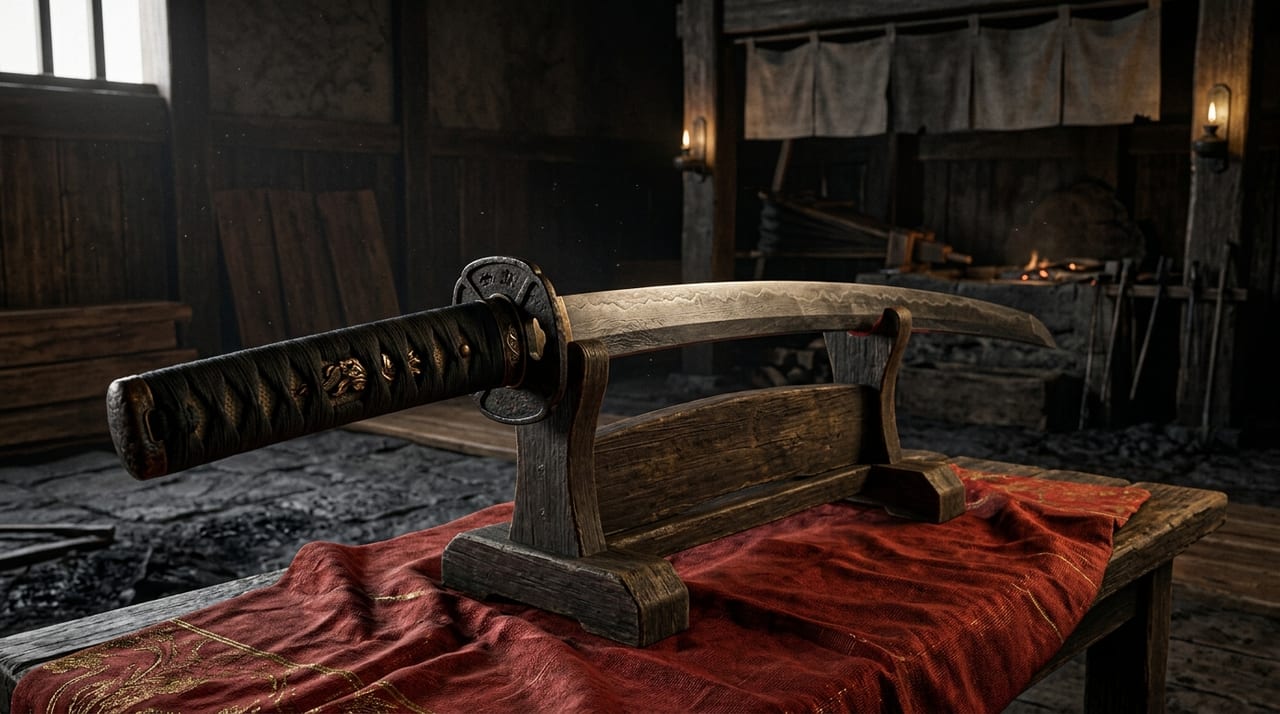
The other type was the nihontō in the true sense of the word: swords passed down through a family, or newly commissioned from renowned tōkō (swordsmiths). During the war, swords known as "Yasukuni-tō," made at the forge of the Nihontō Tanren-kai established within the precincts of Yasukuni Shrine (set up in 1933), were also highly prized among officers. These were forged by tōkō using traditional tamahagane and were genuine nihontō possessing artistic and craft value.
Many records attest that, when actually used on the battlefield, factory-produced blades and traditionally forged blades differed markedly in durability and sharpness.
Situations in Which the Guntō Was Actually Used
Nevertheless, several situations in which the guntō was used in actual combat have been documented.
- Close-quarters combat in jungles and on islands: In close-quarters fighting in dense jungle and urban areas — Guadalcanal, the Philippines, Okinawa, Burma — officers sometimes drew their guntō during charges. Records show that in close combat in narrow trenches, cave positions, and night raids, swords held a degree of effectiveness and were used in combination with bayonet-fixed rifle fighting.
- Use in the handling of prisoners and surrenders: As a sad historical fact, records exist of guntō being used in the execution of prisoners and in the handling of surrenders. Reporting on the "hundred-man killing contest" during the Nanjing Incident drew international condemnation even at the time and was submitted as evidence at the Tokyo Trials. Historians continue to disagree over the interpretation of this issue, but the fact that the guntō was used for violence in occupied territories — not merely as a symbolic accessory — cannot be denied.
- Ritual acts before gyokusai: Reports from various locations tell of officers entrusting their guntō to subordinates or leaving them at a command post before gyokusai (a final all-out charge to annihilation). Leaving the sword as a keepsake was said to carry the symbolic meaning of completing one's return to one's family.
The Guntō for Officers — Layered Spiritual Meanings
Despite the limited practical utility of the guntō in modern warfare, why did Imperial Japanese Army officers continue to carry one? The answer lies in the complex layering of spiritual and cultural meanings.
- Embodiment of the bushidō spirit: According to the militarist view of bushidō, the sword was "the soul of the warrior," and carrying it was believed to preserve the bushidō spirit. "Bushidō" — reinterpreted and reconstructed since the Meiji era — was placed at the core of prewar military education, and the sword functioned as its visible symbol.
- Symbol of command and leadership: An officer drawing his guntō and ordering a charge was a symbol of a "commander who leads from the front" and a means of boosting morale. Multiple war memoirs record that the very act of drawing the sword had the effect of igniting the fighting spirit of subordinates, regardless of the actual danger involved.
- Bond with family and homeland: In many cases, officers carried a sword inherited from a father or grandfather, or one given by their family, thereby maintaining a spiritual connection with their homeland and loved ones. The custom of families commissioning a newly made sword from a local kaji (smith) before a soldier's departure for the front remained widespread, and the sword thus held the meaning of an amulet that transcended its role as a mere weapon.
Swords Left on the Battlefield — The Testimony of Captured Arms
U.S. military official records contain many descriptions of captured Imperial Japanese Army officers' guntō. The difference in quality was striking; accounts attest to a wide range from celebrated blades and traditionally forged swords to the factory-made blades of the Type 95.
Guntō brought home by American soldiers as war souvenirs are said to number tens of thousands still held by collectors across the United States today. Some may include genuine works by master smiths of the Edo period and earlier. Organizations such as the Nihontō Bunkazaidan have supported their repatriation, and there are many cases in which swords have actually been returned to bereaved families. As of 2026, repatriation requests from Japanese-American bereaved families living overseas continue to come in, and public-private cooperative efforts are advancing.
Meanwhile, swords also played an important role in the surrender ceremonies at the end of the war. On September 2, 1945, at the surrender signing ceremony aboard the USS Missouri, many Imperial Japanese Army officers handed over their guntō to the Allied forces. This act was also staged as a symbol of surrender that imposed upon warriors the greatest humiliation — relinquishing the sword.
Postwar Legal Settlement and the Transition to Cultural Property
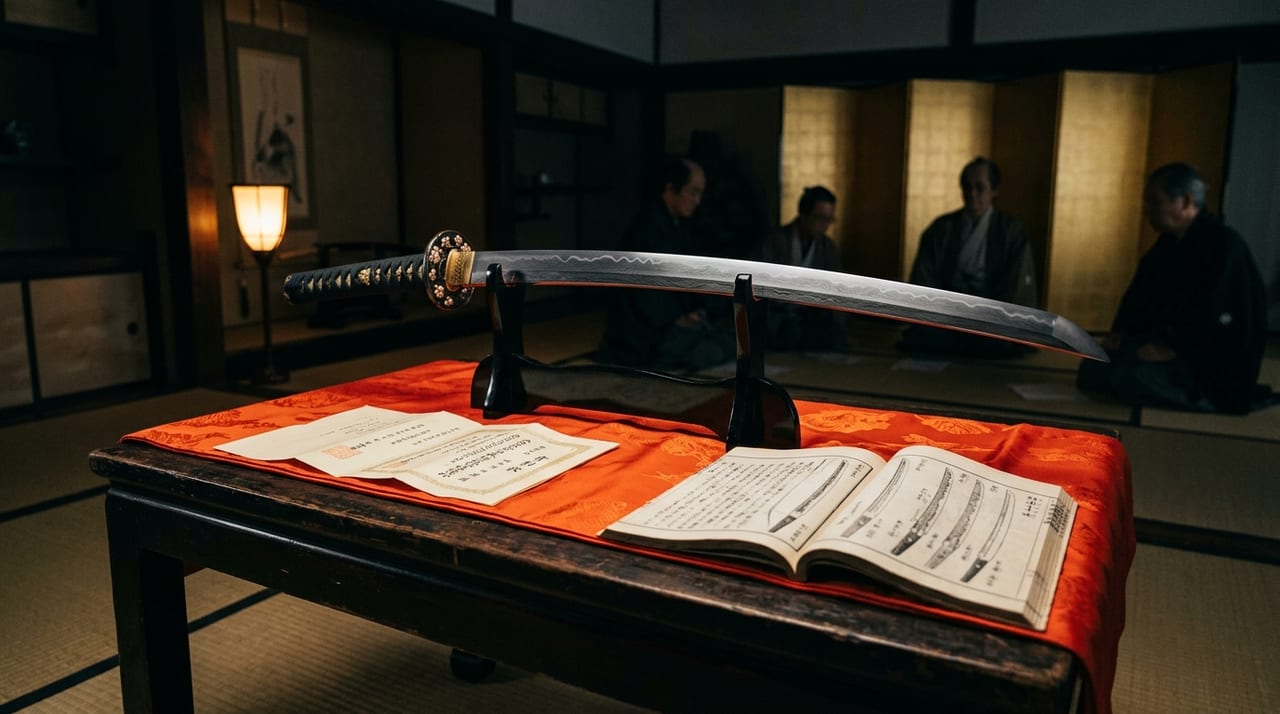
After the end of the war, GHQ issued an order for the comprehensive confiscation and disposal of swords, including nihontō. During this Postwar Sword Confiscation Era, many swords were destroyed, but through negotiations by the Japanese side arguing for their value as cultural properties, and through the efforts of sword researchers and enthusiasts, nihontō as works of art came to be protected under a registration system in 1946.
The current Firearms and Swords Control Act (Jūtōhō) explicitly permits the possession of "nihontō as works of art" and manages this by requiring registration with the prefectural Board of Education. Statistically, the frequency with which registered nihontō are used in crimes is markedly lower than that of other bladed implements.
Accurately understanding the reality of the guntō in the Pacific War is indispensable to grasping the starting point of postwar nihontō culture. Through the historical transition from symbol of the battlefield to work of art and cultural property, swords have continued to serve as a mirror reflecting the spiritual history of the Japanese people. A sword that once raced across battlefields now stands quietly in the light of a museum — that very contrast speaks to the journey of modern and contemporary Japan. Engaging with the history of the nihontō will provide an opportunity to confront this complex past.