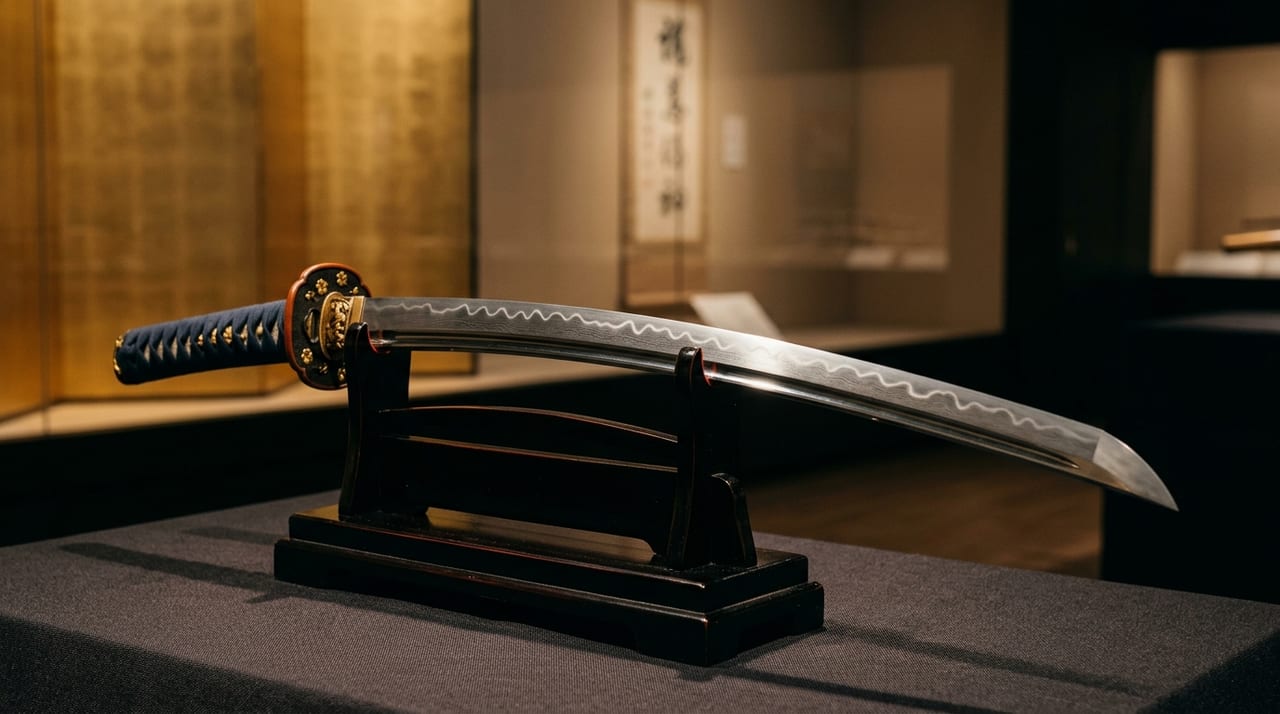
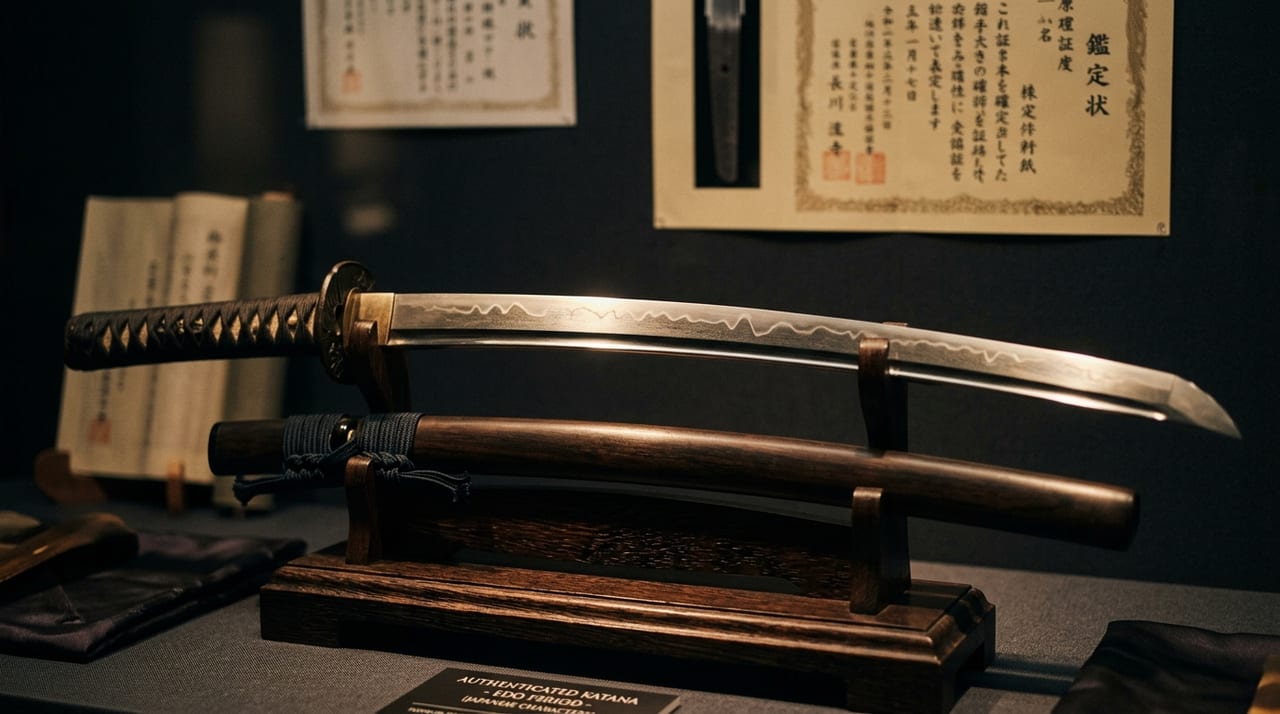
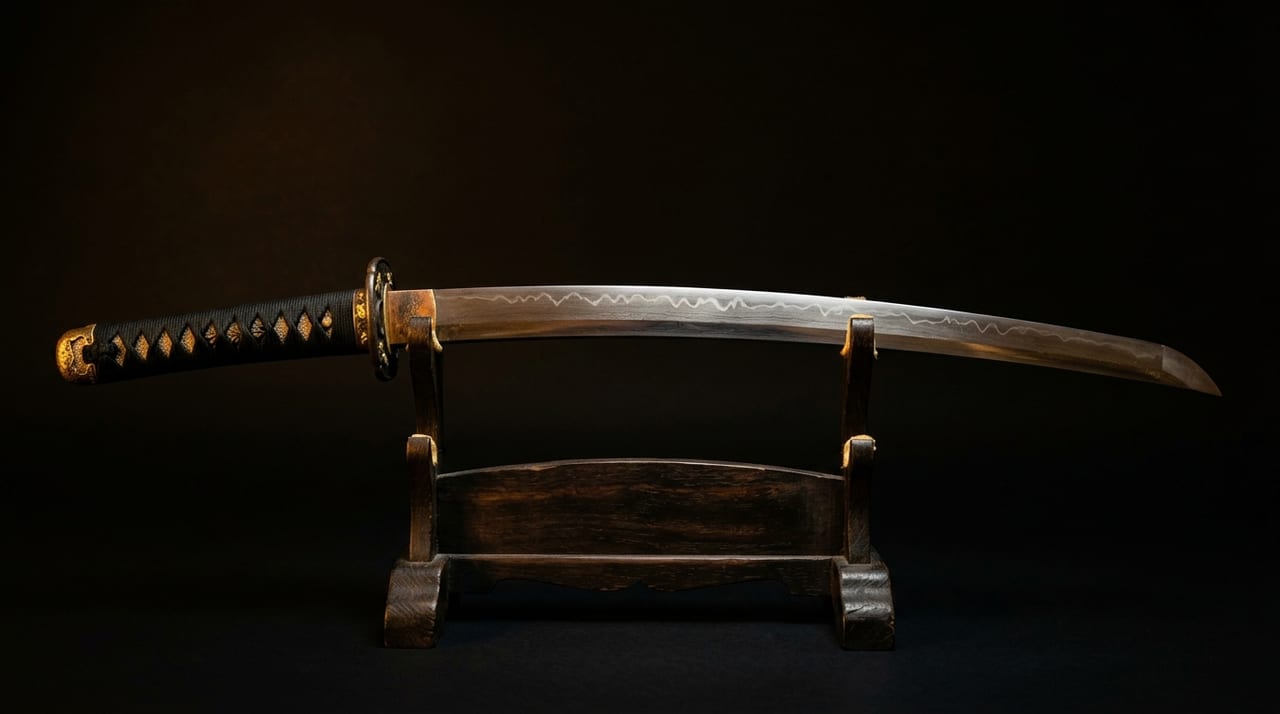
The Reliability of Kanteisho: A Comparison of NBTHK and Other Institutions — Understanding the "Seal of Approval" for Japanese Swords
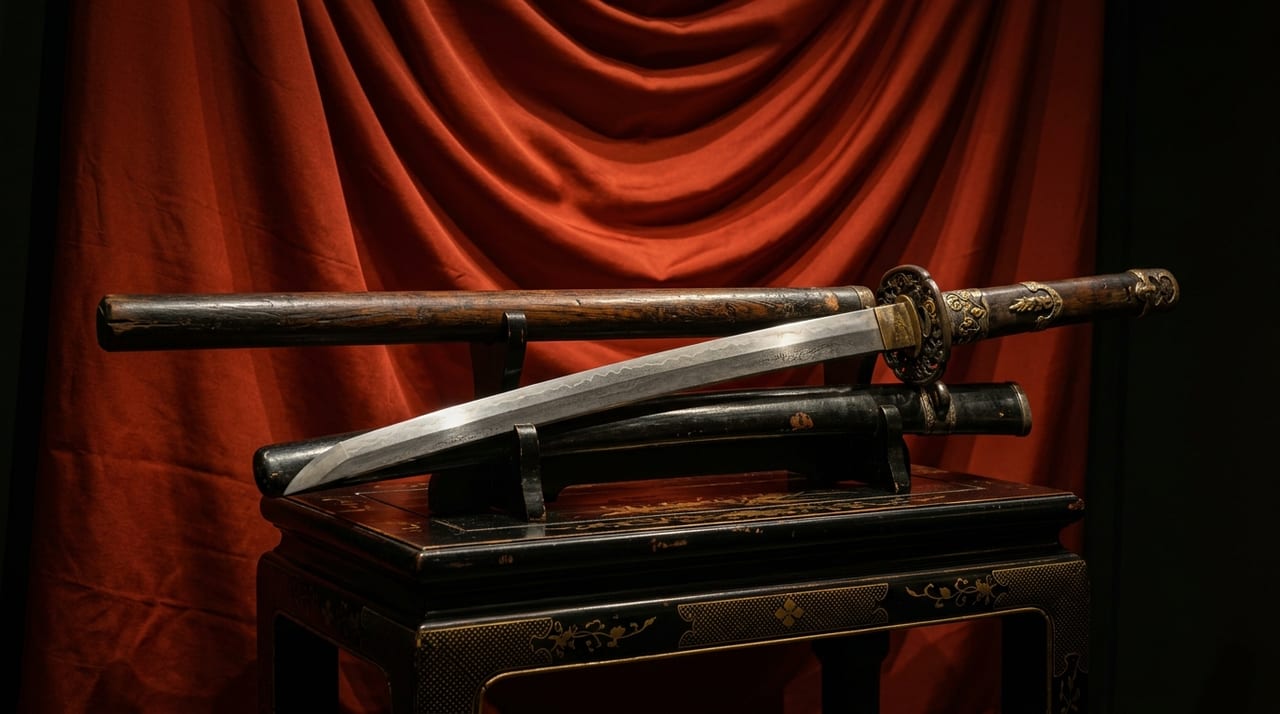 * Image is for illustrative purposes only.
Table of Contents
What Is a Kanteisho — The World of the "Seal of Approval" for Japanese Swords
When buying, selling, or collecting Japanese swords, a kanteisho (appraisal certificate) plays an extremely important role. A kanteisho is a document in which a specialist institution examines and certifies a sword's authenticity, period, place of origin, maker (tōkō), and condition.
However, even when speaking of a "kanteisho," the reliability, examination process, and international recognition vary greatly depending on the issuing institution. Misunderstanding the value of a kanteisho without proper knowledge can result in losses in high-value transactions. This article compares the major appraisal institutions and explains how to read each type of kanteisho correctly.
What Is NBTHK — Japan's Highest Authority
NBTHK (Society for the Preservation of Japanese Art Swords, Nihon Bijutsu Token Hozon Kyokai) is Japan's largest and most authoritative sword preservation organization, established in 1948. It operates under the guidance of the Agency for Cultural Affairs, with the aims of sword appraisal, preservation, research, and dissemination.
NBTHK Appraisal Ranks (Low to High)
| Rank | Abbreviation | Description |
|---|---|---|
| Hozon Tōken | Hozon | Certified as authentic. The lowest rank, but an important certification |
| Tokubetsu Hozon Tōken | Tokuho | Above Hozon. Period and place of origin can be confirmed |
| Jūyō Tōken | Jūtō | A superior work of high artistic and historical value |
| Tokubetsu Jūyō Tōken | Tokujū | The highest rank. A masterpiece by a renowned tōshō; kokuhō (National Treasure) candidate class |
It is said that fewer than a few percent of all swords can attain Tokubetsu Jūyō Tōken status, making it the most authoritative certificate for sword collectors.
NBTHK Examination Process
Swords are brought to examination sessions held two to four times a year, where a judgment is reached by a panel of multiple examiners — sword researchers, tōshō, togishi (polishers), and others — through a system of collective deliberation. Examination fees range from several thousand to tens of thousands of yen depending on the rank, and it often takes several months from application to notification of results.
The following items are evaluated in the examination.
- Authenticity (whether the mei is forged or added later)
- Period (identifying the date of production)
- Place of origin and school (Bizen, Sōshū, Yamato, etc.)
- Tōkō mei (authenticity of the mei)
- Condition (rust, scratches, state of togi)
- Artistic value (quality of the hamon and jigane)
Points to Note Regarding NBTHK Kanteisho
One should understand that NBTHK kanteisho also have their "limitations."
- In the case of mumei swords: The notation will be a presumption such as "attributed to so-and-so" or "such-and-such school." This is not a definitive statement
- Differences in examiner opinion: Judgments may differ among examiners, and results can occasionally vary between examination sessions
- Re-examination system: It is possible to submit a sword for examination again after it has once been rejected. Cases exist where a sword "passed re-examination after being re-polished"
- Changes over time: Old kanteisho issued many decades ago may need revision by current research standards
NTHK — Another Authoritative Japanese Institution
NTHK (Nihon Token Hozon Kai) is another of Japan's major appraisal institutions alongside NBTHK, with a history dating to its establishment in 1910 (Meiji 43).
NTHK examination ranks carry their own designations, but are not as well recognized externally — particularly overseas — as those of NBTHK. NTHK's "nintei" (certification) is said to carry authority equivalent to NBTHK's Hozon, but in overseas markets there is a tendency to evaluate the two as "NBTHK > NTHK."
The characteristics of an NTHK certificate are as follows.
- Some evaluate the examination process as relatively rigorous
- Overseas recognition is lower than that of NBTHK
- Acquisition costs and examination fees are often cheaper than NBTHK
Overseas Appraisal Institutions — The Reality of Their Reliability
Institutions and individuals that appraise Japanese swords also exist overseas, but their reliability varies greatly.
Token Society of Great Britain (TSGB)
This is a sword enthusiast association in the United Kingdom that issues opinion letters from its members. Unlike the rigorous institutional examination of NBTHK, these have more the character of "opinion letters." They serve as a certain point of reference for circulation in the British market, but for transactions within Japan and high-value deals, an NBTHK kanteisho is essential.
Private Kanteisho and Certificates Issued by Sword Dealers
"Kanteisho issued by sword dealers" and "opinion letters from well-known sword researchers" also exist in the market, but carry no institutional authority. Since they depend on the individual's knowledge and experience, reliability varies greatly from person to person. It is dangerous to treat these as substitutes for an NBTHK kanteisho.
Appraisal by Overseas Auction Houses
Major auction houses such as Bonhams and Christie's employ their own Japanese sword specialists (catalogue writers) and publish detailed descriptions in their catalogues. However, these are "catalogue descriptions," not "kanteisho," and are not official proof of authenticity.
NBTHK Kanteisho and Their Actual Effect on Prices
In the actual market, the presence or absence of an NBTHK kanteisho and its rank directly affect prices. The following are approximate price differentials.
| Situation | Price Level |
|---|---|
| NBTHK Tokubetsu Jūyō Tōken | 3–10× unappraised |
| NBTHK Jūyō Tōken | 2–5× unappraised |
| NBTHK Tokubetsu Hozon Tōken | 1.5–3× unappraised |
| NBTHK Hozon Tōken | 1.2–2× unappraised |
| Unappraised (authenticity beyond doubt) | Base |
| Forged mei / doubt present | Base × 0.1–0.3 |
Overseas buyers in particular treat "NBTHK special paper (Tokubetsu Jūyō Tōken) = highest guarantee," and to secure liquidity in the international market, a Tokubetsu Jūyō Tōken or at least a Jūyō Tōken certificate is practically required.
Handling Swords Without Kanteisho — Risks and Opportunities
Swords without a kanteisho (unappraised swords) tend to be seen as "dangerous," but that is not the whole truth.
The following are cited as cases where unappraised swords present opportunities.
- When a sword has provenance from an old family or shrine and there is a high probability that it is genuine
- When a sword is in good condition but the owner never had the opportunity to submit it for examination
- When a sword is in a condition requiring re-polishing, and there is a prospect of achieving a high rank at examination after togi
The practice of "value-up" — identifying such swords with an expert eye, purchasing them, and enhancing their value through re-polishing and examination — is one of the pleasures of advanced collectors. However, assessing authenticity requires abundant experience and knowledge and is of high difficulty for beginners.
How to Read a Kanteisho Correctly — Understanding the Content
An NBTHK kanteisho contains the following information.
- Category: tachi, katana, wakizashi, tantō, etc.
- Mei: the name of the tōkō (the mei text as written). May read "mumei"
- Period and province: such as "Kamakura period, Sōshū"
- Tōkō name (presumed): such as "attributed to Masamune" or "Osafune Morimitsu"
- Date of appraisal: the date of issue
- Rank: such as "Tokubetsu Jūyō Tōken"
- Number: NBTHK internal management number (has an anti-forgery function)
Note that the character "den" (attributed to) in the recorded content means "said to be" and is not a definitive statement. "Den Masamune-saku" means "presumed to be the work of Masamune, but not definitively stated."
Conclusion — A Kanteisho Is a "Tool," Not an "Absolute"
An NBTHK kanteisho is the most reliable official certificate in Japanese sword transactions, but it does not guarantee "absolute truth." Examinations are conducted by human beings, and established judgments can be overturned by new research and discoveries.
To use a kanteisho correctly, the following points should be kept in mind.
- Understand the hierarchy of institutions (NBTHK > NTHK > others)
- Read the meaning of each rank accurately
- Recognize the limitations of "den" notation
- Seek the opinions of multiple specialists before high-value transactions
The true value of a Japanese sword lies not in the presence or absence of a kanteisho alone, but in the totality of the sword's beauty, historical significance, and cultural background. It is important to make appropriate use of a kanteisho as nothing more than a "tool." On TOUKENZA's online catalogue, you can also browse each listed sword while checking its appraisal information.