Introduction to Japanese Sword Collecting — Budget, Types, and Reliable Sources for Choosing Your First Sword
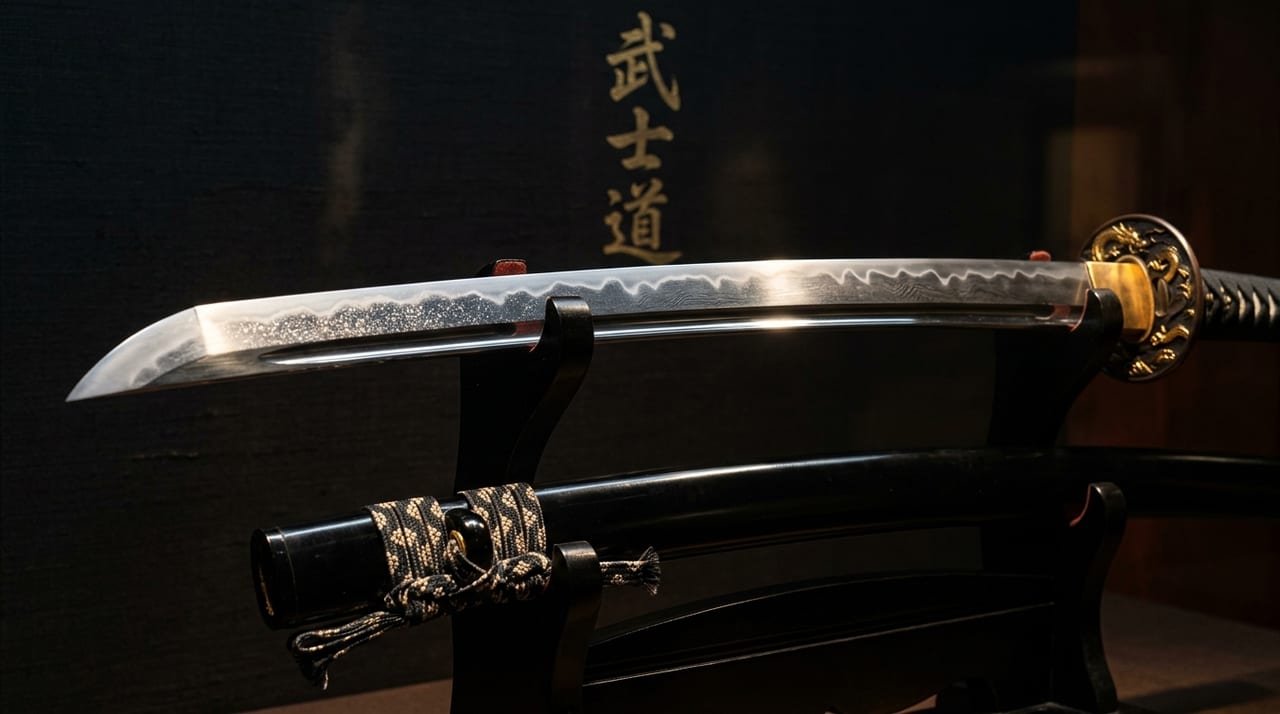 * Image is for illustrative purposes only.
Table of Contents
The Mindset Required for Getting Started as a Collector
Motivations for starting a Japanese sword collection vary — an interest in history, the beauty of craft, or involvement in swordsmanship — but regardless of which entry point you come from, you cannot begin without at least a minimum of legal and practical knowledge. The first step is to understand the Act for Controlling the Possession of Firearms or Swords and Other Such Weapons (Jūtōhō) and the system of registration certificates.
What Is a Registration Certificate?
In Japan, possession of swords is in principle limited to swords that have been registered by a prefectural Board of Education (Firearms and Swords Control Act (Jūtōhō), Article 3, Paragraph 1), and a registration certificate is issued for each registered sword (Article 15, Paragraph 1). A sword without a registration certificate may be unregistered, so before purchasing you must always confirm whether a registration certificate is present and whether the nagasa, sori, and mei recorded on the certificate match the actual sword.
Furthermore, when ownership of a sword changes through sale, inheritance, gift, or other means, the new owner is required under Article 17, Paragraph 1 of the Act for Controlling the Possession of Firearms or Swords and Other Such Weapons (Jūtōhō) to file a change-of-owner notification with the Board of Education of the prefecture that issued the registration certificate within 20 days. Failure to file may result in imprisonment of up to one year or a fine of up to 300,000 yen (Article 32, Act for Controlling the Possession of Firearms or Swords and Other Such Weapons (e-Gov Legal Search)). The procedure and forms for filing differ by prefecture, so confirm with the Board of Education that issued the registration certificate and do not forget to complete the procedure immediately after purchase.
Budget Ranges for Beginners
| Budget | Types of Swords to Expect |
|---|---|
| 100,000–300,000 yen | Average-condition Edo-period wakizashi or tantō, mumei small swords |
| 300,000–1,000,000 yen | Good-condition Edo-period uchigatana or wakizashi, NBTHK Hozon Tōken |
| 1,000,000–3,000,000 yen | NBTHK Tokubetsu Hozon Tōken, fine-quality shintō or shinshintō |
| 3,000,000 yen and above | Jūyō Tōken and above, works by notable tōkō, fine kotō |
What to Choose as Your First Sword
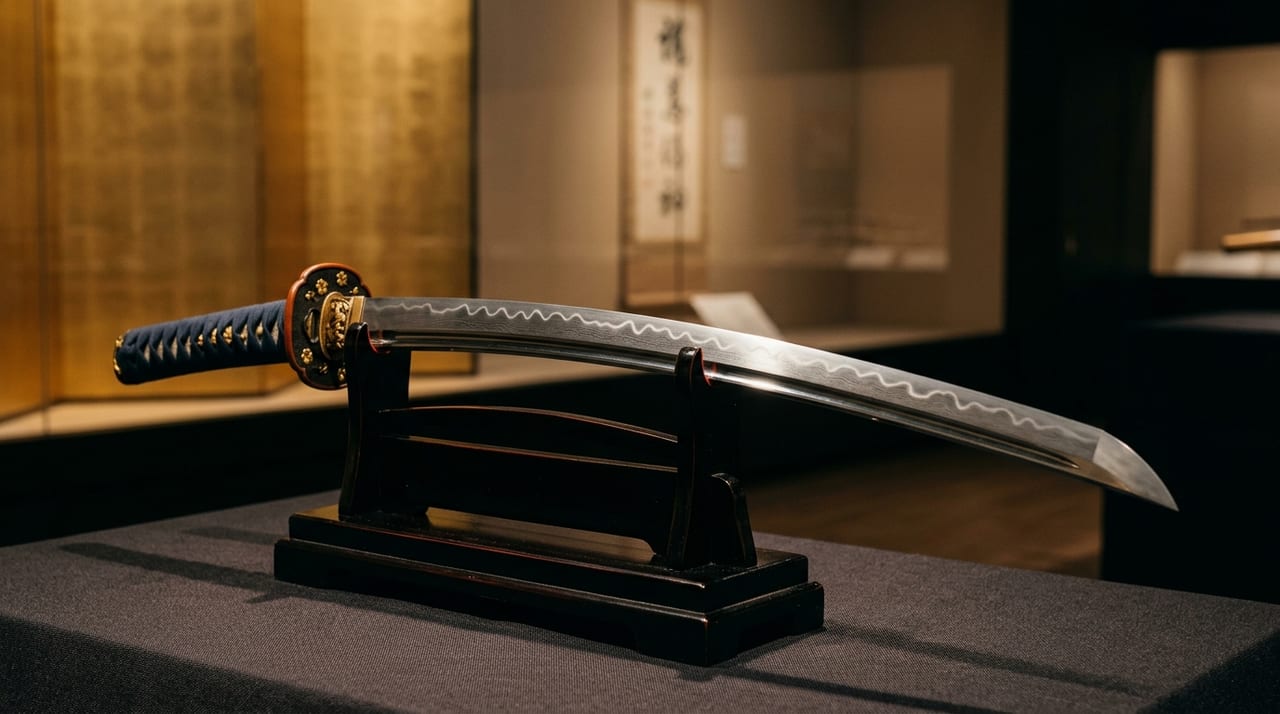
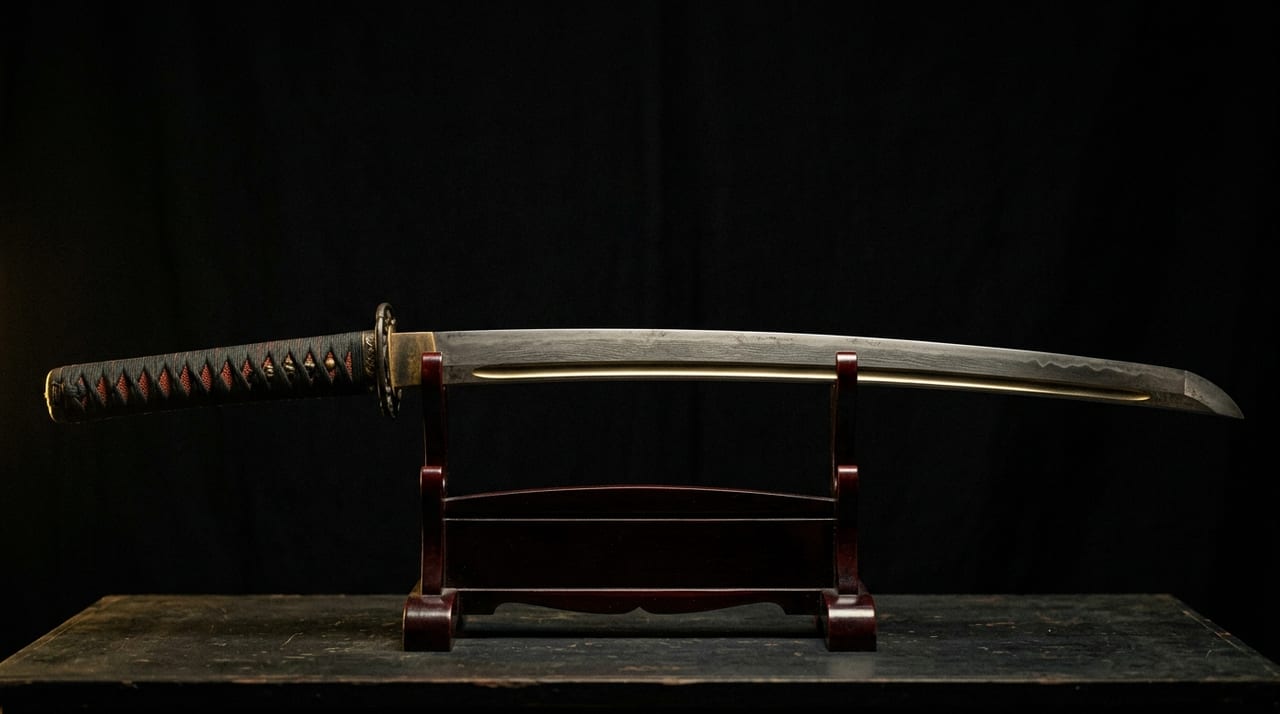
Starting with a wakizashi or tantō is recommended. The reasons are that storage space is less of a concern, the price range is wide, and they are easier to use for learning the fundamentals of appreciation. Because tachi and uchigatana require more in both space and cost, it is wise to wait until you have developed a certain degree of discernment before pursuing them.
How to Choose Reliable Sources
Sword dealers (antique dealer license): The safest source for purchasing. Obtaining an antique dealer license requires filing an application with the prefectural police, and the application fee is set uniformly at 19,000 yen (paid in revenue stamps) across all prefectures. The cost and screening process involved in obtaining this license provide a minimum assurance of reliability for a dealer. Member shops of the All-Japan Sword Dealers Cooperative Association follow the industry's code of ethics and offer an even greater sense of security.
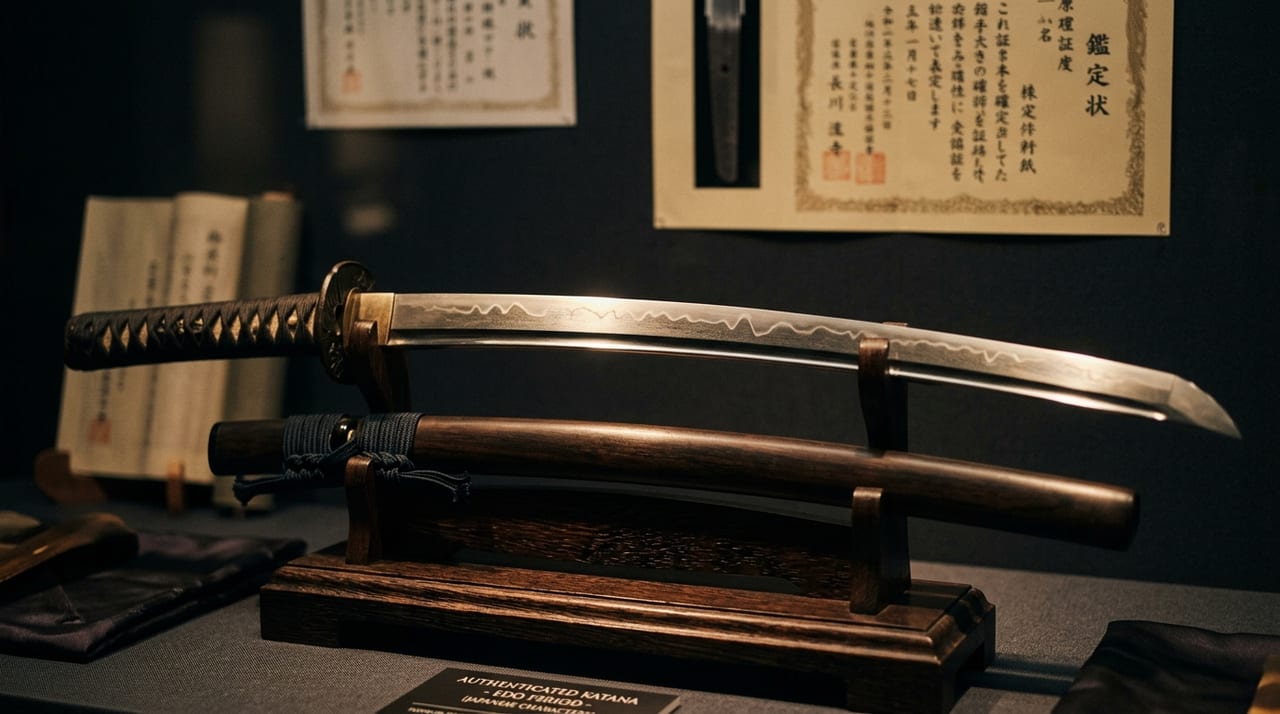
Checking the kanteisho: Trustworthy sword dealers clearly disclose NBTHK (Society for the Preservation of Japanese Art Swords) kanteisho (appraisal certificates). NBTHK appraisal ranks consist of four levels: Hozon Tōken, Tokubetsu Hozon Tōken, Jūyō Tōken, and Tokubetsu Jūyō Tōken. The higher the appraisal rank accompanying a sword, the greater its market liquidity, and the certificate also functions as a basis for pricing upon resale.
Auctions: NBTHK-hosted bidding events, and major international auction houses such as Bonhams. Catalog information is detailed and easy to compare, but exercise caution when inspection of the actual item is available online only. The obligation to file a change-of-owner notification also arises after winning a lot.
General flea markets and online sales: There are many cases in which confirmation of the registration certificate and accuracy of condition descriptions are problematic, making these high-risk for beginners. Avoid purchasing from sellers who do not list an antique dealer license number.
Checklist at the Time of Purchase
- Is the registration certificate included, and do the recorded details match the actual sword?
- Has the seller obtained an antique dealer license (confirm the license number)?
- The type and rank of the kanteisho, and its consistency with the item in question
- Clarity of the condition description, including chipping, re-quenching, rust, and scratches
- Can the seller explain the procedure for filing the change-of-owner notification?
When a beginner is choosing their first sword, prioritizing "being able to follow the correct procedures" over a lower price forms the foundation for long-term collecting activity. TOUKENZA's online catalog lists the registration certificate information and kanteisho rank for each sword, and can be used as a basis for comparison and consideration.
Practice for Developing an Discerning Eye
The most important thing in the early stages of collecting is cultivating your "eye." The following approaches are effective.
Making use of sword museums and exhibitions: The Japanese Sword Museum in Shibuya, Tokyo (operated by the NBTHK, a public-interest incorporated foundation) allows visitors to appreciate kokuhō (National Treasure) and jūyō bunkazai (Important Cultural Property)-class works in its permanent collection. The general admission fee is around 1,000 yen, and observing genuine high-quality swords up close is the fastest path to learning.
Reading sword books and kanteisho: By referring to specialized texts such as "Tōken Kantei Dokuhon" and "Nihontō Daihyakka Jiten," you can systematically learn how to read the hamon (temper line), jigane (steel of the blade surface), and bōshi (temper line in the point). NBTHK kanteisho record the grounds for estimating the tōkō, period, and region, and reading multiple kanteisho comparatively brings the criteria for evaluation into focus.
Participating in sword study groups and enthusiast associations: Sword study groups exist throughout the country, and there are opportunities to receive direct guidance from veteran collectors and sword dealers. The experience of holding and comparing actual swords in hand offers something that books and photographs cannot replace.
Making use of TOUKENZA's catalog: The online catalog allows you to filter by kanteisho rank, sword type, period, and price range, which is useful for beginners in developing a sense of market prices. For questions before purchasing, please use the inquiry form.