What Is Origami — The Edo-Period Sword Kanteisho Issued by the Honami Family and the Origin of "Origami-tsuki"
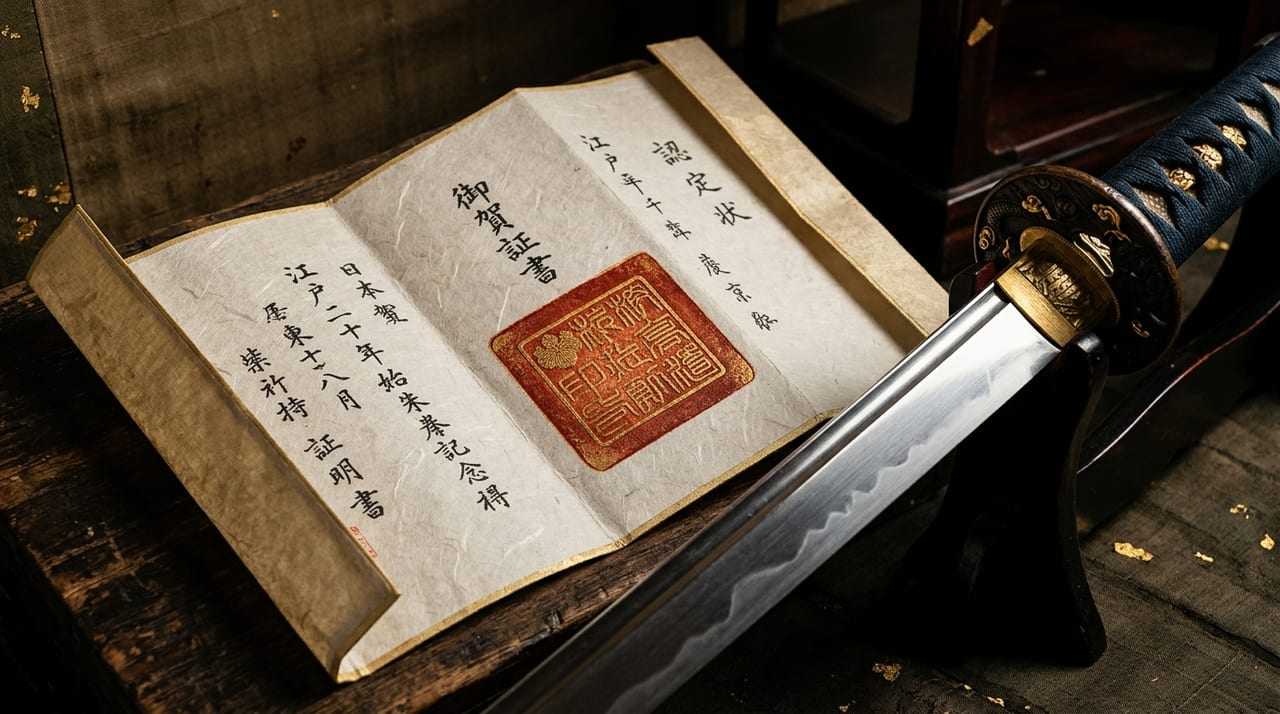 * Image is for illustrative purposes only.
Table of Contents
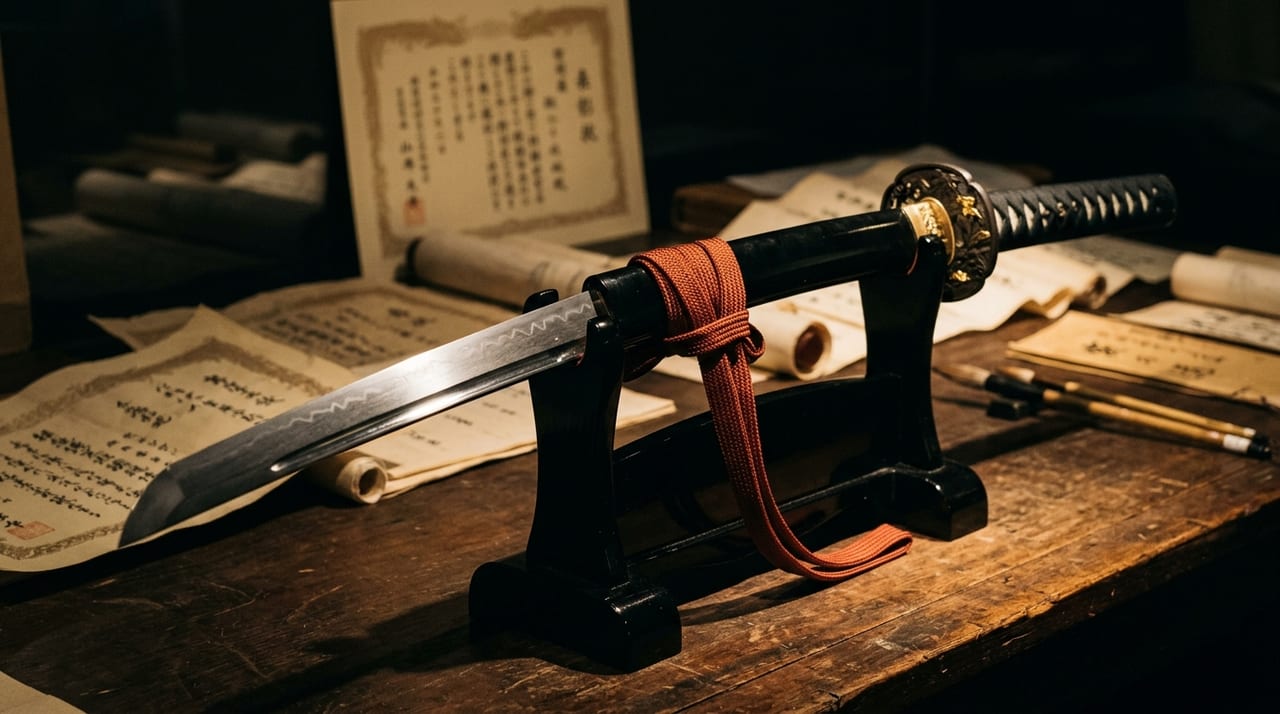
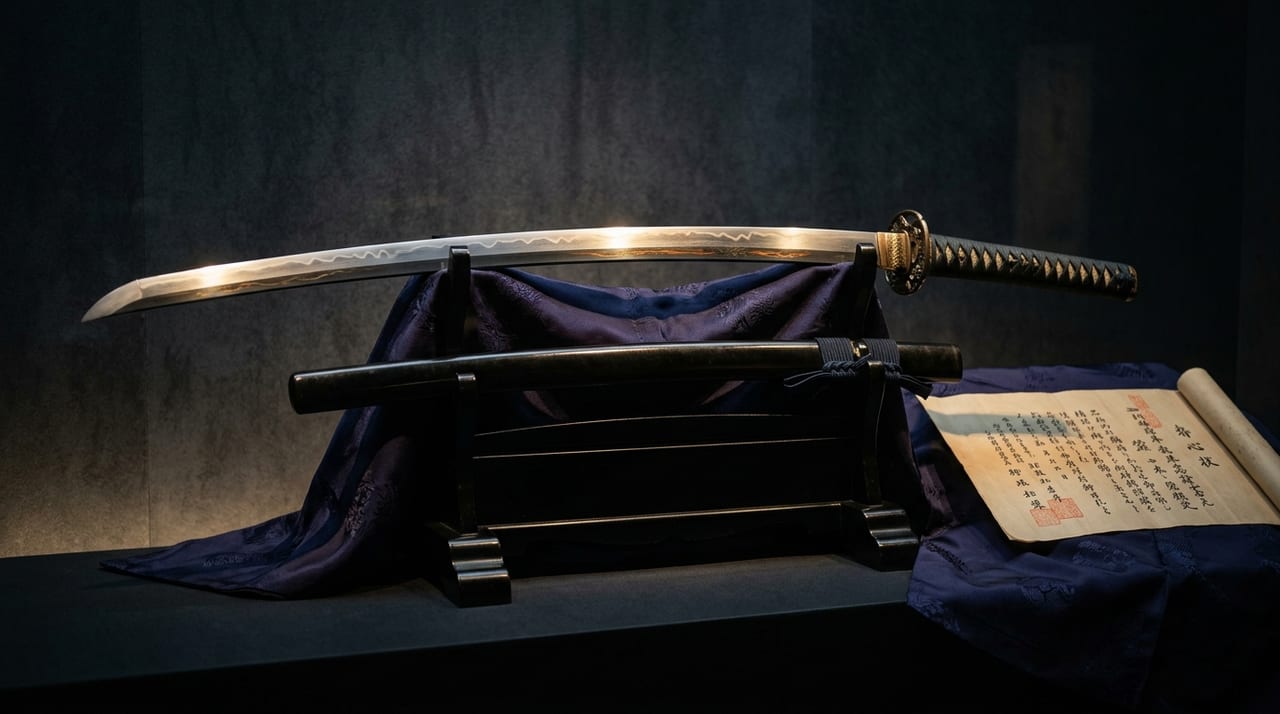
The expression "origami-tsuki" is used in everyday language today to refer to something whose quality or reputation has been recognized as reliable. The word originated in the nihontō world's term "origami." Origami refers to the kanteisho issued primarily during the Edo period by the Honami family, who made sword appraisal their hereditary trade. The name is said to derive from the practice of folding hōsho paper or danshi paper in half.
This article examines what origami was as a document, what it contained, and why "origami-tsuki" became synonymous with trustworthiness. It also clarifies the differences from modern kanteisho.
What Kind of Document Was Origami?
Origami was a written document issued to record the results of a sword appraisal. Its name comes from the practice of folding the paper in half, and it was treated as proof of an appraisal with an official character. It was issued by the Honami family, who had been involved in sword polishing, maintenance, and appraisal since before the Muromachi period. According to explanations from the Nagoya Japanese Sword Museum and others, only the main house could issue origami, and appraisals were reportedly conducted through deliberation between the main house and branch houses.
Accounts of when the system began vary depending on the source. Some explain that the appraisal system was established as an authenticating authority during the Keichō era (around 1596), while others state that Honami Kōtoku became the authenticating authority during the Genna era. In any case, it is sufficient to understand that by the early Edo period, a system had been established in which the Honami family served as appraisers for the swords of the shogunate and daimyo families, and the written results of those appraisals circulated as origami.
The reasons origami were so highly regarded include the following:
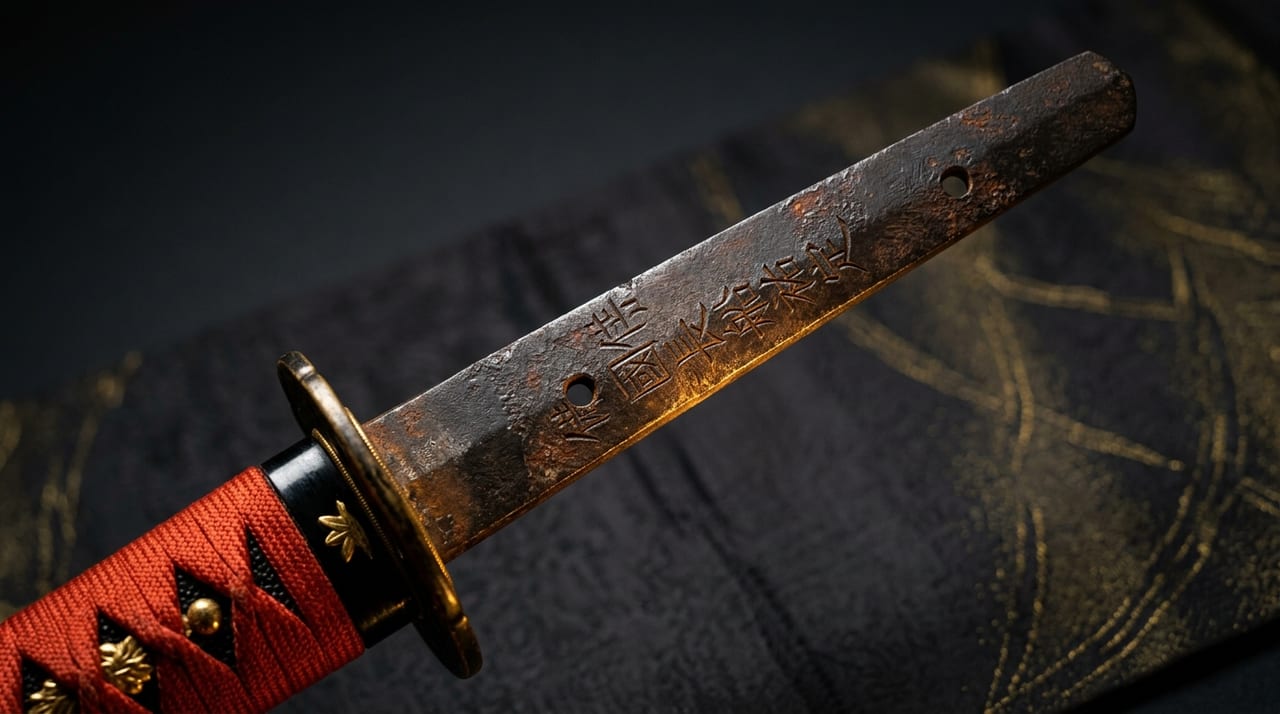
- Many swords were mumei or had lost their mei through suriage, so identifying the maker depended entirely on the appraiser's discernment
- In samurai gift-giving and commerce, the quality of an item needed to be substantiated by a third-party appraisal
- Because the families authorized to conduct appraisals were limited, their judgments carried a certain authority
What Was Written on Origami?
A formal origami is generally said to have contained the following information:
- The sword's maker and the result of the attribution (in the case of a mumei sword, the attributed maker)
- Dimensions and characteristics of the blade
- The shirozuke (assessed valuation)
- The date of appraisal and the name of the appraiser
The shirozuke was expressed in "mai," the unit for gold coins, or "kan," the unit for copper coins. For example, there are known cases of origami from a particular head of the Honami family bearing the notation "five gold mai." However, explanations of the meaning of shirozuke differ by source. Some interpret it as the actual transaction price, while others consider it a reference valuation indicating the sword's rank, separate from the actual sale price. Here it is sufficient to note that shirozuke was a notation expressing the sword's value in monetary form.
There are also accounts stating that a formal origami bore the Honami family's square seal on the reverse of the paper. However, the mere existence of a document does not guarantee the sword's authenticity; the correspondence between the sword and the document must be verified separately.
The Origin of the Expression "Origami-tsuki"
A sword accompanied by a Honami origami gained in value as something backed by appraisal. From this, it came to be said of a person or thing that one is "origami-tsuki," meaning their evaluation or ability is certain and can be vouched for. This is one example of terminology from the nihontō world taking root in the general language, and it can be seen as a trace left in the Japanese language by sword culture.
It should be noted that in later times there were aspects in which origami's credibility came into question. There are accounts of origami being issued indiscriminately from the mid-Edo period onward, and cases are recorded of heads of the Honami family issuing "naishō origami" — origami issued without the deliberation of the branch houses. This illustrates that the more authoritative a document, the more easily its trustworthiness suffers when its management becomes lax.
Differences from Modern Kanteisho
Modern sword appraisal centers on the examinations conducted by bodies such as the NBTHK (Society for the Preservation of Japanese Art Swords) and the kanteisho based on those examinations. A rough summary of the differences between origami and modern kanteisho is as follows:
- Issuing body: origami were issued by the Honami family; modern kanteisho are issued through organizational examination
- Contents: origami sometimes included a shirozuke; modern kanteisho focus on classification and attribution of maker, and do not include pricing
- Role: origami were certificates that held currency in Edo-period samurai society; modern kanteisho serve as a reference for evaluating and preserving swords as works of art
If an old sword comes accompanied by an origami, it becomes a resource for learning how that sword was evaluated during the Edo period. At the same time, the attribution in an origami does not necessarily agree with the results of modern appraisal. This is because standards and accumulated scholarship differ across eras. It is appropriate to read origami as "a record of evaluation at the time."
Points to Bear in Mind When Viewing Swords
When encountering origami in the buying, selling, or appreciation of nihontō, the following points are worth keeping in mind:
- Origami is an accompanying document, not the sword itself
- Whether the document is genuine and whether it corresponds to the sword requires separate verification
- For assessing the maker and period, both the origami and modern kanteisho should be consulted
Origami is a document that shows nihontō were not merely weapons but also works of art whose value was substantiated through appraisal and authority. For those wishing to learn more about the relationship between appraisal and commerce, The Mid-Edo Sword Appraisal Boom and the Honami Family and The Techniques of Kinzōgan-mei and Ginzōgan-mei are also useful references.
Sources consulted: What is sword origami (Nagoya Japanese Sword Museum), The Honami Family and Origami (Touken World)