The Fee Structure and Application Period for Sword Kanteisho — Practical Guide from Submission to Issuance by NBTHK
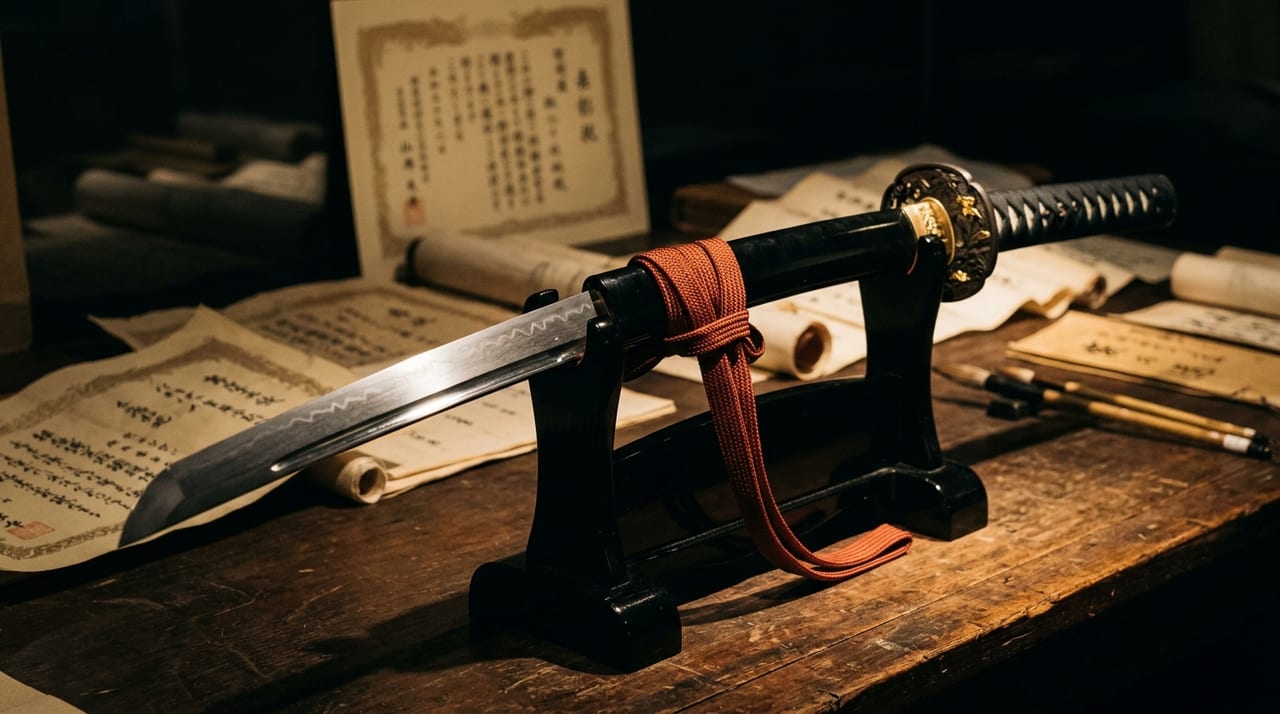 * Image is for illustrative purposes only.
Table of Contents
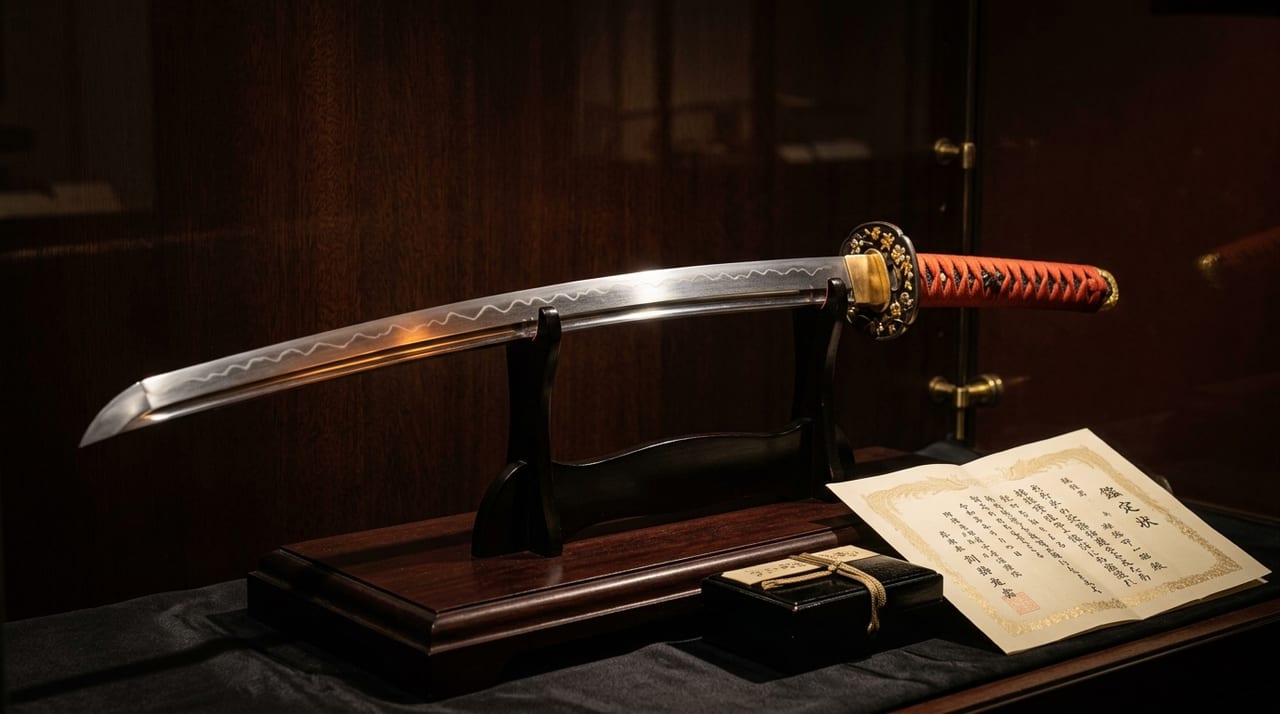
What Is a Kanteisho — The "Official Passport" of a Nihontō
When buying, selling, collecting, or inheriting nihontō, a kanteisho is indispensable. Among these, the kanteisho issued by the NBTHK (Society for the Preservation of Japanese Art Swords) functions as the most trusted certificate of evaluation both domestically and internationally.
Kanteisho are broadly divided into three grades, called "Hozon Tōken," "Tokubetsu Hozon Tōken," and "Jūyō Tōken (Jūtō)." There is also a highest rank called "Tokubetsu Jūyō Tōken (Tokujū)," which is positioned one step below kokuhō (National Treasure) and jūyō bunkazai (Important Cultural Property).
These documents are not mere certificates of appreciation. They serve as the basis for price assessments conducted by sword dealers, and also function as supporting documentation for insurance contracts. Describing them as the "official passport" of nihontō is perhaps the most accurate characterization.
This article focuses on the practical aspects of applying to NBTHK — fee structure, application methods, and examination periods. As fees and regulations may be revised, please always confirm the latest official information before applying.
NBTHK Kanteisho Grades and Their Characteristics
Hozon Tōken
This is the most basic grade. It is issued to blades recognized as genuine works that have preservation value as swords. In some cases, blades with chips, rust, or polishing scratches may still qualify if the fundamental blade shape and hamon can be confirmed. Even for blades in poor condition, there is a strategy of first obtaining "Hozon" as a stepping stone and then aiming for higher grades.
Tokubetsu Hozon Tōken
This is the grade above Hozon. It is issued to blades of particularly outstanding workmanship and condition. Marketability (ease of sale) in the sword market increases significantly, and the impact on assessed value is also pronounced.
Jūyō Tōken (commonly called "Jūtō")
This is the grade that sword collectors call "Jūtō-certified," close to the pinnacle of collector's items. Examination sessions are held twice a year, in spring and autumn, and certificates are issued following rigorous deliberative review. Whether or not a sword receives Jūtō designation can cause market prices to vary severalfold.
Tokubetsu Jūyō Tōken
This is the highest grade, awarded to particularly outstanding works among Jūtō. The examination is extremely strict, and well-known old swords and great meibutsu class blades qualify.
Application Methods and Practical Procedure
1. Individual Application and Application via Dealer
Applications to NBTHK can be made either by individuals or through sword dealers. In practice, however, applying through a dealer is the mainstream approach, for the following reasons:
- Document preparation support: Application documents require filling in basic information about the sword (nagasa, sori, kasane, mei text, etc.), and the process goes more smoothly when entrusted to an experienced dealer
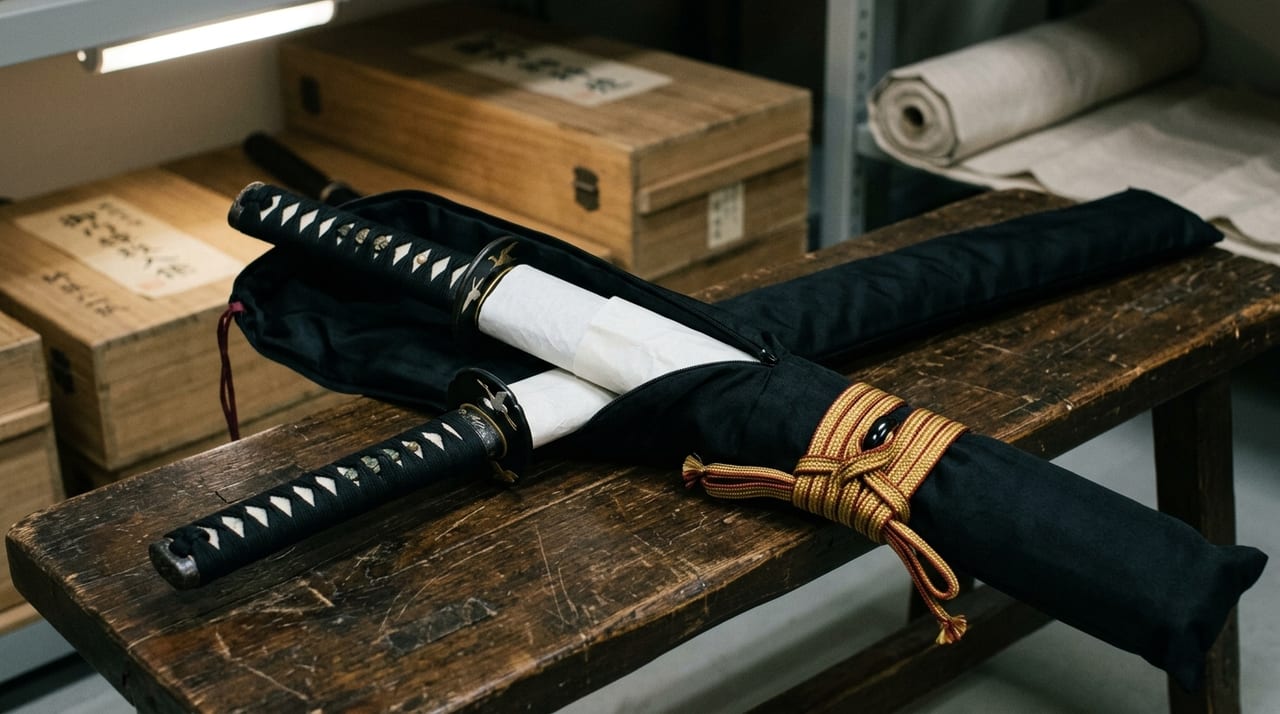
- Packaging and transportation risk management: Safe transport of swords requires specialized packaging techniques. An experienced dealer provides peace of mind
- Verification of consistency with the registration certificate: In many cases, the dealer also handles confirming that the registration certificate for firearms and swords (issued by the Board of Education) matches the sword being submitted for appraisal
For individual applications, the method is to bring the sword in person or send it by mail on a reception day at the NBTHK headquarters (Shibuya-ku, Tokyo) or at a regional branch.
2. Required Documents and Registration Certificate Verification
What is absolutely required for an application is the original or copy of the firearms and swords registration certificate (issued by the Board of Education). Swords without a registration certificate cannot be submitted for appraisal, and possessing such swords may itself be a legal issue.
If you possess an unregistered sword, the procedure is to first file a report of discovery or inheritance with the prefectural Board of Education, go through the examination and registration process to obtain a registration certificate, and then apply.
3. Application Acceptance Schedule
Examinations for "Hozon" and "Tokubetsu Hozon" are held relatively regularly, and reception periods can be confirmed through the NBTHK official website or branches. Examination sessions for "Jūyō Tōken" and "Tokubetsu Jūyō Tōken" are held twice a year (spring and autumn), and from the application deadline to examination and return takes several months.
Overview of Fee Structure (For Reference — Verify Latest Information)
Fees vary depending on the grade, type of sword (tachi, katana, wakizashi, tantō, tsuba, etc.), and blade length. The following is only a reference explanation, and before actually applying, please always confirm the latest fees at the NBTHK official website or counter.
Basic Fee Structure
- Hozon Tōken: Relatively inexpensive. Tachi and katana tend to be slightly more expensive than tantō and wakizashi
- Tokubetsu Hozon Tōken: Higher than Hozon. Costs increase as the rigor of examination increases
- Jūyō Tōken: Even higher. The operating costs of the examination committee are reflected
- Tokubetsu Jūyō Tōken: Falls into the most expensive category
Additionally, appraisal of tsuba and small fittings (tōsōgu other than the blade) often falls under a separate fee structure.
Dealer Fees
When applying through a dealer, a dealer fee is charged in addition to the appraisal fee above. The amount of the fee varies by dealer, so it is recommended to obtain quotes from multiple dealers. Conditions such as "partial refund of the fee if the certificate is not obtained" also differ by dealer.
Document Reissuance and Renewal
A certain fee is also incurred for reissuance in cases where the kanteisho has been lost or damaged. When applying for reissuance, re-examination with the sword in hand may be required.
Estimated Examination Periods
For "Hozon" and "Tokubetsu Hozon"
From examination to return of the certificate, 2 to 4 months is often used as a guideline. However, this varies depending on the time of year and the number of applications. Even in urgent cases, it is advisable to avoid buying, selling, or exporting before the kanteisho is obtained.
For "Jūyō Tōken" and "Tokubetsu Jūyō Tōken"
Due to alignment with the twice-yearly examination sessions, depending on the timing of application, it can take more than six months. If an application misses the spring examination session, one must wait until the next session (autumn).
In Case of Examination Failure (Rejection)
If a sword is not certified at the grade applied for, it is returned as-is. Rejection does not conclusively determine a question of authenticity, and there are cases where re-application is made after improving the togi condition or obtaining a reference appraisal from another institution.
Leveraging the Value of Kanteisho — Why Obtain One
Impact on Sale Price
In the sword market, the difference in assessed value between "without kanteisho (no appraisal)" and "Hozon-certified" can range from several tens of percent to severalfold. The market price premium grows larger as one moves up to "Tokubetsu Hozon" and "Jūtō."
Appeal to Overseas Collectors
Japanese sword collectors in Europe, America, and Asia place great importance on NBTHK kanteisho as proof of quality. In English-speaking countries, they are recognized under names such as "NBTHK Hozon paper," and there are many situations where the presence or absence of a kanteisho determines whether overseas sale is possible.
Insurance, Inheritance, and Asset Management
For insurance contracts on high-value swords, the assessed value based on kanteisho often serves as the basis for the insured amount. For property valuation at the time of inheritance, kanteisho also functions as an objective basis for value.
Summary — Key Practical Points
Obtaining a sword kanteisho is an unavoidable process for treating nihontō seriously as an asset or collection. The key practical points can be summarized as follows:
- First confirm whether a registration certificate exists — this is a prerequisite for a kanteisho application
- Choose between applying through a dealer or individually — for first-timers, applying through a dealer is safer
- Set a target grade — starting with Hozon and stepping up to aim for higher grades is also an effective approach
- Confirm fees and schedules with the latest information — as revisions occur, referencing the official website is essential
- Plan with examination periods in mind — if you have plans to sell or export, draw up a schedule with ample time
Understanding the kanteisho system is indispensable for correctly evaluating the value of nihontō and safely conducting sales and transfers. Please start by consulting the NBTHK website or contacting a regional branch.