The Science of Sori — Why the Curve of the Nihontō Arises and the Dimensional System of Each Part
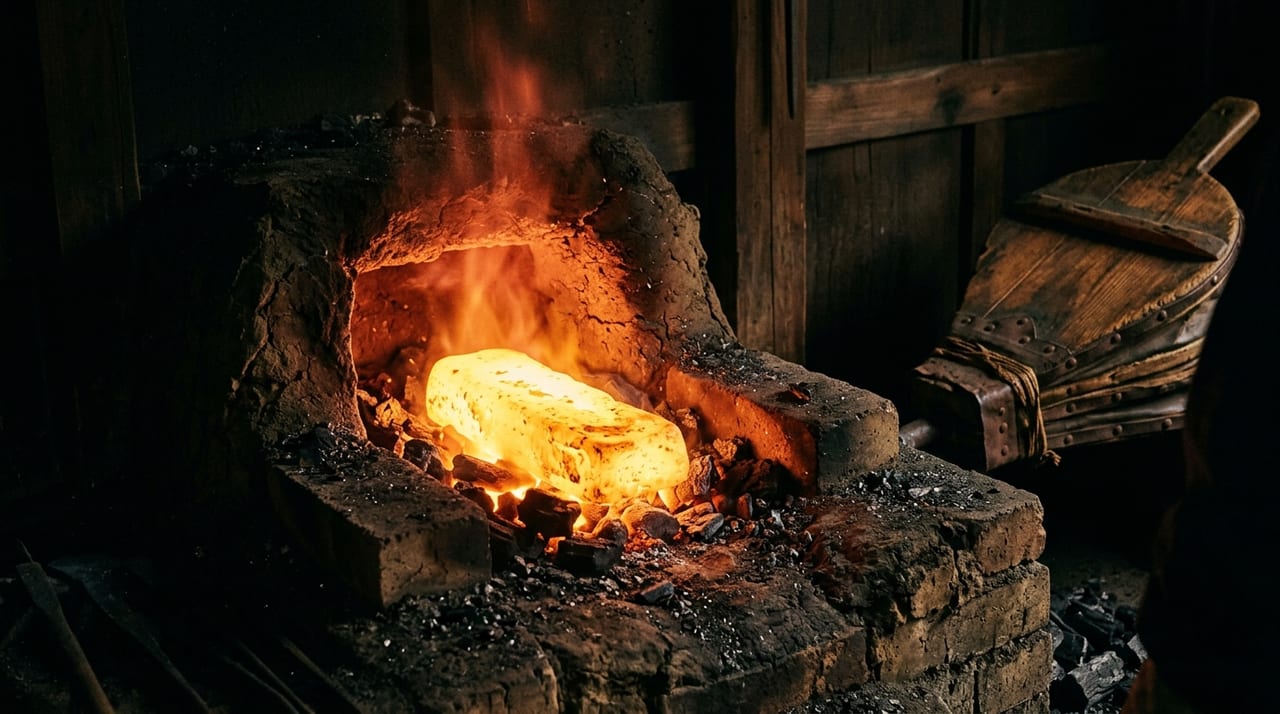 * Image is for illustrative purposes only.
Table of Contents
What Is Sori?
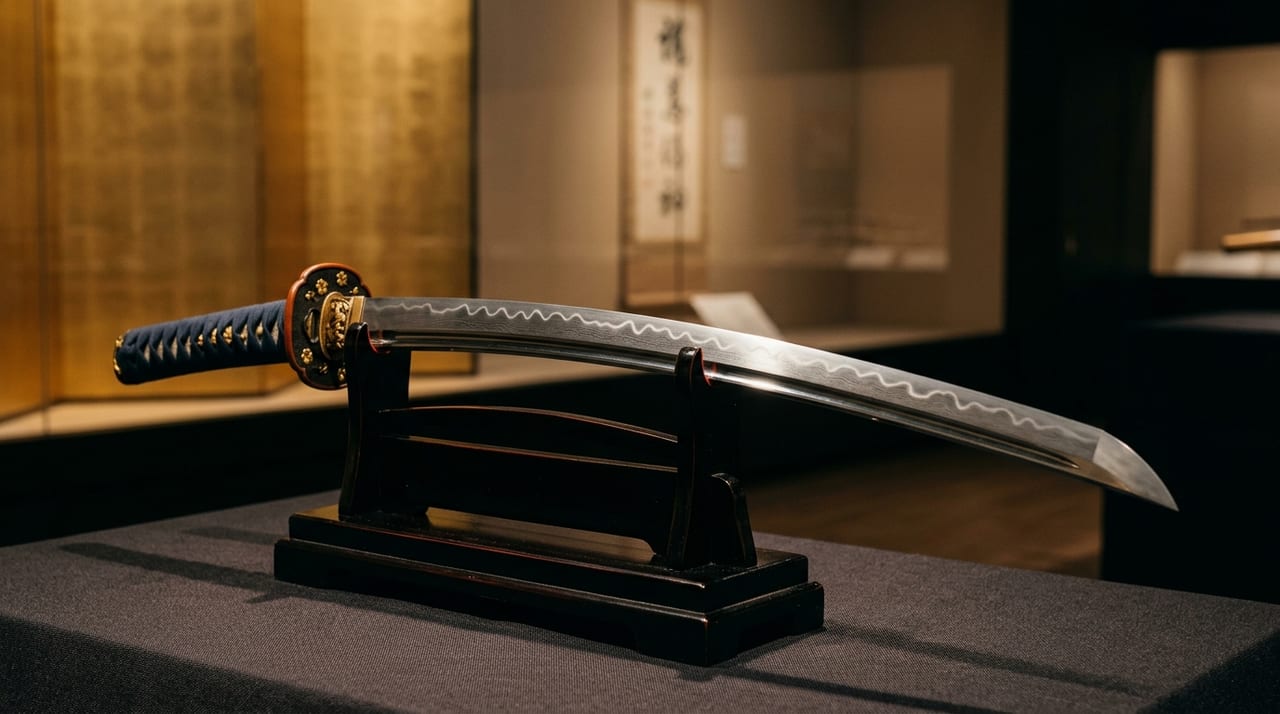
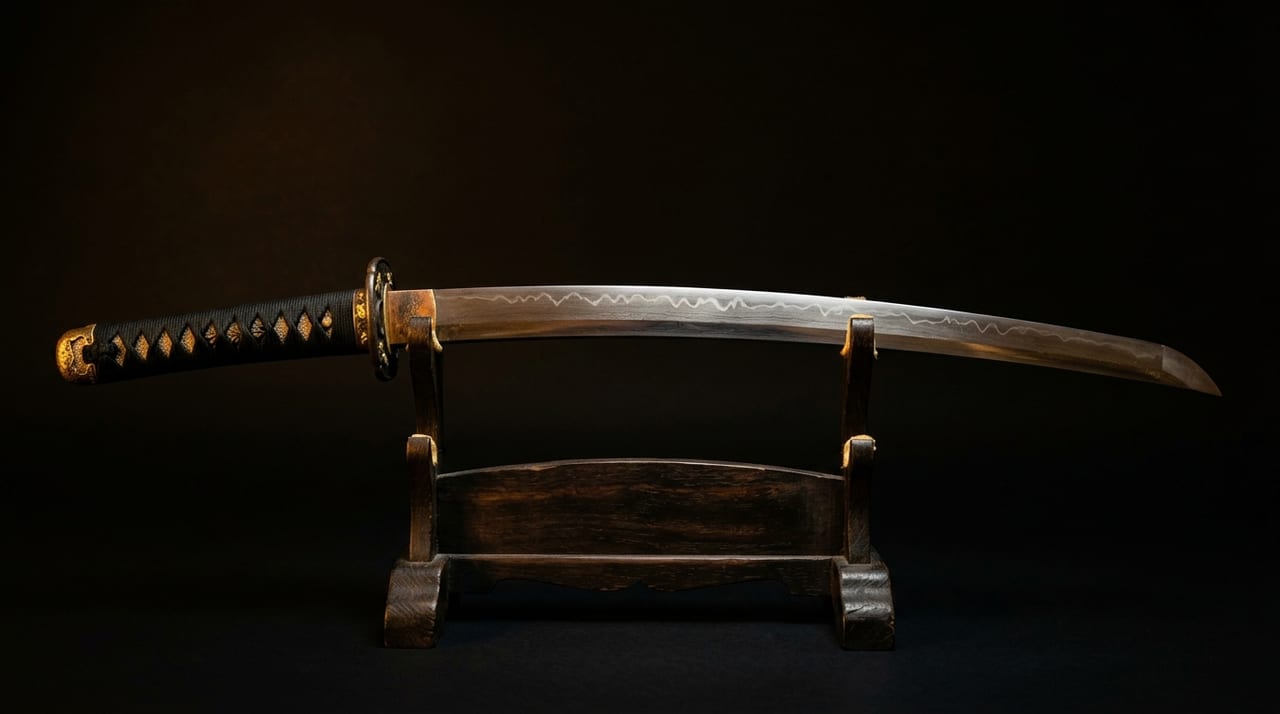
Sori refers to the arc-shaped curve that forms in the blade of a nihontō. It is the single greatest morphological feature that distinguishes the nihontō from the straight sword (ken, chokutō), and was established from the mid-Heian period (around the 10th century) onward.
Sori is not merely an aesthetic element; it is directly tied to the practical functions of cutting power, drawing speed, and portability. Moreover, the formation of sori is an inevitable product of the physical process of yaki-ire (quenching).
The Physical Mechanism Behind the Formation of Sori
The sori of a nihontō arises primarily from thermal stress during yaki-ire (quenching).
Details of the Mechanism
- Heating stage: The entire blade expands uniformly
- Water-quenching stage:
- Edge section (thin clay): rapid cooling → martensitic transformation → volume expansion (approximately 1%)
- Body/mune section (thick clay): slow cooling → pearlitic transformation → minimal volume change
3. Onset of deformation: Because the edge section expands in volume through martensitic transformation, the blade curves toward the mune (back of the blade) side
This phenomenon is explained as "bending stress toward the mune side caused by martensitic volume expansion." The tōshō (swordsmith) bends the blade slightly in the reverse direction beforehand (uchisori) so as to predict and control the sori after yaki-ire.
Additional Factors Contributing to Sori
- Work hardening during tanren (forging): The stress states of the inner and outer layers differ through orikaeshi tanren (folding)
- Thinness of the edge section: Because the edge is thinner than the body, it has lower thermal mass and undergoes greater temperature change
Part Names and Dimensional System of the Blade
Each part of a nihontō has its own name and measurement standard.
Length Dimensions
| Part Name | Reading | Measurement |
|---|---|---|
| nagasa / tōchō | hachō | Also called hawatari. Total length along the edge side |
| nakago length | nakagonaga | Length of the portion housed in the tsuka (hilt) |
| Overall length | zenchō | nagasa + nakago length |
Width and Thickness Dimensions
| Part Name | Reading | Measurement |
|---|---|---|
| motohaba | motohaba | Width at the ha-moto (base of the edge) (from the mune side to the cutting edge) |
| sakihaba | sakihaba | Width near the kissaki (point) |
| motokasane | motokasane | Thickness at the ha-moto (base of the edge) (measured from the mune side) |
| sakikasane | sakikasane | Thickness near the kissaki |
Sori Dimensions
| Part Name | Reading | Measurement |
|---|---|---|
| sori | sori | Maximum curvature of the blade (maximum distance from the string to the blade surface) |
Standard dimensions (approximate guide for a tachi of 2 shaku 3 sun 5 bu ≈ 71 cm class)
- motohaba: 29–32 mm
- sakihaba: 18–22 mm
- motokasane: 6–8 mm
- sori: 18–22 mm
Types of Sori and Their Functional Significance
Sori is classified into three types depending on which part of the blade the peak of the curve falls on.
Koshi-zori
Characteristic: The peak of the sori falls near the ha-moto (root of the blade) Period: Common in tachi of the late Heian to early Kamakura Function: Excels in downward cutting strokes on horseback. The center of gravity is closer to the hand, making it easy to control Representative: Kotō such as Ko-Bizen and Ko-Sanjō
Naka-zori
Characteristic: The peak of the sori falls near the center of the blade Period: Tachi and uchigatana of the mid-Kamakura to Nanbokuchō and Muromachi Function: Highly versatile, a shape that balances slashing and thrusting Representative: The standard shape across many periods
Saki-zori
Characteristic: The peak of the sori falls toward the kissaki (point) side Period: The "archetypal Enbun-Jōji style" and works such as Kikusui of the Nanbokuchō to Muromachi Function: Excels in thrusting and draw-cutting. The center of gravity is toward the tip Representative: Ōdachi and uchigatana of the Nanbokuchō
Historical Changes in Nagasa and Sori Over Time
The shape of the nihontō changed over time.
| Period | nagasa | Sori | Characteristics |
|---|---|---|---|
| Late Heian | 70–80 cm | Large koshi-zori | Slender and elegant tachi |
| Mid-Kamakura | 70–75 cm | Large naka-zori | Imposing body proportions |
| Nanbokuchō | 80–90 cm or more | Large saki-zori | The age of the ōdachi |
| Muromachi | 60–70 cm | Naka-zori | Transition to uchigatana |
| Early Edo | 65–70 cm | Somewhat shallow sori | Practicalization and ornamentation |
| Modern works | 65–73 cm | Naka-zori as standard | Return to tradition |
Conclusion
The sori of the nihontō is not a product of chance but an inevitable consequence of the physical phenomenon of yaki-ire (quenching), and at the same time a functionally optimized shape. Understanding the dimensional system of each part is indispensable foundational knowledge for appraising, purchasing, and collecting nihontō.