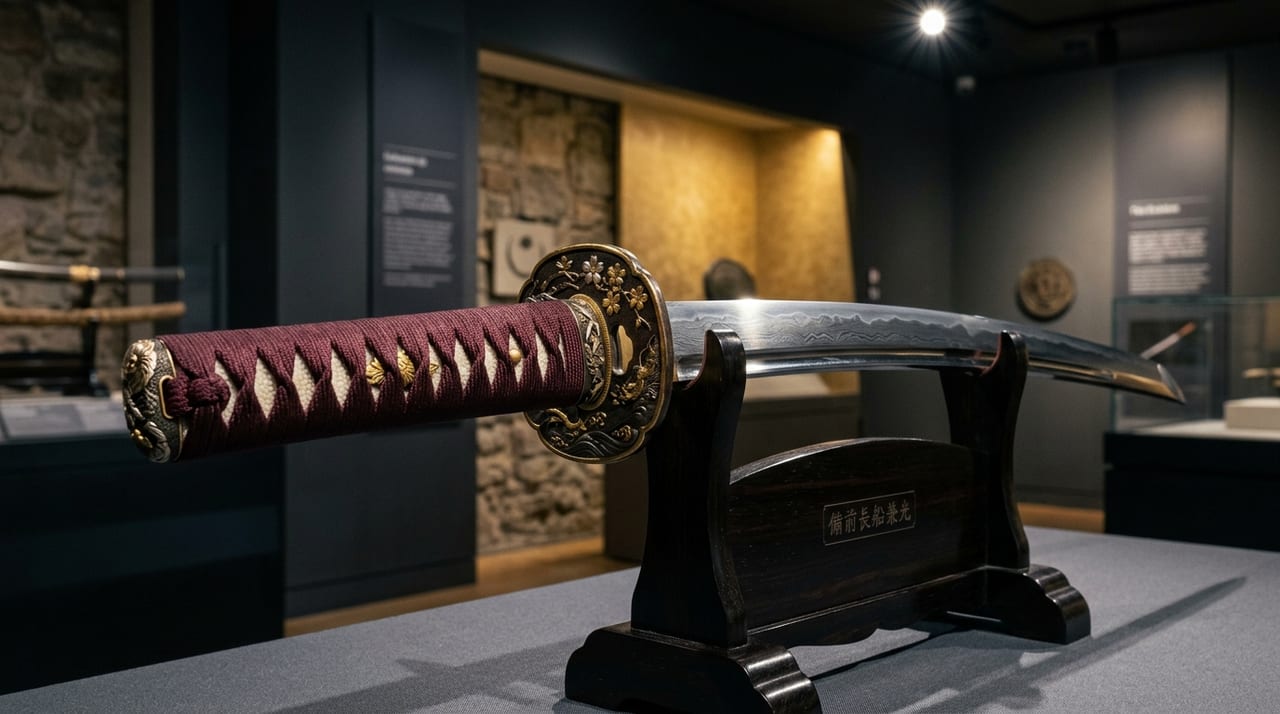
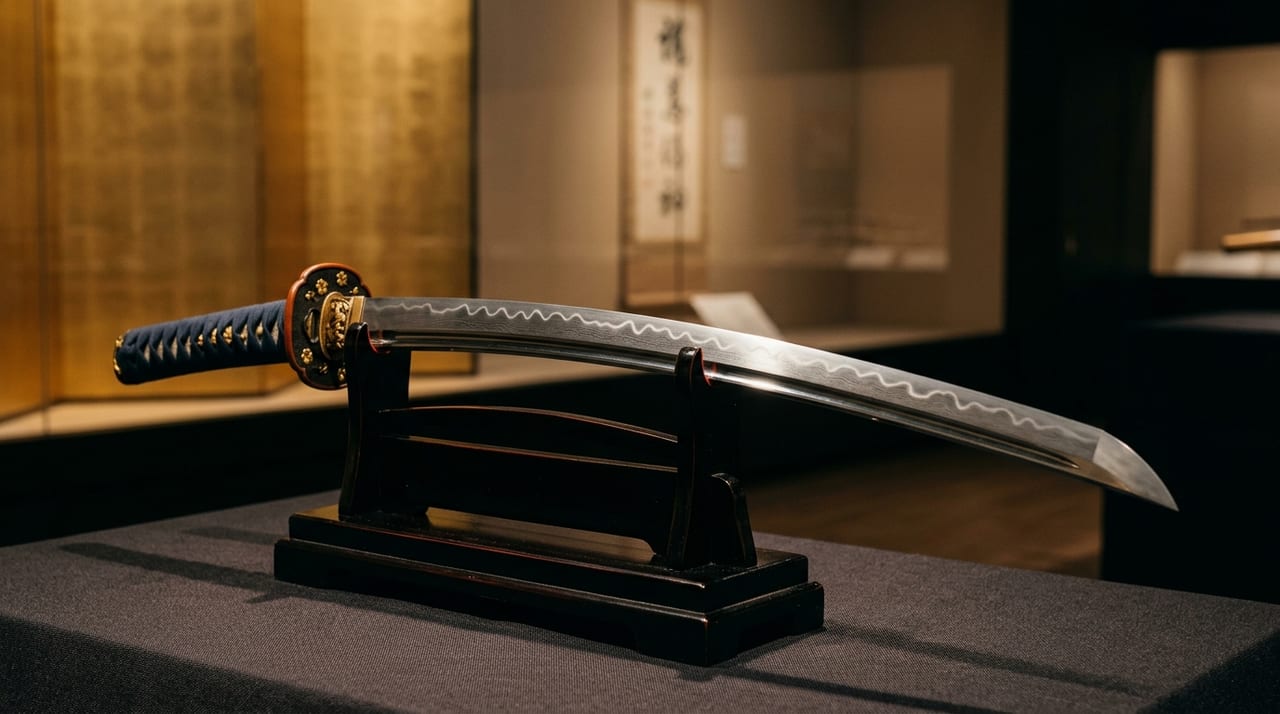
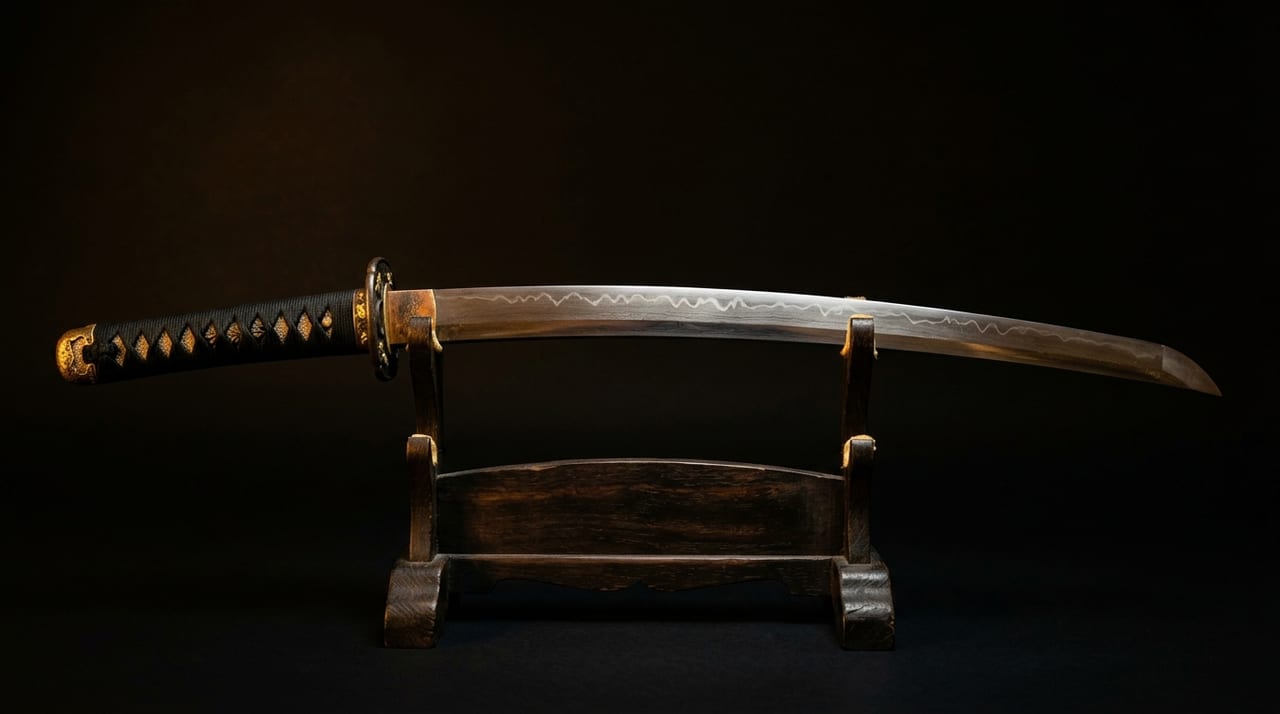
Old Swords, New Swords, and Newest Swords—The Three Eras of Japanese Swords and Their Distinguishing Characteristics
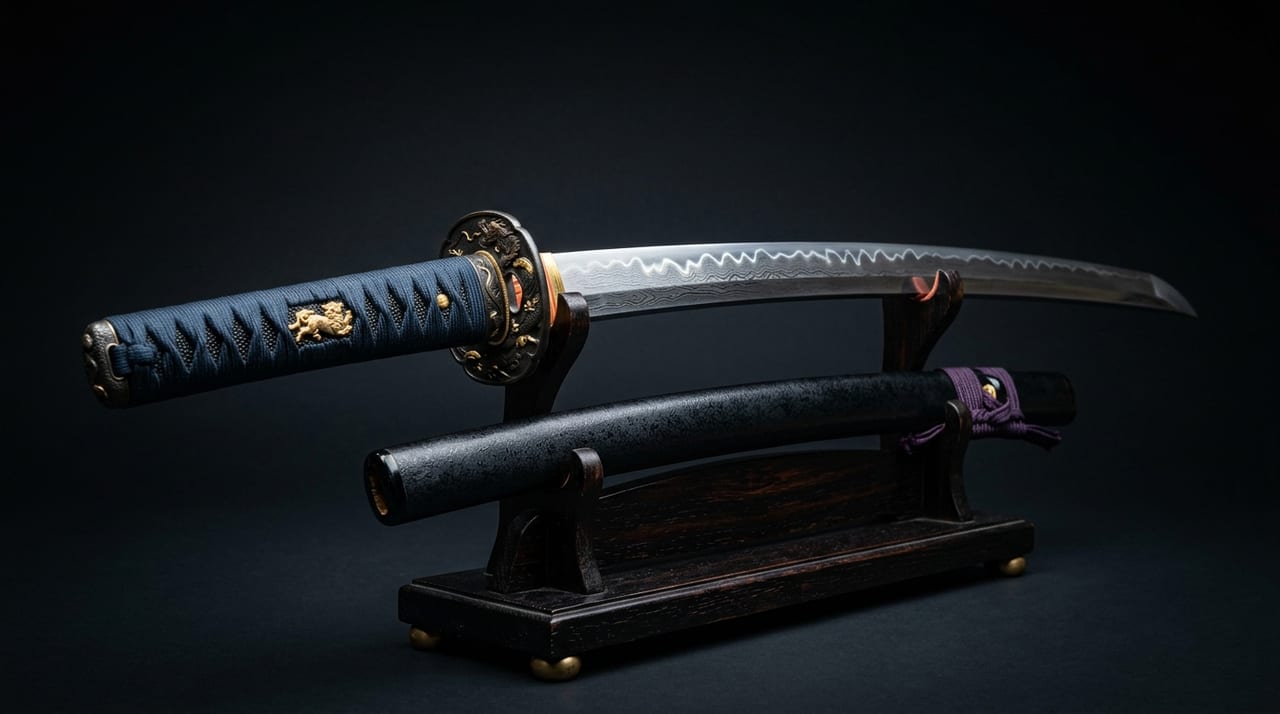 * Image is for illustrative purposes only.
Table of Contents
Three-Era Classification—The Fundamental Axis of Japanese Sword Authentication
One of the most fundamental axes for authenticating and classifying Japanese swords is "temporal classification." In Japanese sword research, the era in which a sword was made is broadly divided into the following three categories.
| Classification | Alternate Name | Temporal Period | Western Calendar |
|---|---|---|---|
| Koto (Old Swords) | Koto Era | Late Heian through Early Keicho | ~1596 CE |
| Shinto (New Swords) | Shinto Era | Keicho through Early Tenmei | 1596–1781 CE |
| Shinshintō (Newest Swords) | Shinshintō Era | Anei through Meiji 9 | 1772–1876 CE |
After the "Edict Abolishing Swords" (Haitorei) in 1876 (Meiji 9), swords are called "contemporary blades" (gendaito), but for authentication purposes, these three classifications remain the foundation.
Koto (Old Swords)—"Genuine Battle Blades" of the Heian through Sengoku Periods
The koto era (through 1596) was the age when Japanese swords were literally forged as "instruments of war." Blades from this era were created using distinctive forging techniques designed to withstand the harsh realities of actual combat.
Characteristics of Koto Forging (Smithcraft)
Tamahagane (Precious Steel): Koto-era smiths used tamahagane (a high-carbon steel made from iron sand) produced through tatara smelting. Due to its uneven carbon content, this steel formed "complex iron layers" during the forging process.
Folding and Reforging: Tamahagane was repeatedly folded and forged (typically around 15 times) to remove impurities and achieve uniform carbon distribution. Because koto-era tamahagane was particularly rich in impurities, sophisticated folding techniques were essential.
Complexity of the Jigane (Steel Surface Pattern): The jigane (surface pattern of the steel blade) of koto swords features intricate interweaving of grain patterns—itamehada (wood-grain), mokumehada (wavy grain), and masame (straight grain)—giving them distinctive "variation" and "depth." Authenticators can infer the origin and school of a sword from the complexity of its jigane.
Major Koto Production Centers and the Five Traditions (Goka-den)
Koto-era Japanese swords emerged from five major production centers known as the "Five Traditions" (Goka-den).
- Yamashiro Tradition: Centered in Kyoto. Schools included Awataguchi, Rai, and Ayanokōji. Characterized by slender blades with elegant refinement.
- Yamato Tradition: Centered around Nara. Schools included Tegaki and Senjuin. Characterized by rounded temper patterns and hard steel surfaces.
- Bizen Tradition: Centered in Okayama (former Bizen Province). Osafune, at its heart, produced vast quantities of renowned swords. Characterized by irregular temper lines (midareba).
- Soushu Tradition: Centered in Kanagawa (former Sagami Province). Represented by Masamune and Yukimitsu. Characterized by intense "boiling" (nie) in the temper pattern.
- Mino Tradition: Centered in Gifu (former Mino Province). Led by smiths from Seki. Characterized by practical, uniform blades.
Representative Koto-Era Smiths
- Sanjo Munechika: Late Heian period (late 10th to early 11th century, around the Eien era). Created legendary swords such as "Mikazuki Munechika" and "Ishikiri Maru."
- Awataguchi Yoshimitsu: Mid-Kamakura period. Renowned as a supreme master of short sword (tantō) crafting.
- Masamune: Late Kamakura period. Remembered by posterity as "the supreme sword smith."
- Osafune Nagamitsu: Representative Bizen smith of the Kamakura period.
Shinto (New Swords)—The "Art Blade" Era of Edo
With the Keicho period (1596 onward), Japanese swords entered the "shinto era." This transition marked not merely a change of calendar year but a fundamental shift in the nature of the Japanese sword itself.
The Shinto Transition—From "Combat Blades" to "Ceremonial and Art Swords"
Following the Battle of Sekigahara (1600), the Tokugawa shogunate brought the entire nation under its control, and large-scale warfare ceased. During the peaceful Edo period, the sword transformed in character from "weapon" to "symbol of samurai status" and "work of art."
Characteristics of Shinto Forging and Steel Patterns
The shinto era witnessed changes in forging techniques and materials.
Influx of Nanban Iron (Southern Barbarian Iron): With the Edo period came imports of high-quality European iron through trade with Portugal and the Netherlands (nanban iron), which some sword smiths began to use as a material.
Homogenized Steel Patterns: As material quality became more stable, the "complex variations" characteristic of koto steel were lost, but achieving uniform and beautiful patterns became easier. Authenticators often note that "shinto steel is beautiful but lacks the depth of koto."
Refinement of Temper Lines: Shinto temper patterns typically feature orderly, beautiful arrangements of forms such as gunome (comb pattern), notare (undulating), and suguha (straight).
Representative Shinto-Era Smiths
- Nagasone Kotetsu: Early to mid-Edo period. Praised for blades renowned for "superior cutting ability worldwide." It is said that Kondo Isami possessed a Kotetsu blade (though interpretations vary).
- Echizen Yasutsugu: Official sword smith to Tokugawa Ieyasu. Blades bearing the "Yasutsugu" mark were valued as official shogunate works.
- Inoue Shinkai: Renowned master from Osaka. Creator of numerous masterworks, including a fighting sword (uchigatana) owned by Yodo Dono.
- Tsuda Echizen no Kami Sukehiro: Master representative of the Osaka shinto era. Pioneered the bold "toran blade" (toranba) with overlapping wave patterns, exerting profound influence on sword smiths of later generations.
Shinshintō (Newest Swords)—Revival of Koto Traditions and Final Artistic Perfection
Around the Anei period (circa 1772) through the early Tenmei period, Japanese swords entered the "shinshintō era" as the nation moved toward the late Edo period.
Characteristics of Shinshintō—"Revival of Koto Traditions"
The doctrine of "koto research and koto revival" championed by Suishinshi Masahide (1750–1825) became the foundation of shinshintō. Shinshintō smiths departed from the Edo "art blade" style to study koto swords from the Kamakura and Namboku-Chō periods as their models, seeking to restore those techniques to contemporary practice.
Commitment to Materials: Smiths used traditional tamahagane rather than nanban iron, attempting to restore the "complex steel patterns" of the koto era.
Diversification of Temper Patterns: By studying koto forms such as "gunome-midareba" and "choji-midareba," they created shinshintō's distinctive bold temper patterns.
Representative Shinshintō-Era Smiths
- Suishinshi Masahide: The founder-like figure of shinshintō. Authored and systematized "The Genealogy of Sword-Making Technique."
- Minamoto Kiyomaro: One of the greatest masters of the late Edo period. Characterized by dramatic temper patterns and practical blade forms.
Minamoto Kiyomaro was a prodigy smith from Shinshū (present-day Nagano Prefecture) who went to Edo and established his own forging method. Additionally, because well-preserved examples of shinshintō blades are relatively common in the market and more accessible than koto or shinto pieces, they are often considered ideal for those beginning to collect Japanese swords.
- Koyama Munetsugu: Known for his uniform and beautiful steel patterns.
Authentication in Practice—Distinguishing the Three Eras
| Element | Koto | Shinto | Shinshintō |
|---|---|---|---|
| Steel Pattern | Complex and varied | Uniform and refined | Variation with attempted koto restoration |
| Temper Pattern | Strength and wildness | Orderly and refined | Bold or koto-like |
| Curve | Waist curve (koto period) | Mid curve | Koto-like or mid curve |
| Rust on Tang | Black to reddish-black | Black to red | Relatively modern rust color |
Summary—Understanding the Three Eras Is Possessing a Map of Japanese Sword Culture
Understanding the three-era classification of koto, shinto, and shinshintō is tantamount to possessing a "map" to navigate the vast ocean of Japanese swords. Knowing what era a blade comes from and which school's lineage it follows—this foundational knowledge deepens the true pleasure of appreciating and collecting Japanese swords many times over.