Kanashi and Tōkō — The History of Those Who Ran Tatara and Supplied Tamahagane
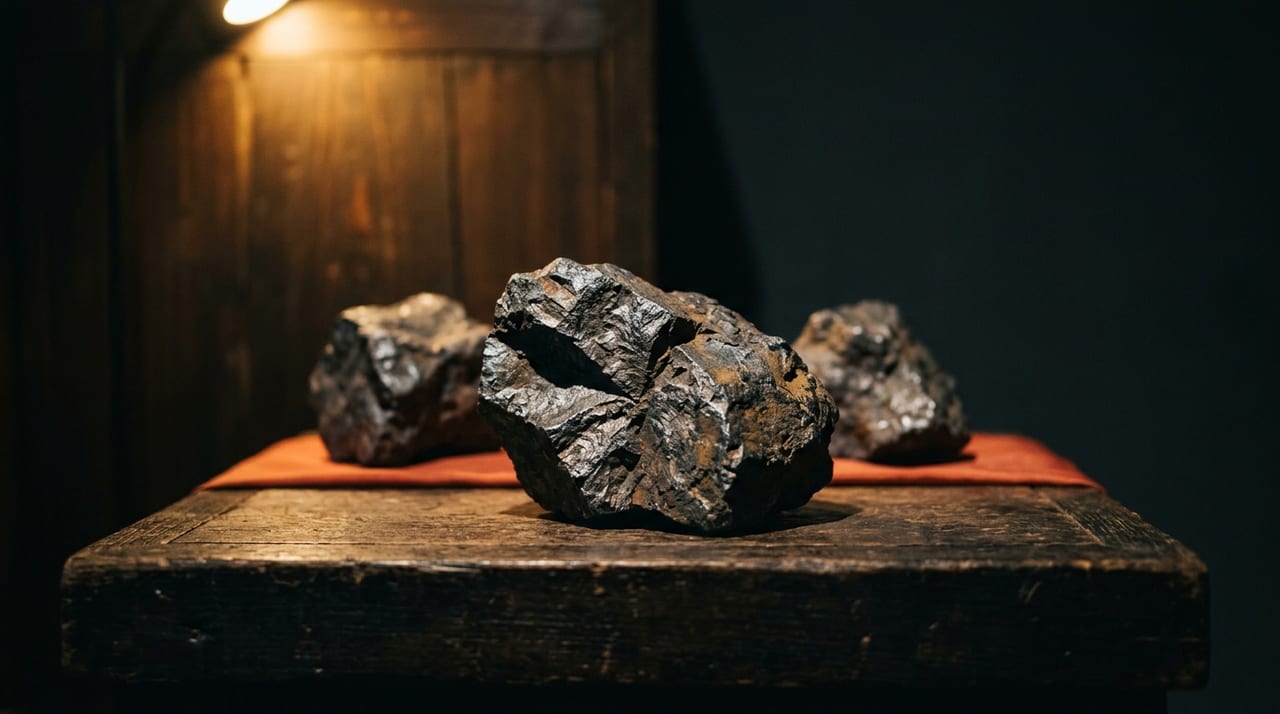 * Image is for illustrative purposes only.
Table of Contents
Where Does Tamahagane Come From — Tatara and the Kanashi
The tamahagane that forms the material of the nihontō is produced by a traditional iron-smelting method called tatara. The main production region for tatara is the Chugoku Mountains (a region spanning present-day Shimane, Tottori, Hiroshima, and Okayama prefectures), and in particular the Oku-Izumo area of Shimane Prefecture has long been known as a "land of iron."
The specialized group that carried out tatara was the "kanashi." The kanashi were a group of manager-technicians who oversaw every stage of tatara production, from collecting satetsu (iron sand) and managing the smelting furnaces (tatara furnaces) to procuring charcoal and distributing the finished products. When people speak of the beauty of the nihontō, attention tends to focus exclusively on the skill of the tōkō, but knowing about these behind-the-scenes contributors is indispensable.
How Tatara Works
The basic principle of tatara is to alternately feed satetsu and charcoal into a large clay furnace (roughly 1–1.5 m in height and 3–4 m in length), then force air through using large bellows (tenbinfuigo, balance-beam bellows) to carry out reduction smelting at high temperatures.
One operating cycle (called "hitoshiro") is roughly 72 hours of continuous work, continuing until the furnace becomes unusable. The iron mass extracted by dismantling the furnace after the operation is called "kera (hana)," and what is obtained by splitting and sorting this kera is classified into types such as "tamahagane," "kera," and "zuku."
Of these, the portion with appropriate carbon content (approximately 0.6–1.5%) and good quality is selected as "tamahagane" for tōkō. The proportion of tamahagane obtainable from a single operation is roughly 10–15% of total production, while the remainder was distributed as iron for agricultural implements and tools. It can be said that the scarcity of high-quality tamahagane underpins the rarity value of the nihontō itself from below.
The Organizational Structure of the Kanashi
The kanashi of the Chugoku Mountains established a highly organized management system during the Edo period. As a representative organizational form, large-scale kanashi called "tetsuzanshi" managed multiple small-scale smelting furnaces (called "takadono") and employed a large number of craftsmen and workers.
As representative kanashi, the Tanabe family (Tanabe-ke), Sakurai family (Sakurai-ke), and Itohara family (Itohara-ke) held great influence in the Shimane and Tottori regions. These kanashi were not merely iron producers but held economic and political power as influential regional figures and major landowners, and through their transactions with tōkō across various regions, they sometimes established a position of advantage as sellers relative to buyers.
A division of labor among craftsmen involved in iron production was also well established, with the following principal roles:
- Murage: The person with overall technical responsibility for the smelting furnace. The chief technician who controlled heat, the quantity of satetsu fed in, and charcoal adjustments, holding the highest position among tatara workers.
- Daiku: A construction technician responsible for building and repairing the furnace, who handled material selection (clay, stone, etc.) and structural design of the furnace.
- Sumikata: Responsible for procuring and managing charcoal. Since securing high-quality charcoal was directly linked to the quality of iron production, the skills and procurement network of the sumikata were an important source of competitive advantage.
- Satetsuhori: A group of workers who collected satetsu. Experience-based skills in reading the distribution of satetsu in mountains were required.
The Relationship Between Kanashi and Tōkō — Complex Mutual Dependence
The relationship between kanashi and tōkō was not a simple commercial transaction of "kanashi selling tamahagane and tōkō buying it," but involved complex mutual dependence and tension.
- Tōkō evaluation of tamahagane: Tōkō evaluated the quality of tamahagane they purchased through methods such as "splitting it and looking at the cross-section," "striking it and listening to the sound," and "observing the surface." The discernment to identify high-quality tamahagane was one of the important skills of tōkō, and it is said that even among those buying from the same kanashi, each tōkō's ability to select "good iron" varied.
- Formation of regional brands: Regional brands such as "Izumo no satetsu (iron sand of Izumo)" and "Chugoku Sanchi no tamahagane (tamahagane of the Chugoku Mountains)" were formed through the trust and evaluation of tōkō. Many tōkō favored the tamahagane of specific kanashi as "iron of Master ○○," and long-term trading relationships were built.
- Negotiations over delivery quantities and quality: Since kanashi supplied tamahagane to multiple tōkō, they held the power of choice as to "which tōkō to prioritize for high-quality tamahagane supply." While renowned tōkō could secure high-quality tamahagane at premium prices, newcomer tōkō sometimes had to make do with what remained.
- Exchange of technical information: There was a two-way flow of technical information between kanashi and tōkō. Feedback from tōkō (such as "recent tamahagane has low carbon content" or "the hamon is difficult to bring out with iron from this area") was utilized for production improvements by kanashi, while technical information from the kanashi side (such as "this year the satetsu quality is better than usual" or "we tried a new way of building the furnace") influenced tōkō's material selection.
Tamahagane Distribution and Prices in the Edo Period
In the Edo period, tamahagane distribution was conducted mainly through sword wholesalers in Edo, Osaka, and Kyoto. A multi-stage distribution channel was formed in which kanashi in producing regions wholesaled to regional wholesalers, regional wholesalers shipped to receiving wholesalers in Edo and Osaka, and receiving wholesalers sold to tōkō and sword merchants.
Tamahagane prices fluctuated greatly depending on the era, producing region, and quality, but it is said that in the mid-Edo period, the cost for a tōkō to acquire the tamahagane (roughly 8–12 kg) needed to make a single tachi was equivalent to a skilled worker's monthly wages. Securing high-quality tamahagane was a critical business challenge for tōkō, and the more skilled the tōkō, the more effort they put into discerning the quality of materials.
Modern Tatara — Nittōho Tatara and Securing Tamahagane
After the Meiji era, traditional tatara declined rapidly with the spread of Western-style iron-smelting technology. The tatara that had nearly become extinct by the Taisho era was revived by "Nittōho Tatara," which began operations in Oku-Izumo, Shimane Prefecture in 1977 (Showa 52).
Led by the NBTHK, Nittōho Tatara produces the tamahagane needed by modern tōkō through one annual operation (in winter). Currently, virtually all tamahagane used by domestic tōkō is produced by this Nittōho Tatara, ensuring a stable supply to tōkō.
However, the amount of tamahagane that Nittōho Tatara can produce is limited, and it is said to always be barely sufficient to meet the demand of tōkō nationwide. There are also discussions comparing the quality consistency of this tamahagane with traditional Edo-period regional tamahagane, and among researchers, "differences between modern tamahagane and old tamahagane" remains an ongoing research theme.
Conclusion — The Kanashi: The Unsung Pillars of Tōkō Culture
The beauty and function of the nihontō are often attributed to the skill of the tōkō. However, the cultural heights of the nihontō could not have been achieved without the kanashi who produced the tamahagane — the material supporting the tōkō's skill — and the tatara system that formed their technical framework. The kanashi are an indispensable presence in the history of the nihontō as the bearers of the "material and economic foundation that supported tōkō as artists." The modern continuation of tatara and the research and preservation activities that support it are an important endeavor for passing on the whole of nihontō culture to future generations.