Sword Smiths of Kyushu and the Satsuma Tradition — the Naminohira School, the Jigen-ryū, and the Unique Sword Culture of Southern Kyushu
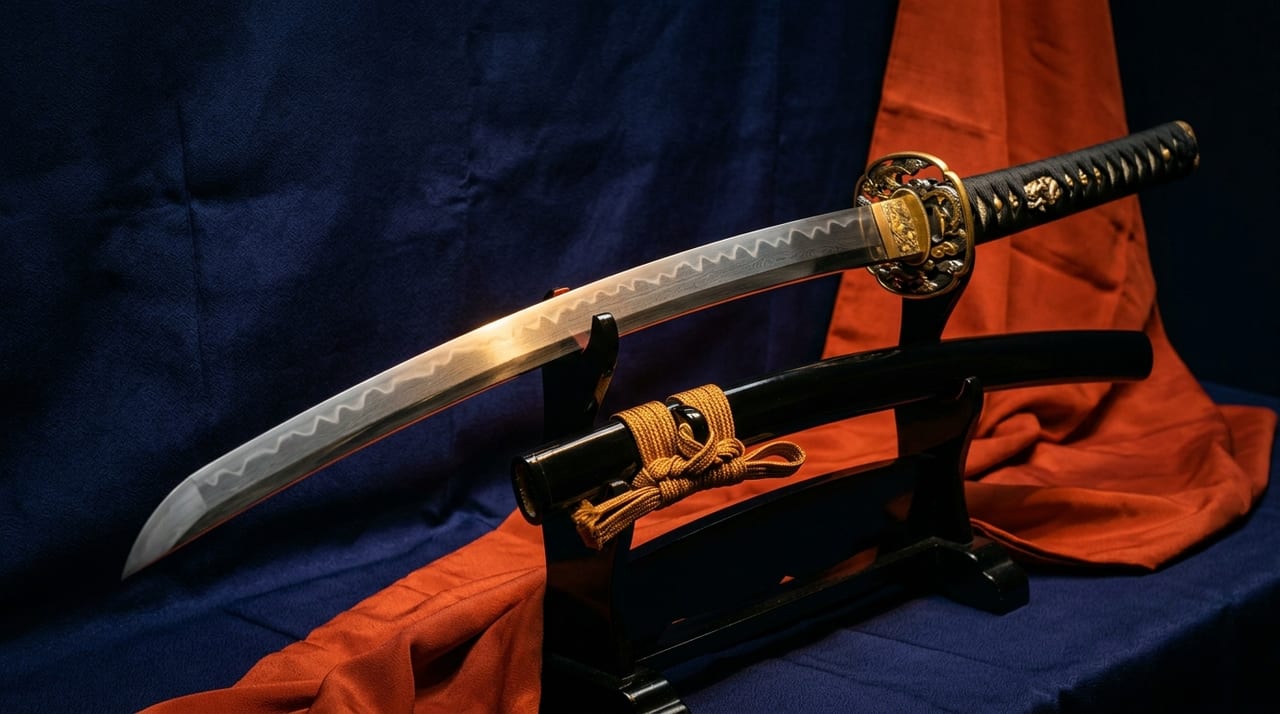
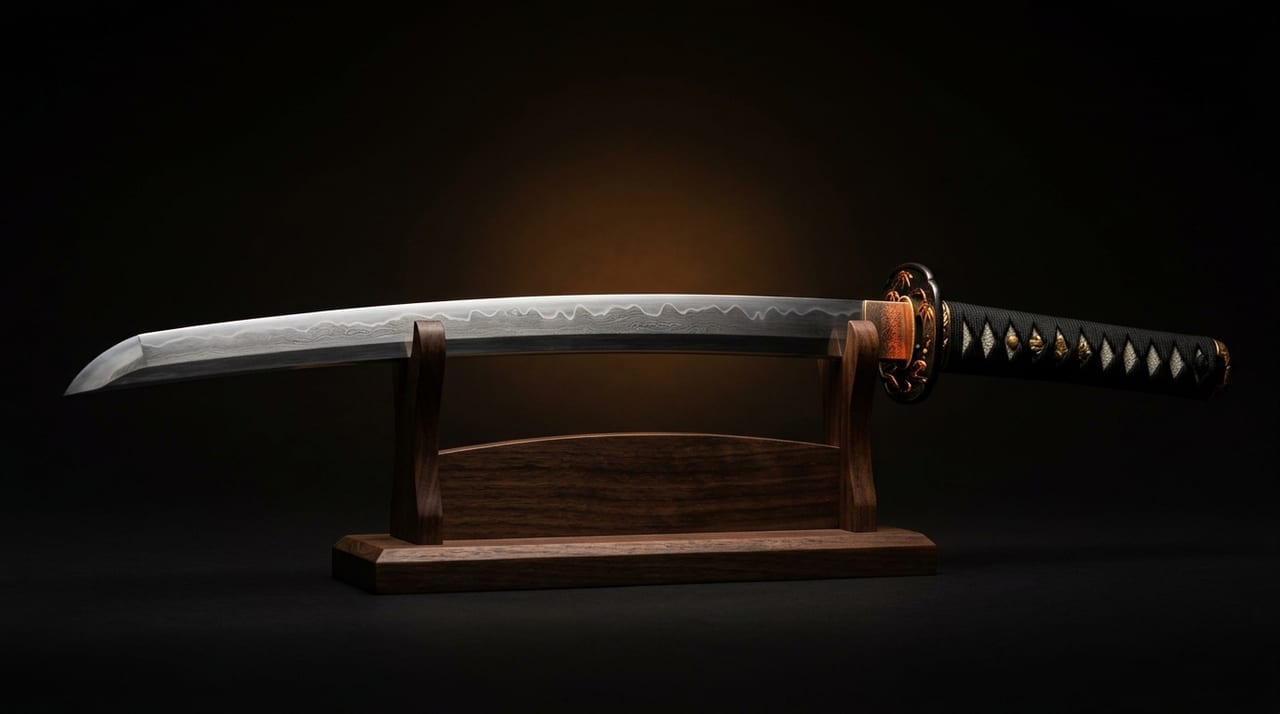
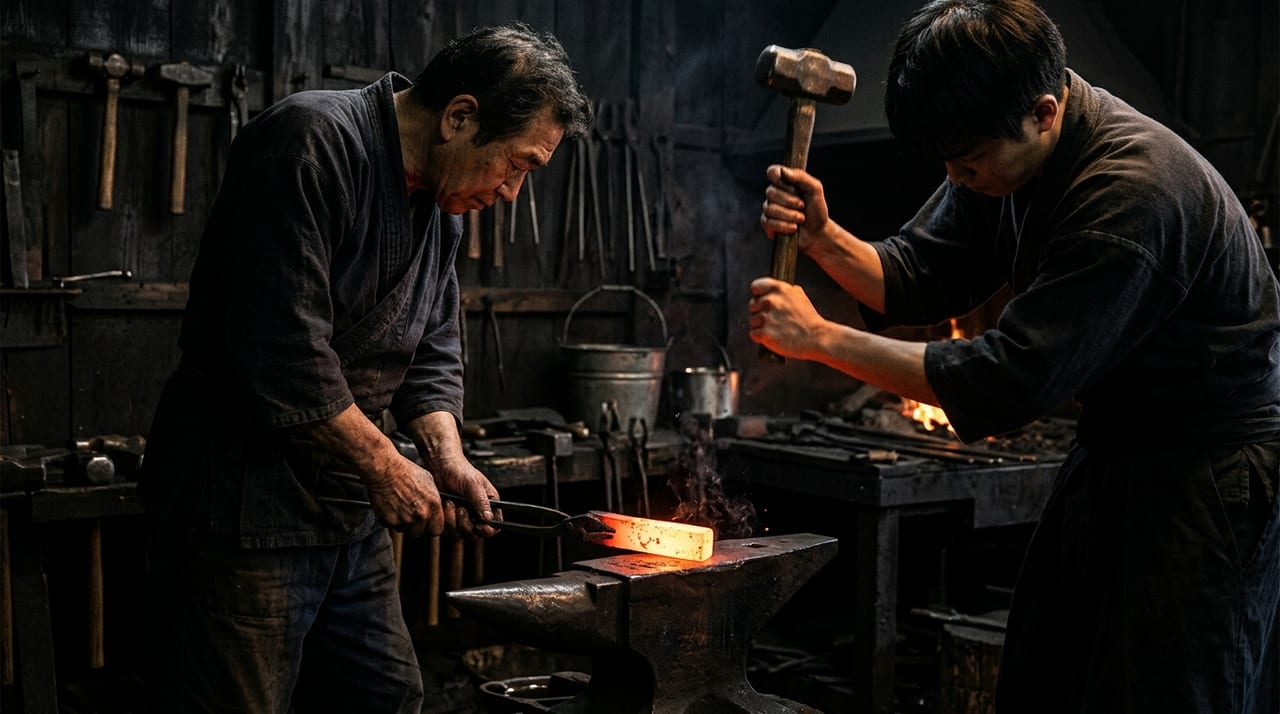
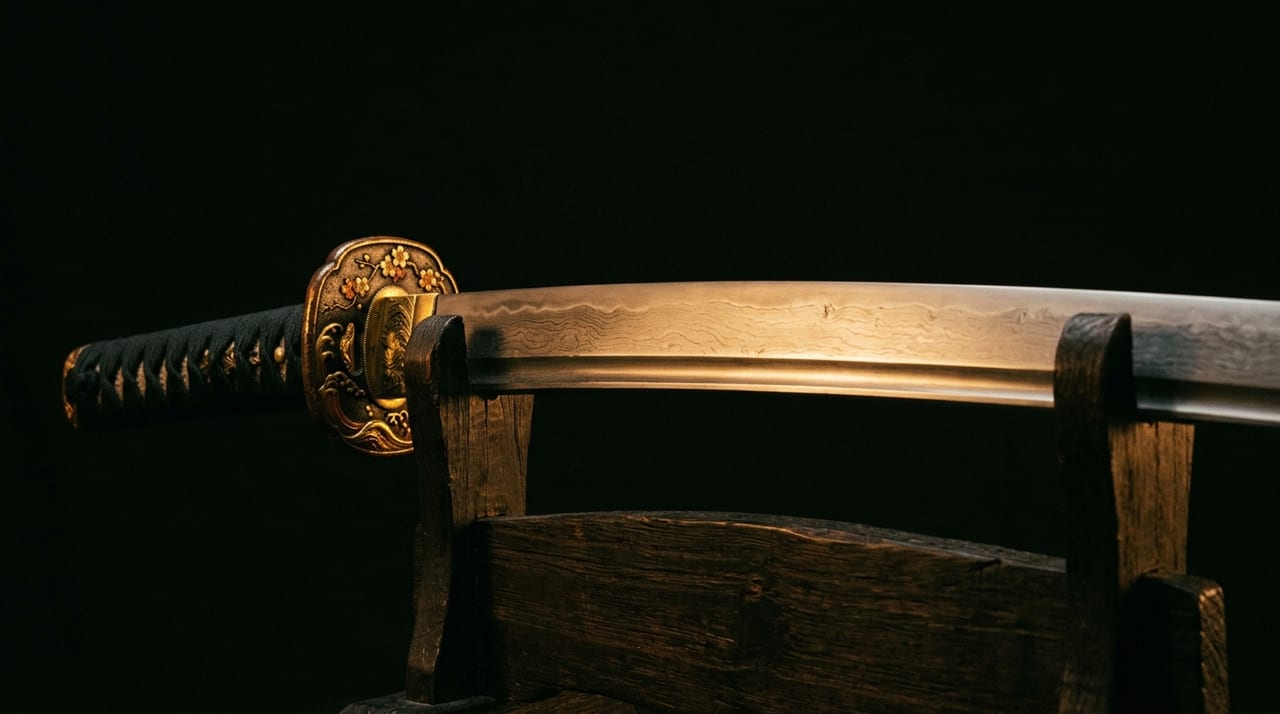 * Image is for illustrative purposes only.
Table of Contents
The Distinctiveness of Kyushu's Sword Culture — Another Tradition Alongside the Gokaden
The Gokaden (five traditions) — Yamashiro, Yamato, Bizen, Sōshū, and Mino — are certainly the core of Japan's sword culture. Yet in Kyushu, and especially in Satsuma (Kagoshima), there exists a distinct sword-culture sphere that developed independently of the Gokaden.
At its heart is a lineage of tōkō (swordsmiths) known as the Naminohira school (Naminohira-ha). Its legendary origins trace to a group of tōkō said to have settled in Satsuma during the Eien era (987–989, mid-Heian period), and they continued forging blades in the same region for over 700 years through the Kamakura, Muromachi, and Edo periods. This continuity stands out even among Japan's sword lineages and demonstrates the deep vitality of Satsuma's sword culture.
Origins and History of the Naminohira School
The Founding Legend and Background of Settlement
The name "Naminohira" is said to derive from a place called "Naminohira" in Satsuma Province (near present-day Higashitaniyama, Kagoshima City). According to legend, the school originated when tōkō of the Yamato school or from the capital moved to and settled in Satsuma during the Eien era (987–989, mid-Heian period).
However, what is certain from documentary sources begins in the mid-Kamakura period, when names such as Naminohira Yukiyasu and Naminohira Yasuyuki are recorded; everything before that is largely legendary. The masterwork that conveys the style of the Naminohira school to the present day is the tachi Sasanuki, a jūyō bunkazai (Important Cultural Property) made by the first-generation Yukiyasu.
The Continuity of the Naminohira School — 700 Years of Forging
The most distinctive feature of the Naminohira school is its extraordinarily long continuity in a single region.
- Kamakura period: early tōkō of the Yukiyasu and Yasuyuki lines
- Muromachi period: many tōkō active, including Yukimitsu and Yukishige
- Sengoku period: mass production of battle swords in response to the Shimazu clan's military demands
- Edo period: multiple lines continued, including Yukihiro and Yukimasa
- Bakumatsu to Meiji: tōkō who attempted to preserve the tradition even after the Sword Abolishment Edict (Haitōrei)
A sword lineage that continued unbroken for so long in a single region is rare throughout Japan, and it is evidence that Satsuma, a "provincial" area, remained a stronghold of its own distinctive tōkō culture.
Technical Characteristics of Satsuma Swords
Construction of the Blade — Robustness Prioritizing Combat
Satsuma swords have clear technical characteristics when compared with swords of the Gokaden.
kasane (blade thickness): Satsuma swords tend to have a greater kasane (blade thickness) than the national standard. This is a practical combat design suited to the fighting style of Satsuma warriors — in particular the sweeping, single-strike swordsmanship of the Jigen-ryū, which became famous in the Bakumatsu period. The Jigen-ryū is a style of such forceful swordsmanship that it aims to break the opponent's sword even with a wooden practice blade, and the sword itself was therefore required to be sturdy.
jigane (steel of the blade surface): The jigane of Satsuma swords is said to show much itame and flowing grain. Some works are said to have used nanban-tetsu (continental iron) or kara-tetsu (Tang iron) obtained through southern seas trade, and the quality of that steel — different from ordinary tamahagane — is said to have influenced the characteristics of the jigane.
hamon (temper line): The hamon tends toward a notare style. This indicates a strong influence from Sōshū-den. Some Satsuma swords show a hamon in the Masamune style, deeply influenced by Sōshū-den, which is regarded as a trace of technical exchange between Sōshū and Satsuma.
Relationship with the Southern Seas Trade
Satsuma was a hub for southern seas trade with China and Southeast Asia via the Ryukyu Kingdom. This trade made it possible to obtain continental iron known as nanban-tetsu.
Some researchers argue that the distinctive characteristics of the jigane of Satsuma swords may be attributable to the use of nanban-tetsu. This is because the carbon content, types of impurities, and grain structure differ depending on the origin of the iron, and these affect how the hada (surface grain) appears after forging.
However, the actual volume and manner of nanban-tetsu use remains a matter of debate among researchers, and not every Satsuma sword used it.
The Shimazu Clan and Their Policy of Protecting Tōkō
The Shimazu Clan's Policies That Created a "Land of Swords"
The Shimazu clan, lords of the Satsuma domain, actively protected and fostered tōkō generation after generation. This was a policy that embodied the martial spirit of Satsuma, and it positioned tōkō as "the pride of the domain."
The Shimazu clan:
- Granted chigyo (land and income guarantees) to outstanding tōkō, stabilizing their livelihoods
- Supported the transmission of tōkō skills as a domain-wide endeavor
- In some cases, attempted to invite distinguished tōkō from other domains and provinces
Shimazu Nariakira and Tōkō in the Bakumatsu Period
Shimazu Nariakira (1809–1858), known as one of the outstanding lords of the Bakumatsu period, valued traditional tōkō culture alongside his modernization policies (the Shūseikan enterprise). Among the tōkō he patronized, Masakuni is well known, and his works are still highly regarded today.
Satsuma Swords and the Bakumatsu Patriots
The Beloved Swords of Saigō Takamori, Ōkubo Toshimichi, and Satsuma Warriors
The Satsuma domain warriors of the Bakumatsu period — Saigō Takamori, Ōkubo Toshimichi, and the ancestors of Tōgō Heihachirō — cherished Satsuma swords.
The attachment of Satsuma warriors to their swords was extraordinary, and for practitioners of the Satsuma Jigen-ryū the sword was "an extension of the soul." The Meiji-era Sword Abolishment Edict (Haitōrei) (1876) was a particularly severe shock for Satsuma warriors, and it became one of the factors behind the Satsuma Rebellion (1877).
Comparison with Sakamoto Ryōma's "Yoshiyuki"
Sakamoto Ryōma's beloved sword, Mutsu-no-kami Yoshiyuki, is the work of a tōkō representative of Tosa (Kōchi), yet it makes a striking contrast with Satsuma swords. Where Yoshiyuki is a refined sword that incorporates the shintō-period style of Kyoto and Osaka, Satsuma swords maintained a thick kasane and a practical construction. This contrast might be said to symbolize the difference in warrior culture between the two domains that concluded the Satcho Alliance.
The Naminohira School Today — Attempts at Transmission and the Challenges Ahead
Decline After the Meiji Period
After the Sword Abolishment Edict (Haitōrei) (1876), the tōkō culture of Satsuma declined rapidly. The number of Naminohira school tōkō fell sharply, and the lineage's continuity was temporarily lost.
Contemporary Satsuma Tōkō
Even today, a small number of tōkō are active in Kagoshima, craftspeople who forge swords with a conscious identity as Satsuma tōkō. Whether the techniques of the Naminohira school are being directly transmitted, however, is in some respects difficult to confirm from documentary sources.
Many of today's Satsuma tōkō have learned their craft through the All Japan Swordsmiths' Association and regional sword associations before forging blades in Satsuma. The emphasis tends to be less on "transmission of region-specific techniques" and more on the spiritual dimension of "forging swords on Satsuma soil."
Conclusion — The Value of Regional Sword Culture as Told by the Naminohira School
The history of the Naminohira school and Satsuma tōkō reveals a richness in sword culture that is invisible from a "Gokaden-centric" perspective. Over 700 years of continuity, a connection to the southern seas trade, a close bond with the swordsmanship culture of Satsuma warriors — these are characteristics not found in other regional tōkō lineages.
For collectors and researchers of Satsuma swords, reassessment is under way as objects with inherent cultural value that transcend the label of "the work of a provincial tōkō." As interest in regional tōkō cultures grows, the swords of Satsuma and the Naminohira school deserve attention as a new frontier in Japanese sword research.