The Echizen Tradition: Master Swordsmiths of the Gokaden
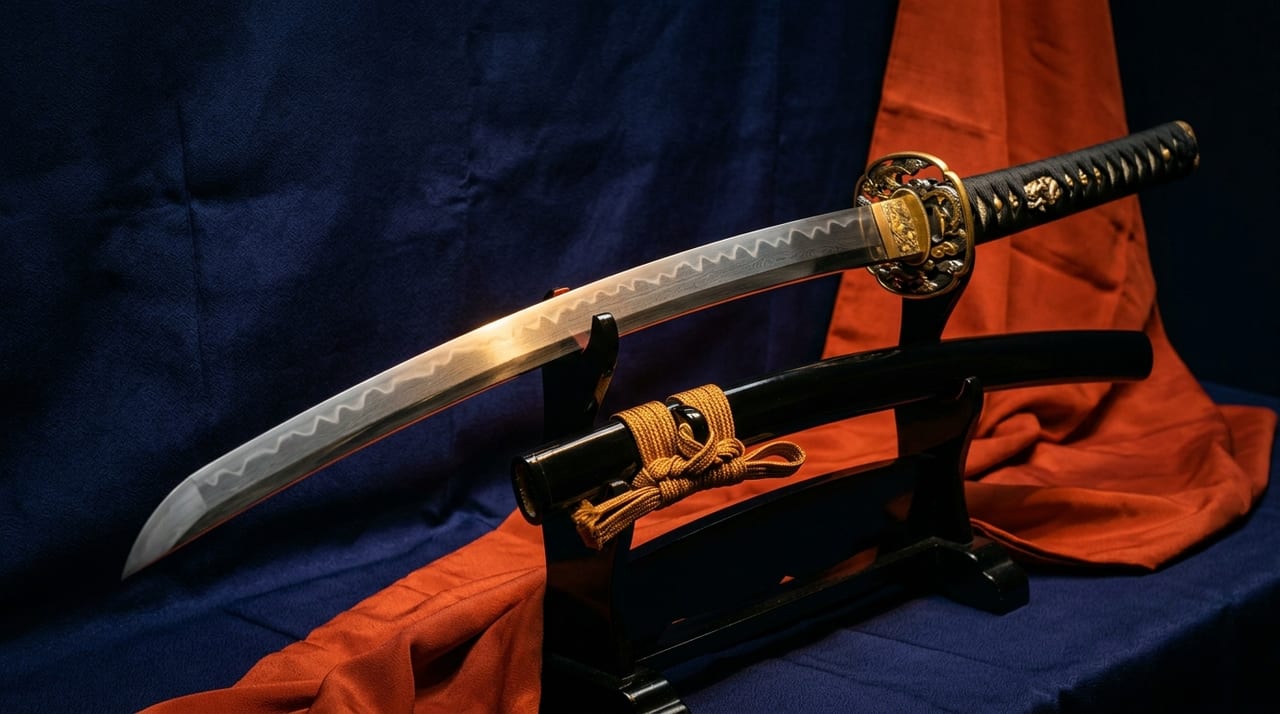 * Image is for illustrative purposes only.
Table of Contents
Echizen Tōkō
Echizen Province (present-day Fukui Prefecture) is the birthplace of Echizen-den, one of the five tōden (five major schools of sword-making) of Japanese swords. Echizen tōkō were sword smiths who developed distinctive techniques in Echizen, blessed with excellent materials and water resources. Along with Soshu-den, Yamato-den, Yamashiro-den, and Bizen-den, they occupy the highest ranks in the history of Japanese sword-making.
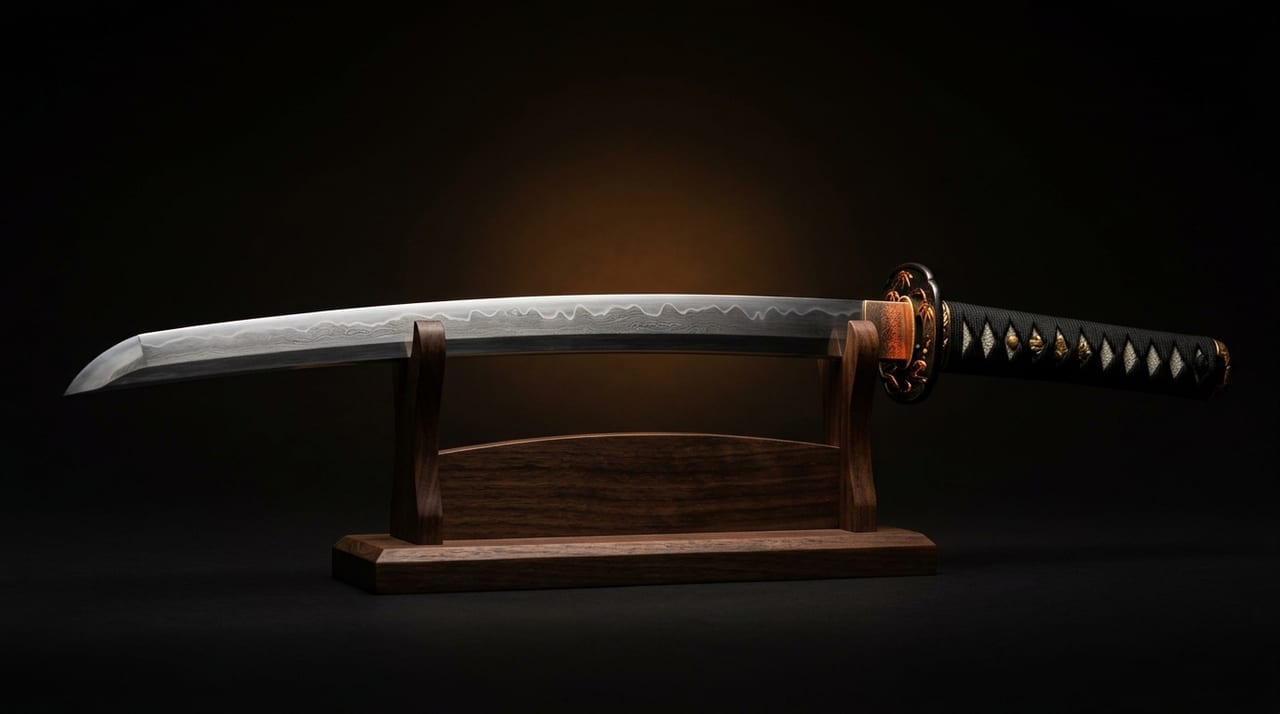
The characteristic of Echizen tōkō lies in the balance between practicality and beauty of the sword blade. While prioritizing ease of use in actual combat, they created swords that possessed both refined hamon and graceful appearance. Their techniques were passed down through a long period from the Kamakura through Edo periods.
History of Echizen-den
The history of Echizen tōkō begins in the late Heian period. In this region blessed with abundant nature and high-quality tamahagane, sword smiths developed their own techniques. Early Echizen tōkō gradually established their own style while learning techniques from famous sword smiths in various regions.
By the Kamakura period, Echizen tōkō gained nationwide recognition. Orders came in succession from shoguns and warriors, and swords presented from Echizen were treated as premium goods. The techniques established during this period remain the foundation of Echizen tōkō to this day.
Echizen tōkō flourished even more from the Nanboku-chō through Sengoku periods. As demand for practical use in combat increased, Echizen tōkō produced large quantities of swords with superior durability. Many renowned swords produced in Echizen during this period are preserved today as National Treasures and Important Cultural Properties.
Echizen tōkō of the Edo period shifted toward increased ornamentation after the chaos of the Sengoku period ended. However, without losing practicality, they pursued swords with increasingly refined appearance. Works by Echizen tōkō of the Edo period possess a unique beauty that fuses ancient tradition with Edo refinement.
Characteristics of Echizen-den
The characteristics of Echizen-den swords can be summarized in three points.
- hamon: The characteristic of Echizen-den swords lies in the hamon. The hamon created by Echizen tōkō possessed a complex yet orderly form. The typical hamon of Echizen swords resembles connected waves, and this is called "guno-me-chōji."
- Texture: The texture of the blade is also characteristic of Echizen swords. Because the tamahagane produced in Echizen was of high quality, the jihada of Echizen swords possesses a finely organized, beautiful structure. The beauty of this structure is an important element that enhances the value of Echizen swords.
- Depth of hardening: The depth of hardening is also a characteristic feature of Echizen-den. Echizen tōkō achieved high sharpness and durability by applying deep hardening to the blade. This depth of hardening is a distinctive feature compared to other schools and is an important point in identifying Echizen swords.
Representative Echizen Tōkō
Among Echizen tōkō, particularly famous are a group of sword smiths called "Echizen-kaji" from the Kamakura period. Most notably among them are figures recorded as three generations of Echizen tōkō.
During the Muromachi period, there were several renowned sword smiths who worked near Echizen-kokufu. Many of their works are transmitted as renowned swords from the Sengoku period. Swords presented from Echizen were particularly treasured as official swords for the shogun.
Most notably among Echizen tōkō of the Edo period were sword smiths who were active in the early Edo period. While preserving the ancient techniques of Echizen-den, they simultaneously created new styles that incorporated Edo aesthetics.
Techniques of Echizen Tōkō
The techniques of Echizen tōkō consist of three processes.
- Material selection: The techniques of Echizen tōkō begin with material selection. Discerning the quality of tamahagane mined in Echizen is the most important skill for Echizen tōkō. Identifying high-quality tamahagane greatly affects the final quality of the completed sword.
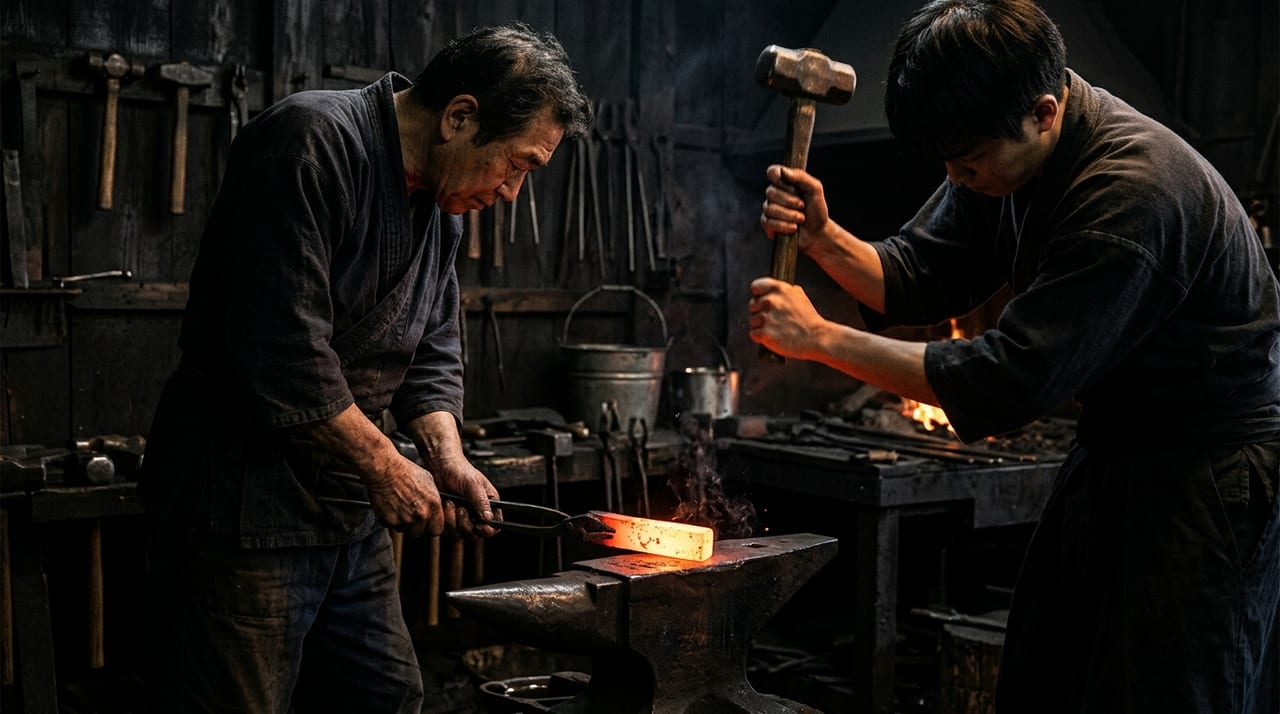
- Forging: The forging method is also characteristic of Echizen-den. Echizen tōkō removed impurities and refined the steel structure by repeatedly folding and forging tamahagane. Through this repeated forging, Echizen swords acquired high durability.
- Hardening: The hardening technique is also the core of Echizen-den. Echizen tōkō created the characteristic hamon by performing hardening at specific temperatures and cooling rates. This hardening technique was passed down through generations via apprenticeship.
Modern Echizen Tōkō
Even today, sword smiths in the Echizen region continue to forge swords using traditional methods. They continue to develop and innovate while preserving the ancient techniques of Echizen-den and responding to the needs of the modern era.
The techniques of Echizen tōkō, designated as an Important Intangible Cultural Property of the nation, are being passed to the next generation through the training of successors. However, the apprenticeship period is long, and becoming a full-fledged sword smith requires more than 10 years of training.
Market and Evaluation of Echizen Swords
Antique Echizen swords are highly valued in the market. Particularly, Echizen swords from the Kamakura through Muromachi periods are largely designated as National Treasures or Important Cultural Properties, and possess high academic value.
Echizen swords from the Edo period are also popular among collectors. Works of Echizen swords that fuse ancient tradition with Edo aesthetics are recognized as representative of the beauty of Japanese swords.
New swords created by modern Echizen tōkō also receive recognition. Swords that preserve tradition while meeting contemporary demands are gaining attention from collectors.
Conclusion
Echizen tōkō, as one of the highest peaks among the five tōden of Japanese swords, possess a history of over a thousand years. The techniques developed in Echizen, blessed with excellent materials and water, influenced many sword smiths in later generations. The elegant and practical beauty of Echizen swords represents the highest achievement of Japanese sword culture.