Japanese Sword Export Regulations and International Market
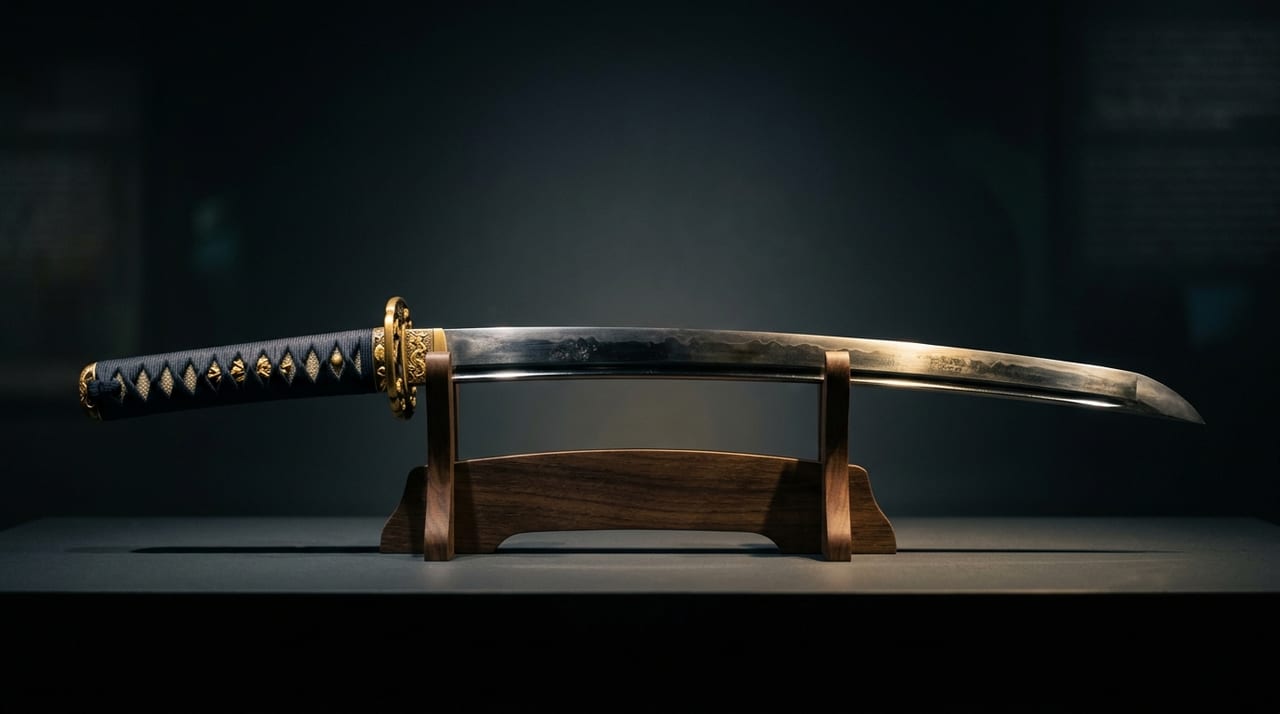 * Image is for illustrative purposes only.
Table of Contents
Japanese Sword Export Regulations and International Markets
Japanese swords exist simultaneously as Japanese cultural heritage and, under international law, as both "weapons" and "artworks." This ambiguity makes the export of Japanese swords a complex and high-risk business. Multiple layers of regulation—domestic restrictions under the Firearms and Swords Control Law, international treaty limitations under CITES (Convention on International Trade in Endangered Species), and individual import regulations imposed by the United States and EU nations—intertwine to create a legal maze that exporters must navigate. This article provides a practical guide for international trade in Japanese swords, clarifying the regulatory framework, cross-border procedures, and current state of international markets.
The Japanese Firearms and Swords Control Law and Registration Certificates: Basic Rules Before Export
In order to distribute Japanese swords within Japan, one must first understand the Firearms and Swords Control Law (Law Regulating Possession of Firearms, Cannons, Swords, and Similar Items), enacted in 1958. This law imposes strict restrictions on the manufacture, possession, and sale of swords. Under this law, swords with a blade length of 15 cm or more are classified as "swords," and may be legally possessed only if they fall into one of the following categories.
First, there are "old swords." Swords manufactured before the Edo period are treated as "old swords" and fall outside the scope of possession restrictions under the Firearms and Swords Control Law. However, certification as an "old sword" requires a certificate of appraisal issued by a sword appraiser. When exporting a Japanese sword abroad, the exporter must prepare an appraisal certificate proving that the sword is an old sword. Without such a certificate, the sword will not be recognized as an old sword and may constitute a violation of the Firearms and Swords Control Law.
Second, there are "registered swords." Even if a sword was manufactured after the Meiji Restoration, it can become a "registered sword" by submitting a registration application to the prefectural board of education and obtaining approval. Registered swords are legally permitted to be possessed and may be bought and sold. Registration requires submission of detailed information, including the manufacturing date, swordsmith's name, and appraisal results. All registered swords are issued a "registration certificate," which becomes an important document for both domestic and international transactions.
A third category under the Firearms and Swords Control Law is "new swords." Swords manufactured from the Meiji Restoration onward, particularly those made after the Taisho and Showa periods, are classified as "new swords." Possession of new swords is in principle prohibited under the Firearms and Swords Control Law, and manufacture, possession, and sale are all illegal. However, new swords may be subject to registration applications, and if registration is successful, possession and sale are permitted.
When export is the intended purpose, the exporter must prepare one of the following:
- An appraisal certificate for an old sword (official document from an appraiser)
- A registration certificate for a registered sword (document issued by the prefectural board of education)
- If a registration application is pending, documentation indicating this fact and provisional consent
Exporting swords without a registration certificate is a violation of the Firearms and Swords Control Law under Japanese law, and the item may be confiscated at customs. Additionally, even in bank transfers of funds, if the source of payment is identified as proceeds from the sale of swords, supervisory authorities may intervene.
CITES (Washington Convention) and Restrictions on Ivory Fittings
CITES (Convention on International Trade in Endangered Species of Wild Fauna and Flora), also known as the Washington Convention, is an international treaty that regulates international trade in endangered species. It came into force in 1975 and currently has 185 signatory countries and regions. Japan became a signatory in 1980.
The primary reason CITES affects Japanese sword exports is "ivory fittings." Many traditional Japanese swords feature ivory used on the handle (tsuka) or handguard (tsuba). Because elephants are designated as Appendix I species under CITES (prohibited from international trade), international trade in products containing ivory is in principle prohibited.
If a Japanese sword has ivory fittings, exporting it abroad requires obtaining a CITES permit in advance from the Japanese government (Ministry of Economy, Trade and Industry and Ministry of the Environment). The process for obtaining a permit is as follows:
- Confirmation of ivory fittings: An appraiser or art dealer confirms whether ivory is used in the sword's fittings
- Permit application: Submit an application to the relevant department of the Ministry of Economy, Trade and Industry (CITES Management Committee)
- Review: The review period from application to permit is normally 2-4 weeks
- Permit issuance: A CITES permit is issued and attached to the customs declaration
If there are no ivory fittings (for example, if only wooden or sheath fittings are present), a CITES permit is not required. However, the exporter must verify the presence or absence of ivory beforehand and maintain a record of this verification. If ivory is concealed and the sword is exported, and this is discovered by Japanese customs, the exporter faces confiscation and penalties. The sword may also be confiscated by the receiving country's customs authorities.
When a CITES permit has been obtained, the permit number must be noted on the customs declaration. Exporting swords with ivory fittings without a CITES permit is treated as international smuggling and is an extremely high-risk legal act.
U.S. and EU Import Regulations: ITAR, Cultural Heritage Designations, and Taft-Hartley
Exporting Japanese swords to the United States is particularly complex. The United States has multiple regulatory agencies, each managing sword imports from different perspectives.
ITAR (International Traffic in Arms Regulations)
The United States sometimes classifies swords as "weapons." In particular, when a sword including sheath or fittings (koshirae) is interpreted as a "complete weapon," advance permission under ITAR from the U.S. Department of State may be required. However, if only the blade (without sheath or fittings) is involved and it is clearly classified as an "artwork," it is often exempted from ITAR. It is recommended that exporters work with U.S. importers to submit a classification determination request to U.S. customs in advance.
Cultural Heritage Designation and Import Prohibition
In certain U.S. states (particularly New York), swords are classified as "culturally significant weapons," and laws exist prohibiting their import. New York's "Sword Import Prohibition Law" restricts the import of rusted swords, damaged swords, or swords with recognized historical value. To comply with this law, importers must consult with U.S. attorneys and submit a prior approval application to the New York State Attorney General's office.
European Union (EU) Regulations
Most EU member states classify swords as "dangerous weapons," restricting the import of swords except for sports or ceremonial purposes. Germany, under its Weapons Law (Waffengesetz), generally prohibits the import of swords with blades 55 cm or longer. France permits sword sales only under a licensing system, requiring sellers to obtain specific qualifications. The United Kingdom is relatively permissive of personal sword imports but requires permits for commercial imports.
Cross-Border Transaction Procedures: Customs Clearance, Documentation, Costs, and Risks
The practical steps for exporting a Japanese sword abroad are as follows:
Document Preparation
- Bank transfer cases: Obtain an official purchase contract from the importer before paying the product cost
- Prepare a registration certificate or CITES permit (digital copies are acceptable, though original copies may be required for customs submission)
- Photograph record of quality and condition (serves as evidence in disputes)
- Create an Invoice: Include descriptions of the product (e.g., "old sword, Edo period, 70 cm length"), estimated value, swordsmith name, manufacturing date, etc.
Customs Procedures
Submit an Export Declaration Form to Japanese customs. The declaration must include:
- HS code (product classification code): For swords, typically "9305.20-000" (swords)
- Product name: Clear indication of "old sword" or "registered sword"
- Quantity and weight
- Estimated value (in yen)
- Destination country and importer name
- CITES permit number (if applicable)
After filing, a customs inspector may conduct a physical inspection. For particularly expensive swords (1 million yen or more), inspection rates are higher. The inspection confirms the sword's dimensions, condition, and fittings (such as presence of ivory).
Customs Clearance Costs
- Customs brokerage fee: ¥3,000-10,000 (per sword)
- Customs inspection fee: Free (though time-consuming inspections may incur indirect costs)
- Packaging and shipping: ¥5,000-20,000 per sword (secure packaging is essential)
- Ocean freight: ¥4,000-15,000 (to Asia and nearby regions)
- CITES permit acquisition: ¥10,000-30,000 (if ivory fittings are present)
Total costs typically range from approximately ¥30,000 to ¥50,000 per sword.
Cross-Border Transaction Risks
1. Confiscation due to incomplete permits: If an ivory-fitted sword is exported without a CITES permit, it is highly likely to be confiscated by the receiving country's customs. In this case, the product price is not refunded, and disputes arise between the importer and seller regarding revenue attribution.
2. Fraudulent registration: The act of exporting a sword while falsely claiming it is not registered or forging a registration certificate. If discovered by Japanese customs, the exporter faces criminal charges and confiscation of goods.
3. Shipment delays due to misclassification: If a sword is declared as a "craft product" in customs but the receiving country's customs reclassifies it as a "weapon," shipment may be delayed up to three months.
4. Foreign exchange risk: In international transactions, gaps between payment deadlines and shipping periods expose parties to foreign exchange fluctuations. In USD and EUR transactions, 10-15% value changes can occur within 1-2 months.
Current State of International Markets: Collector Markets and Legitimate Sales Routes
Japanese swords have collectors overseas and are traded as artworks. While domestic and overseas prices may differ, the price of each individual sword varies significantly based on the creator, era, condition, and whether it has been appraised, making projections based on uniform price differentials difficult to establish.
Overseas Collector Markets
Europe and America have specialized galleries and sword dealers that handle Japanese swords, and Japanese swords are auctioned at international fine art auctions. When selecting trading partners, it is necessary to verify their track record and reputation individually.
Legitimate Sales Routes
1. Direct transactions: A Japanese sword dealer and overseas gallery or collector enter into a direct contract. Investigation of the counterparty's creditworthiness is important.
2. International art auctions: Submit items to overseas auction houses. In addition to the hammer price, commissions apply, and conditions must be confirmed in advance through each house's regulations.
3. Online marketplaces: Some platforms prohibit the listing of swords. It is necessary to check each platform's regulations in advance.
4. Third-party export agents: Engage an agent to handle international shipping, customs procedures, and insurance collectively. Fees vary by agent and should be confirmed through quotes.
For any route, when exporting a registered sword, a "Certificate of Art Export Examination" from the Agency for Cultural Affairs is required, and items designated as National Treasures or Important Cultural Properties are in principle not exportable (Tokyo Metropolitan Board of Education, "When Exporting Firearms, Cannons, Swords and Similar Items").
Practical Considerations and Future Market Expansion
Japanese sword exports involve complex regulations and legal risks. Success requires the following practical measures:
- Legal consultation in advance: Before export, consult with a trade attorney or customs consultant to confirm regulations in the destination country
- Credit investigation: For overseas importers, conduct credit checks through the BBB (Better Business Bureau) or credit investigation agencies
- Insurance coverage: Obtain fine art shipping insurance to cover damage or theft during transport
- Document management: Maintain all transaction documents (contracts, shipping records, permits) for five or more years
Demand for Japanese swords in international markets is expected to continue growing, but individual transaction risks remain high. Even if a marketplace platform like toukenza provides domestic catalogs, responding to international shipping and cross-border regulations is practically best delegated to specialized export agents.