Types and History of the Naginata — Classification and Historical Context of Ko-naginata, Suriage, Onna-naginata, and Naginata-naoshi
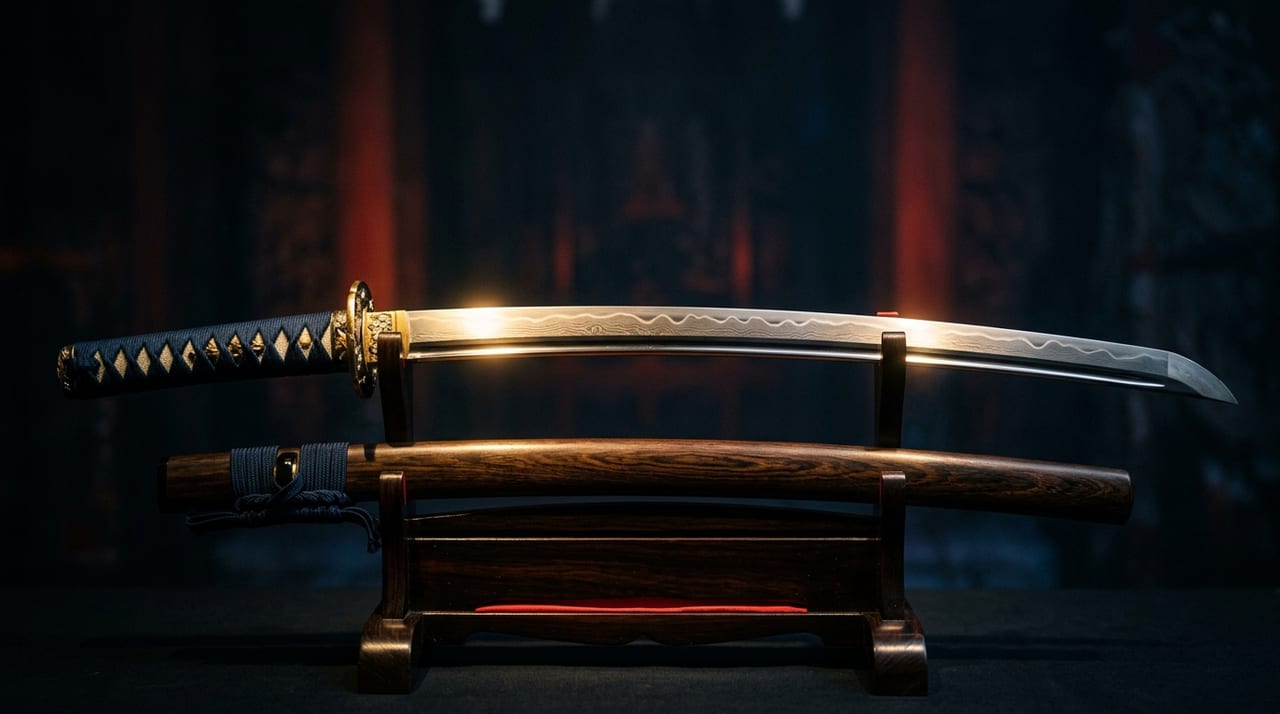 * Image is for illustrative purposes only.
Table of Contents
What Is a Naginata?
A naginata is a bladed weapon unique to Japan, consisting of a curved blade attached to the end of a long shaft (nagae). Unlike the ken (straight sword) or the tachi, its primary mode of attack is the sweeping, mowing motion (nagiharai) made possible by the long shaft. It was the most widely used weapon against mounted warriors from the late Heian period through the Nanbokuchō period, and appears frequently in battle-scene picture scrolls depicting Kamakura-era warriors.
The naginata is said to have first appeared in Japanese weapons history in the late Heian period, and its initial users were primarily the monk-soldiers (sōhei) of major temples such as Enryakuji and Kōfukuji. The monk-soldiers carried naginata when staging forcible appeals (gōso) to the imperial court and the shogunate, and the weapon's power and ease of handling became widely recognized. It subsequently spread to the warrior class, and the tactic of sweeping at a mounted warrior's horse legs from the ground with a long-shafted naginata became established.
The Form of the Ko-naginata
The ko-naginata is a naginata produced from the Heian period through the early Muromachi period, and has the following characteristics.
- nagasa: a relatively long blade of approximately 60–90 cm
- sori: characterized by a deep koshi-zori
- nakago: a long nakago (naganakago) providing stable attachment to the tsuka (hilt)
- kissaki: most commonly ōkissaki or chūkissaki
Surviving ko-naginata are rare; most were converted by suriage (described below) in later periods and survive today as tachi or swords.
Tomoe-gata Naginata and Shizuka-gata Naginata — A Comparison of the Two Major Forms
The blade shapes of naginata fall into two broad categories.
Tomoe-gata naginata: A form with a wide mihaba (blade width) and deep sori. The width increases toward the tip, placing the center of gravity forward. It handles easily and cuts well, and is also called "onna-naginata." There is a theory that its name derives from Tomoe Gozen, the female warrior who distinguished herself in the Genpei War.
Shizuka-gata naginata: A form closer to a sword, with a narrow mihaba and little sori. It is suited for actual combat and can be wielded quickly, and is also called "otoko-naginata." There is a theory that its name derives from Shizuka Gozen.
These two forms correspond to the school classifications of naginata-jutsu established in the Edo period — the Tomoe-ryū and the Shizuka-ryū — and each school prescribed the shape of naginata used in its practice.
Suriage and Its Significance
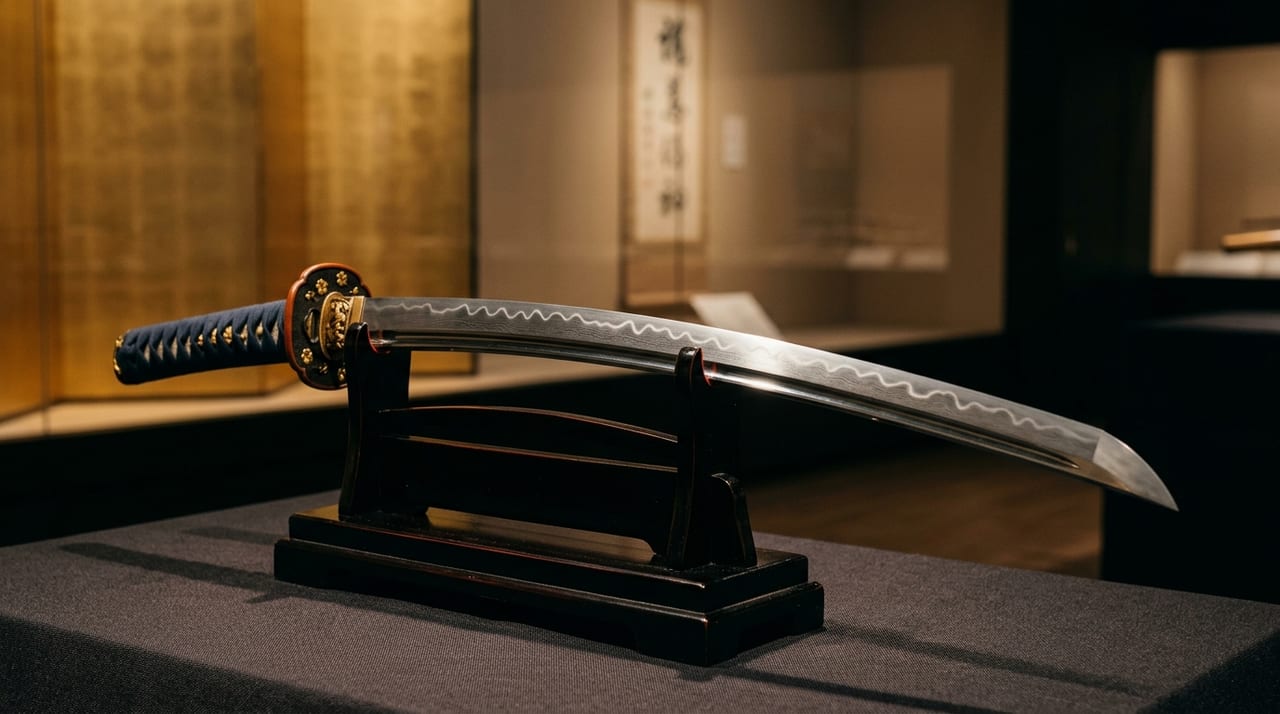
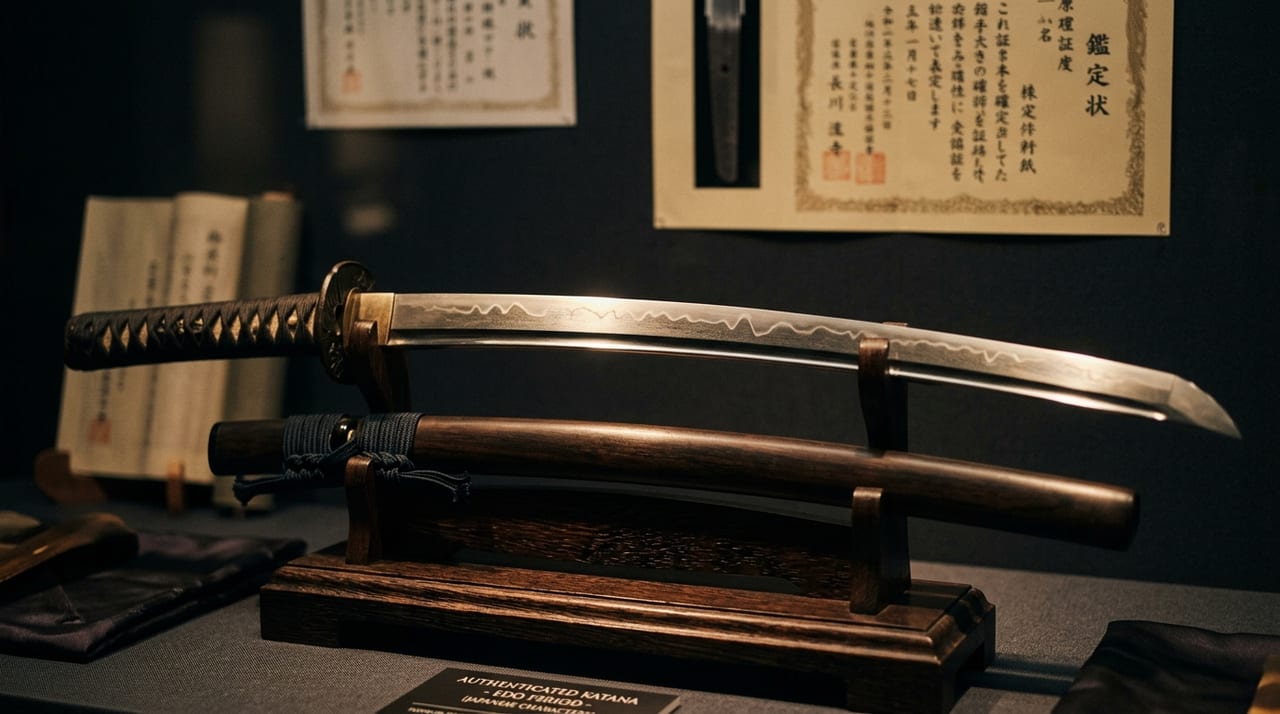
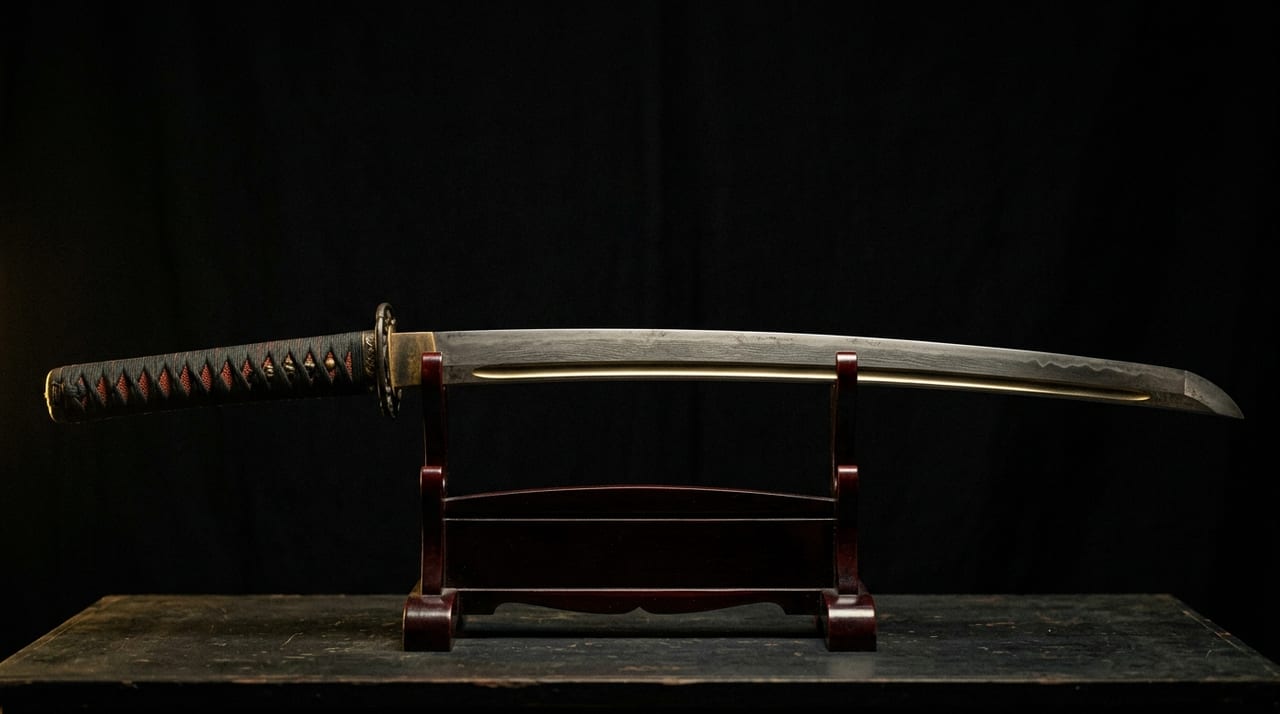
Suriage is the process of shortening a long naginata from the nakago, converting it for use as a tachi or sword. As warfare prolonged through the Nanbokuchō and Muromachi periods, the "recycling" of ko-naginata blades into new weapons became widespread. When suriage is performed, the mei (the tōkō's name) is often lost as the nakago is cut away, leaving many such swords mumei; however, it is sometimes possible to identify a blade as a converted ko-naginata from characteristics of its jigane (steel of the blade surface), hamon (temper line), and so on.
Naginata-naoshi
Naginata-naoshi is a specialized term referring to a naginata that has been reworked into a sword. The proportions of sori, motohaba, and sakihaba in the blade differ from those of an ordinary tachi or sword, giving it a distinctive appearance that retains characteristics from its naginata form. In NBTHK appraisals, it may be assessed as an independent category designated "naginata-naoshi."
Iwatooshi — The Legend of Musashibō Benkei and the Naginata
Among the famous legends associated with naginata is Iwatooshi, the beloved naginata of Musashibō Benkei. Said to boast "a cutting edge that could cleave even rock," it is spoken of as the legendary weapon Benkei used when he took 1,000 swords. However, in the Gikeiki — the extant military tale — it is recorded as "a sword called Iwatōsu," a type of sword, and one should note that it is not explicitly identified as a naginata.
At Ōyamazumi Shrine in Imabari City, Ehime Prefecture, there survives and is preserved a great naginata said to have been dedicated by Benkei, designated as a jūyō bunkazai (Important Cultural Property). The shrine is also a treasure house of arms and armor, holding approximately 40% of the nation's suits of armor designated as kokuhō (National Treasure) or jūyō bunkazai. It is also known that the Date family possessed a naginata with a nagasa of 2 shaku 6 sun 1 bu (approximately 79.1 cm), bearing a vermilion mei reading "formerly owned by Musashibō Benkei."
The Onna-naginata of the Edo Period and Women of Warrior Households
In the Edo period, the naginata's role as a weapon of actual combat came to an end, and it transformed into the "onna-naginata," used by women of warrior households for self-defense, etiquette, and training. The origins of modern naginata-dō lie in this Edo-period culture of women's martial arts. From the Muromachi period onward, as the yari (spear) replaced the naginata as the primary infantry weapon, the naginata underwent its own distinctive development as a specialized martial art for women.
Schools of Naginata-jutsu — Tomoe-ryū and Shizuka-ryū
The Tomoe-ryū and the Shizuka-ryū, the two great schools of naginata-jutsu established in the Edo period, each have a training system closely linked to the blade shapes of the tomoe-gata and shizuka-gata respectively. Schools differ in their stances, angles of strike, and management of distance, and the shape of the naginata used corresponds to each school's techniques.
Modern naginata-dō is administered by the All Japan Naginata Federation in a two-track system of competition and kata, and has been adopted as an elective martial arts subject in junior high and high schools. In competition, a shinai-naginata is used for safety, while wooden or bamboo naginata are used in kata practice.
The Naginata and Women's Martial Arts
Behind the naginata's establishment as a martial art for women of warrior households is the practical advantage of the long shaft: it is well suited to compensating for differences in physical build. The sweeping motion performed while maintaining distance by means of the long shaft is effective even against opponents with superior physical strength, and was deemed appropriate as a martial art for women of warrior households who placed importance on self-defense. Edo-period manuals on warrior-household etiquette contain the phrase "the martial art of women takes the naginata as its foundation," showing that the naginata was positioned at the forefront of the accomplishments and refinements expected of women of warrior households.