The Sword Aesthetics of the Heian Court — Decorative Techniques of Ceremonial Tachi, the Emergence of Goyuishotō, and the Divergence of Combat Swords
 * Image is for illustrative purposes only.
Table of Contents
The Background of Sword Culture in the Nara and Heian Periods
In the history of the Japanese sword, the approximately 200 years spanning the Nara and Heian periods were an exceptionally important time in which sword culture truly took shape. The swords of this era were not merely weapons; they were symbols of power, instruments of ritual, and works of art.
In the process of development from the tantō of the Kofun period and the straight swords (chokutō) of the Nara period to the curved swords (wantō) of the Heian period and then to the tachi, Japan's distinctive sword-making techniques and aesthetic sensibility were formed.
The Development of Ceremonial Swords
The Role of Swords in Court Ceremonies
From the late Nara period through the early Heian period, court ceremonies became rapidly formalized alongside the development of the ritsuryō system. In particular, it was prescribed that officials should wear ceremonial swords at ceremonies marking the emperor's appearances (such as the chōga and the Sanmiyasai).
The Hyōefu provisions of the Yōrō Code explicitly set out standards for sword fittings according to an official's rank, and even the ornamental components of swords were positioned as symbols of the status system. Officials of the early Heian period clearly expressed their standing at court by wearing sumptuous tachi at their waists. The designs employed included the following:
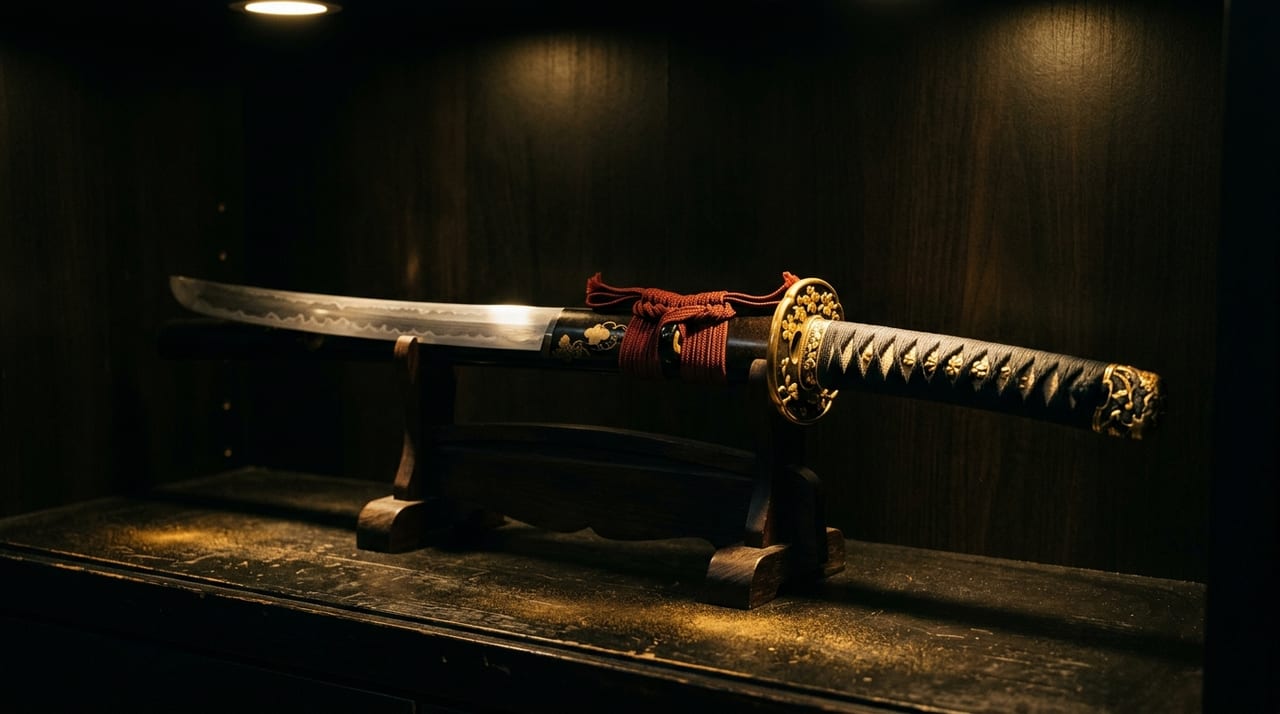
- Silk tsuka (hilt)
- Ivory kashira (pommel)
- Gold-woven brocade saya (scabbard)
Goyuishotō and the Authority of the Emperor
Upon entering the Heian period, certain celebrated swords came to be treated as symbols of imperial succession. This was the concept of the "goyuishotō" (swords of august lineage). When the throne changed hands, a sword of distinguished provenance was presented from the preceding emperor to the successor, and the quality of that sword was linked to the emperor's legitimacy.
Particularly from the mid to late Heian period, tachi of distinguished lineage were prized as one of the power bases of regency government, and their provenance came to be explicitly recorded in historical documents.
The Emergence and Development of Combat Tachi
The Rise of Mounted Archery Combat and the Functionalization of the Tachi
From the mid Heian period (10th century) through the late Heian period (11th century), Japan's style of combat changed dramatically. The shift from the foot combat of the Nara period to kisha combat — shooting a bow on horseback — brought revolutionary changes to sword design.
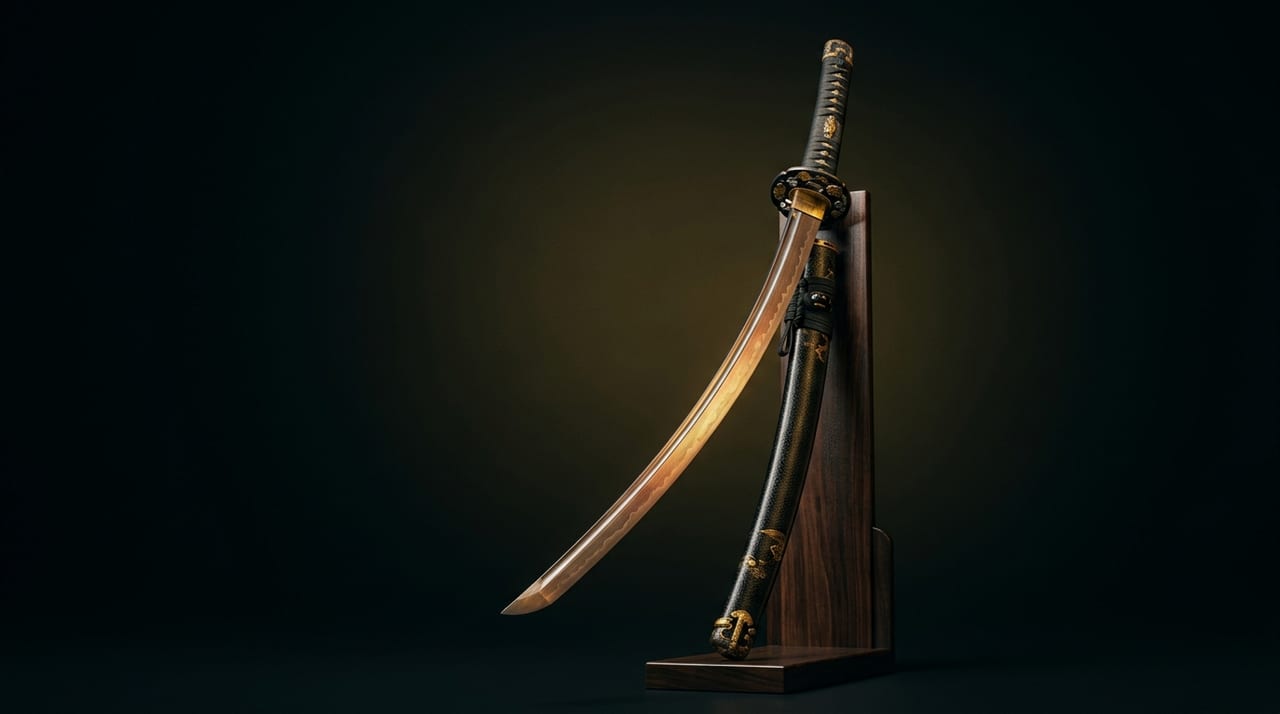
The tachi, conceived for striking blows from horseback, needed to be longer, more curved, and sturdier than the traditional ceremonial swords. In the late Heian period, tachi with this kind of sori (curvature) became the mainstream.
Dramatic Advances in Forging Technology
The tōkō (swordsmiths) of this period developed innovative forging techniques in order to produce swords that combined greater strength with flexibility. In particular, the technique known as orikaeshi-tanzo (folded forging) dramatically improved the quality of the steel.
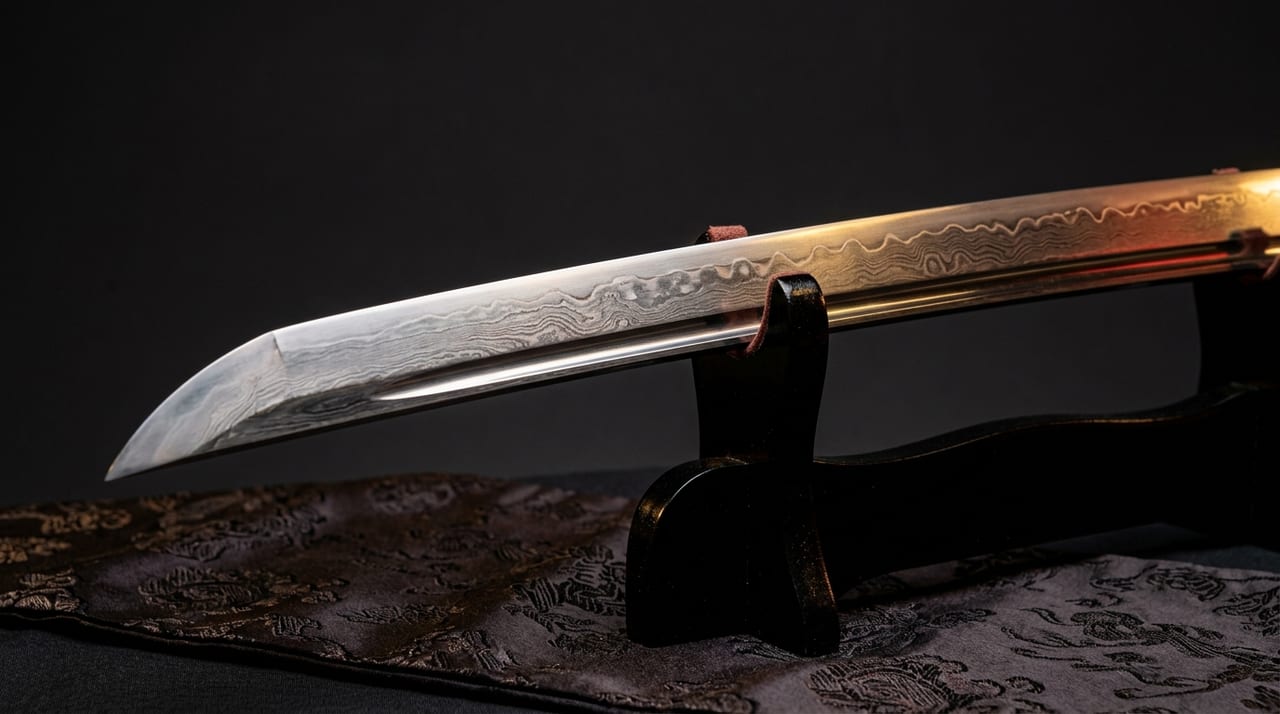
Furthermore, the technique of yaki-ire (quenching), used to achieve both hardness and durability, evolved from the simple methods of the Nara period into complex, precise processes during the Heian period. The stylization and diversification of the hamon (temper line) is also a major characteristic of this era.
The Establishment of Decorative Techniques and Aesthetic Sensibility
The Development of Gold and Silver Metalwork and Koshirae (Mounting)
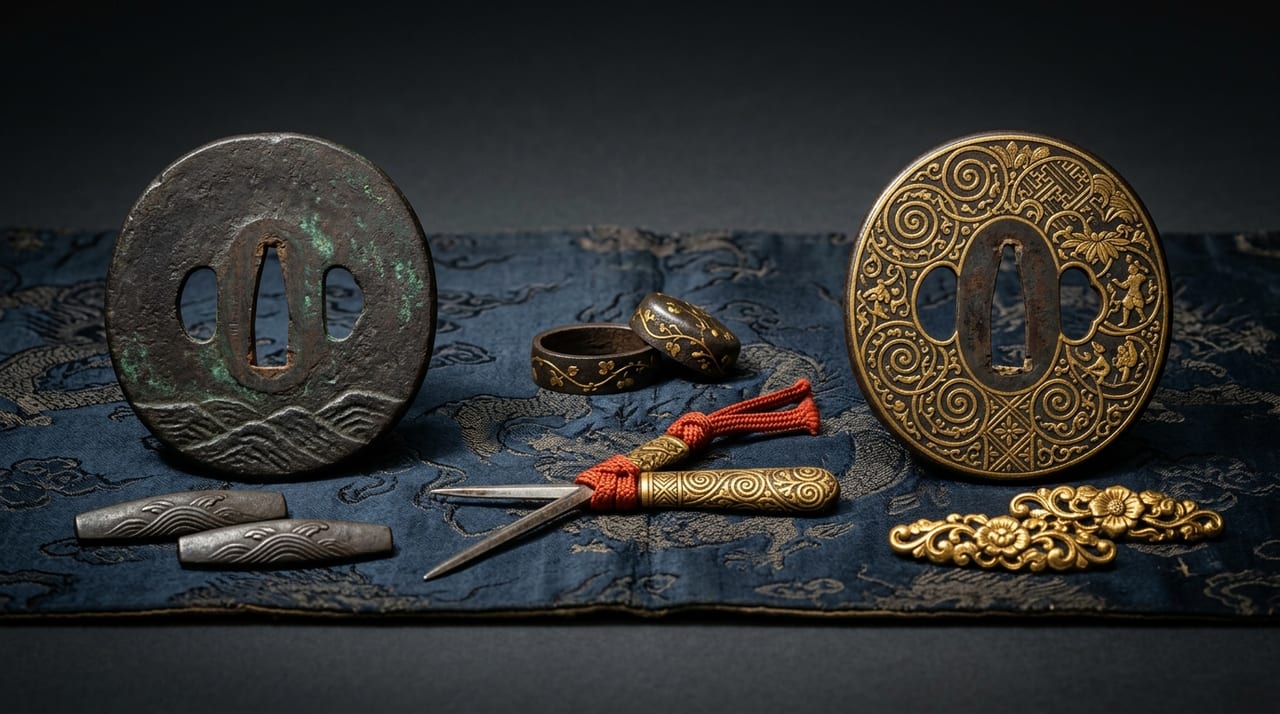
In the tachi of the Heian period, a sophisticated aesthetic was pursued not only in the blade but also in the koshirae (mounting). The technique of gold and silver zōgan (inlay) was employed, and the components to which precise and delicate patterns came to be applied include the following:
- Tsuba (hand guard)
- Fuchi-kashira
- Menuki
The openwork (sukashibori) tsuba developed by Kyoto craftsmen particularly from the 10th through the 11th century became the cornerstone of later sword-mounting culture. These decorative elements had not only aesthetic beauty but also a social function of expressing the owner's rank and cultivation.
Regional Divergence in Sword-Making Styles
From the mid to late Heian period, workshops of tōkō developed throughout Japan, and distinctive regional styles took shape. Groups of tōkō in various regions — such as Awataguchiha of Yamashiro Province (present-day Kyoto Prefecture) and the Sōshū school of Sagami Province (present-day Kanagawa Prefecture) — established their own unique techniques, which have been handed down to the present day.
The style of each school was rooted in local mineral resources, climate, and cultural background, demonstrating that the development of swords was fundamentally linked to regional industry.
The Coexistence of Ceremonial Swords and Combat Swords
The Fusion of Two Lineages
By the late Heian period, two lineages — the ornate ceremonial tachi and the functional combat tachi — had developed in parallel. However, the two exerted influence on each other and gradually merged.
The beauty of the hamon (temper line) born from the pursuit of strength in combat swords enhanced the decorative value of ceremonial swords, while the refined designs of ceremonial swords in turn influenced the aesthetics of combat swords.
The Rise of the Warrior Class and the Transformation of Sword Culture
After the Genpei War at the end of the 12th century, when the warrior class seized power, the role of swords changed further still. While retaining their ceremonial value, swords were increasingly required to possess more practical combat capability.
Many swords made in this period display characteristics midway between the elegance of the Heian period and the practicality of the Kamakura period, symbolizing a transitional era in the history of the Japanese sword.
The Achievements of Tōkō of the Nara and Heian Periods
Celebrated Tōkō and Legends
The Heian-period tōkō recorded in old texts such as the Tōken Zanmaisho have become the subjects of many legends. In particular, the master craftsmen from Bizen Province (present-day Okayama Prefecture) and the founders of Awataguchiha of Yamato Province were respected as the finest craftsmen of their day.
According to records of the time, tōkō in service to the court are believed to have produced swords numbering from several dozen to the order of one hundred per year, suggesting that workshop operations were highly organized.
Technical Transmission and Secret Traditions
The tōkō of the Heian period strictly transmitted superior forging techniques and decorative methods within the family. In particular, the heating temperature for yaki-ire (quenching) and the procedures for gold and silver metalwork were guarded as secret traditions not to be shared outside the household.
This lineage-based transmission of technique gave rise to the continuity and distinctiveness of each school's style in later periods, forming a powerful tradition in the history of the Japanese sword.
Conclusion
Sword culture in the Nara and Heian periods developed in a multifaceted manner as the establishment of the ritsuryō system, the emergence of mounted archery combat, and innovations in the craft of tōkō all interacted with one another. In the process of fusing the refinement of the ceremonial sword with the practicality of the combat sword, the distinctive aesthetic and technical system of the nihontō was formed.
The swords of this era laid important foundations that connect to the production of celebrated blades in the later Kamakura and Muromachi periods, and they were the roots of the nihontō culture that would eventually earn worldwide acclaim.