Japanese Sword Insurance and Appraisal Values: Practice and Basis of Assessment in Movable Property and Fine Art Insurance
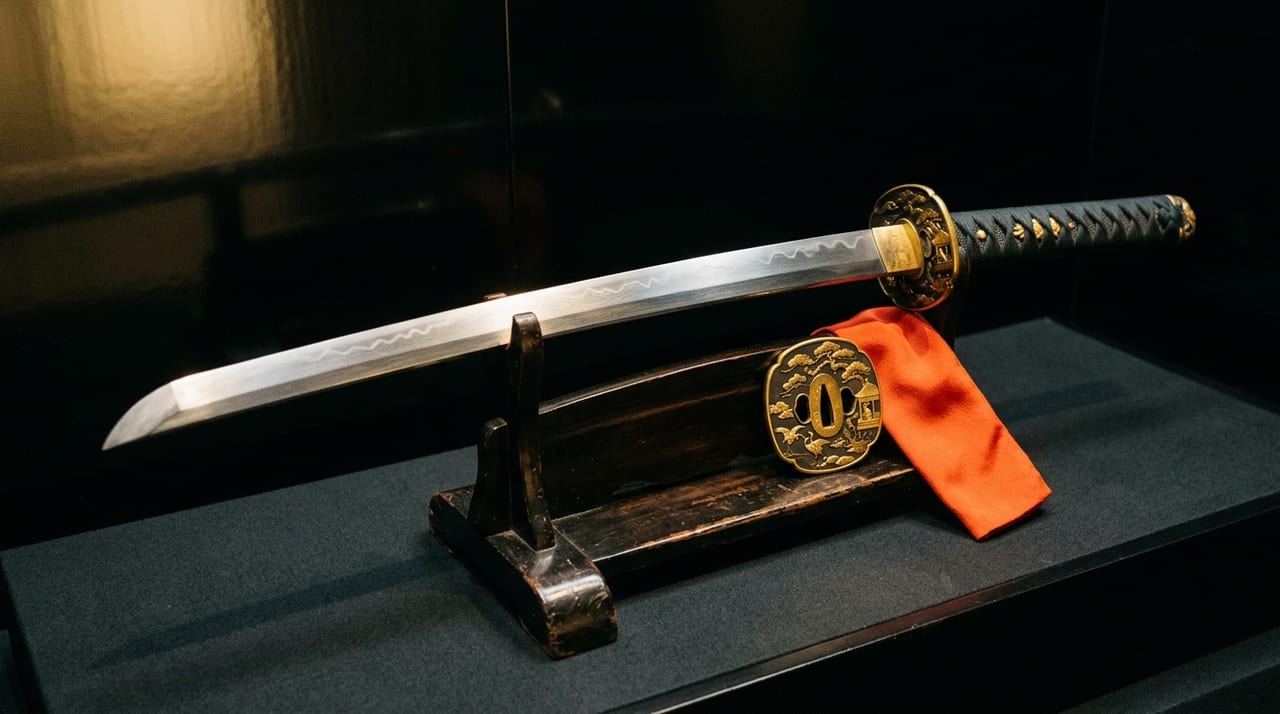 * Image is for illustrative purposes only.
Table of Contents
The Need to Cover Nihontō with Insurance
Nihontō are high-value assets ranging from several hundred thousand to tens of millions of yen, and storing them without appropriate insurance is risky. Standard household contents insurance often requires swords to be separately declared as "valuables," and coverage may be subject to restrictions. Collector-level swords should consider movable property insurance or specialized fine art insurance.
Major non-life insurers such as Tokio Marine Nichido require fine art items worth 300,000 yen or more to be declared as "scheduled items" under fire insurance policies, and depending on the insurer, fine art items valued over 1,000,000 yen may be excluded from coverage. This is precisely why prioritizing insurance plans designed specifically for swords is advisable.
Differences Between Movable Property Insurance and Fine Art Insurance
Movable property insurance covers risks during the movement, exhibition, or temporary storage of items, and the typical use case is for sword dealers applying it to shop inventory or swords in transit. Fine art insurance is a format in which museums and individual collectors obtain comprehensive coverage for their entire collection, and "all-risk" type policies are standard.
All-risk fine art insurance covers fire, theft, accidental damage, and natural disasters (earthquake riders may be available in some cases), and premiums are typically around 0.3 to 0.8% of the appraised value. Venue insurance may be arranged at major sword fairs, but confirm in advance that personally owned pieces require separate coverage.
Setting the Insured Amount and the Role of the Kanteisho
The principle of fine art insurance is to set the insured amount at "replacement cost (the cost to reacquire an equivalent item on the market)" rather than "actual cash value." This requires a reliable kanteisho (appraisal certificate).
In Japan, the kanteisho issued by the NBTHK (Society for the Preservation of Japanese Art Swords) carries the greatest authority in the market. The NBTHK examination grades consist of four levels — Hozon Tōken, Tokubetsu Hozon Tōken, Jūyō Tōken, and Tokubetsu Jūyō Tōken — and examination frequency differs: Hozon and Tokubetsu Hozon are held 8 times per year, Jūyō once per year, and Tokubetsu Jūyō once every two years (alternate years). Insurance companies refer to the sword type, condition, and provenance recorded in the NBTHK kanteisho to verify the appropriateness of the insured amount.
Examination fees differ depending on pass or fail; the fee for a Hozon Tōken pass is approximately 25,200 yen as a guideline, but confirm the latest fees at the NBTHK official website. It is advisable to treat kanteisho acquisition as a cost of insurance planning and to incorporate periodic renewal, including reappraisal, into one's plan.
Notes on Earthquake and Fire Risks
Standard fire insurance may limit coverage for swords. Earthquake insurance has limitations for fully compensating high-value items such as swords, and it is important to carefully review the content of fire and theft rider clauses before signing a contract. Confirm that secondary damage to the blade caused by damage to the sword box, sword bag, or sword stand is also included in coverage.
Also, since chōji oil is a plant-based oil, it tends to oxidize over long periods, and damage resulting from neglecting proper oil application may be treated as "ordinary wear and tear" and excluded from insurance coverage. It is wise to confirm storage and maintenance conditions with the insurer at the time of contracting.
Practical Recommendations
- Maintaining an inventory and photographs: Submit an inventory of the collection (nagasa, mei, kanteisho number, acquisition price, and seller) along with clear photographs to the insurance company, to serve as supporting documentation in the event of a claim.
- Periodic reappraisal: Reflect market price fluctuations in the insured amount every 5 to 10 years.
- Disclosure of storage location: Insurance companies set premiums based on the storage location and security conditions (presence of a safe, burglar alarm system, etc.), so report the actual situation accurately.
- Additional coverage during transport and exhibition: Temporary additional movable property insurance coverage may be required when taking swords off-site.
For swords purchased from TOUKENZA, we can provide general information on insurance planning through the inquiry form.
The Process for Obtaining a Kanteisho
To obtain an NBTHK kanteisho required for insurance planning, follow the steps below.
- Choosing where to apply: Applications can be submitted at any of 8 NBTHK examination venues nationwide. Check the examination schedule at the NBTHK official website (touken.or.jp).
- Choosing the examination grade: It is common practice to first select Hozon or Tokubetsu Hozon. The convention is to advance through the higher grades of Jūyō and Tokubetsu Jūyō in stages.
- The examination process: Bring the sword at the time of application; examination committee members evaluate the actual piece by visual inspection and handling. The pass or fail result is notified by mail at a later date.
- Payment of the examination fee: Pay the prescribed examination fee after receiving the result (approximately 25,200 yen for a Hozon Tōken pass).
As kanteisho are issued in paper form, use a copy when submitting to the insurance company and store the original in a safe place. If a kanteisho is lost, a reissuance application will be required, which takes time and money, so careful management is essential.
Purchasing from TOUKENZA and Insurance Planning
The TOUKENZA online catalog lists the kanteisho grade, registration certificate information, and condition description for each sword. For general questions about insurance planning and kanteisho applications after purchase, please contact us via the inquiry form.