How to Distinguish Authentic Japanese Swords in Museums: Determining Authenticity Through Optical Properties, Blade Construction, and Hamon Patterns
 * Image is for illustrative purposes only.
Table of Contents
What You Should Know Before Viewing Japanese Swords in Museums
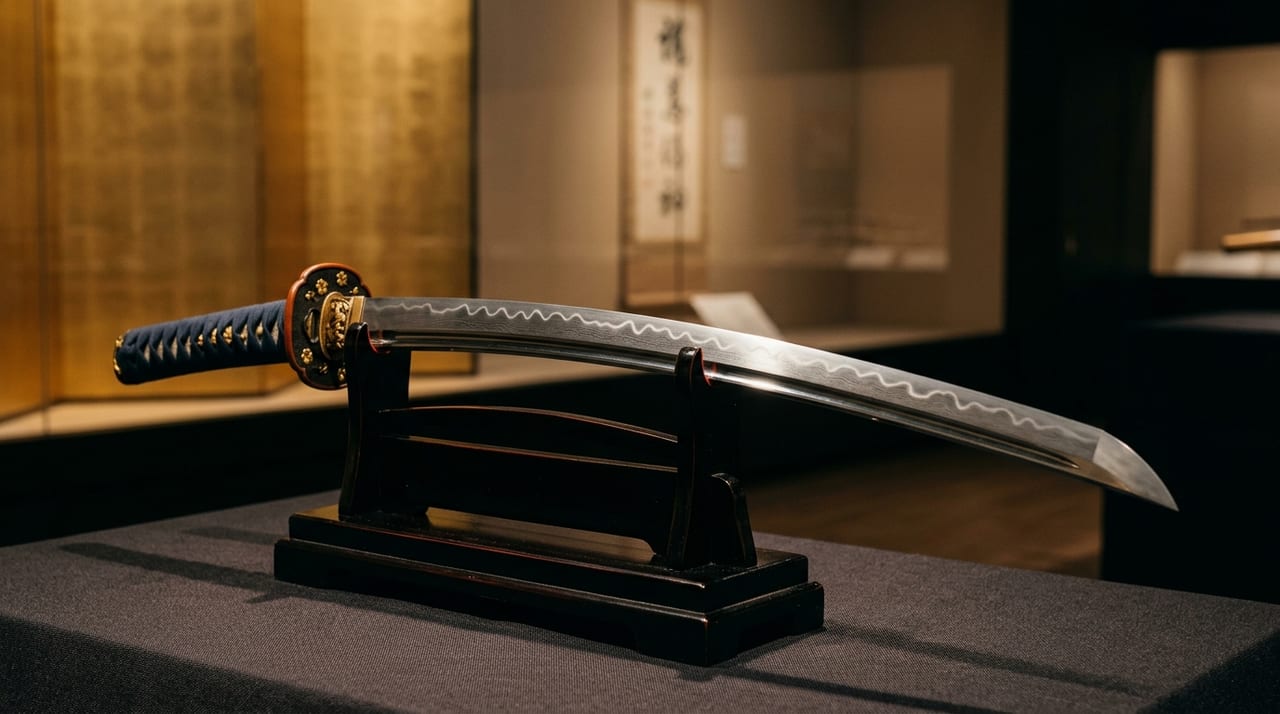
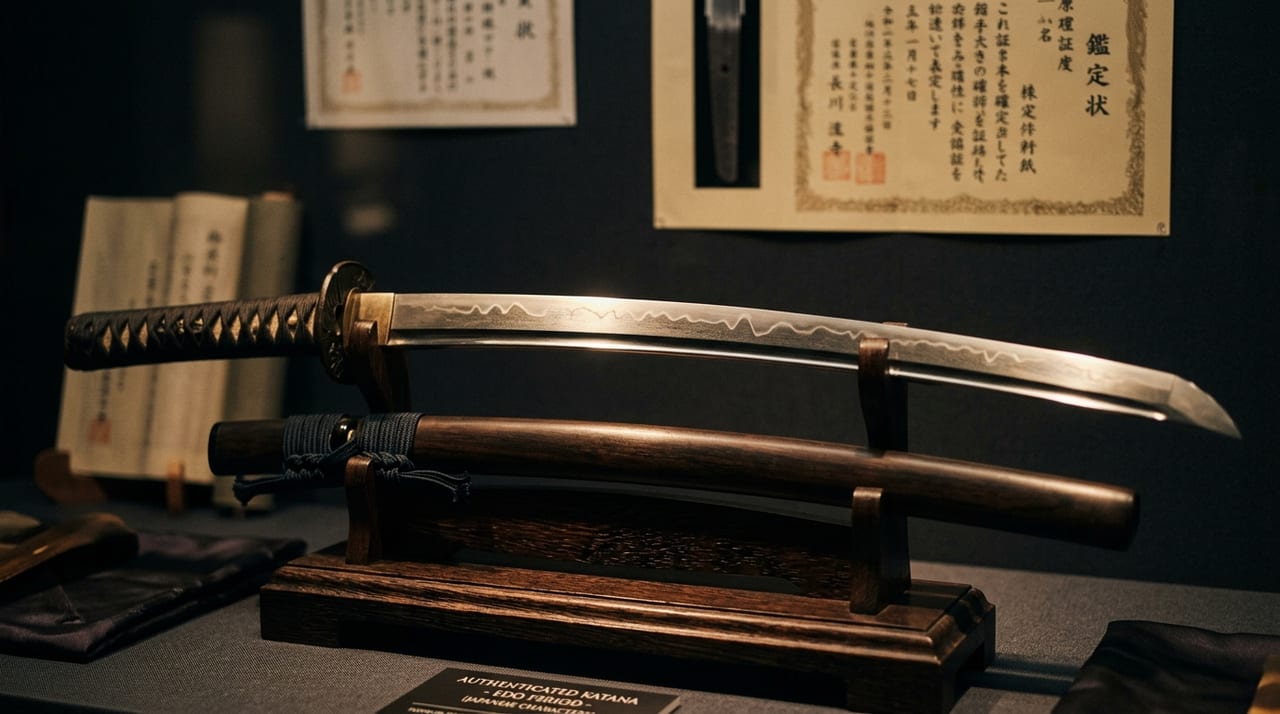
Japan's regional sword museums and art galleries offer opportunities to view authentic Japanese swords designated as National Treasures or Important Cultural Properties up close. However, many visitors viewing swords through glass cases say they don't know what to look for.
Authentic Japanese swords possess several optical and structural characteristics fundamentally different from counterfeit swords, reproductions, and foreign imitations. Understanding these features dramatically enriches the museum viewing experience and develops the ability to distinguish genuine from fake.
What Light Reflection Reveals: The Optical Properties of Steel Grain
The steel grain (jigane) of a Japanese sword is composed of thousands of steel layers formed through folding and forging (orikaeshi tanren). The optical properties created by this multilayered structure are the defining characteristic of authentic Japanese swords.
How to Observe Steel Surface Patterns (Jihada)
Approaching a museum case and angling the light while moving reveals wood grain-like patterns on the blade surface. These are traces of folding and forging called "jihada" (steel surface patterns).
- Itame: Flowing wood-grain-like patterns. Common in Bizen and Soshu traditions.
- Masame: Straight, concentric ring-like patterns. Common in Yamato and Yamashiro traditions.
- Ayasugi: Complex wavy or arrow-feather patterns. Distinctive to the Gassan school.
- Koitame: Tightly packed fine wood-grain patterns. Common in Echizen and Mino traditions.
The jihada of an authentic blade appears to "live" and change expression depending on viewing angle. Industrial products and reproductions cannot produce such organic variation.
Chikei (Ground Lines) and Kinsuji (Gold Lines)
Characteristic of Soshu tradition swords are dark linear patterns flowing through the steel grain (chikei) and bright golden lines (kinsuji). These are the result of steel flow during forging appearing on the surface—advanced metallurgical features that appear only in the work of skilled smiths.
Kinsuji only gleams at specific light angles, making them easier to spot by moving around the case while observing.
Observing the Hamon Pattern: Distinguishing Nie and Nioi
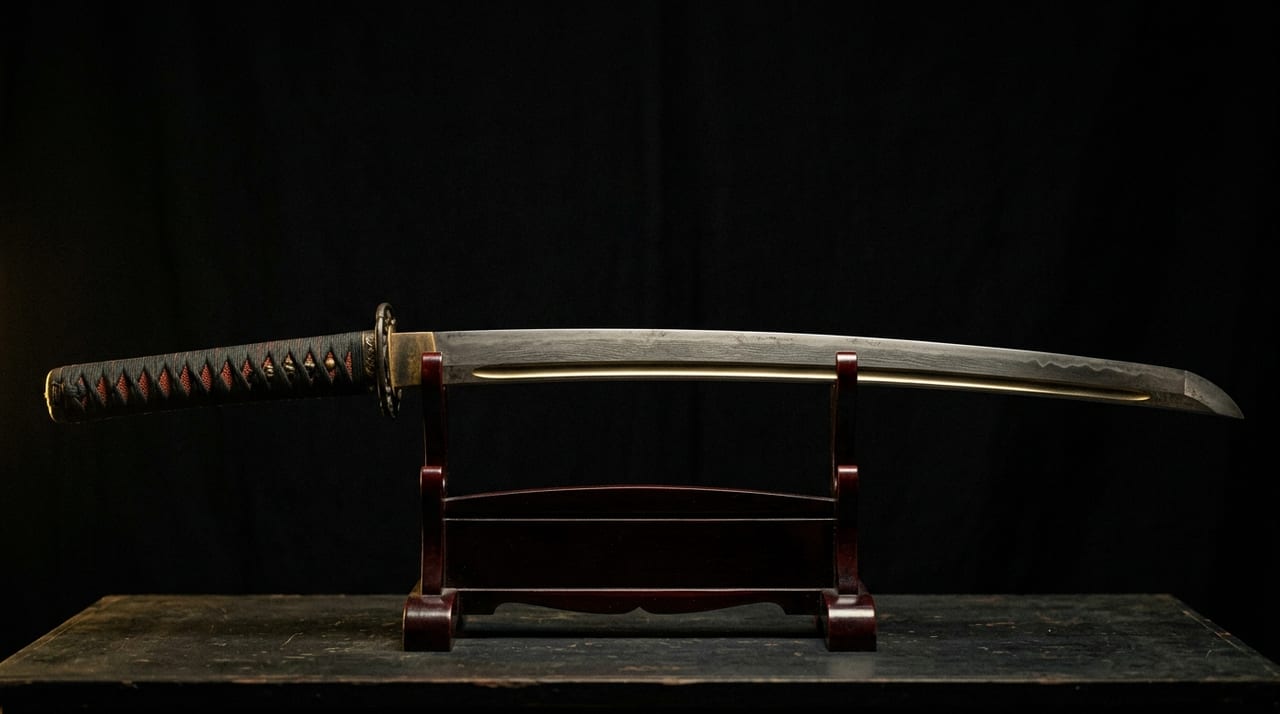
Hamon refers to the wavy patterns appearing near the blade edge, traces of steel structural changes created during the hardening process. Careful observation of hamon is essential, and distinguishing between the following two types is fundamental.
Nie-Deki and Nioi-Deki
- Nie: Sand grain-like particles visible to the naked eye. Rough texture. Particles glimmer brightly under light. Common in Soshu and Yamato traditions.
- Nioi: Fine particles spread uniformly like mist with hazy boundaries. Common in Bizen and Yamashiro traditions.
Under museum lighting conditions, distinguishing between the two can be difficult, but shining strong light (spotlights) from certain angles makes the nie particles clearly visible.
Major Hamon Types
| Hamon Name | Characteristics | Representative Region |
|---|---|---|
| Suguha (straight blade) | Straight blade line | Yamato, Yamashiro |
| Gunome (clove eye) | Continuous oval forms | Bizen, Mino |
| Choji (clove flower) | Clove flower-like shape | Bizen, Ko-Bizen |
| Hitatsuran (entire blade hardened) | Entire blade is hardened | Soshu |
| Sanbon Sugi (three cedars) | Three consecutive peaks | Mino |
Tsukurikomi: Observing the Blade's Cross-Section
Tsukurikomi refers to the blade's cross-sectional shape, an important clue for determining a sword's period, purpose, and origin. In museums, you can typically view swords from the side and observe the position and height of the shinogi (ridge line).
Major Types of Tsukurikomi:
- Shinogi-zukuri (ridge construction): Standard cross-section with three surfaces: blade, ridge, and spine. Most common across all periods.
- Hira-zukuri (flat construction): Flat cross-section without a ridge. Common in short swords and companion swords.
- Kiritsuha-zukuri (cut blade construction): Ridge set high with steep angles. Seen in short swords from the Kamakura through Nanboku-Cho periods.
Kiritsuha-zukuri is particularly rare, exemplified by the National Treasure "Kiriha Sadamune."
Curve and Form: Reading the Period
The blade's curve (sori) and overall form are important indicators reflecting period and origin.
Changes in Form by Period:
- Heian through early Kamakura: Strong hip curve (koshizori) with elegant tapering point.
- Late Kamakura through Nanboku-Cho: Larger size with smaller difference between base and point width; imposing form.
- Muromachi through Sengoku: Spread of uchigatana style; shallower curve for practical use.
- Edo period: Blade length constrained by regulations; well-proportioned, beautiful form.
In museums, display panels indicate the period, so confirming whether the blade's form matches its dated period is one way to enjoy appreciation.
The Tang: Signatures and Evidence of Period
Often overlooked during appreciation, the "tang" (nakago) hidden under the hilt is one of the most important authentication points. Some museums display swords with exposed tangs; when they do, check the following.
- Color and quality of rust: Authentic old blades naturally develop characteristic reddish-brown to black patina. The rust texture differs from artificially patinated counterfeit signatures.
- Signature carving: Old blade signatures display unique brushstroke pressure and character from hand carving, distinct from modern CNC-machined finishes.
- Tang shape: Specific forms like "kuri-jiri," "kenkata," and "haagari" vary by period and origin.
Proper Museum Etiquette and Observation Techniques
Following these points in sword museums enables deeper appreciation.
- Move around while viewing: Position yourself at various angles around the case to change light reflection angles. Steel patterns, hamon, and ground lines often appear only at specific angles.
- Read the explanatory panel first: Learning information before viewing the blade helps you know where to focus.
- View in chronological order: Most museums display swords chronologically, allowing you to follow changes in blade form continuously.
- Use catalogs and brochures: Special exhibition catalogs include high-resolution photos and detailed explanations, allowing further study at home.
Connecting with Sorou (Tourist Spots): Museums Worth Visiting
Below are major facilities where you can view authentic Japanese swords (primarily in the Tokyo area):
- Sword Museum (Tokyo, Ryogoku): NBTHK-operated. Permanent displays of National Treasures and Important Cultural Properties.
- Tokyo National Museum (Tokyo, Ueno): National Treasures including "Kiriha Sadamune" and "Mikazuki Munechika" and other supreme masterpieces.
- Yasukuni Shrine Yushuukan (Tokyo, Chiyoda): Military swords and military history exhibits.
- Atsuta Shrine Treasure Museum (Aichi, Nagoya): Connections to the Kusanagi Sword.
- Kyoto National Museum (Kyoto): Comprehensive holdings of old blades and National Treasure swords.
By repeatedly viewing authentic swords at these facilities, your eye develops naturally and the ability to distinguish genuine from counterfeit becomes instinctive.