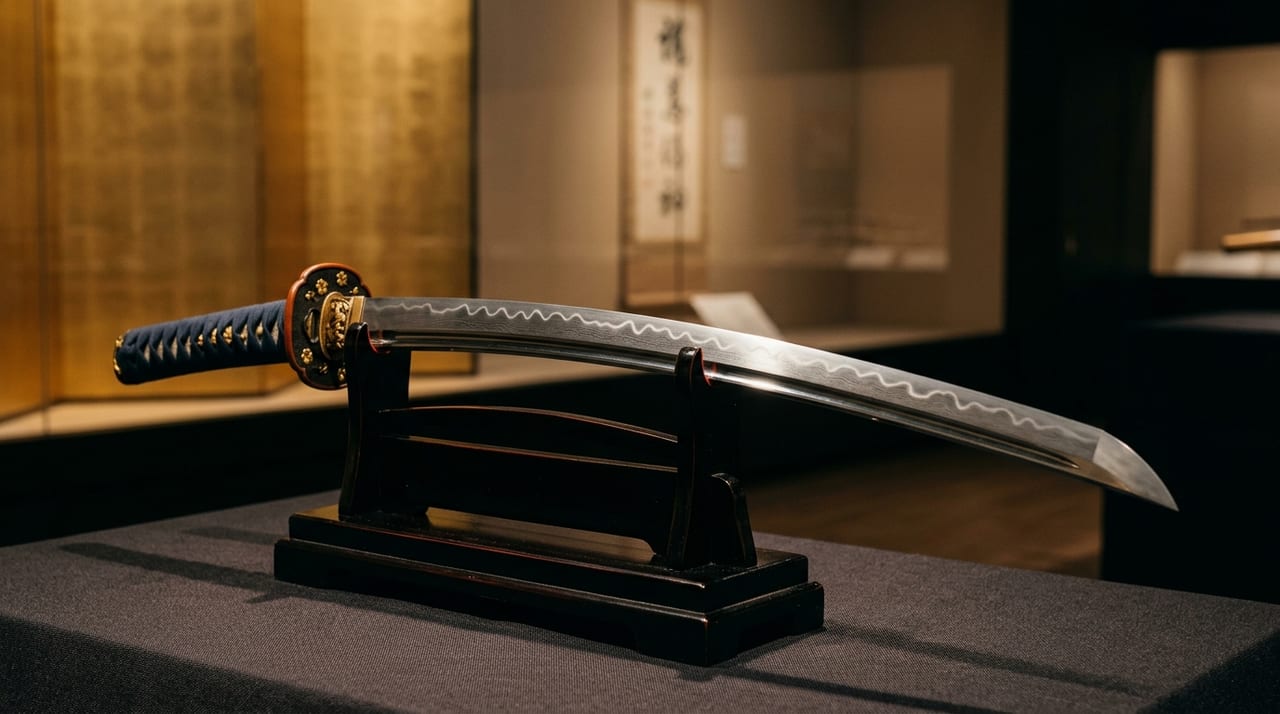
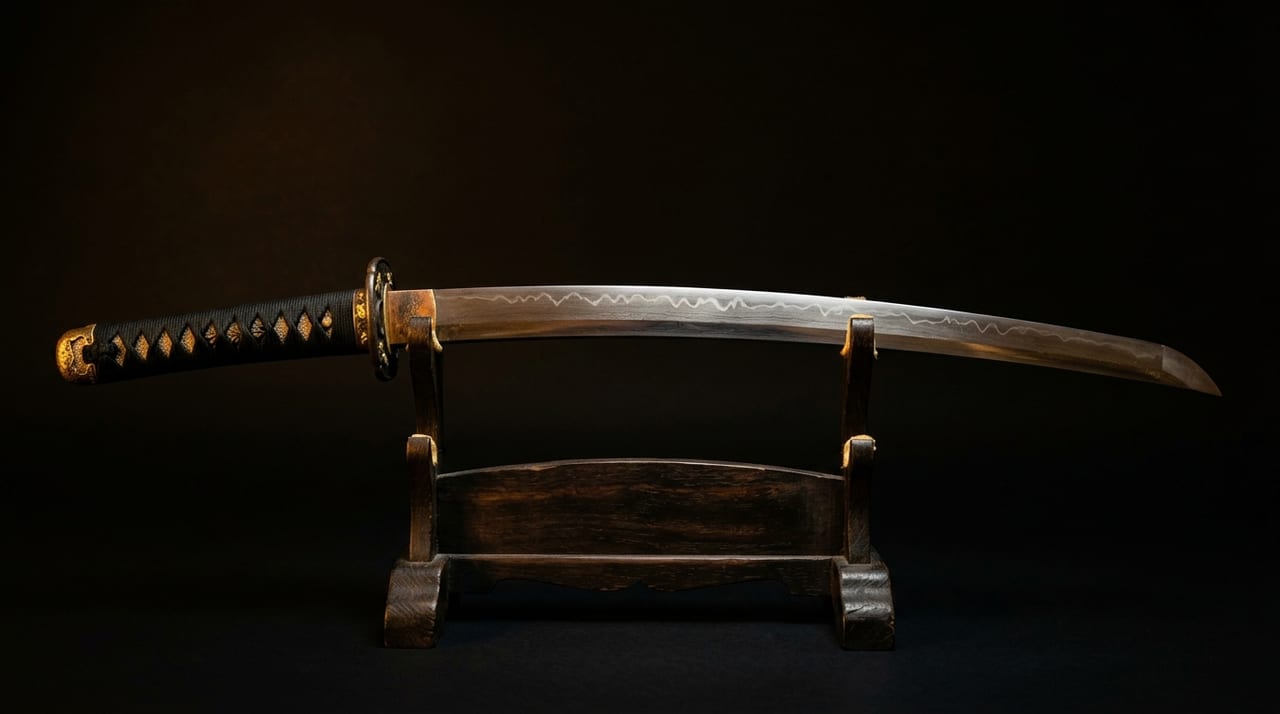
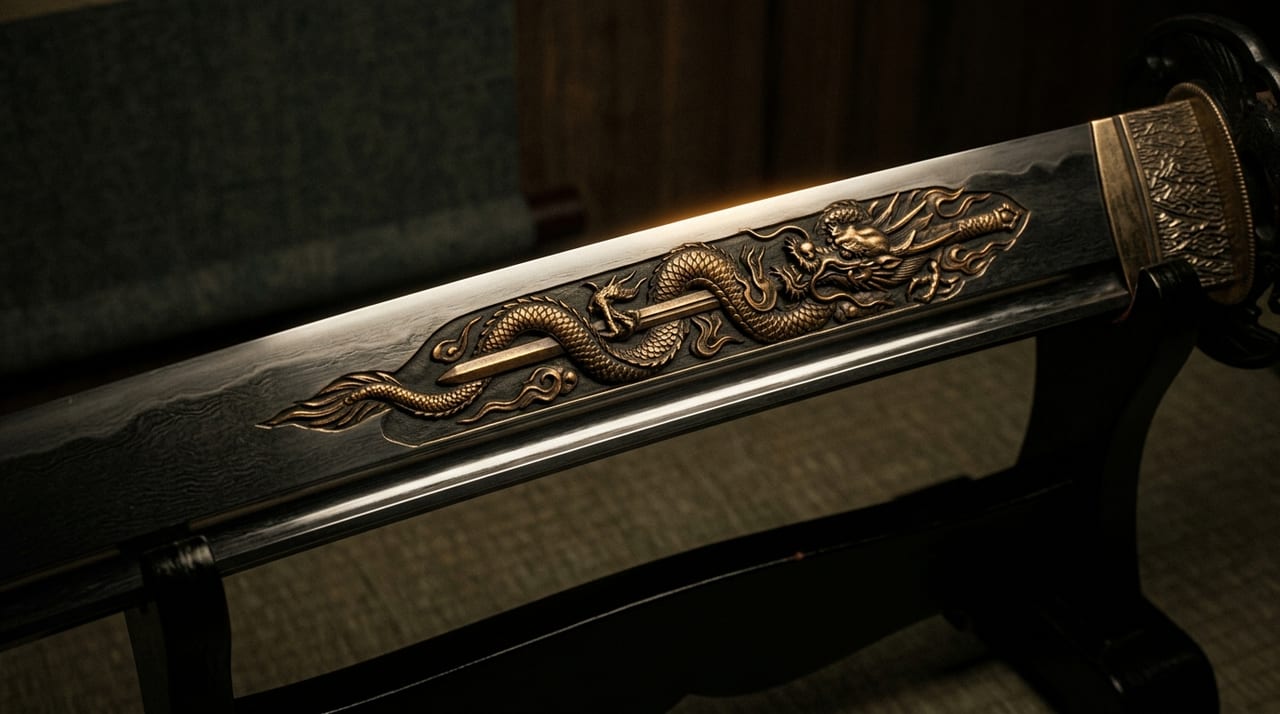
Wiping, Oil Removal, and the Art of Appreciation for Nihontō: Thorough Care Procedures Practiced by Tōshō and Togishi
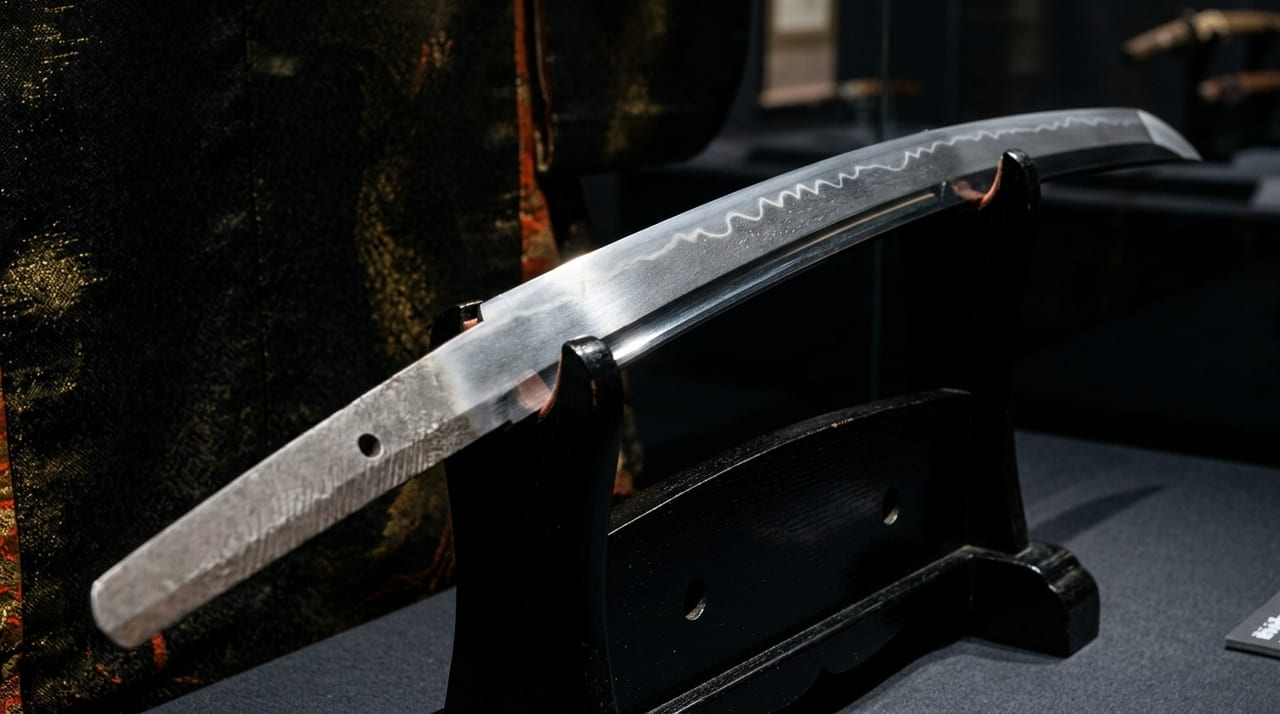 * Image is for illustrative purposes only.
Table of Contents
The Essence of Care: Nihontō as "Living" Metal
To understand the maintenance of nihontō, one must first recognize the fact that a blade is "living." It is a composite material forged through repeated folding of steels with differing carbon content, and its structure continually reacts to Japan's hot and humid climate, adapting to daily environmental changes. Neglect the proper care and rust will erode from the surface into the internal structure, causing irreversible damage.
"Performing maintenance" and "performing maintenance properly" are entirely different things. Incorrect care — excessive polishing, wiping with a coarse cloth, using the wrong type of oil — can inflict damage on a blade more serious than the damage caused by rust. This article explains in detail the precise procedures still practiced in 2026 by tōshō and togishi.
The Basic Set: Selecting and Preparing Maintenance Tools
The tools required for thorough blade maintenance are as follows. Assembling a carefully chosen selection of quality tools is a critical factor that determines the long-term preservation of the blade.
Essential Tools
- Nuguigami (wiping paper): Washi hōshogami or uchigami. It must be soft and have a uniform fiber. Tissue paper and cotton cloth must never be used, as their fibers will scratch the blade.
- Uchiko: A powder made from finely ground whetstone, wrapped in gauze or similar material. It functions as an abrasive that adsorbs and removes old oil and dirt.
- Chōji oil (chōji-abura): A traditional rust-prevention oil extracted from chōji (cloves). It is resistant to decay and forms a stable protective film on the blade's steel. It is important to always use commercially available "sword-grade chōji oil."
- Mekugi-nuki: A brass pin used to push out the mekugi when removing the nakago from the tsuka. An essential tool for disassembling the hilt.
- Gloves: Thin nitrile rubber gloves. An essential item to prevent the oils from fingerprints from coming into direct contact with the blade.
Basic Maintenance Procedure (Once or Twice a Month)
Step 1: Remove the Tsuka (when necessary)
When appreciating or performing thorough maintenance, push out the mekugi with the mekugi-nuki, remove the tsuka, and expose the blade. When pulling off the tsuka, the recommended method is not to "hold the blade downward and strike the tsuka from above," but rather to "hold near the nakago with one hand and lightly tap the kashira with the heel of the other hand." Since carelessly removing the tsuka exposes the blade and is dangerous, it is safer to have an assistant support the blade so it does not fall.
Step 2: Remove Old Oil (Wiping)
Use nuguigami to wipe away all old oil from the entire blade. What matters is the direction of wiping: always limit it to a single longitudinal direction from the habaki-moto (base near the habaki) toward the kissaki. Back-and-forth wiping is an absolute cause of damage to the blade and must be avoided. For this initial wipe, it is sufficient to simply let the paper adsorb the oil without applying force.
Step 3: Using Uchiko
After removing the bulk of the oil with wiping, lightly tap uchiko onto the hira-ji (flat surface) and mune side of the blade. Then wipe carefully in the same direction (from mune toward the edge) with nuguigami. Since uchiko is whetstone powder, using it in excess will minutely abrade the blade surface. For routine maintenance once or twice a month, one to two applications of uchiko is appropriate.
Step 4: Apply Fresh Oil
Place a few drops of chōji oil on the edge of a clean piece of nuguigami and spread it thinly and evenly across the entire blade. The appropriate amount of oil is roughly "a barely-moist feeling." Applying too much can cause the oil to seep into the interior of the saya and degrade the wood. It is important to apply oil to every surface: the hira-ji, shinogi-ji, edge, and mune.
Step 5: Reattaching the Tsuka and Storage
Once the oil has been applied evenly to the blade, return the nakago to its original orientation in the tsuka and push the mekugi back into the original hole. The basic approach to storage is to keep the blade with the edge facing upward (ha-age), with the saya level or slightly tilted so the edge side is higher. This method of storage prevents the oil from pooling in one direction.
Abura-nuki (Nugui) — Specialized Pre-polishing Treatment
"Abura-nuki" is a specialized treatment performed by togishi before polishing a blade, and is a fundamentally different process from routine maintenance.
Blades brought in for polishing often have a thick film of oil on their surface. Applying a whetstone in this state causes the oil to clog the surface of the stone, reducing polishing efficiency and resulting in an uneven finish. Abura-nuki is the process of completely removing this oil film.
Procedure for Abura-nuki
The abura-nuki performed by togishi takes the approach of carefully wiping multiple times using a generous amount of uchiko, or using an "oil-removing liquid" (an ethanol-based solvent) to completely dissolve the oil on the surface. When using a solvent, it is important to apply it evenly across the entire blade surface and wipe it off carefully after several minutes.
After abura-nuki, the blade is in an extremely rust-prone state, so the principle is to begin polishing work the same day. When a collector performs abura-nuki themselves, it is essential to re-apply a thin coat of chōji oil after the abura-nuki.
The Art of Appreciation: Properly "Seeing" a Nihontō
Equally important to maintenance is the "art of appreciation." Proper methods of appreciation both protect the blade and draw out its essential beauty.
Basic Manner of Holding
The formal manner of holding a blade during appreciation is "to hold it with both hands, edge facing upward (ha-age)." Hold the tsuka lightly with the right hand, and support it from below around the shinogi with the left hand. Never touch the edge with the fingers. The oils from fingerprints immediately cause rust.
How to Direct Light
To accurately observe the jihada of the jigane and the hamon, how one directs light is important. Tilt the blade gently toward window light or a fluorescent light, and observe the reflection of the light while changing the angle. To observe the hamon, face the edge toward the light source and observe while tilting the blade vertically; the nie and niku particles will become visible. Appraisers refer to this observation technique as "osaete miru" (pressing and looking).
Observing the Jihada
The grain of the jigane (itame, mokume, masame, etc.) becomes easier to see by holding the blade horizontally and shining light from directly to the side. Since the angle of light differs from that used to observe the hamon, it is necessary to alternate between the two during appreciation. To make accurate observations, it is recommended to try multiple different light sources.
Sequence of Appreciation
The sequence of appreciation followed by appraisers is generally: "overall shape (sugata) → jigane → hamon → nakago and mei." First, the balance of the overall sori, length, motohaba, and sakihaba is examined to estimate the period and school, then the details of the jigane and hamon are observed for confirmation, and finally the shape of the nakago, the mei, and the date are confirmed.
Storage Environment: The Conditions That Make Care Count
No matter how carefully one performs maintenance, it is meaningless if the storage environment is poor. The optimal storage conditions for nihontō are described as "a temperature of 15–25°C and a humidity of 50–60%." High humidity accelerates the oxidation (rust) of the steel, while low humidity causes the wood of the saya to dry out and crack.
The standard approach is to store the blade in a tōfukuro (sword bag) or a paulownia sword box, with a desiccant (silica gel) placed inside. Sword bags are often made of navy or white fukusa fabric. When stored horizontally on a katana-dai (sword stand), it is also important to periodically change the orientation so that the oil does not pool in one direction.
Humidity management must be maintained continuously throughout the year, with particular care required during the rainy season and the high-humidity summer months. It is recommended to have a hygrometer and monitor the environment at all times.
Summary: Care as the Practice of Knowledge and Respect
The maintenance of nihontō is not merely "rust prevention"; it is the practice of the knowledge and skill that sustains the life of a blade. The ideal cycle consists of the basic routine of wiping, uchiko, and oil application once or twice a month; a thorough cleaning every six months to a year; and regular consultation with a polishing master. With proper knowledge, a celebrated blade can be passed down in perfect condition to generations a hundred years from now. It is precisely this continuous effort that is indispensable for preserving nihontō as a cultural heritage.