Wakizashi — The Supporting Blade That Completes the Daishō, and the Samurai's True Self-Defense Sword
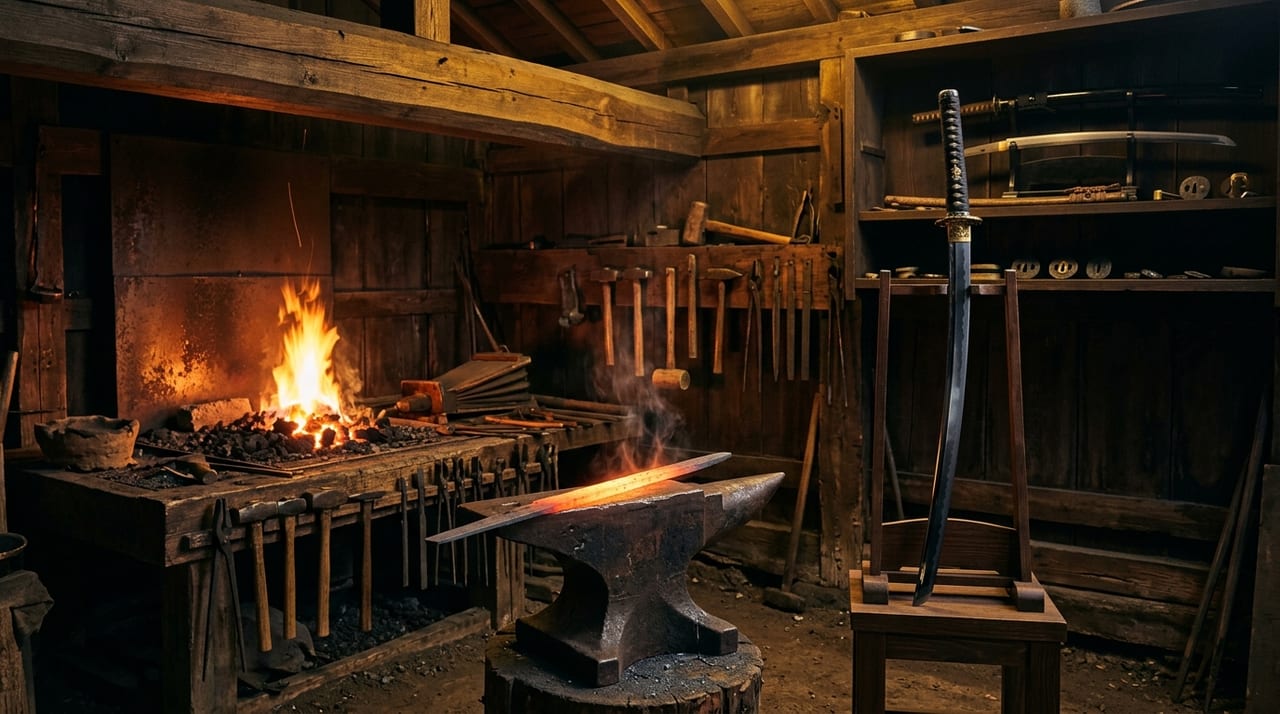 * Image is for illustrative purposes only.
Table of Contents
What Is the Wakizashi — Definition and Basic Specifications
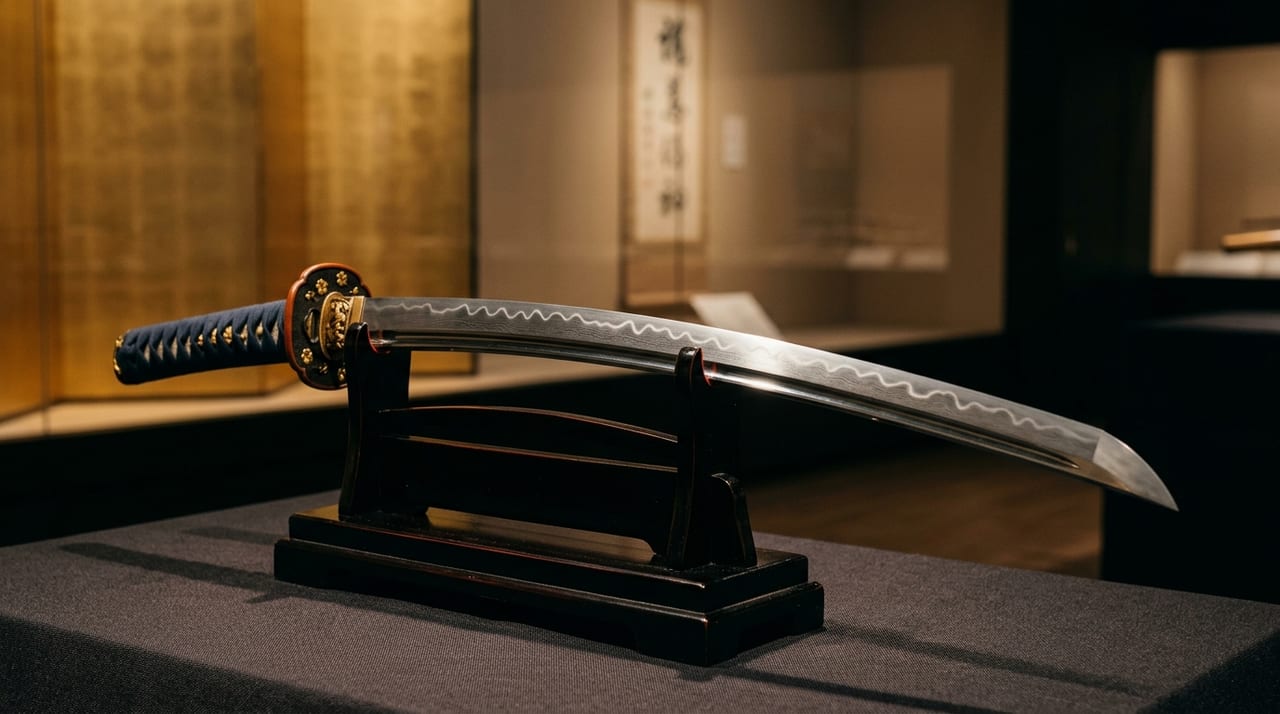
The wakizashi is a nihontō classified under the firearms and swords registration system as having a nagasa of 30 cm or more and under 60 cm. It is shorter than the uchigatana (nagasa of 60 cm or more) and longer than the tantō (nagasa under 30 cm).
The name "wakizashi" means "sword worn at the side," and it functioned as a secondary blade — a backup sword — to the uchigatana, which was the primary sword.
To possess a nihontō including a wakizashi within Japan, a registration certificate issued by the Board of Education is required. This signifies ownership not as a weapon but as a recognized work of art and cultural property, and the wakizashi falls within the scope of this registration system.
The three categories of uchigatana, wakizashi, and tantō are classified by nagasa alone and do not represent absolute boundaries of construction or use. Even works by the same tōkō may be made to wakizashi dimensions depending on the commission or the era.
The Daishō — Samurai Formal Dress and the Legal Status of the Wakizashi
In the Edo period, it was stipulated that when samurai appeared in public they were to wear the "daishō" — two swords at the hip: the uchigatana (daitō) and the wakizashi (shōtō). This was not mere armament but a "proof" of samurai status and a form of "formal attire."
- Daitō: Uchigatana. Nagasa of 60 cm or more. The primary sword for combat.
- Shōtō: Wakizashi. Nagasa of 30–60 cm. The secondary sword for self-defense, indoor use, and ceremonial purposes.
This "obligation to carry the daishō" was permitted only to samurai (those of samurai rank), and farmers, merchants, and artisans were in principle prohibited from wearing swords (following the Sword Hunt edict (Katanagari)). Conversely, samurai were socially required to wear the daishō at all times.
The daishō was often matched by the same tōkō and the same koshirae design, a practice called "daishō-zoroi." Unifying the koshirae design — the tsuba, fuchi-kashira, menuki, hilt wrapping, and so on — across the daitō and shōtō was an important element in demonstrating a samurai's rank and refinement.
The Practical Roles of the Wakizashi
Because the wakizashi is shorter than the uchigatana, it offered the following practical advantages.
Self-Defense Sword for Indoor Use
The uchigatana can catch on pillars, shōji screens, and walls indoors, making it difficult to draw. The wakizashi, owing to its shorter length, was suited to self-defense indoors and was also called "zashiki-gatana" (sitting-room sword).
Backup Weapon When the Uchigatana Is Lost
When the primary sword broke, was taken, or became separated from its saya during combat, the wakizashi served as an immediately usable backup weapon.
Tool for Seppuku
In seppuku, the ritual of self-disembowelment performed by samurai, a wakizashi rather than a tantō was often used (varying by school and period). Particularly from the mid-Edo period onward, the wakizashi became established as the official implement for seppuku.
Tool for Decapitation (Kaishaku)
For kaishaku during seppuku — the act of cutting the neck from behind to hasten the end of suffering — the maneuverable wakizashi was used (being shorter than the uchigatana, it could be swung even indoors).
Types and Specifications of the Wakizashi
Subcategories of the wakizashi by nagasa:
- Ō-wakizashi: Nagasa of 55 to under 60 cm. Close in size to the uchigatana and usable as an independent weapon.
- Chū-wakizashi: Nagasa of 45–55 cm. The most standard wakizashi.
- Ko-wakizashi: Nagasa of 30–45 cm. Small, close to a tantō in size, used for self-defense and formal dress.
Even within the same category of "wakizashi," the ō-wakizashi tends toward combat effectiveness while the ko-wakizashi emphasizes portability and ceremonial character; the appropriate length depends on which purpose is prioritized when choosing one.
Construction and Points of Interest of the Wakizashi
For tōkō, the wakizashi was also an opportunity to attempt freer forms than with the uchigatana.
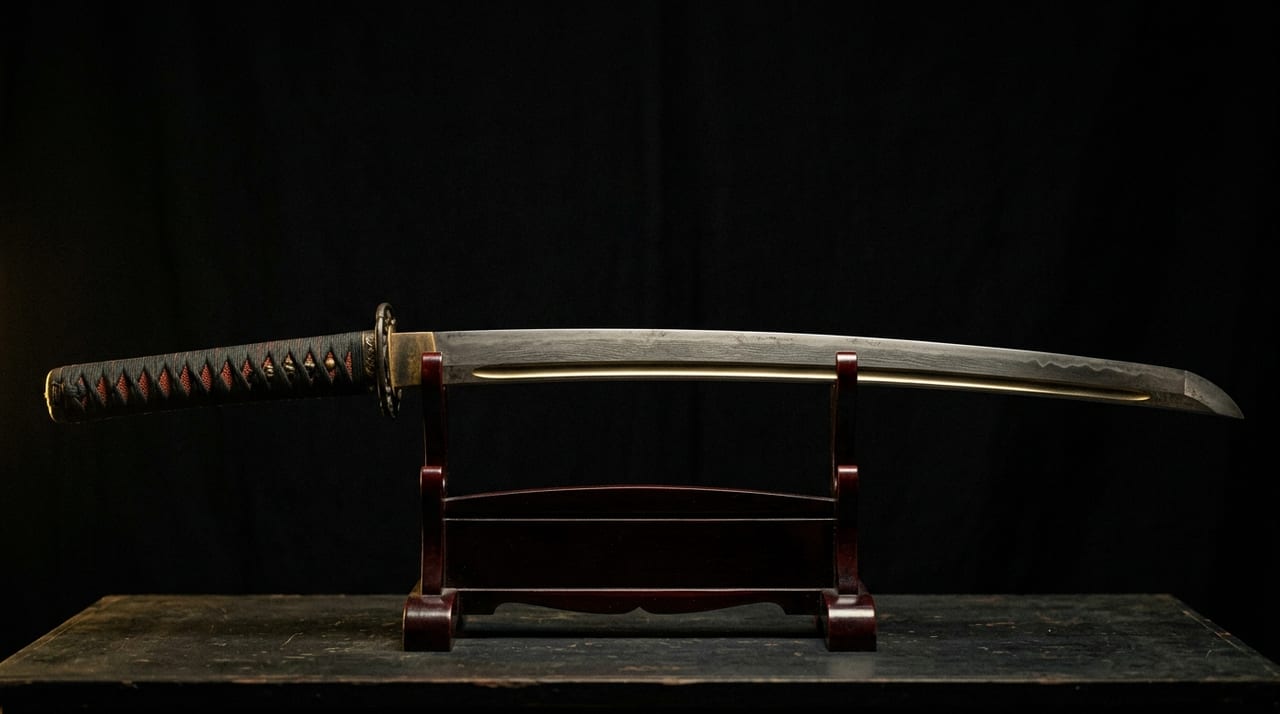
Construction (cross-sectional shape): Both hira-zukuri and shinogi-zukuri are found in wakizashi, but hira-zukuri wakizashi have superior thrusting performance and many are exceptional combat blades.
Hamon: Being shorter than a katana, the entire hamon is easier to appreciate. Many wakizashi by master tōkō are masterpieces that rival a katana in the beauty of their hamon.
Nakago: The nakago of a wakizashi is shorter than that of an uchigatana, but it bears the mei, date inscriptions, and dedication inscriptions to the owner.
Bōshi: This refers to the concluding section of the hamon at the kissaki. Because the distance to the kissaki is short in a wakizashi, the quality of the bōshi greatly influences the overall impression of the work.
How to Choose a Wakizashi — Points to Check When Appreciating or Purchasing
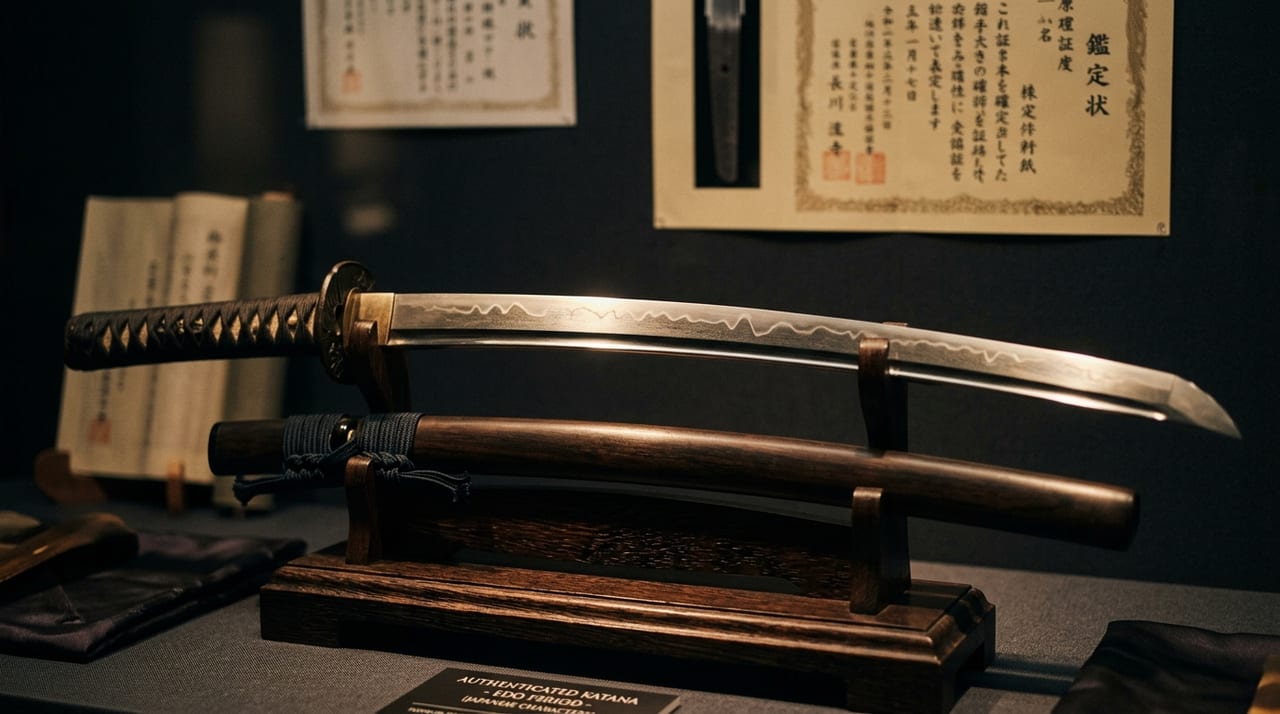
When choosing a wakizashi, first check the condition of the blade and whether a kanteisho and koshirae are included.
- Kanteisho: A kanteisho issued by an appraisal body such as NBTHK (Society for the Preservation of Japanese Art Swords) serves as documentation supporting the assessment of the tōkō and period.
- Koshirae or shirasaya: Koshirae (full mounting with tsuba, tsuka, and so on) is suited for appreciation and carrying; shirasaya (a plain storage saya of bare wood) is a configuration that prioritizes preservation of the blade.
- Zaimei or mumei: Whether the nakago bears a mei (zaimei) or no mei (mumei) changes the criteria for appraisal.
- Balance of nagasa: Which subcategory — ō-wakizashi, chū-wakizashi, or ko-wakizashi — the sword belongs to determines its suitability for appreciation versus practical use (iai, enbu).
Basic Care and Storage of the Wakizashi
Nihontō including the wakizashi are most susceptible to moisture. The essentials of storage are as follows.
- Store with the blade in the saya, in a well-ventilated place away from direct sunlight.
- Periodically remove from the saya to inspect the blade, remove old oil with uchiko, then apply a thin coat of chōji oil.
- Never touch the blade with bare hands; always handle it through cloth or paper.
- If both koshirae and shirasaya are available, long-term storage in the shirasaya is preferable.
These are basic maintenance methods common to the uchigatana as well, but the wakizashi has the advantage of being easier to inspect regularly, given that it is handled indoors more frequently.
The Wakizashi in the Edo Period — Development as a Work of Art
During the peaceful Edo period, combat uses diminished and the wakizashi developed in a direction that emphasized artistic value. The splendor of the koshirae — tsuba, fuchi-kashira, menuki, hilt wrapping — commissioned from master craftsmen by domain lords and daimyō became one of the criteria for evaluating a wakizashi.
Wealthy merchants in Edo were subject to the prohibition on wearing swords, but certain privileged merchants and village officials were permitted to carry only a wakizashi (a lower rank of "myōji-taitō").
Many of the wakizashi that survive today were crafted with care during this Edo period for appreciation and as gifts, and no few receive high regard for the refinement of their koshirae design and the completion of their hamon.
Conclusion — The Wakizashi Is Not a "Backup" but a "Partner"
The wakizashi tends to be seen as an existence that "supports" the uchigatana as primary sword, but in reality it bore unique roles — self-defense, indoor use, and ceremony — that the uchigatana could not fill. In the sense that only the two swords of the daishō together complete the "full dress of a samurai," the wakizashi should be called not a "supporting player" but a "partner."