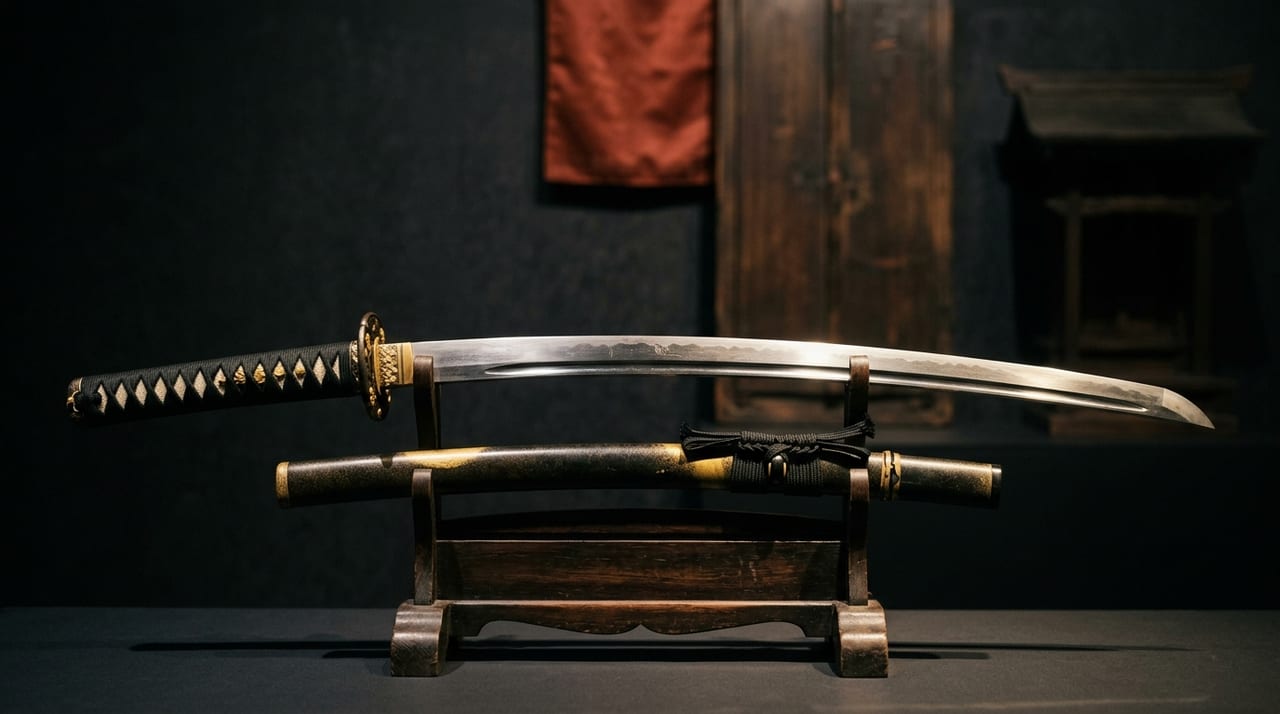
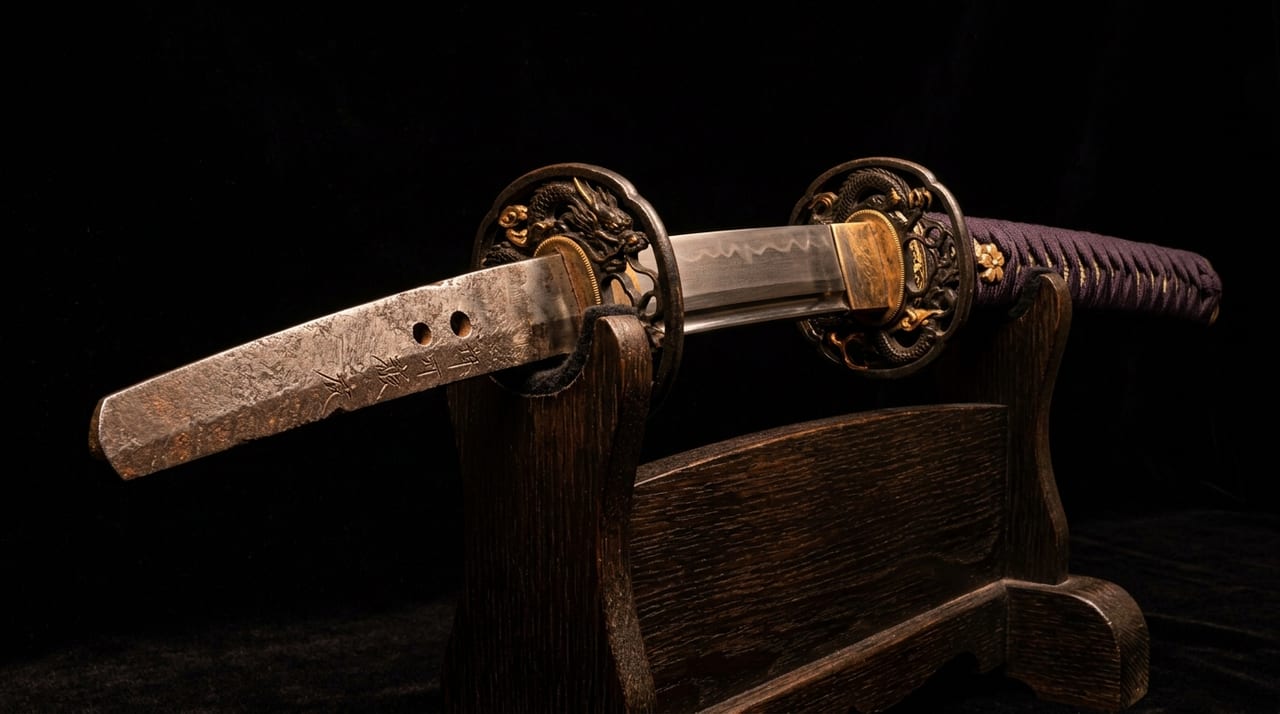
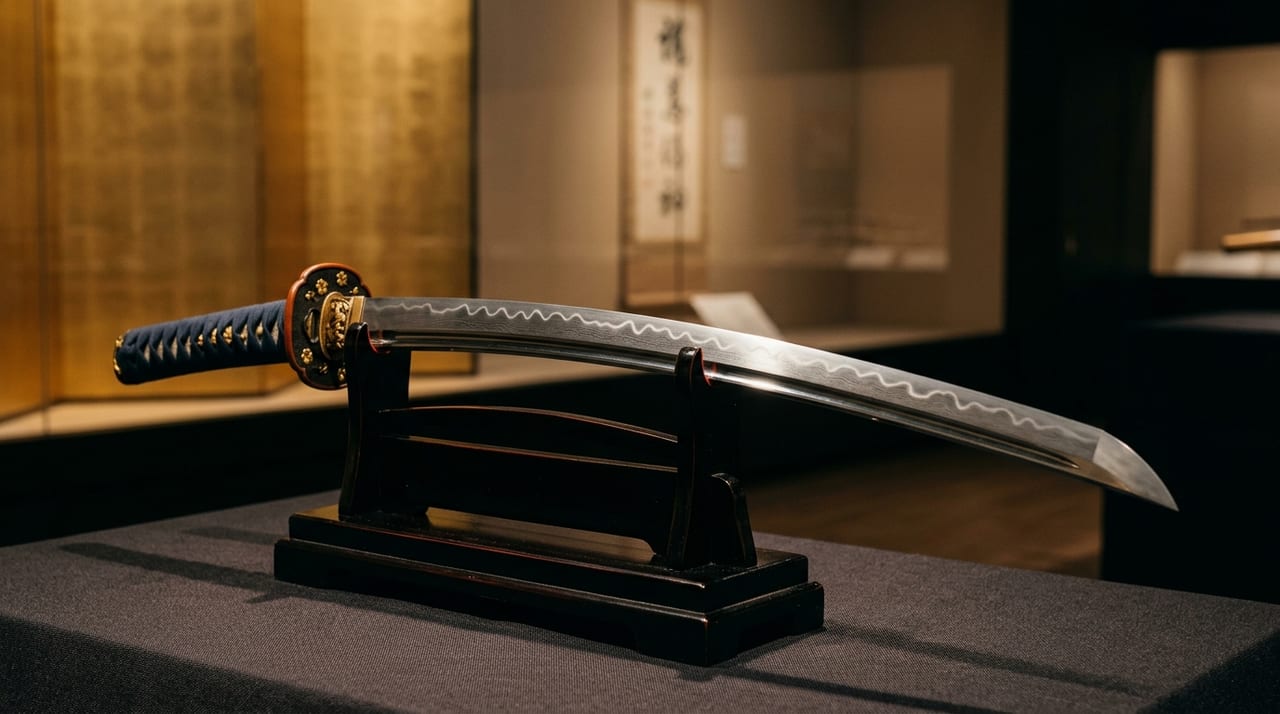
Shinogi-zukuri Blade Shape and Function — A Thorough Explanation of the Cross-Sectional Structure of Japanese Swords
 * Image is for illustrative purposes only.
Table of Contents
What Is the "Zukuri" of a Japanese Sword?
The word "zukuri" refers to the cross-sectional shape of a Japanese sword. When the blade is viewed in cross-section, its shape is determined by the zukuri, and this shape has a major influence on both the sword's function (cutting ability, strength, and weight balance) and its aesthetic appearance.
The great majority of Japanese swords made today have a cross-sectional shape called shinogi-zukuri, but it took a long historical evolution before this form was established. This article explains shinogi-zukuri as its central focus, along with the main types of zukuri found in Japanese swords and the functional significance of each.
The Structure of Shinogi-zukuri — Names and Roles of Each Part
Shinogi-zukuri is a construction in which, when the cross-section of the blade is viewed, a ridge line called the shinogi runs between the cutting edge and the mune, giving the blade a multifaceted structure that slopes inward from the shinogi. Centered on this shinogi, the parts of the blade are divided as follows.
Parts on the edge side (hagawa):
- Ha (cutting edge): The part directly responsible for the sword's cutting ability. It is hardened most by yaki-ire (quenching).
- Hamon (temper line): The pattern produced by yaki-ire (quenching). An important criterion in appraisal.
- Hamachi (edge notch): A notch at the base of the cutting edge, at the boundary with the tsuka (hilt).
- Ji (body): The flat surface between the cutting edge and the shinogi. The area where the kitae-hada (forging grain) appears.
- Jihada (grain pattern of the steel): The forging pattern that appears on the ji surface (itame, masame, mokume, etc.).
Structure of the shinogi (ridge line):
- Shinogi (ridge line): The ridge line dividing the ji from the shinogi-ji. An important structural element that contributes to the rigidity of the blade.
- Shinogi-ji: The sloping surface between the shinogi and the mune. The part where the blade's thickness increases sharply.
Parts on the mune side (munegawa):
- Mune (back of the blade): The back surface of the blade, opposite the cutting edge. Shapes include maru-mune (round), iori-mune (peaked), and kaku-mune (square).
- Munemachi (mune notch): The notch at the base of the mune, at the boundary with the tsuka (hilt).
The Function of the Shinogi — Why Is a Ridge Line Necessary?
The presence of the shinogi in shinogi-zukuri is not merely an aesthetic element; it has a clear functional significance.
1. Improved bending strength: By placing a rib (a projecting ridge line) in the cross-section, the resistance to bending increases dramatically compared to a flat plate. This is a phenomenon that can be explained in engineering terms as an increase in the "second moment of area," and it realizes a structure that resists breaking even in a slender blade.
2. Improved cutting-through: Because the cross-section becomes wedge-shaped at the shinogi, the resistance after the edge has entered a target is reduced. As the edge penetrates, the shinogi pushes the target apart to the left and right, contributing to good cutting-through.
3. Optimization of weight balance: By appropriately distributing the blade's thickness while maintaining the necessary strength, the weight and position of the center of gravity can be controlled.
Hira-zukuri — The Simplest Structure
Hira-zukuri is a construction in which the cross-section of the blade, having no shinogi, is composed only of a wedge shape. It is seen often in small knives (kogatana), tantō, and wakizashi, and has a structure in which the thickness increases uniformly from the edge side to the mune side.
Characteristics of hira-zukuri:
- The structure is simple and easier to produce than shinogi-zukuri.
- The edge is thin and excels at thrusting.
- Because there is no shinogi, bending strength is lower than that of shinogi-zukuri.
- It is often combined with suguha on tantō and wakizashi.
Representative hira-zukuri tantō: It is common in short tantō that Edo-period warriors carried for self-defense and in thinly made decorative swords produced as tea-ceremony objects.
Kiriba-zukuri — An Intermediate Form Between Hira-zukuri and Shinogi-zukuri
Kiriba-zukuri is a construction in which most of the blade has a simple cross-section like hira-zukuri, but a different angle is applied only at the cutting edge. The cross-section narrows sharply near the edge (forming a double bevel), creating a structure that enhances cutting ability.
This construction is seen especially in swords from the latter part of the Sengoku period through the early Edo period, and it spread as a functional form suited to "slashing attacks against an opponent wearing armor." It was a construction at which the tōkō (swordsmiths) of Bizen and Mino excelled, and even today a certain number of tōshō (swordsmiths) choose this construction.
Iori-zukuri and Moroha-zukuri — Special Constructions
Iori-zukuri: A construction in which the cross-section of the mune comes to a triangular point. It takes its name from the resemblance of the mune's shape to an "iori," meaning a triangular-roofed hut. It is seen often on naginata.
Moroha-zukuri: A double-edged construction in which both the edge side and the mune side are sharpened. It is seen on swords (tsurugi) and is a shape common in ancient straight swords.
Blade Shape as an Indicator of Period and School
The type of zukuri allows inference of the sword's period and place of production (school).
| Zukuri | Main period / school |
|---|---|
| Shinogi-zukuri (koshi-zori) | Heian-Kamakura period (peak of kotō) |
| Shinogi-zukuri (saki-zori) | Nanbokuchō period; long tachi |
| Hira-zukuri tantō | Late Kamakura through Nanbokuchō (height of the tantō) |
| Kiriba-zukuri | Sengoku through early Edo period (Keichō period) |
| Shinogi-zukuri (from Edo onward) | Shintō through shinshintō period (mainstream for uchigatana) |
Accurately observing a sword's zukuri is a fundamental and important skill in appraisal, and cultivating the eye to read the period from "shape" — not only from the mei (signature) and yakiba (hardened edge) — is one of the great pleasures of appreciating Japanese swords.