How to Read Hamon — Decoding the Beauty of Nihontō
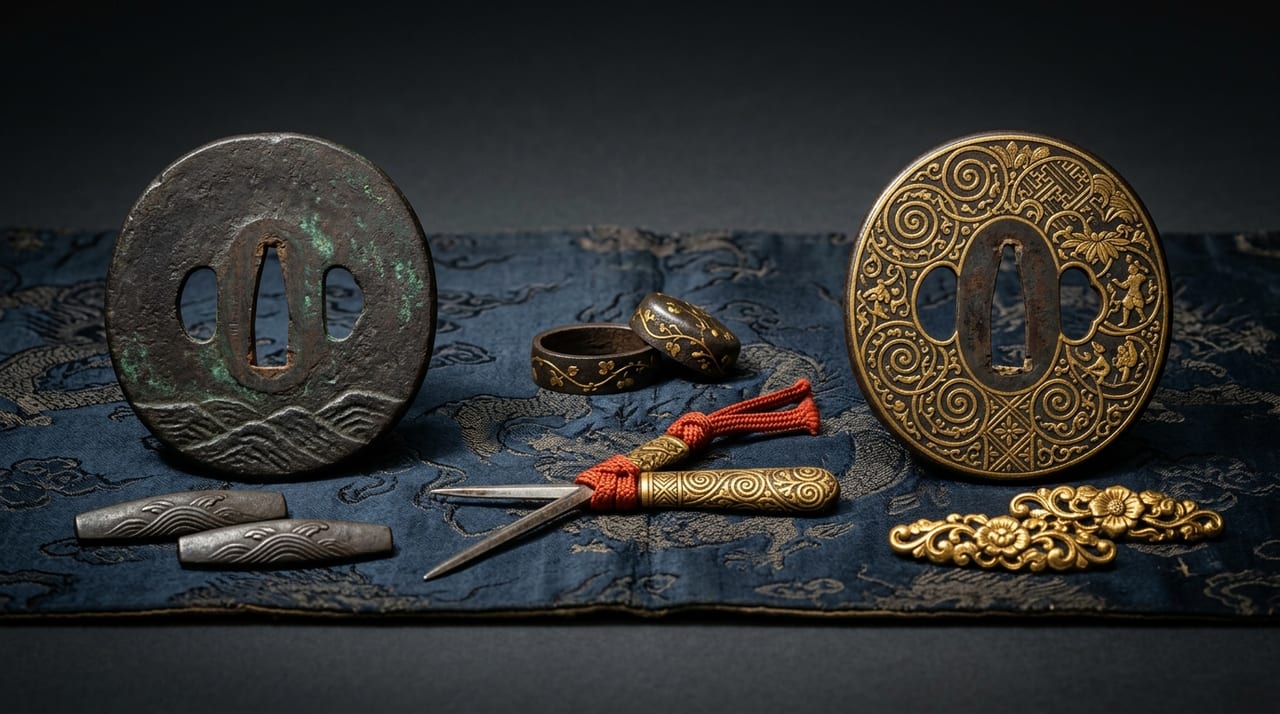 * Image is for illustrative purposes only.
Table of Contents
What Is Hamon — Its Essence and Beauty
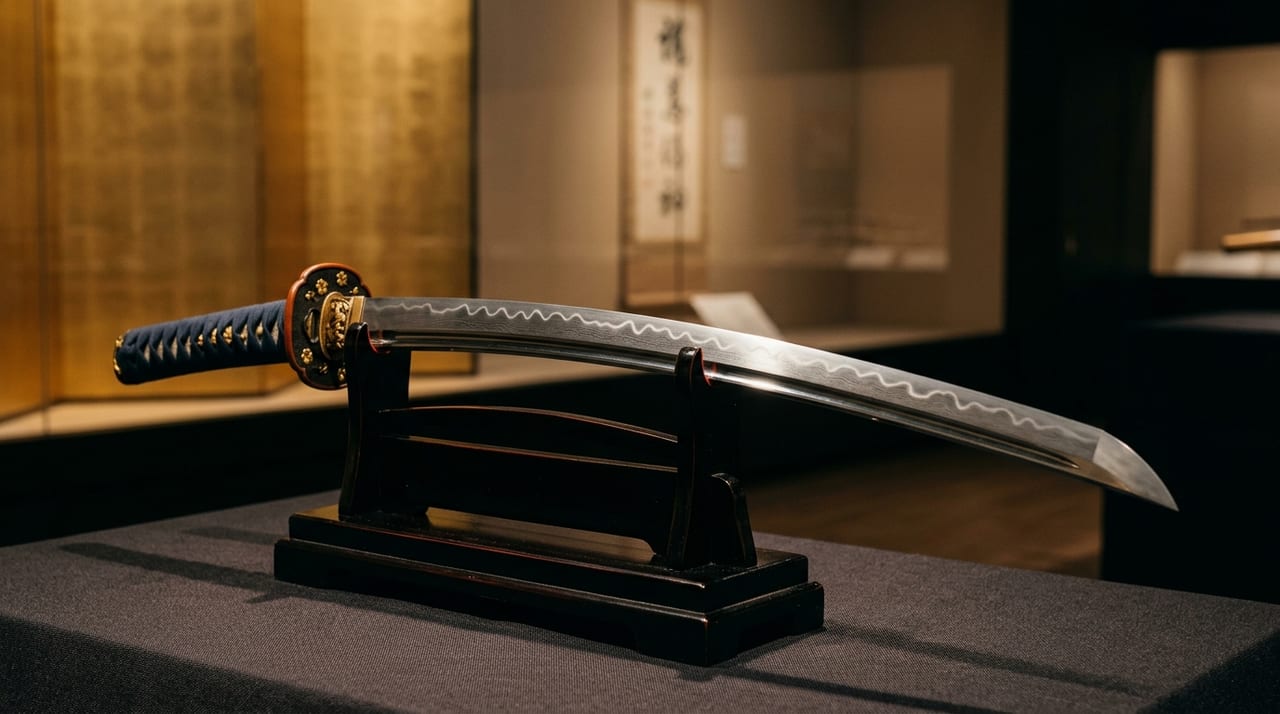
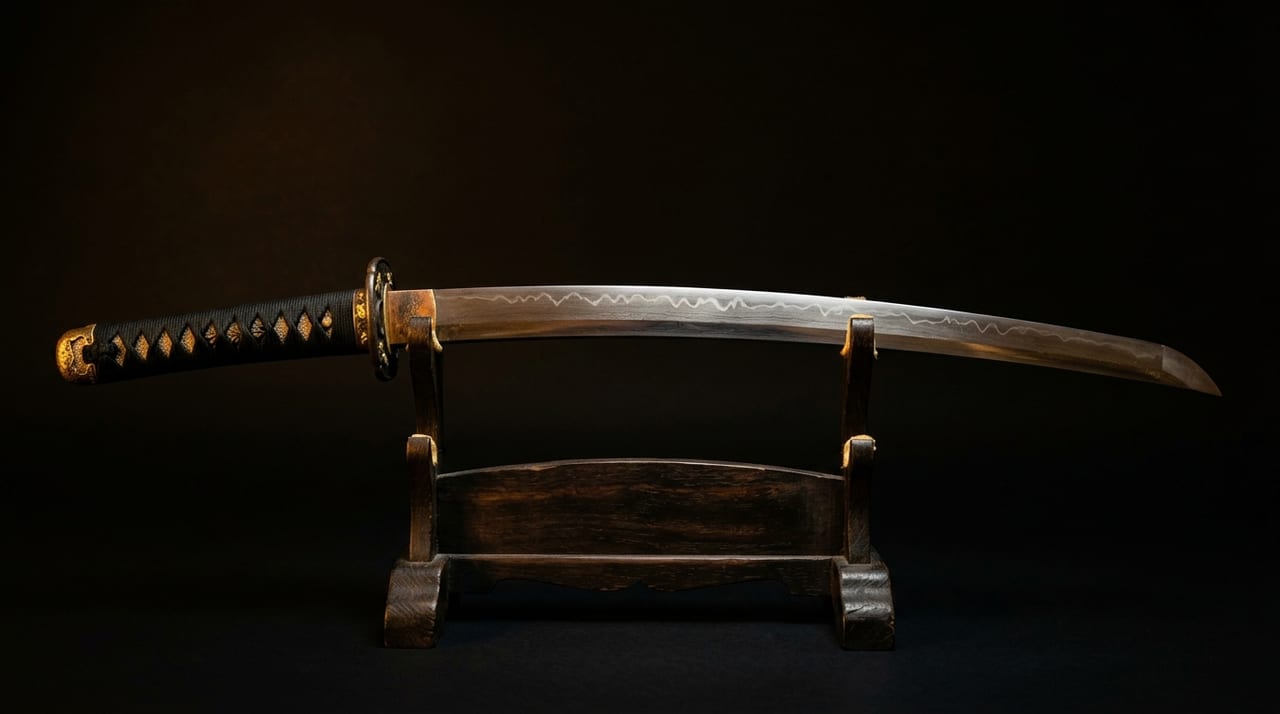
Hamon (temper line) is one of the most important elements symbolizing the beauty of the nihontō. The hamon is the pattern that forms at the boundary between the edge and the jigane (steel of the blade surface), created when the tōkō (swordsmith) intentionally controls heating and cooling during yaki-ire (quenching). This band-like pattern, which appears white and bright when light is shone on it, "speaks" to every aspect of a sword — its period, school, the tōkō's technique, and its intended use — making it the single most important object of observation in authentication. The shape of the hamon is designed before yaki-ire, when the tōkō applies clay (tsuchioki) to the blade, and is fixed as the metallurgical structure of the steel changes through rapid quenching in oil or water. The subtle and precise adjustment of how the yakiba-tsuchi (clay coating) is applied and the temperature and speed of yaki-ire produces that complex and varied hamon. Developing the ability to read hamon means reaching the very heart of nihontō appreciation.
Suguha — The Ultimate in Simplicity
Suguha is the most visually simple of all hamon. The edge boundary is a single straight line, with no decorative elements. Yet this very simplicity is what makes it the most difficult to achieve. Producing a perfectly uniform, unwavering suguha requires the tōkō to manage temperature with extreme delicacy during yaki-ire, as even slight variation in temperature will manifest as wavering or distortion in the hamon. Suguha is the hamon most commonly seen in Yamashiro-den, embodying the refined and pure aesthetic sensibility nurtured by Kyoto's court culture. The philosophy of suguha is to eliminate all decoration so as to highlight the texture of the steel itself and the essence of the yaki-ire technique. When one encounters a masterwork suguha by a renowned kotō-period tōkō, the viewer is left breathless by the immense technical skill and spirituality concealed within its simplicity. Many masterpieces demonstrating the ultimate beauty of suguha have been handed down from the works of the Kyoto Awataguchiha.
Chōji-midare — Splendid Decorativeness
Chōji-midare is a flamboyant hamon that evokes the flower of chōji (clove), the aromatic plant. While it repeats in a regular pattern, each individual chōji has a subtly different shape, forming an overall pattern of vivid, dynamic beauty. This hamon is synonymous with Bizen-den, and is the defining characteristic of Bizen swords, which flourished in the Osafune region of Okayama Prefecture. The masterwork chōji-midare produced in particular by the Ichimonji school (Ichimonji ha, including the Fukuoka Ichimonji and others) of the Kamakura period and the Osafune school (Osafune ha) of the Nanbokuchō period are regarded as among the most beautiful hamon in the history of nihontō. When observing chōji-midare, focusing on the subtle individual differences in the shape of the head and waist of each chōji, and on the variation in the shape of the "valley" nestled between two chōji, conveys the depth of the tōkō's skill.
Gunome — Regularity and Power
Gunome is a hamon in which semicircular or mountain-shaped forms are arranged in a regular sequence. The name "gunome" derives from the way two shapes appear to interlock in alternation. It is known as the representative hamon of Mino-den, and togari-gunome (pointed gunome) in particular is famous as the distinctive style of renowned Mino tōkō such as Kanesada and Kanemoto. There was a practical rationality behind the preference for gunome. During the Sengoku period, large quantities of swords were needed rapidly, and it was necessary to streamline the production process while maintaining a certain level of quality and beauty. Gunome was selected as the hamon best suited to maintaining that balance. When appreciating gunome, focusing on the subtle differences in the height and spacing of the semicircles reveals the individuality of each tōkō.
Nie and Nioi — What the Particles of Light Tell Us
There are two main types of luminosity in hamon.
| Item | Nie | Nioi |
|---|---|---|
| Appearance of particles | Particles large enough to be distinguished by the naked eye cluster together; when the sword is moved, individual particles scatter glittering points of light | Particles too fine to distinguish individually with the naked eye are densely packed and glow softly, like a mist |
| Tradition most associated with | Sōshū-den | Bizen-den |
| Visual impression | Bold and powerful | Refined and elegant |
The difference between nie and nioi reflects not only the direction of beauty but also the direct difference in the technical approach chosen by the tōkō — including temperature control during yaki-ire, the type of charcoal used, and the composition of the tsuchioki. Recognizing this difference allows the philosophical distinctions between schools to become visible even within the same type of hamon.
How to Appreciate Hamon in Depth
To fully savor the beauty of hamon, appropriate lighting conditions are essential. Under incandescent light or natural light rather than fluorescent light, slowly tilting the sword at various angles to catch the hamon in the light causes it to stand out three-dimensionally. Tilting the sword in both the vertical and horizontal axes causes the hamon to show different expressions, gradually revealing the complex structure the tōkō intended. For those observing hamon for the first time, a step-by-step focusing method is recommended.
- First, identify the overall type of hamon (suguha or midareba)
- Next, identify the general shape of the pattern (chōji, gunome, hako-gakari, etc.)
- Then perceive the difference in texture between nie and nioi
- Finally, observe the detailed elements such as kinsuji, sunagashi, and inazuma
Following this sequence is the most effective approach. As experience accumulates, all of these elements can be grasped in an integrated way, and one can reach a level at which simply viewing the hamon of a single sword conveys the tōkō's character and the historical context of its era.