Chronicles of Master Swordsmiths — The Great Masters of Japanese Swords You Should Know
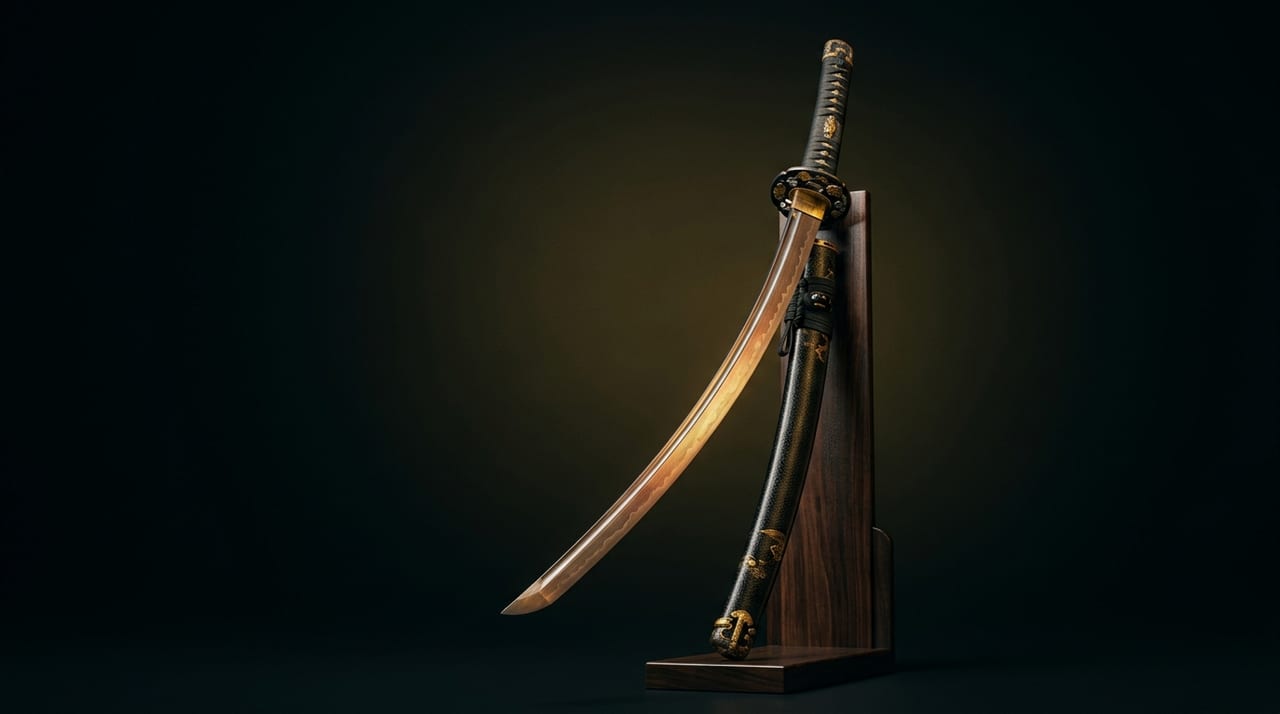 * Image is for illustrative purposes only.
Table of Contents
The Master Smiths Who Shaped Japanese Sword History
The history of Japanese swords is also a history built upon the ingenuity and technological innovation of exceptional sword smiths. Master smiths representing each era not only forged superior swords but also defined the very form of Japanese swords as a craft and art, refined them, and evolved them for future generations. The works they left behind are still evaluated as art at the highest level, and encountering even a single blade of theirs becomes an unforgettable experience for collectors.
An overview of the master smiths covered in this article follows below.
| Swordsmith | Period of Activity | Primary Region of Activity | School | Characteristic Style |
|---|---|---|---|---|
| Masamune | Late to end of Kamakura Period | Kamakura, Sagami Province | Soshu School | Magnificent hamon with controlled nie, featuring kin-suji and sunagashi patterns |
| Muramasa | First half of 16th century (Bunki-Tenbun era) | Ise Province | ― | Magnificent and practical hamon based on o-gunome patterns |
| Kotetsu | Edo Period (Shinto era) | Edo | Inheriting Soshu School | Balance of nie and nioi, refined jihada |
| Osafune Kanemitsu | Nanbokuchō Period | Bizen Province | Bizen School (Osafune branch) | Elegant choji-midare hamon, strong jihada |
| Awataguchi Yoshimitsu | Mid-Kamakura Period (estimated) | Kyoto | Yamashiro School | Nashi-ji jihada, master of tantos |
Masamune — Master Who Perfected the Soshu School
Masamune (dates unknown, active in the late to end of the Kamakura Period) is widely known as a swordsmith representing Japanese sword history. Masamune, who worked in Kamakura in Sagami Province (present-day Kanagawa Prefecture), was the person who perfected the Soshu School. The founder of the Soshu School was Shintōgo Kunimitsu, and Masamune inherited his lineage and raised this technique to its pinnacle. The characteristic of Masamune is the magnificent hamon with skillfully controlled nie (coarse particles), and the linear and flowing effects called kin-suji and sunagashi that appear within the hamon.
Masamune's swords are not only excellent in sharpness but are highly regarded for how the entire blade harmonizes as a single artwork. The three elements of technical perfection, aesthetic perfection, and practical combat effectiveness are connected at a higher level compared to other smiths. Masamune's disciples were called the "Masamune Ten," all of whom were master smiths. They transmitted the Soshu School technique throughout Japan and had a major influence on Japanese sword culture as a whole.
Muramasa — The Reality Behind the "Demon Blade" Legend
Muramasa (dates of the first generation unknown, active in the first half of the 16th century during the Bunki-Tenbun era) was a swordsmith from Ise Province (present-day Mie Prefecture), and his works have been spoken of alongside the legendary reputation of being "demon blades." The oldest existing dated signature appears in Bunki 1 (1501), and his period of activity is estimated to be roughly the first half of the 16th century. Behind the spread of the "demon blade" reputation was not only the fact that Muramasa's blades possessed exceptionally sharp cutting ability, but also the coincidence of several instances where high-ranking shogunate officials were wounded or killed by Muramasa blades, to which urban-legend-like embellishments were later added. But in reality, Muramasa was an exceptional swordsmith who left behind many superior practical swords.
Muramasa's hamon is based on o-gunome patterns and, while magnificent, reflects a style strongly conscious of actual combat. His swords, superior in durability, were beloved by many samurai in battles during the Sengoku Period. As research into Muramasa progressed from the modern era onward, it became recognized that the "demon blade" reputation had obscured his original value, and today he receives fair evaluation commensurate with his actual skill.
Kotetsu — Master Smith Representative of the Shinto Era
Kotetsu's real name was Nagasone Okisato. Kotetsu, who worked in Edo (present-day Tokyo), was one of the master smiths representative of the Shinto era. While inheriting the Soshu School technique, Kotetsu highly refined it to suit the sword-making environment of the Edo Period. Kotetsu's hamon excels in the balance of nie and nioi, and his jihada quality is also well-regarded.
The characteristic of Kotetsu's work is its subtlety. There is a saying that "only by holding a Kotetsu can you know Kotetsu," and because photographs and explanations alone cannot convey its true value, it is said that one can only fully understand its excellence by actually holding it up to the light. Kotetsu's swords were also used in actual combat, and their high practicality has been highly evaluated. Today, Kotetsu's works receive extremely high evaluation, and owning a single blade bearing Kotetsu's signature is a great source of pride for collectors.
Osafune Kanemitsu — Master of the Bizen School
Osafune Kanemitsu (dates unknown, active during the Nanbokuchō Period) was a swordsmith who led the Osafune school of Bizen Province (present-day Okayama Prefecture). Kanemitsu was active during the turbulent Nanbokuchō Period and created many tachi with magnificent and elegant hamon sought after by the samurai of that time. Many of Kanemitsu's representative tachi are designated as National Treasures or Important Cultural Properties and are positioned as a group of representative works in Japanese sword history.
The characteristic of Kanemitsu's style lies in the elegant choji-midare hamon and strong jihada. Choji-midare is the hamon that symbolizes Kanemitsu's work, and its perfection is evaluated as one of the achievements of the Bizen School. Kanemitsu's swords, which achieve both beauty and practicality at a high level, embody one of the ideal forms of swords.
Awataguchi Yoshimitsu — Master of the Tanto
Awataguchi Yoshimitsu (dates unknown, estimated to have been active in the mid-Kamakura Period) was a master smith of the Yamashiro School who worked in Kyoto, and is particularly famous as a creator of tantos. Though no dated works presently survive and there are no historical sources confirming his birth and death dates, his stylistic characteristics suggest activity in the mid-Kamakura Period. Yoshimitsu's tantos are still treasured as National Treasure class, and are known for their beautiful nashi-ji jihada and refined, elegant hamon. Yoshimitsu's tantos have been treated not merely as practical weapons but as the finest art objects.
Yoshimitsu's jihada shows finely refined itame jihada, and the overall surface has a quality resembling a pear. This beauty of jihada became one of the ideal forms that later smiths aspired to. Encountering a Yoshimitsu tanto is a great joy for collectors, and his works are treated as top-tier display pieces even in museums.
Encountering the Works of Master Smiths
Encountering the works of these master smiths carries meaning beyond mere acquisition of an object for collectors. It is a direct encounter with the skill and aesthetic sense of craftsmen from centuries ago, and also a dialogue with the past through the sword. When one holds a blade from a master smith, one can experience how the lifetime of the swordsmith who created it, the history of that era, and the depth of Japanese sword culture all converge and overlap as one.