Authenticating Japanese Swords — Practical Knowledge for Detecting Forgeries
 * Image is for illustrative purposes only.
Table of Contents
Types of Forgeries — Four Patterns Encountered in Practice
The forgeries encountered in Japanese sword authentication can be broadly organized into four types.
- The first is "later-added mei"
- The second is "forgery of the nakago itself"
- The third is "deception of the hamon and jigane"
- The fourth is "period misattribution"
All require technical skill and experience to detect, and an authenticator reads information simultaneously from every part of the blade to reach a comprehensive judgment. For sword enthusiasts considering a purchase, a basic knowledge of these four types constitutes the minimum preparation for self-protection.
The most frequently encountered type is later-added mei. This method — carving the mei of a famous tōkō onto an otherwise mumei blade in order to inflate its value — has existed since antiquity. A later-added mei tends to produce a sense of incongruity in the tagane (chisel) marks, the way rust has settled, and the continuity of the jigane around the mei, and a seasoned authenticator often says a great deal from a single glance at the nakago. However, because extremely skillful later-added mei do exist, the final judgment must combine multiple viewpoints.
Observing the Nakago — Rust Color, Yasurime, and the Position of the Holes
The first step in authenticating a forgery is observing the nakago (tang). Because the nakago is hidden inside the tsuka (hilt) and does not come into contact with open air or human hands, it develops a distinctive rust color over many years. This is called "kuchirikomi" or "kuro-sabi," and over time it takes on a deep lacquer-black or adzuki-bean color. The nakago of a kotō carries centuries of natural time, and this rust color is extremely difficult to reproduce artificially. In forgeries, new bare metal surface may remain, or conversely an unnatural mottled pattern may appear where rust was forced to form.
The yasurime (file marks) on the nakago are also an important clue. Each tōkō has characteristic direction, depth, and density of filing, and the tendencies vary by period and school. The yasurime of the kotō period are relatively rough and bold, while from the shintō period onward they tend toward fine regularity. One checks whether the pattern of yasurime matches the typical work of the tōkō named in the mei, and whether there are any signs of unnatural reworking. Furthermore, the position and number of the mekugi holes and the condition of any filled holes also serve as material for judging the credibility of the mei. If there is any incongruity in the positional relationship between the mei and the mekugi holes, one suspects that the nakago may have been shortened or the blade transferred from a different sword.
Authenticating the Hamon — The Naturalness of the Yakiba and the Clarity of the Nioiguchi
The hamon is one of the elements most difficult to deceive. The yaki-ire (quenching) of a genuine sword produces a natural nioiguchi when three things come together perfectly:
- The application of yakiba-tsuchi (clay coating)
- Heat control
- Water temperature
The size and uniformity of the nie (visible martensite crystals) particles, the hazy, diffuse spread of the nioi (fine martensite mist), and the clarity of the nioiguchi possess a depth that cannot be conveyed in words.
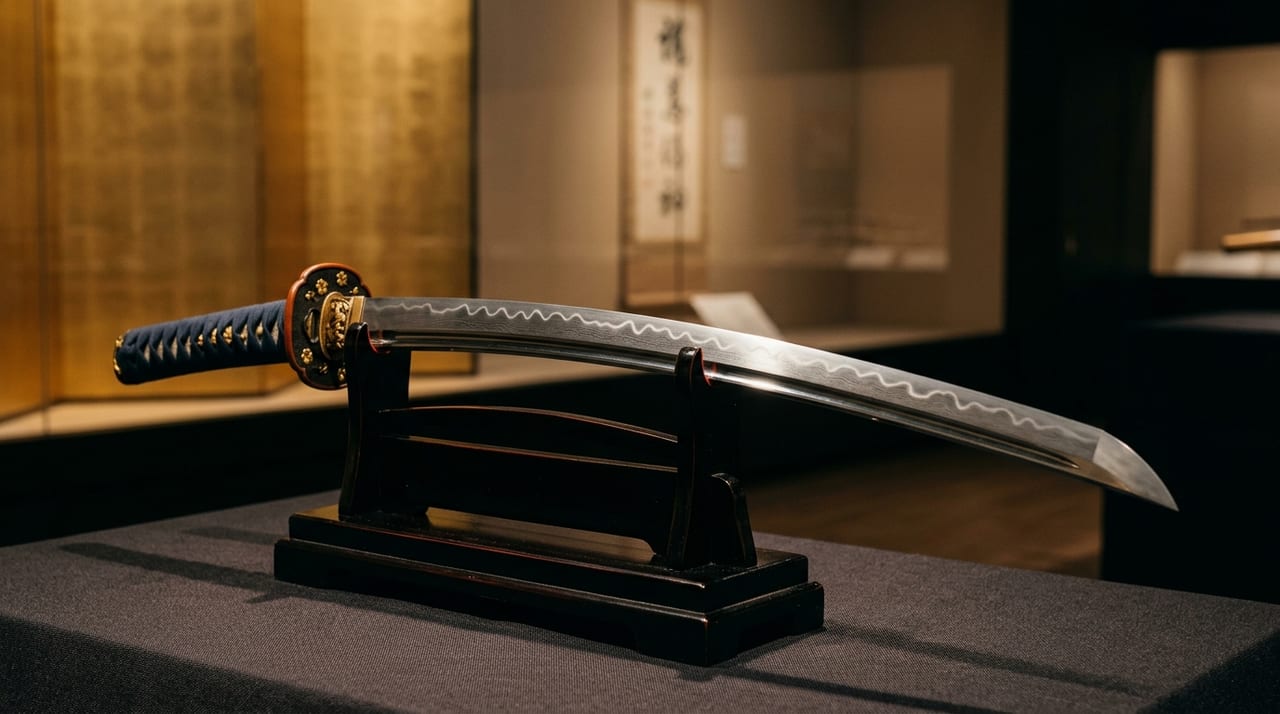
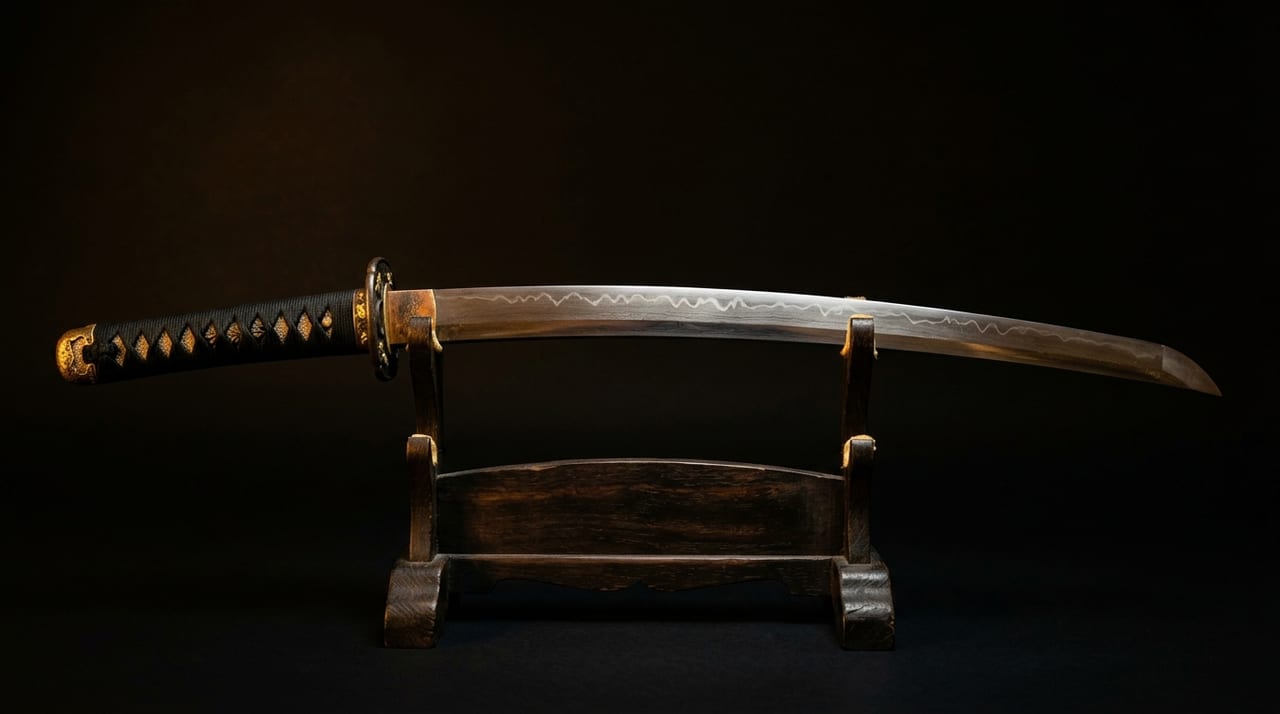
The most egregious forgeries are those that use modern chemical treatment or polishing to create an appearance "as if it were a kotō." However, when such artificial hamon are observed by changing the angle of the light, the appearance of the nie and nioi is unnatural and lacks the inherent depth and three-dimensionality of a genuine kotō. An authenticator tilts the blade under natural light near a window or under a point light source, observing the movement of the hamon and the reflection of the jigane from multiple angles. Whether the texture of the jigane matches the characteristics of the named tōkō, whether the layers of the forging flow naturally, whether minute activity such as chikei and kinsuji conforms to the style of a genuine work — all of these are material for authentication.
Period Misattribution and School Error — Developing an Eye Through Comparison with Real Swords
Among forgeries there are cases — not involving deliberate fabrication — where a sword circulates at a value above its true worth due to "period or school misattribution." These include cases where an Edo-period sword is passed off as a Kamakura-period work, or where a provincial sword is confused with the product of a famous center of production. To prevent such misattribution, it is necessary to know in one's bones the "period character" of each of kotō, shintō, shinshintō, and gendaitō. The following elements cannot be conveyed in photographs or writing, and can only be cultivated by repeatedly viewing real swords:
- Sugata (the overall silhouette of the blade)
- The balance between mihaba (blade width) and kasane (blade thickness)
- The center position of the sori (curvature)
- The shape of the kissaki (point)
- The character of the forging
The best training ground for beginners is the permanent exhibitions of national museums and the Japanese Sword Museum. By repeatedly observing authentic kotō at the kokuhō (National Treasure) and jūyō bunkazai (Important Cultural Property) level, the atmosphere that a genuine piece carries becomes fixed as a sensory memory. When subsequently viewing actual swords at sword dealers or in the market, having a benchmark memory makes it easier for one's instincts to detect something wrong. Developing an eye for authentication takes time, but this accumulation of experience is the greatest defense against falling victim to forgeries.
Making Use of Authentication Bodies and Reaching Final Judgment — The Authority of NBTHK
As a means of objectively establishing authenticity and value, the authentication system of NBTHK (Society for the Preservation of Japanese Art Swords) is widely trusted. NBTHK issues the following tiered kanteisho (appraisal certificate), each certified through review by multiple specialists:
- Hozon Tōken
- Tokubetsu Hozon Tōken
- Jūyō Tōken
- Tokubetsu Jūyō Tōken
In the market, swords accompanied by a kanteisho trade at high values, while swords circulating without authentication carry commensurate risks.
However, the presence of a kanteisho does not guarantee absolute security. Cases of kanteisho forgery, or of a kanteisho for one sword being applied to another, are occasionally reported. When making a purchase, always cross-check that the dimensions, mei, and sugata recorded in the kanteisho match the actual sword. Even a slight discrepancy becomes grounds for doubt. Purchasing from a reputable sword dealer with a long track record of transactions provides a more certain guarantee than a kanteisho alone. The ability to detect authenticity can only be exercised when knowledge, experience, and a relationship of trust are all in place.