Samurai Culture and Contemporary Art — The Nihontō as Inspiration for 21st-Century Expression
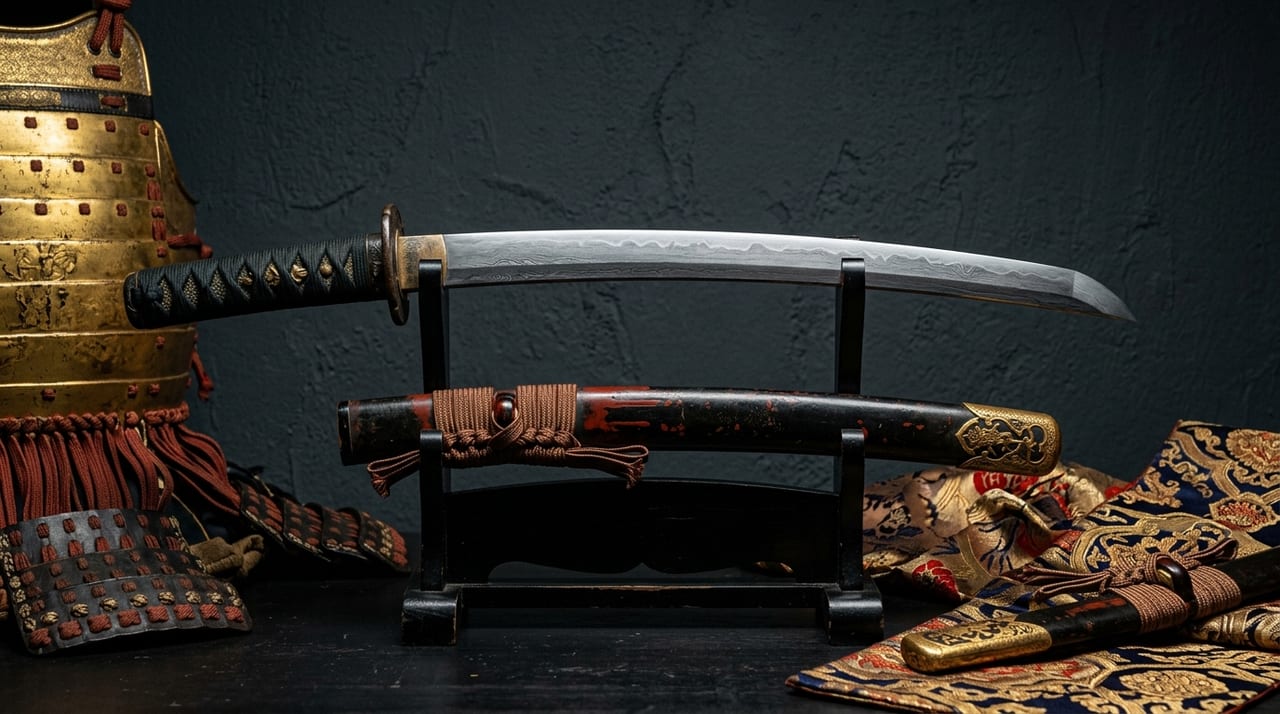 * Image is for illustrative purposes only.
Table of Contents
Samurai Culture as a Universal Subject — Why Contemporary Artists Are Drawn to the Sword
Samurai culture is both a historical heritage of Japan and an inexhaustible source of inspiration for contemporary artists around the world. The nihontō's pared-down functional beauty, the tension between chance and necessity embodied in the hamon, and the theme of "a spirituality that faces life and death" together form a rich vein of material that can be developed across diverse genres including painting, sculpture, installation, fashion, and media art. Since the dawn of the 21st century, works inspired by nihontō and samurai culture have been presented in growing numbers at international art fairs in Tokyo and at contemporary art museums across Europe.
One reason contemporary artists are drawn to the sword is that it is an "object containing contradictions." The sword holds within it the following contrasts:
- A weapon and yet a work of art
- Forged for practical use, yet aspiring to the pinnacle of aesthetic appreciation
- A tool of destruction, yet at the same time a symbol of spiritual cultivation
It is this very multiplicity of meanings that resonates with the context of contemporary art, and an increasing number of artists are treating the sword as a philosophical subject that transcends a simple object.
The Sword Motif in Painting and Sculpture — Deconstruction and Reconstruction of Form
In contemporary painting, works that take the sword as their subject have evolved beyond mere realistic depiction, moving toward abstraction and symbolization. Not only Japanese artists but also artists from the West and across Asia have been attempting to translate the curve of the blade, the rhythm of the hamon, and the mirror-like reflections of the blade surface into the language of painting. In large-format abstract paintings using ink, there are many examples of brushwork that evokes the flow of the hamon. It is not uncommon for words such as "hamon," "katana," and "blade" to appear in the titles of works, and it can be observed that sword terminology is becoming established as part of the vocabulary of contemporary art.
In the field of sculpture, artists who work with iron itself as a material have been presenting works inspired by the forging process of the nihontō. The layered structure of the jigane produced through orikaeshi tanren has influenced contemporary sculpture as a method of making visible the time embedded in the material itself. Installations that deconstruct the form of the blade and reconstruct it as an abstract metal structure dislocate its context as a weapon, prompting viewers to ask anew, "What is sharpness?"
Installation and Spatial Expression — The Space of Stillness Created by the Sword
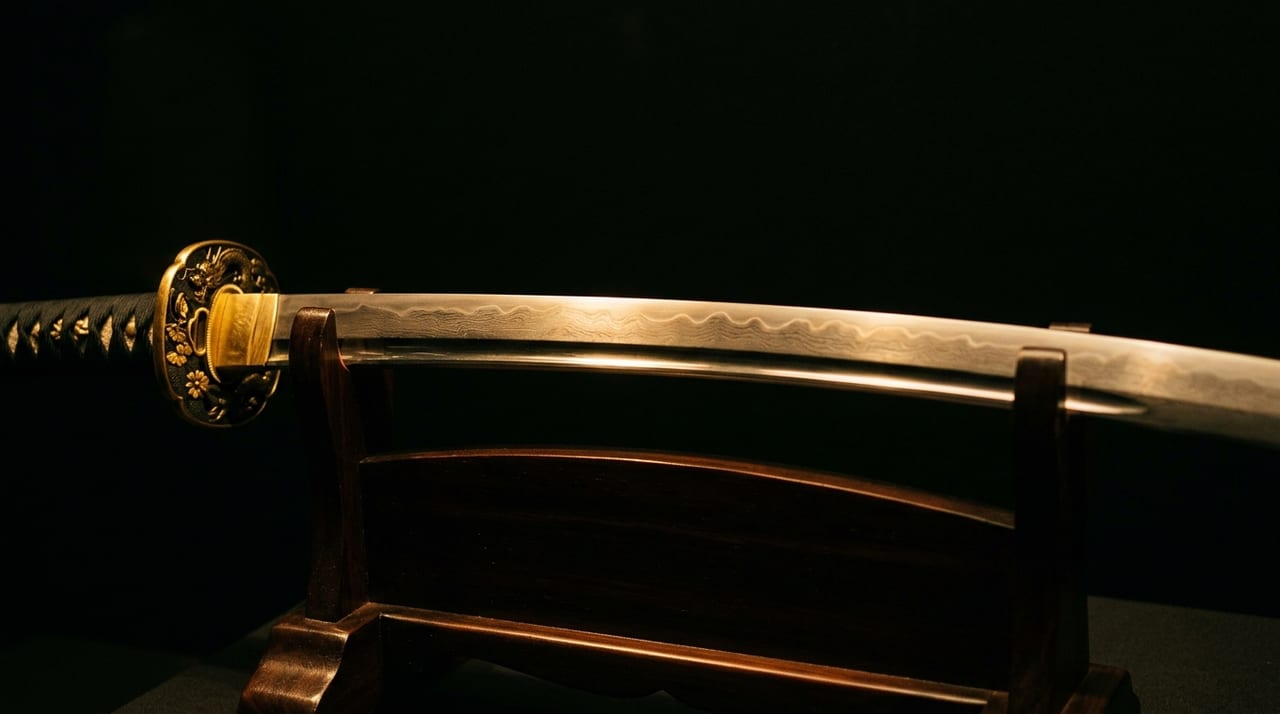
In the field of contemporary art installation, there are many attempts to place the nihontō at the center of a "space," generating a taut tension and stillness throughout the entire room. An installation in which a single sword is illuminated with precision lighting in a darkened room is a method that maximizes the sword's inherent power "to stop the viewer's breath." Viewers stand before the sword, and as their eyes follow the flow of the hamon, they are led into a meditative time cut off from everyday life.
The efforts of artists from abroad are also not to be overlooked. At contemporary art museums in Europe, installations placing nihontō in opposition to Western religious symbols, and works using the sword as a medium of light and shadow, have been presented. These works address the contemporary theme of "a dialogue between the weapons of the East and the values of the West," positioning the sword as a device for intercultural translation.
Expansion into Fashion and Craft — The Sword as Design
In the realm of fashion design, there is a growing number of cases in which the designs of tōsōgu (tsuba, fuchi-kashira, menuki) and patterns derived from the hamon are adapted for use in textiles, jewelry, and bag designs. Not only established Japanese brands but also luxury brands in Paris and Milan have presented collections incorporating sword-derived motifs as Japanese design. The design of the tsuba in particular is a perfected craft that harbors infinite expressive potential within a circular frame, and its minimal, symbolic structure is highly compatible with the sensibility of contemporary design.
In the field of craft, artists who apply traditional metalworking techniques to create contemporary objects are active both in Japan and abroad. Distinctively Japanese metal materials and techniques such as kin-zōgan, shakudō, and shibuichi have brought new expressive breadth to contemporary jewelry and objects. Such works blur the boundary between traditional craft and contemporary art, playing a role in connecting the aesthetic sensibility of samurai culture to the 21st century.
Media Art and Digital Expression — The Sword in Virtual Space
Particularly notable in recent years is the treatment of the nihontō in media art and digital expression. Using technologies such as VR, AR, and 3D scanning to reproduce famous swords held in museum collections at high resolution, exhibitions allowing visitors to freely observe them in virtual space have been attempted both in Japan and abroad. This is both a democratizing movement that makes precious swords — which cannot be physically handled — accessible to a wider audience, and an attempt to reconsider from a new angle the richness of information held by the sword as an object.
Digital representations of swords nurtured in the context of games and animation have, through content such as "Tōken Ranbu," shaped a culture of appreciation among younger generations. These pop-culture developments, by connecting with the world of traditional sword appreciation, play a role in guiding a new audience toward museums and sword dealers. At TOUKENZA as well, we see every day customers who have an interest in the context of contemporary art discovering the nihontō as a work of art from a new perspective. The aesthetics of the nihontō born of samurai culture will, transcending era and medium, continue to inspire diverse creators well into the future.