The Art of the Togishi: Japanese Sword Polishing Techniques, Workflow, and Certification
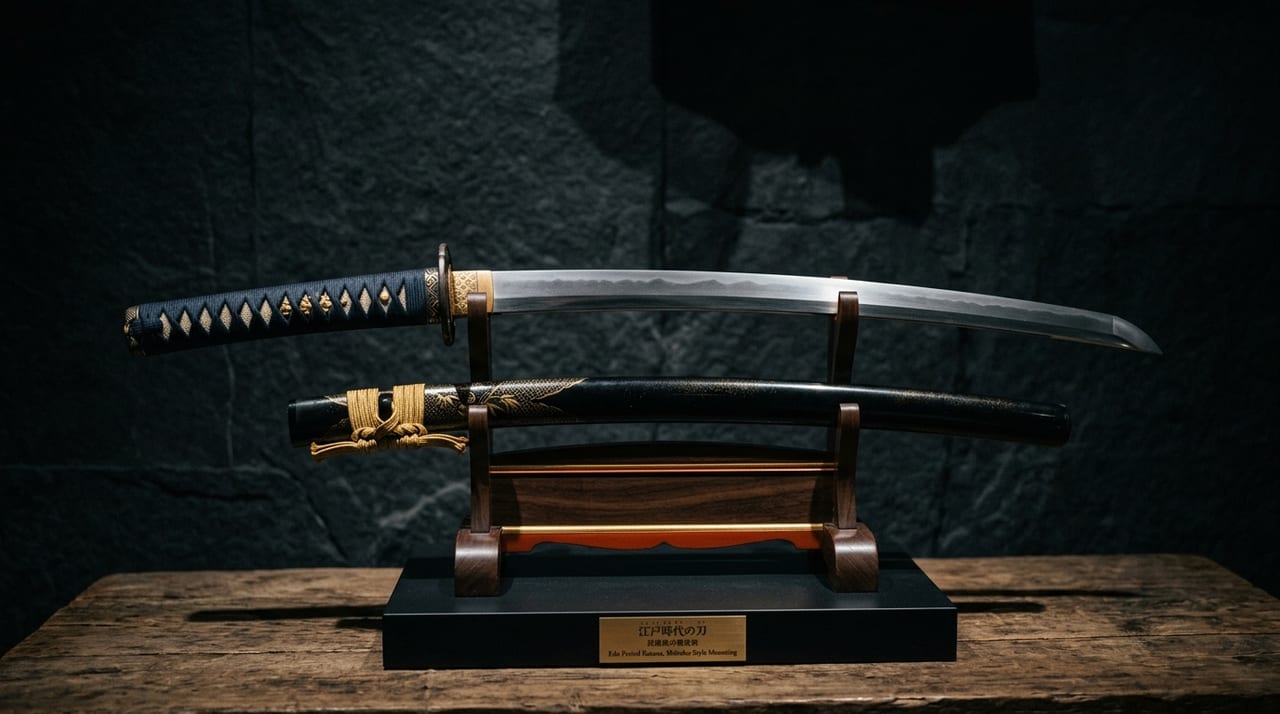 * Image is for illustrative purposes only.
Table of Contents
What is a Polishing Master (Togishi)?
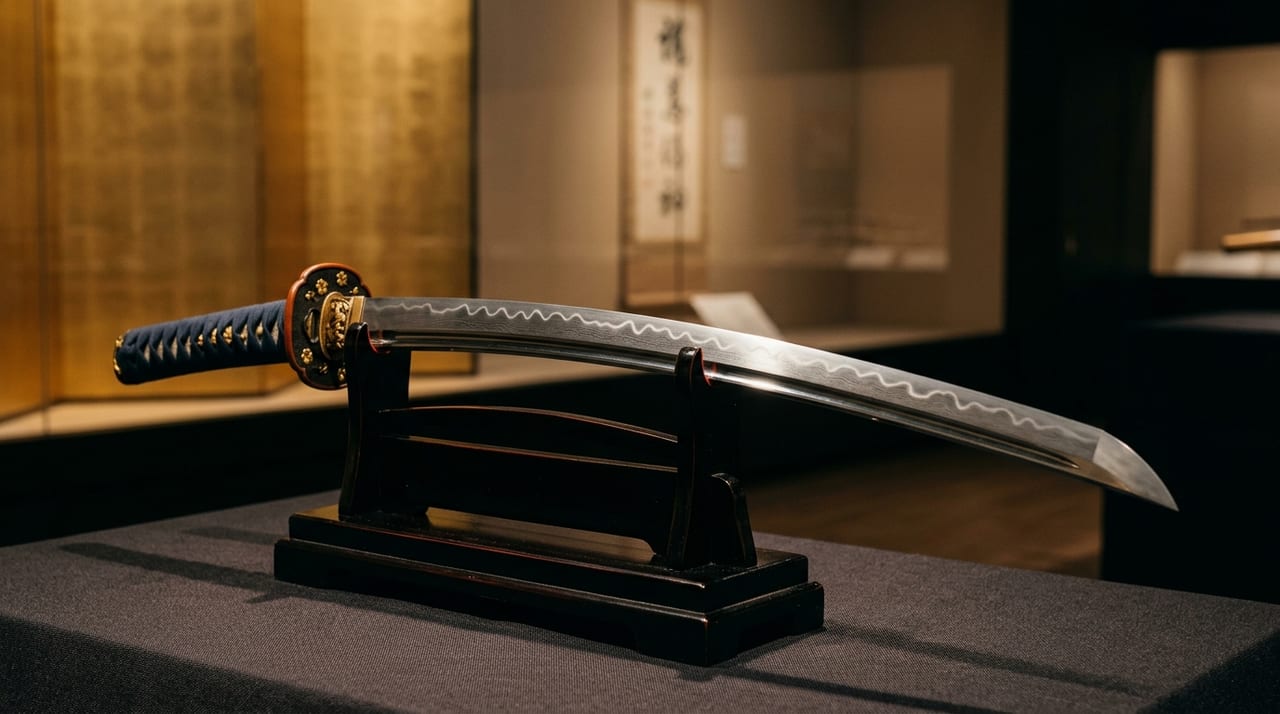
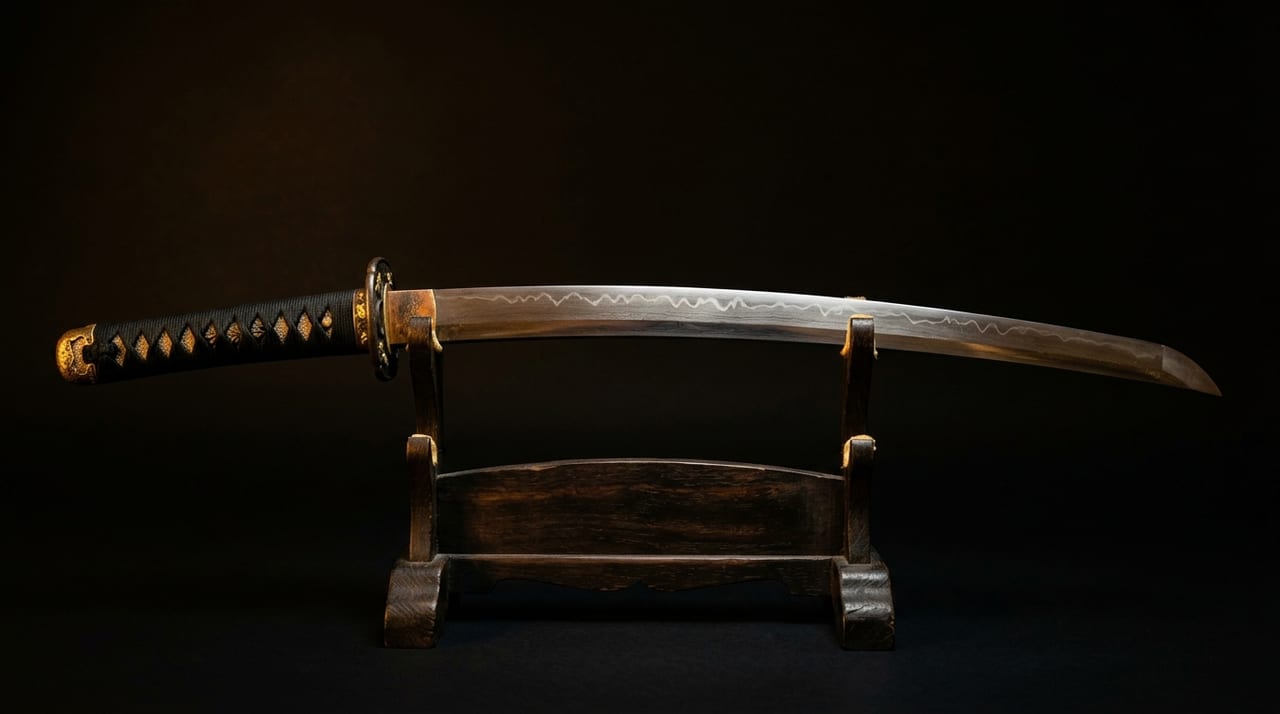
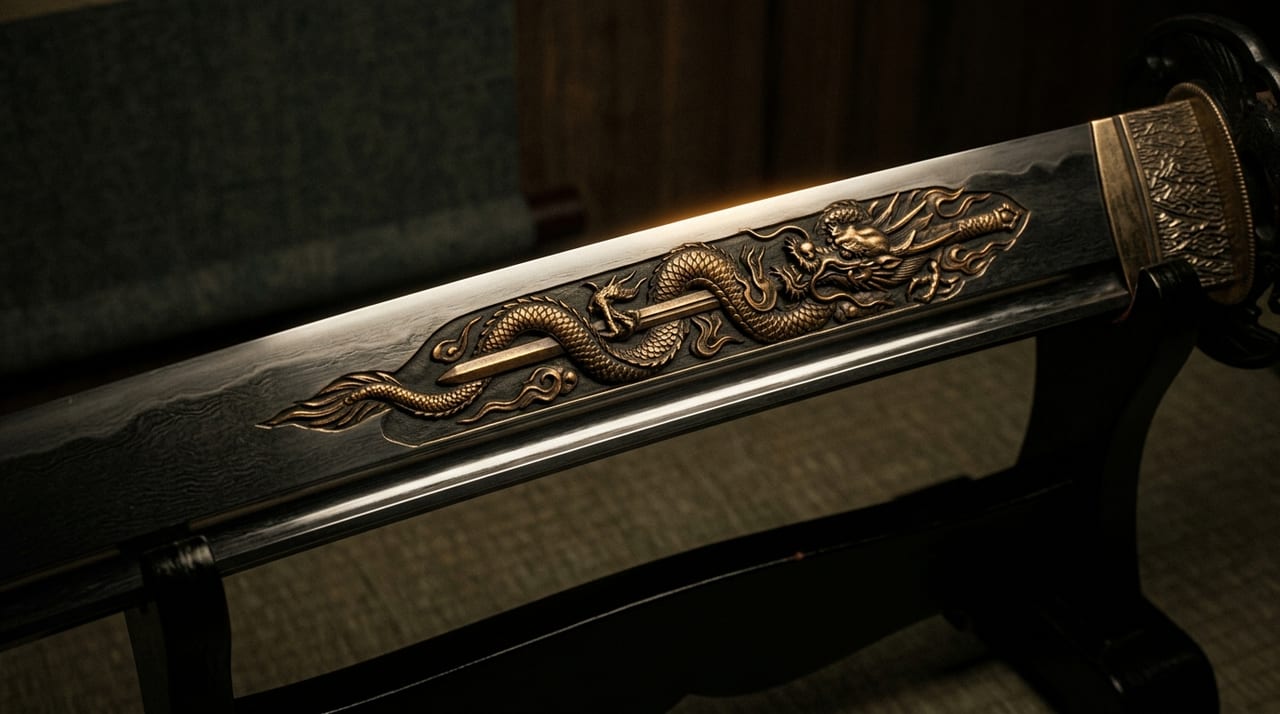
In the process of Japanese sword manufacture, the specialized craftsperson who polishes and refines the blade after the swordsmith (toshu) completes forging is known as a polishing master (togishi・研ぎ師). The work of a polishing master is not merely a polishing task, but rather a sophisticated technical system designed to maximize the aesthetic and evaluative value of the sword's surface texture (jihada), hamon, landscape markings (chikei), reflections (utsuri), and other features.
If the swordsmith is the "artisan who gives birth to the sword," then the polishing master can be called the "artisan who brings out the sword's beauty." The same blade can appear dramatically different depending on the polishing master's skill, and this directly affects its assessed value. Therefore, the polishing master is considered an essential specialist in the sword world, comparable in importance to the swordsmith.
The quality of polishing affects not only the grading in appraisal certificates but also the blade's condition and preservation. When the surface texture and hamon do not properly reveal their inherent characteristics, even experts find accurate appraisal difficult. Conversely, excessive cosmetic finishing by a less skilled polishing master can overemphasize the hamon beyond its true nature, risking damage to the blade's authentic appearance. For this reason, sword dealers and enthusiasts place considerable emphasis on the polishing master's skill and trustworthiness.
The Phased Process of Polishing
Japanese sword polishing consists of 7 to 9 finely divided stages. Each stage builds upon the completion of the previous one, so steps cannot be skipped or reordered midway. Completing a single blade requires the polishing master to work with sustained concentration over extended periods, making it a hand craft that cannot be replaced by simple machinery.
Rough Polishing (Shitaji-togi)
Rough polishing is the coarse stage in which the blade's basic shape is established and surface irregularities are removed. During this stage, the polishing master carefully evaluates flaws such as surface unevenness and rust formed during forging, while shaping the overall form (sugata) of the blade. An error in judgment at this stage cannot be corrected by even the most careful finishing polishing later, making this the stage where the polishing master's experience and discernment are most tested.
| Stage | Whetstone | Purpose |
|---|---|---|
| Rough whetstone (arato) | 800-grit equivalent | Removal of large scratches and rust, basic shape formation |
| Medium finishing stone (nakanagura) | 1200-grit equivalent | Removal of rough marks, shape refinement |
| Fine finishing stone (hosonagura) | 2000-grit equivalent | Surface uniformity |
Finishing Polishing (Shiage-togi)
Finishing polishing is the precision stage that maximizes aesthetic value. The whetstones used in finishing polishing have much finer particles than those used in rough polishing, and subtle differences in pressure and angle directly affect how the surface texture appears. Since stones like uchigumori and hadone are natural minerals, no two possess identical properties, requiring the polishing master to select appropriate stones based on the blade's condition.
| Stage | Whetstone | Purpose |
|---|---|---|
| Uchigumori stone (uchigumori-to) | Natural whetstone | Reveals surface texture patterns |
| Hadone (hadone) | Special natural whetstone | Clarifies the hamon |
| Polishing (migaki) | Polishing powder and cotton | Final gloss finishing |
Cosmetic Polishing (Kesho-togi)
For the highest-grade finishes, a technique called wiping (nugui) is applied to give the blade a distinctive luster through cosmetic polishing. Polishing traditions are said to include two schools: "sashikomi polishing," which presents the surface texture and hamon in a natural state, and "cosmetic polishing (art polishing)," which uses techniques such as edge emphasizing (hadori) to make the hamon strikingly clear. The chosen finishing method varies depending on region, school, and the purpose of the commission. Blades displayed for appreciation or submitted for competition typically receive cosmetic polishing, but all schools maintain the principle of never compromising the blade's inherent characteristics.
Types of Whetstones Used
The whetstones used by polishing masters fall into two main categories: natural whetstones and synthetic whetstones. The differences in grit and regional characteristics of whetstones are directly reflected in the blade's appearance after polishing, making whetstone selection considered part of the polishing master's technical skill.
Natural Whetstones (Tennen-to-ishi)
Japanese natural whetstones are primarily produced around Kameoka City in Kyoto Prefecture, with "Kyoto whetstones" being the most renowned. Whetstone types and their characteristics are as follows:
- Uchigumori: A medium-hard, whitish-gray whetstone, essential for revealing surface texture patterns
- Narutaki: Fine-grained and uniform, excels at expressing the hamon
- Tomae: The highest-grade finishing whetstone, now extremely rare due to drastically reduced production
These natural whetstones can only be quarried from limited mountains and layers, and high-quality raw stones become increasingly difficult to obtain. Many polishing masters strategically preserve and use their precious whetstones for future work.
Use of Synthetic Whetstones
In recent years, as natural whetstone supplies have declined, precision synthetic whetstones have also come into use for polishing. However, natural whetstones remain essential for final finishing. Synthetic whetstones offer uniform grit and stable quality, making them valuable for rough polishing stages requiring heavy pressure or when reserving natural whetstones. However, they cannot fully replicate the subtle properties inherent to natural mineral stones. In the final finishing stage where fine surface texture details must be revealed, many polishing masters still rely on natural whetstones.
The Lineage of Polishing Tracing Back to the Hon'ami Family
The most crucial role in systematizing Japanese sword polishing technique was played by the Hon'ami family (Hon'ami-ke), a lineage continuing from the late Muromachi period.
The Hon'ami family served as sword attendants (okatana-ban) to the Ashikaga shoguns and monopolized sword polishing, appraisal, and expertise across generations. In particular, Hon'ami Kōetsu (1558-1637) was a comprehensive artist renowned for calligraphy, pottery, and lacquerware, while sword polishing and appraisal were passed down as the Hon'ami family's hereditary craft to subsequent generations.
The Hon'ami family, beyond polishing alone, also undertook appraisal of swords and maintenance of fittings as family crafts, playing a comprehensive role in transmitting swords as cultural artifacts to future generations. Today, polishing schools active throughout Japan are diverse, but much of their underlying philosophy and basic techniques trace their roots to the traditions established by the Hon'ami family.
The technical lineages of contemporary polishing masters predominantly originate from Hon'ami family methods, transmitted from master to apprentice through oral and practical instruction.
Modern Certification Systems and Training
Modern polishing master qualifications are certified through evaluation systems involving the All Japan Sword Smiths Association and the Public Interest Incorporated Foundation Japan Sword and Art Sword Preservation Society (NBTHK). These certification systems objectively evaluate individual polishing masters' skills and serve as a reference for those seeking trustworthy polishers.
Stages of Certification
- Polishing Master Certification Exam: Practical examination confirming basic technical skills
- Distinguished Polishing Master: Accumulated evaluation from exhibitions and competitions
- Special Important Certified Polishing Master: The NBTHK's highest-ranking polishing master qualification
At each stage, actual experience polishing real blades and accumulated evaluations from judges and senior practitioners are emphasized, with continuing technical refinement required even after qualification.
Current State of Training
The current number of active polishing masters nationwide numbers only in the dozens (roughly 50 or so), far fewer than sword smiths (200-300 in scale). Supply falls short of demand, and commissions to excellent polishing masters often face wait times of 1 to 3 years. Behind the shortage of successors lies not only the need for extended training periods before becoming independent, but also the difficulty of earning sufficient income during apprenticeship. Given these circumstances, training programs aimed at transmitting traditional techniques and support initiatives for young polishing masters are being advanced.
Polishing Cost Guide
Polishing costs vary significantly depending on the blade's condition, length, and required quality.
| Type | Estimated Cost |
|---|---|
| Basic polishing (rough stage only) | ¥50,000-150,000 |
| Standard polishing | ¥150,000-300,000 |
| Highest-grade cosmetic polishing | ¥300,000 and above |
Even for the same "standard polishing," if the blade has rust, chips, or wear from previous polishing, additional work becomes necessary, and costs and timelines may vary. When requesting polishing, it is advisable to first have the blade's condition examined, then clearly confirm the work scope and estimate. Since polishing significantly enhances a blade's value in appraisal, exhibition, or sale, the polishing investment represents an important decision for collectors.
Care and Storage After Polishing
After polishing, a blade becomes extremely prone to rusting, making proper care and storage essential. Generally, the blade is not touched directly with bare hands; a thin layer of sword oil such as choji-abura is applied, and the blade is then stored in a shirasaya (plain wooden scabbard). Storing the blade in a location with minimal humidity fluctuation and periodically replacing the oil preserves the surface texture and hamon characteristics revealed through polishing.
Precautions When Requesting Polishing
Once polishing is performed, the blade cannot be returned to its original state, and repeated polishing gradually reduces the blade's mass. Swords that have undergone multiple polishing sessions may experience diminished sharpness characteristics or changes in form, making it important to carefully assess whether polishing is truly necessary. It is advisable to consult with a trusted polishing master or sword dealer, communicate the purpose of polishing (preservation, appreciation, competition submission, etc.), and reach agreement on the finishing direction in advance.
Summary
The polishing master is the "final finisher" of the Japanese sword, a figure whose work decisively determines the sword's value. This technical system represents precision craftsmanship grounded in centuries of tradition, and its rarity and importance continue to grow in the modern era. When owning or considering the purchase of a Japanese sword, directing attention not only to the beauty of the hamon and surface texture but also to the work of the polishing master who brought them out deepens one's understanding of the Japanese sword as a cultural artifact.