The Nobukuni School: The Lineage and Highlights of a Tōkō Tradition That Began in Yamashiro and Spread to Chikuzen
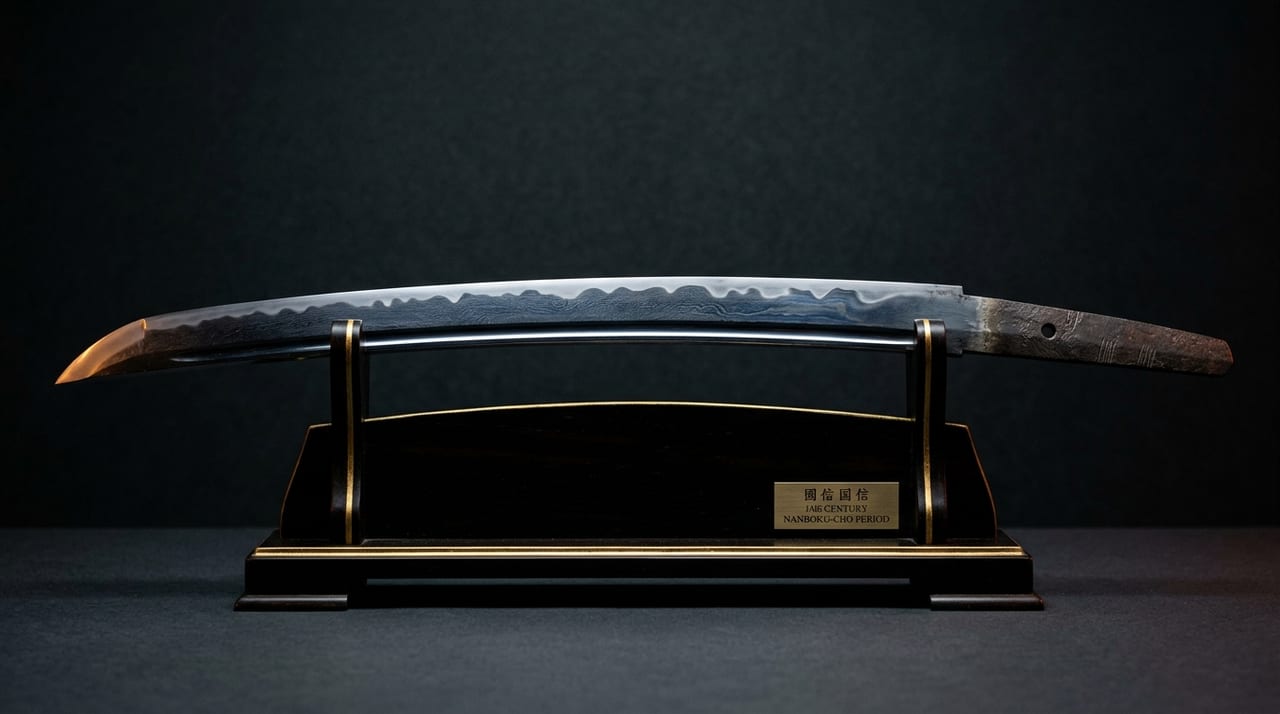 * Image is for illustrative purposes only.
Table of Contents
The lineage of tōkō bearing the name Nobukuni (nobukuni) is known as a school that originated in Yamashiro Province (present-day Kyoto Prefecture) during the Nanbokuchō period and continued for a long time while later relocating its base to Chikuzen Province (present-day northern Fukuoka Prefecture). Because the mei "Nobukuni" was carried on by multiple generations, swords bearing the same mei exist that differ in period, place of production, and style. This is a point that tends to confuse those who are just beginning to study nihontō, and at the same time it directly reflects the historical depth of the school. This article organizes the origins of the Nobukuni School, the characteristics of its two lineages, and the perspectives worth keeping in mind when appreciating these swords.
A School Born in the Nanbokuchō Period: The Origins of the Nobukuni School
The Nobukuni School began in Yamashiro Province during the Nanbokuchō period. Yamashiro of that era was home to the imperial capital of Kyoto and was a place where many tōkō gathered to meet the demands of the court nobility and warrior class. The first-generation Nobukuni is described as a tōkō who was strongly influenced by Sōshū-den, and is said to have possessed a bold, powerful character that set him apart from the refined and quiet style of Yamashiro-den.
Sōshū-den was a tradition that flourished in Sagami Province (present-day Kanagawa Prefecture) from the late Kamakura period through the Nanbokuchō period, and is widely known for producing masters such as Masamune and Sadamune. Its style is characterized by diverse hamon ranging from wide suguha to ō-midare, as well as jigane with a soft, tight texture, and it exerted a tremendous influence on later generations of tōkō. The Nobukuni School is regarded as a lineage that absorbed such techniques of Sōshū in Yamashiro and refined them into its own distinctive expression.
In terms of the Gokaden classification (Yamashiro, Yamato, Sōshū, Bizen, Mino), what makes the Nobukuni School distinctive is that, despite being tōkō of Yamashiro, it was strongly influenced by Sōshū-den — and understanding this background is a great help in comprehending the school. For an overview of the Gokaden as a whole, please also refer to What Are the Five Traditions of Nihontō.
The Style of Yamashiro Nobukuni and the Stamp of the Era
The swords made by Nobukuni during the period of activity in Yamashiro Province (also called Yamashiro Nobukuni) are deeply imbued with the character of the era spanning the Nanbokuchō period to the early Muromachi period. The Nanbokuchō period was a time when armed conflict continued throughout the country, and swords were expected to possess a practical, combative power in their form.
Swords from this period are said to show roughly the following tendencies.
- A large-scale construction with wide mihaba and slightly thin kasane (the bold form characteristic of the Nanbokuchō period)
- The kissaki tends to be elongated, with some approaching the large ō-kissaki of the era
- The hamon shows nie-deki influenced by Sōshū-den, with strong activity
- The jigane can display a soft, flowing texture
As the Muromachi period progressed and society regained its composure, the form of swords also changed. It is thought that the later works of Yamashiro Nobukuni reflect such shifts of the era, and swords exist that show a more subdued quality different from the bold character of the earlier period.
Multiple generations of Yamashiro Nobukuni inherited the mei, and the count of generations differs depending on the source and researcher. To judge the lineage and generation of a particular sword, it is fundamental to consider comprehensively the calligraphy and finish of the mei on the nakago, the characteristics of the hamon and jigane, and the content of the kanteisho.
Relocation to Chikuzen: The Second Chapter of the Nobukuni School
Around the beginning of the Edo period, the Nobukuni school is said to have relocated its base to Chikuzen Province (present-day northern Fukuoka Prefecture). The lineage born from this move is known as "Chikuzen Nobukuni" or "Tsukushi Nobukuni," and continued to make swords throughout the Edo period while passing down the name "Nobukuni" through successive generations in Kyushu.
Chikuzen was home to Hakata, which had long served as a hub for exchange with the continent, and was said to have an environment well suited to nurturing tōkō who could fulfill orders from daimyo and wealthy merchants. The Chikuzen Nobukuni became a school that was active for a long period in this regional setting, and is thought to have accumulated a style bearing a temporal and regional character distinct from that of Yamashiro Nobukuni.
Yamashiro Nobukuni and Chikuzen Nobukuni are sometimes collectively referred to as the "Nobukuni School," while in other contexts they are discussed separately. Since the handling of the terminology varies among researchers and appraisal institutions, it is important to confirm in advance which lineage is being referred to when consulting documents or kanteisho.
Distinguishing the Two Lineages: Four Perspectives for Appreciation
When facing a sword with the Nobukuni mei, the starting question is "which lineage does it belong to?" Checking the following four perspectives in order makes it easier to organize one's thinking.
- The sword's form: Is it the large-scale construction of the Nanbokuchō period, or the composed form from the Edo period onward? Grasp the period character from the depth of the sori, the mihaba, and the size of the kissaki.
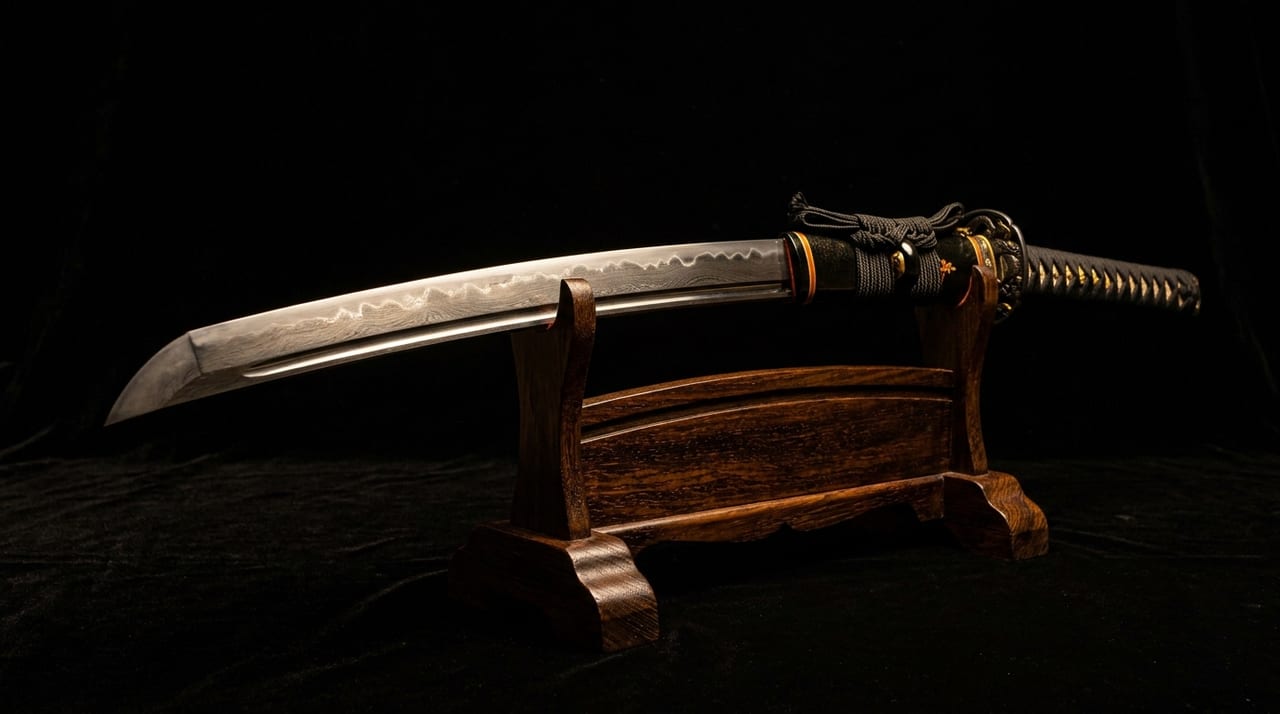
- Jigane and hamon: Does the hamon show strong nie activity reflecting Sōshū-den influence, or is the finish quieter? Observe the type of hamon (suguha, gunome, midare) together with the texture of the jigane.
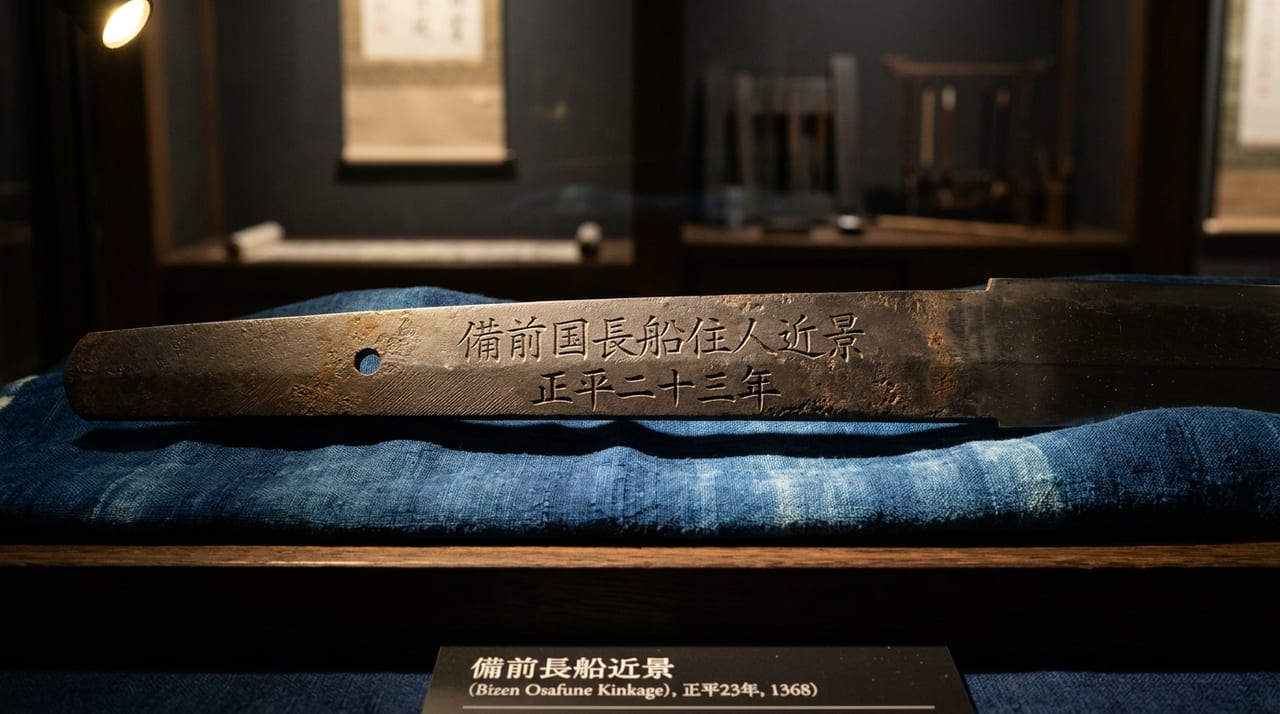
- Nakago and mei format: The calligraphy and cut of the mei, the finish of the nakago, and the condition of the rust are important clues for inferring the period and lineage. The number and position of the mekugi holes are also useful references.
- Accompanying kanteisho: A kanteisho recording the results of an official appraisal is the basis for confirming the lineage, period, and evaluation. When viewing a sword offered for sale, the presence and content of the kanteisho are indispensable criteria for judgment.
For a deeper understanding of how to read the nakago and dated mei, please also refer to What Is a Dated Mei (nenki-mei).
Expanding from the Nobukuni School: As a Starting Point for School Research
Tracing the history of the Nobukuni School reveals how a single name was passed down across eras and regions and has come to be discussed as a single lineage. Such "inheritance of mei" is not unusual in the world of nihontō, and Nobukuni is one of its representative examples. This is precisely why attempting to understand a sword through the mei alone tends to lead to a dead end, and it becomes important to cultivate the habit of carefully reading the elements of the sword itself — form, jigane and hamon, and nakago.
One point to keep in mind when studying school lineages is that classification frameworks are ultimately only a supplementary aid to understanding. Actual swords may show the combined influence of multiple traditions, and carefully observing the characteristics of the sword in front of you takes precedence over fitting it into a single category. For tōkō of Sōshū-den as a whole, see Sōshū-den Tōkō Biographies, and for the framework of the Gokaden, see What Are the Five Traditions of Nihontō.
The TOUKENZA online catalog allows you to view swords currently offered for sale together with photographs and detailed descriptions. Please explore the character of the Nobukuni School and other schools through the actual works on offer.