Masters of the Soshu Tradition: The Aesthetics of Nie and the Legacy of Ten Disciples
 * Image is for illustrative purposes only.
Table of Contents
What is Soshu-den—The Way of the "Strongest" Swords
"Soshu-den (相州伝)" is a system of sword-making techniques that developed in Soshu (present-day Kanagawa Prefecture), the seat of the Kamakura Shogunate. As one of the five major sword traditions (gokaden) of Japanese swords, it is counted alongside Yamashiro-den, Bizen-den, Yamato-den, and Mino-den. What sets it apart from these four traditions is not merely its high degree of technical perfection, but rather its formative philosophy born from the "demands of actual combat."
The Soshu-den tradition has three defining characteristics.
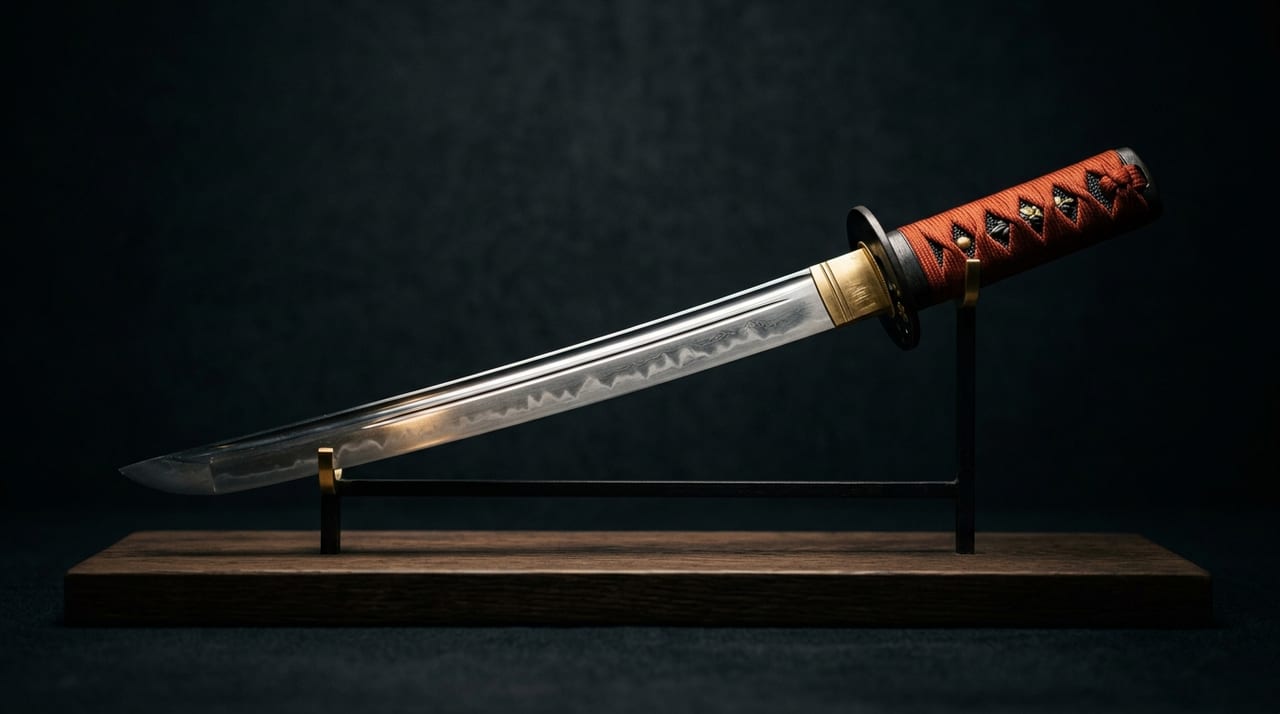
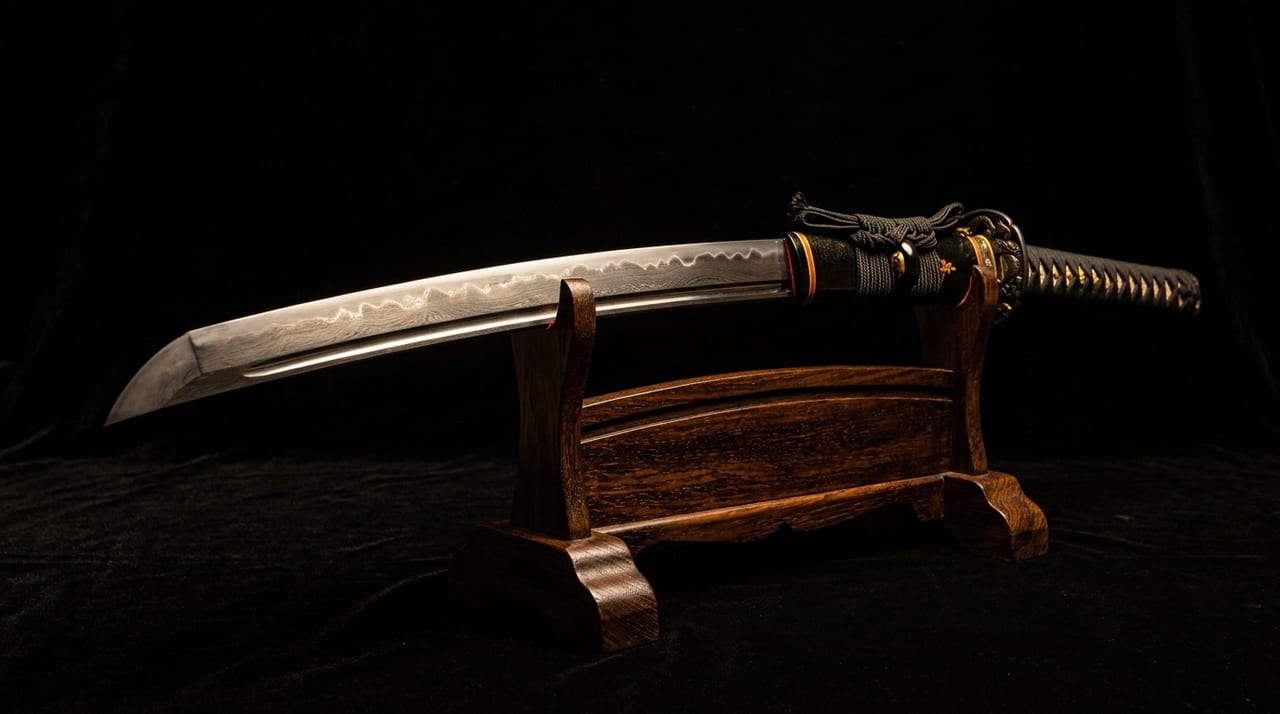
- The abundance of nie: Nie is the crystalline sparkle that appears at the edge boundary through hardening, with densely packed granular bright points called "nie," while a haze-like spreading appearance is called "nioi." Soshu-den blades possess particularly abundant nie, with the area near the edge creating a bright, gleaming impression. This abundance of nie cannot be achieved without precise control of quenching temperature and cooling speed, standing as evidence that the advanced heat-treatment techniques Masamune established were passed down through later generations.
- Bold, undulating hamon: Soshu-den hamon typically features large, dynamic undulating styles such as o-gunome (large clusters), notare (waves), and o-midare (large disorder). In stark contrast to the refined straight blades of Yamashiro-den, the vigorous strength is a visual hallmark of Soshu-den. This undulating hamon is not merely decorative but also served a practical purpose—by widening the hardened area, it increased the toughness of the blade.
- Complex working of the ji-tetsu (surface steel): In Soshu-den, the ji-tetsu displays flowing patterns of o-hada (large skin) and itame (board grain), with diverse working such as ji-nie, chikei (ground patterns), and kinsuji (gold lines). This phenomenon arises from skillfully combining multiple different steel materials and repeated forging, directly demonstrating a high level of technical mastery.
Masamune—Founder of Soshu-den and a Treasure of Japanese Swords
Masamune (正宗, birth and death dates unknown, late 13th century to early 14th century) stands as the supreme master in the history of Japanese sword makers and the figure who established the Soshu-den technical system. His teacher is said to be "Shintōgo Kunimitsu (新藤五国光)," and Masamune synthesized the Kamakura tradition with the essential techniques of Yamato and Bizen to create Soshu-den as a new technical system. Masamune's era was a time when memories of the Mongol invasions remained vivid, and the demand was exceptionally high for swords that could endure actual combat—blades that would "not break, not bend, and cut well."
Very few examples of Masamune's work survive (only several tens of confirmed authentic works), and there are often debates concerning the attribution of genuine examples. However, those works definitively attributed to Masamune are all of the highest caliber, exhibiting in perfect measure the abundant nie, beautiful ji-tetsu, and bold hamon. Notable examples include the "Tokugawa Masamune (a blade, unsigned)" that passed down through the Tokugawa shoguns, and the "Kanze Masamune (観世正宗)," said to have been possessed by Toyotomi Hideyoshi.
Particularly noteworthy is that many of Masamune's authentic works lack a signature (mei). Even unsigned blades are often attributed to "Masamune's work" based on comprehensive assessment of ji-tetsu, hamon, and overall form—a phenomenon that paradoxically heightens both the difficulty of authentication and the mystique of Masamune's work. From the Edo period onward, the adage "unsigned but still Masamune" became established in sword appraisal circles, rooted in this unique phenomenon. The Honami family, the Shogunate's official sword appraisers, recognized the high value of Honami certificates (honami-origami) for Masamune's unsigned works, with valuations said to reach as high as ten thousand hiki (approximately three thousand ryo) in currency.
Sadamune—Masamune's Successor and Embodiment of "Refinement"
"Sadamune (貞宗, birth and death dates unknown, Nanboku-cho period)" is believed to be the son (or disciple, by some accounts) of Masamune and is regarded as a master swordsmith of the Soshu-den's second generation, evaluated on par with Masamune himself. Some appraisers hold Sadamune in such high regard that the saying goes "Echizen's Sadamune surpasses Edo's Masamune."
Sadamune's work is said to possess a more restrained and refined impression than Masamune's, with their differences often described as a "fusion of strength and elegance." The ji-tetsu, rather than the rough o-hada of Masamune, is primarily composed of somewhat tighter ko-itame, creating an overall impression of grace and balance. The hamon is based on notare, with nie grain that is slightly finer than Masamune's and spreads uniformly.
Among Sadamune's masterpieces is "a signed Sadamune blade (housed in the Tokyo National Museum, designated a National Treasure)." This single blade maintains balance in all aspects—ji-tetsu, hamon, and overall form—and is a masterwork that, while retaining the grandeur of Soshu-den, conveys high elegance. If Masamune embodied the beauty of "strength," Sadamune achieved the fusion of "strength and elegance."
Hiromitsu and Akihiro—Capable Masters Who Supported the Era of Intense Conflict in the Nanboku-cho Period
"Hiromitsu (廣光)" and "Akihiro (秋広)" were Soshu-system swordsmiths active during the Nanboku-cho period, with more surviving examples than Masamune or Sadamune. This was an era marked by large-scale battles throughout the land arising from conflict between the Northern and Southern courts, causing a dramatic surge in sword demand. The large volume of blades produced by Hiromitsu and Akihiro directly reflects the era's requirements.
Hiromitsu is known for his characteristic bold o-gunome-midare hamon and rough ji-tetsu, standing as one of the swordsmiths who best embodied the spirit of the Nanboku-cho age. Distinctive features such as "yubashiri (run-off marks)" and "nijuha (double edge)" often appear in the valleys of the hamon, serving as crucial diagnostic markers for identifying Hiromitsu's works. The majority of surviving tachi and katana are evaluated as Important Swords or above, with some designated as Important Cultural Properties or National Treasures.
Akihiro, comparable to Hiromitsu, is a renowned Soshu-system master of the Nanboku-cho period, highly praised for the abundance of nie and the vigorous strength of his ji-tetsu. His undulating hamon tends to be somewhat more restrained than Hiromitsu's, and it is noteworthy that despite being contemporaries, he established a distinct style. Works by both masters represent the Nanboku-cho Soshu-den tradition and continue to receive designations of Especially Important Sword from NBTHK (Nippon Bijutsu Token Hozonkyokai) evaluations.
The Ten Disciples of Masamune—How Soshu-den Transformed Japanese Swordcraft as a Whole
The greatest legacy of Soshu-den lies in the dissemination of its techniques throughout the country via "the Ten Disciples of Masamune (正宗十哲)." The ten disciples—Gono Yoshihiro (Etchū), Samonji (Kyushu), Kaneuji (Mino), Kaneshige (Mino), and others (note that the Ten Disciples of Masamune refers to sword smiths from regions other than Soshu proper)—carried Soshu-den techniques back to their respective regions, thereby contributing to an overall improvement in Japanese sword quality. Notably, Mino-den is said to have developed based on the Soshu techniques that Kaneuji introduced, directly contributing to improved quality in the mass-produced Mino blades of the Sengoku period.
Moreover, Gono Yoshihiro (郷義弘) is counted among "Masamune, Gono, and E"—the three great masters of Japanese swords—and established his own technique of takanie (high nie), leaving his name as one of Etchū's leading swordsmiths (while Etchū Norishige represents the mainstream of the Etchū tradition, Gono Yoshihiro stands out as an exceptional follower of Masamune's disciples). In this manner, Soshu-den transcended a single regional school, becoming the driving force that reorganized Japanese sword techniques throughout the Muromachi and Sengoku periods.
Conclusion—The Sublime Tradition That Unified Strength and Beauty
Soshu-den did not merely forge "strong swords"—it achieved the rare artistic accomplishment of transforming that "strength" directly into beauty. The formative beauty of abundant nie and undulating hamon that Masamune established was refined by Sadamune and developed by Hiromitsu and Akihiro in response to the demands of their time. And through the Ten Disciples of Masamune, those techniques spread across all of Japan, forming the foundation of modern Japanese sword aesthetics.
Even in contemporary swordsmiths, mastering the Soshu-den nie and undulating hamon ranks among the most difficult technical challenges. Spanning more than seven centuries, the legacy left by four great masters—Masamune, Sadamune, Hiromitsu, and Akihiro—in the Kamakura through Nanboku-cho periods continues to be discussed passionately at the forefront of sword appreciation, inspiring swordsmiths to this day.