Tachi vs Katana: The Definitive Guide to Japan's Two Great Sword Classifications
 * Image is for illustrative purposes only.
Table of Contents
Tachi and Uchigatana—Two Easily Confused Major Classifications
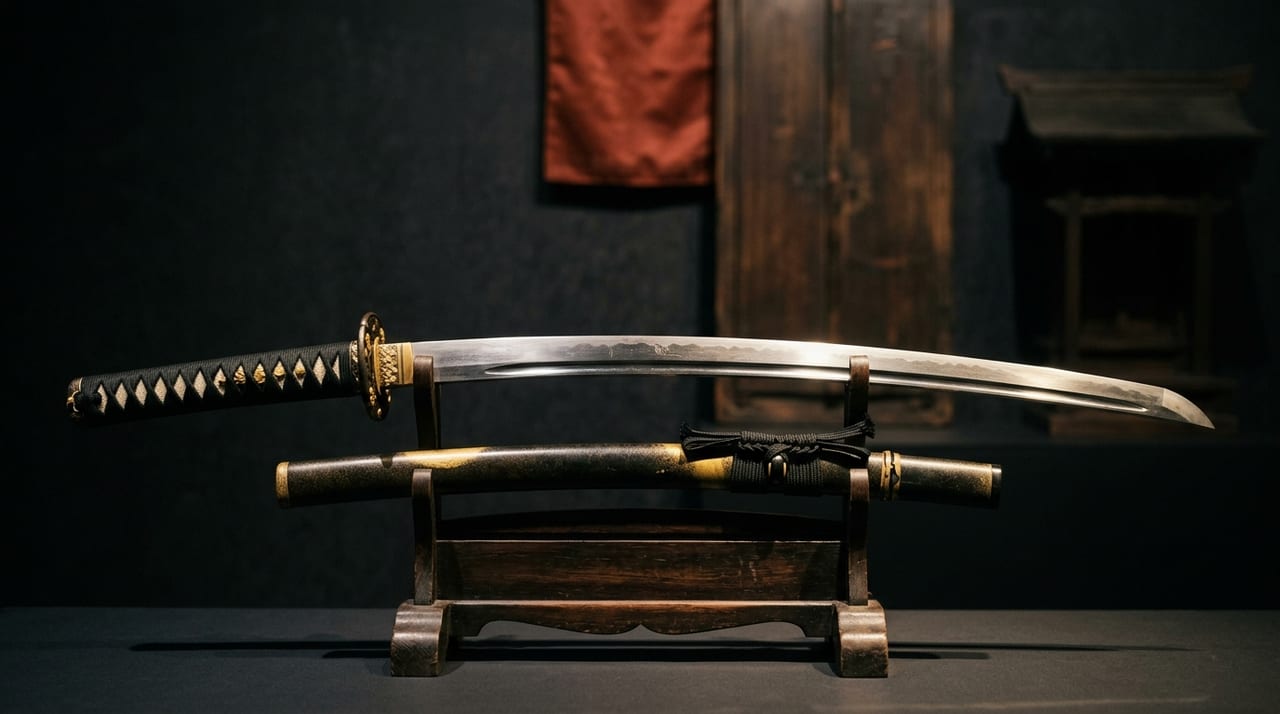
While the word "katana" (sword) is often used as a general term for "nihontou" (Japanese swords), strictly speaking there are two major classifications of Japanese swords: "tachi" and "uchigatana." Although these two may appear similar at first glance, they have fundamental differences in historical background, carrying method, and blade shape.
Understanding this classification is essential when considering collecting or purchasing. Even though both are called by the word "katana," tachi and uchigatana differ in the historical period of their manufacture and original purpose, which also changes the points of appreciation and the names recorded in appraisal documents.
What is Tachi—A Mounted Weapon of the Heian and Kamakura Periods
Tachi is a form of Japanese sword that developed from the late Heian period through the Kamakura period, designed on the premise that it would be used by samurai (mounted warriors) of the time on horseback.
Defining Characteristics of Tachi
- Wearing method: Worn with the blade facing downward, suspended from the waist by a cord called "tachio" in a style called "tachi-goshirae"
- Blade length: Most are 2 shaku 4 sun (approximately 73 cm) or longer
- Curve shape: "Koshi-zori" (curve at the hilt area) is typical—the apex of the curve is located at the koshi (base) of the blade
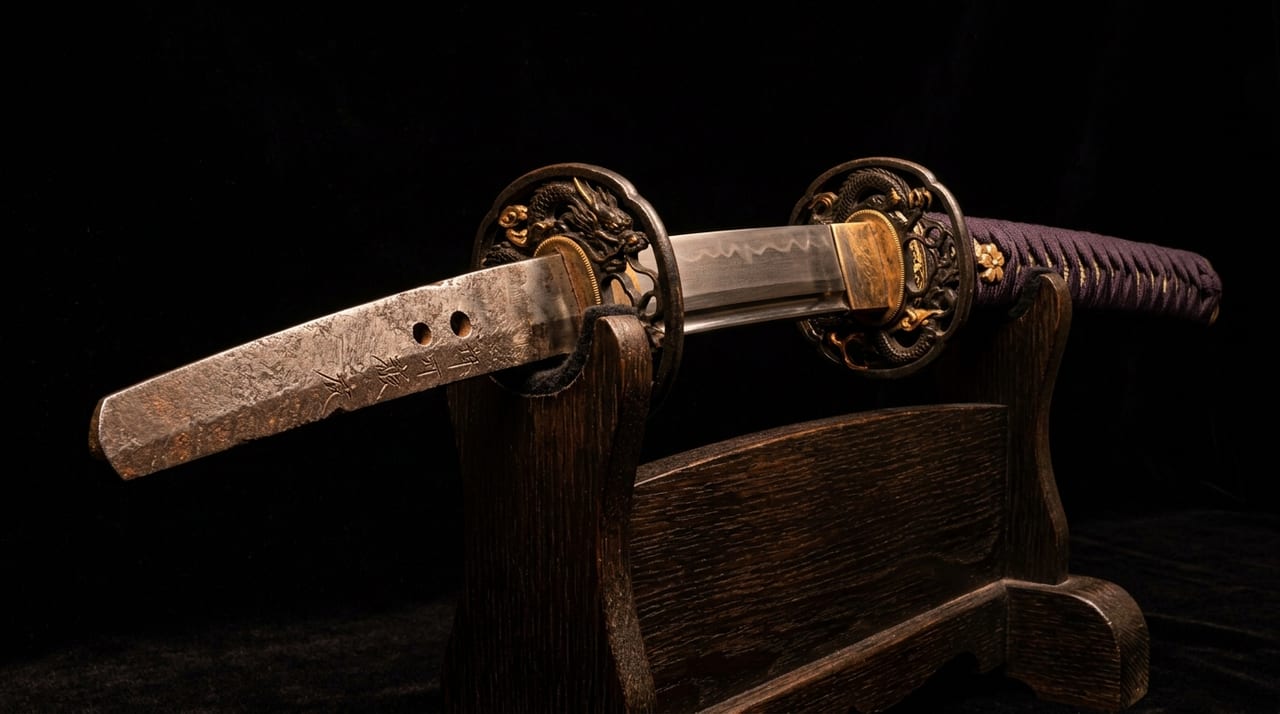
- Nakago (tang) inscription: The signature typically goes on the "omote" (face), but on a tachi, the signature appears on the side that faces outward when worn
Because the tachi blade is suspended from the waist with the edge facing downward, its design allows gravity and centrifugal force to be utilized when swung downward from horseback.
Representative Famous Tachi
- Dōjigiri Yasutsuna: Crafted by Ōhara Yasutsuna, one of the Five Heavenly Swords. National Treasure (held at Tokyo National Museum)
- Mikazuki Munechika: Crafted by Sanjo Munechika, one of the Five Heavenly Swords. National Treasure (held at Tokyo National Museum)
- Shishiō: A tachi said to have been possessed by Minamoto no Yorimasa. Important Cultural Property (held at Tokyo National Museum)
Styles of Tachi-goshirae
There were different styles of goshirae (fittings) for wearing tachi depending on formality. The "Hyogo-gusari tachi-goshirae" used by nobles and high-ranking samurai for ceremonial purposes was characterized by elaborate decorative chains and was also used for offerings to shrines. For combat-focused fittings, the "itomaki tachi-goshirae," with the hilt and scabbard wrapped in cord, and the "kawazutsumi tachi-goshirae," with the scabbard completely wrapped in leather, are well known. These differences in goshirae can also serve as clues to understanding in what situations the tachi was used.
What is Uchigatana—A Foot Soldier's Sword of the Muromachi and Sengoku Periods
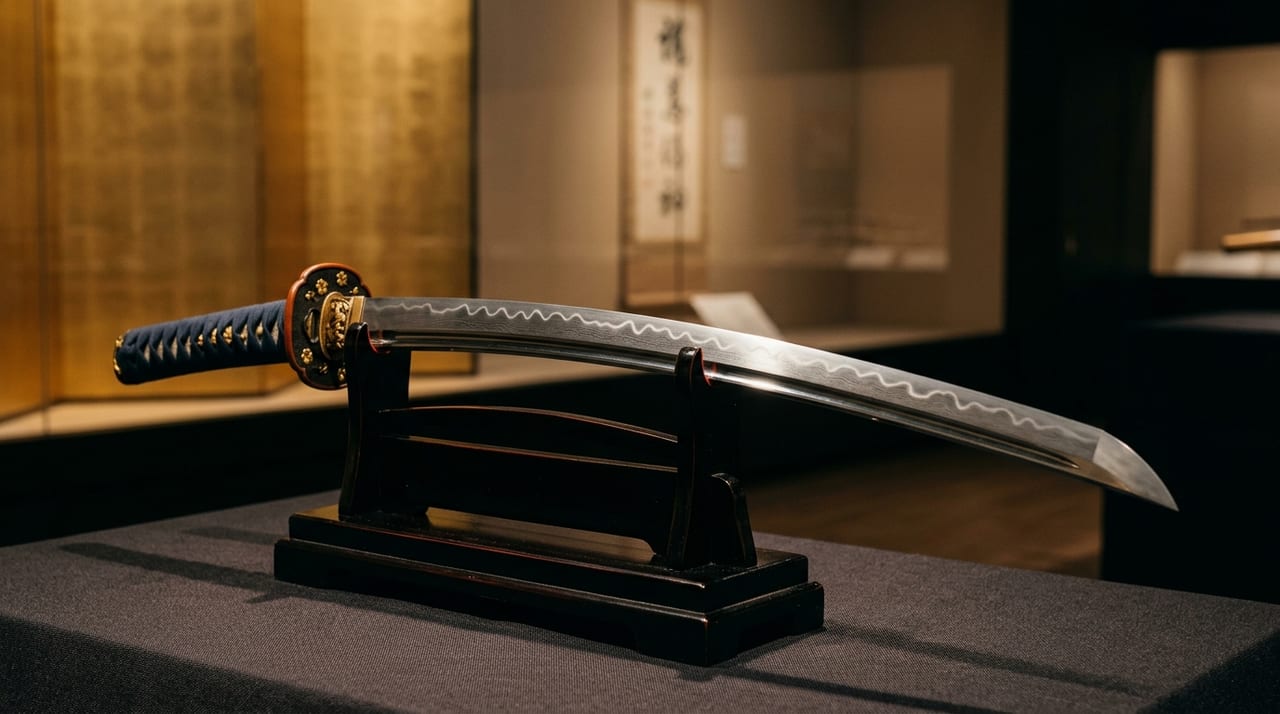
Uchigatana is a form of Japanese sword that became widespread from the mid-Muromachi period onward and developed to meet the practical combat needs of the Sengoku period when foot combat became the primary form of warfare. In modern times, when people refer to "nihontou" or "katana," they are mainly referring to this form.
Defining Characteristics of Uchigatana
- Wearing method: Worn with the blade facing upward, inserted into the waist belt in "sashi-omote" style (the "sashi-omote" faces outward)
- Blade length: The standard is 2 shaku (approximately 60 cm) or longer and less than 3 shaku (approximately 90 cm)
- Curve shape: "Naka-zori" (curve in the middle) is typical—the apex of the curve is located near the center of the blade
- Nakago inscription: The signature appears on the side that faces outward when worn (opposite of tachi)
By wearing the blade facing upward, the practice of drawing and cutting in one motion, "battou-jutsu" (iaijutsu), developed.
Historical Background of Uchigatana's Widespread Use
As large-scale group combat on foot became the primary form of warfare during the Sengoku period (16th century), the uchigatana, which could be drawn and used more quickly than the tachi designed for mounted use, gained advantage in actual combat. Additionally, during the peaceful Edo period, the uchigatana took on symbolic meaning as a "samurai's credential," and wearing two swords together with a shorter wakizashi (called daishō) became the formal dress of samurai.
Composition of Uchigatana-goshirae
Uchigatana-goshirae is composed of various parts including the scabbard, hilt, tsuba (guard), habaki (blade collar), and sageo (hanging cord). The tsuba both protects the hand and developed as an art object with elaborate designs, many featuring intricate openwork by metalworkers. The hilt is wrapped with shagreen and then bound tightly with cord in a technique called "tsukamaki," combining practicality with aesthetic beauty.
Practical Points for Distinguishing Between Them
To distinguish between tachi and uchigatana at a museum or exhibition, check the following.
Position of signature: Check the side where the signature is visible on the displayed sword. For tachi, because the blade is worn facing downward, the side visible when the blade is facing downward is the "omote" (face with the signature). For uchigatana, because the blade is inserted facing upward, the side visible when the blade is facing upward is the omote.
Presence or absence of suriage (shortening): A tachi that was altered to uchigatana by shortening its nakago during the Muromachi to Edo periods is called "suriage tachi." Clues include a cut signature or a folded signature.
Combination of blade length and curve: If the curve at the hilt is deep and the blade is long (2 shaku 4 sun or longer), it is likely tachi; if the curve is in the middle and the blade is approximately 2 to 2 shaku 4 sun, it is likely uchigatana.
The following table summarizes the main differences between tachi and uchigatana.
| Item | Tachi | Uchigatana |
|---|---|---|
| Primary period of use | Late Heian to Kamakura | Mid-Muromachi onward |
| Intended user | Mounted warrior | Foot soldier |
| Wearing method | Suspended with blade facing downward | Inserted with blade facing upward |
| Position of curve | Koshi-zori (near base) | Naka-zori (near center) |
| Position of signature | Side that faces outward when worn | Side that faces outward when worn |
How Classification is Approached in Appraisal Documents
In appraisal of Japanese swords, the determination of whether a sword is tachi or uchigatana (katana) is based on its original form when created (blade proportions and nakago construction), not on what type of goshirae it is currently mounted in. For this reason, a tachi that was shortened through suriage in later periods is sometimes classified as "katana" in appraisal documents. Conversely, even a blade kept in a shirasaya without any goshirae may be determined to be tachi based on its blade proportions. When purchasing or appreciating a sword, understanding deepens by checking not only the current form of the goshirae but also the classification recorded in the appraisal document.
Summary—Tachi and Uchigatana Are Witnesses to History
The difference between tachi and uchigatana reflects not merely a difference in form but a change in Japanese combat methods. Understanding the evolution from the tachi born in the age of mounted warriors to the uchigatana born in the age of foot soldiers is the first step toward reading Japanese history through the lens of Japanese swords. Developing the perspective to distinguish between the two will also deepen one's appreciation of the historical context that each individual sword carries.