Kogatana — Form, Use, and History as an Independent Blade Beyond the Category of Tōsōgu
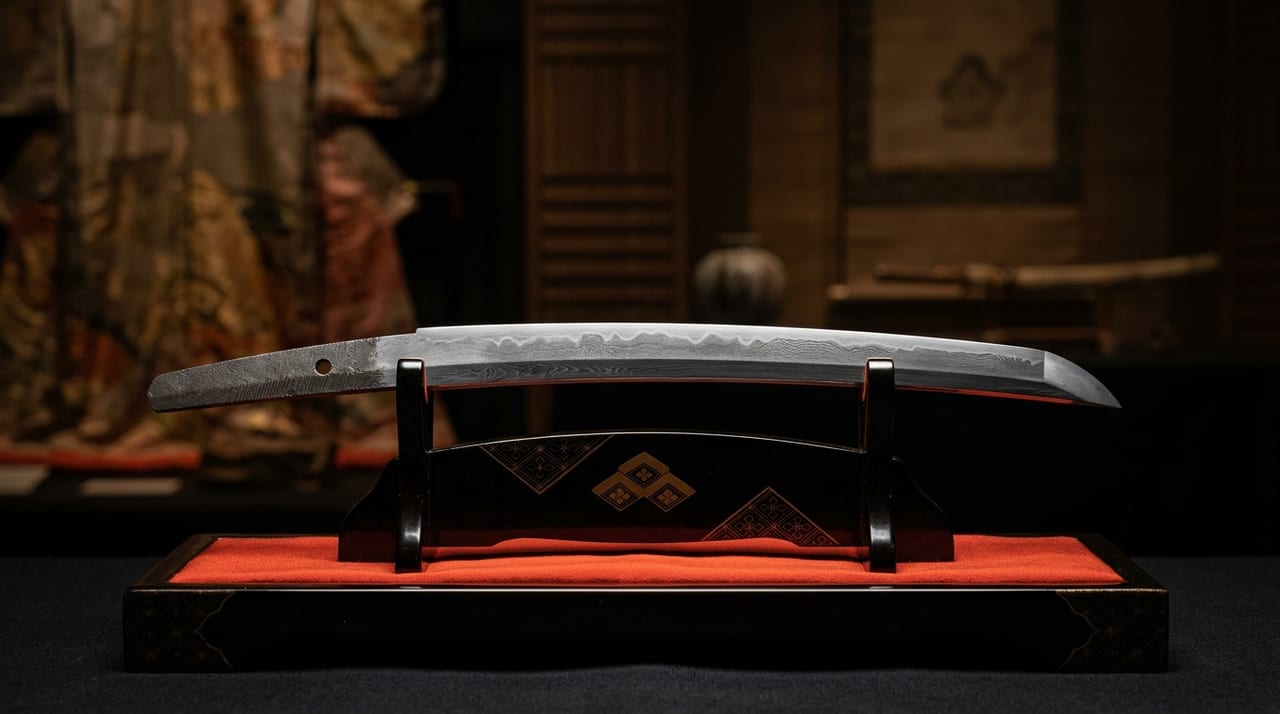 * Image is for illustrative purposes only.
Table of Contents
What Is a Kogatana? — Attached Accessory or Independent Blade?
The term "kogatana" often causes confusion in the world of Japanese swords. It is commonly discussed as the small attached blade fitted into the handle of a kozuka, but as a formal category of bladed weapons, the kogatana encompasses a far broader concept.
When the term is used collectively to describe small blades with a nagasa of roughly 3 to 20 centimeters, it covers an extremely wide range, from kitchen knives and chopstick-whittling knives to craft blades and blades attached to arms. In the contexts of sword appraisal and sword culture, it is important to distinguish between the kogatana of tōsōgu (the kozuka fitting) and the kogatana manufactured as an independent blade.
Classification of Form — Construction and Edge Orientation
The construction of kogatana is varied, and the fundamental forms of Japanese swords are distilled into miniature.
Single-edged (kataha) kogatana are the most common and may be either shinogi-zukuri or hira-zukuri. Shinogi-zukuri has a cross-section approaching a pentagon, as with the tachi and wakizashi, with a clear separation between the edge orientation and the mune (back of the blade). Hira-zukuri has a blade close to flat in section, ground thin only at the cutting edge.
Double-edged (moroha) kogatana are ground sharply on both sides and are often made for ceremonial or ritual use.
Kiriha-zukuri kogatana are used primarily in applications similar to the tantō and wakizashi; the angle of the kiriha directly affects blade strength and sharpness.
The sori (curvature) of kogatana is generally straight or very slight, though examples with saki-zori appear from the Muromachi period onward.
Manufacture and Smith's Techniques
The manufacture of kogatana is grounded in the same forging techniques as the tantō and wakizashi, but the shorter nagasa makes temperature control of the material and the timing of yaki-ire (quenching) even more delicate. The thinner and narrower the blade, the more prone it is to distortion during quenching, and the skill of the tōkō (swordsmith) is put to the test.
From the Kamakura period, examples survive of celebrated smiths making a complete set of kogatana as attachments to a sword or tachi, and furnishing kogatana with the same jigane (steel of the blade surface) and hamon (temper line) as the principal blade was considered an honor. Among kogatana made by tōkō of the Awataguchiha and Rai School, there are pieces that are highly regarded even on their own.
Kogatana as a Sword Fitting Accessory — Its Relationship with the Kozuka
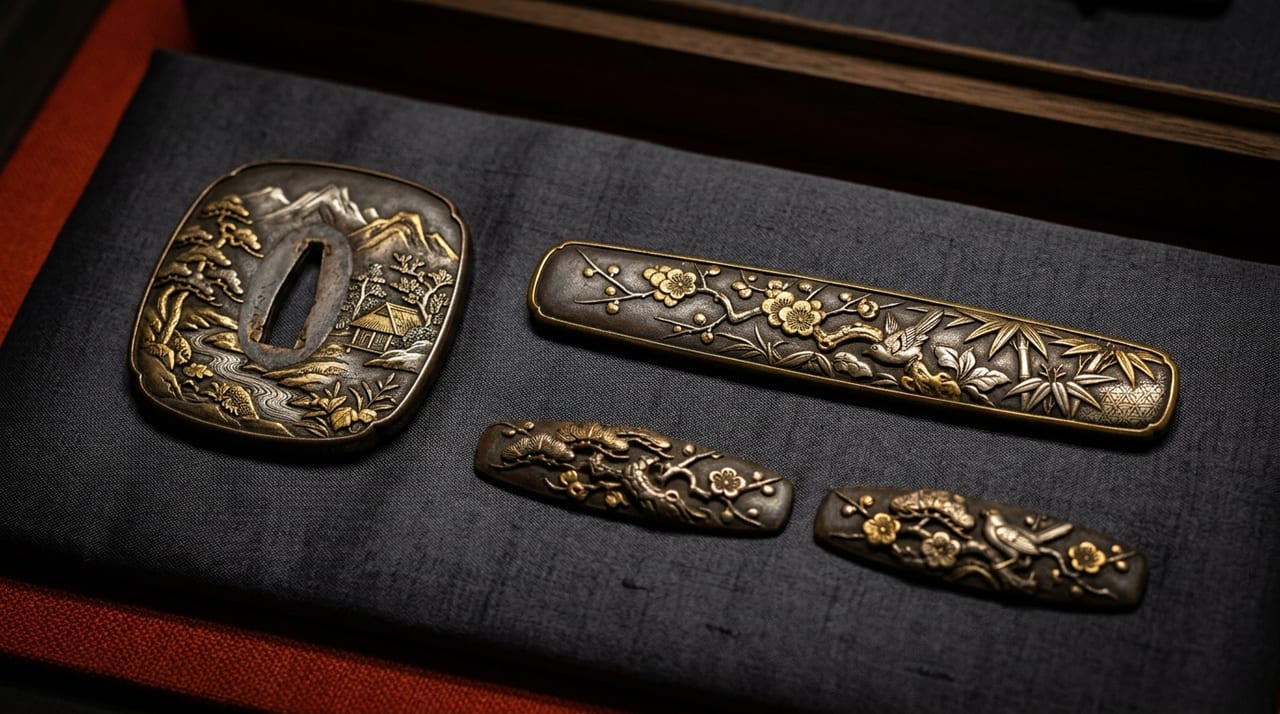
From the medieval period onward, the practice of carrying the kogatana inserted into the tōsōgu piece known as the kozuka became established. The kozuka refers to the handle, and the blade part inserted into it is the "kogatana." The combined implement is sometimes described as a "kozuka-tsuki kogatana."
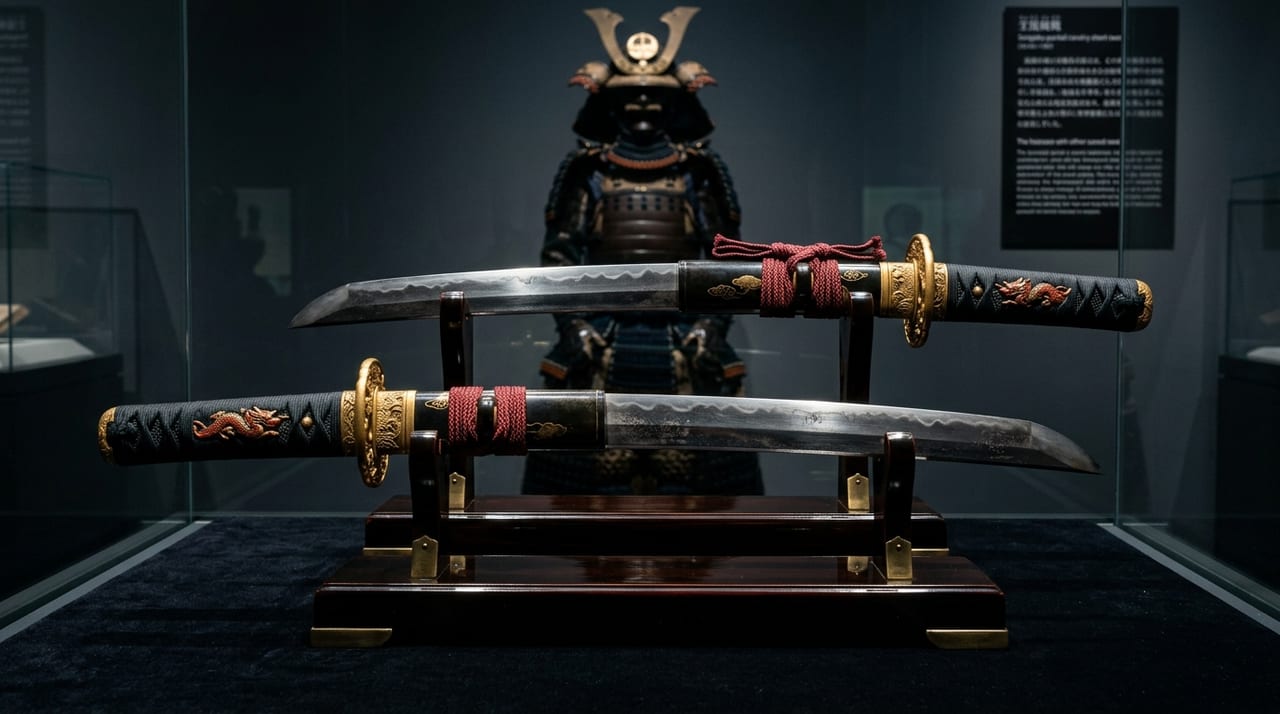
The kōgai and kogatana were everyday carry items for samurai, used for eating, writing, grooming (in the case of the kōgai), and fine work in emergencies. A complete set of attachments made by a tōshō (swordsmith) with the same mei (signature) and jigane as the principal blade commands high appraisal value as a "daishō-zoroi."
The hamon of the kogatana attached to kozuka and kōgai was ideally made to harmonize with that of the principal blade, and the kogatana thus plays a role in the aesthetic unity of the entire sword mounting.
Between Utility and Art
In the Edo period, the kogatana extended its uses from a samurai's everyday tool to a practical implement for literati and craftsmen. Artisans of various kinds used dedicated kogatana for cutting paper, bamboo work, woodblock carving, and more. In Seki City, Gifu Prefecture, and Sakai City, Osaka Prefecture — both renowned as cutlery production centers — specialized manufacture of kogatana continues to this day.
From the perspective of collectors and enthusiasts, there are attached kogatana that command high artistic and technical regard even when evaluated on their own. Kogatana attributed to celebrated medieval smiths in particular are assessed by the same appraisal standards as principal swords.
Points of Appreciation
The points to look for when appreciating a kogatana are essentially no different from those for appreciating a principal sword.
- Jigane (steel of the blade surface): the character of the grain pattern (itame, masame, mokume) and the refinement of the forging
- Hamon (temper line): the quality of the restrained hamon types common to kogatana, such as suguha, ko-midare, and ko-gunome
- Nakago (tang): presence or absence of mei (signature), yasurime (file marks), and the shape of the heel (kurijiri, kengyo, etc.)
- Chikei and nie: minute observation of the activity appearing in the jigane
By comparing a kogatana as part of a complete set with the principal sword, the depth of a tōkō's skill in small-format work becomes all the more evident.
Basics of Care and Storage
A kogatana is an iron blade like any principal sword, and neglecting its care will cause rust. The basic procedure after handling is to carefully wipe away finger oils left on the blade with soft paper or cloth, apply a thin coat of oil, and then store it. Even when storing a kogatana inserted in its kozuka, it is important not to leave it in place for extended periods but to remove it occasionally and check the condition of the blade.
Storing it away from damp locations and in an environment free of sudden temperature changes is no different from caring for a principal sword. Treating a small blade with less care can easily result in rust having progressed unnoticed by the time one takes a closer look. The smaller blade means that once rust does develop, its relative impact on the areas of interest for appreciation is proportionally greater — another point to keep in mind.
Checklist When Acquiring
When considering acquiring a kogatana or a kozuka-tsuki kogatana, confirm the following points.
- Condition of the blade: presence of rust or edge chips, and the degree of thinning from polishing. A small blade offers limited room for re-polishing.
- Mei and attribution: whether it is zaimei (signed) or mumei (unsigned). If there is a mei or an attribution, confirm the basis for that assessment.
- Pairing with the kozuka: whether the kozuka and kogatana are an original combination or were matched at a later date.
- Photographs and listed information: when purchasing online, confirm that detailed photographs and measurements are provided for the blade, nakago (tang), and kozuka respectively.
Because the legal treatment of small blades varies according to their dimensions and form, it is advisable to confirm this with the seller before purchase.