Shakudo Sword Fittings: Color, Dating, and Buying Guide
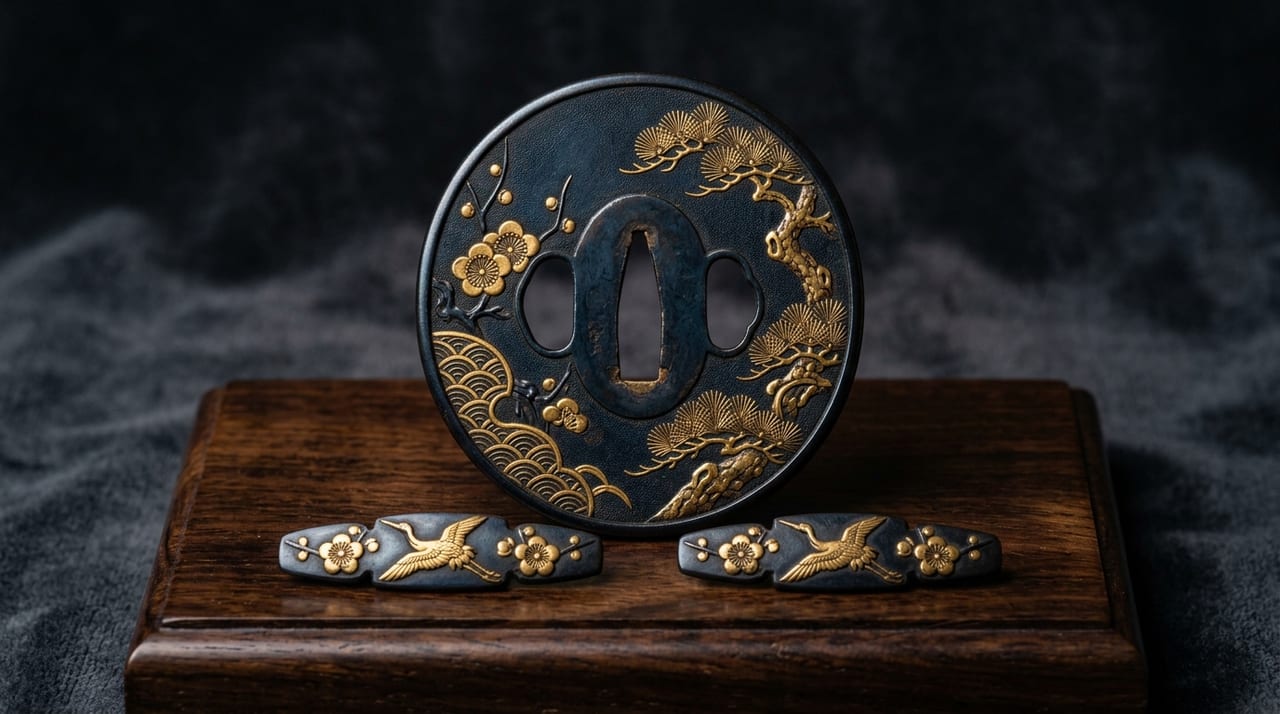 * Image is for illustrative purposes only.
Table of Contents
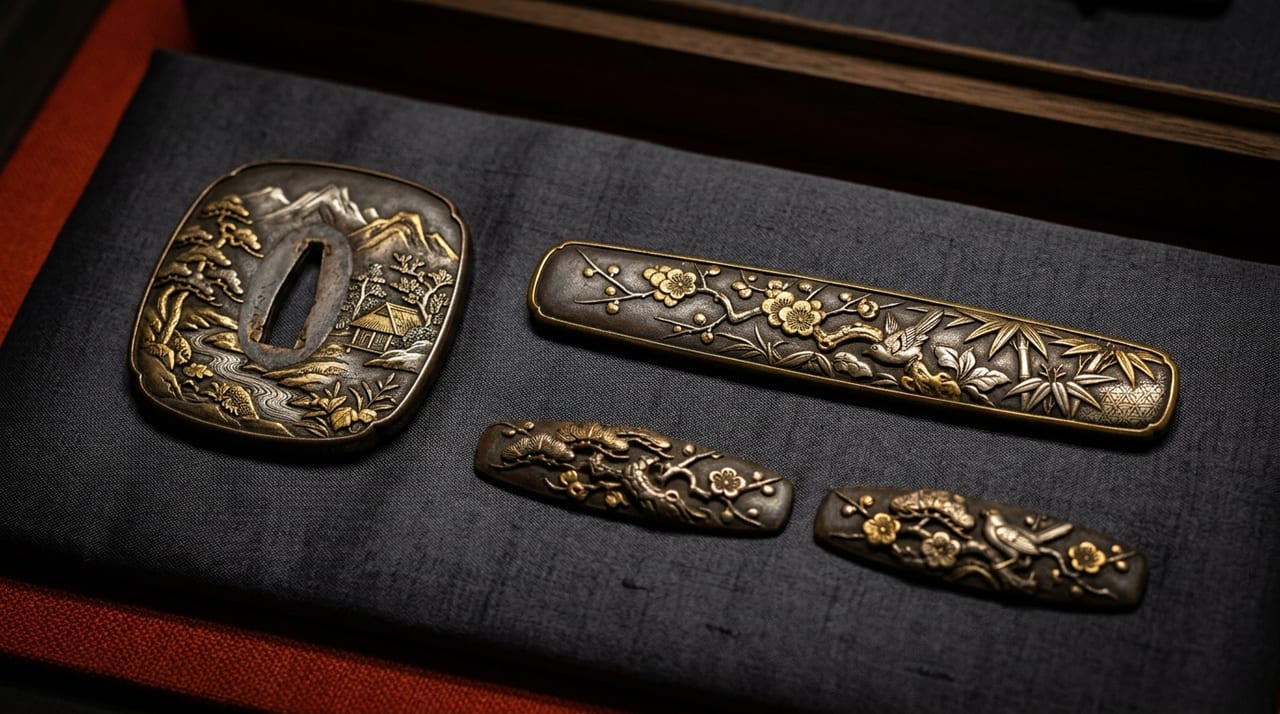
Shakudo is a copper-gold alloy finished using distinctive techniques to create mounting materials for Japanese swords. The elegant works with deep bluish-black base metal and gold pierced openwork exemplify the pinnacle of techniques that competing sword smiths and metalworkers pursued from the Edo period through the Showa period. This article explains the characteristics of shakudo mountings, their historical background, and how to distinguish them at purchase.
Characteristics and History of Shakudo Sword Mountings
Shakudo is an alloy of copper with added gold, and its distinctive bluish-black color is achieved through special heat treatment and oxidation techniques. This coloration was perfected from the mid-Edo period through the late Edo period by Kyoto's Goto family and Higo metalworkers. Shakudo tsuba, menuki, and fuchigashira became status symbols denoting the rank of samurai, and daimyo families competed to acquire them. The shakudo tsuba of Higo metalworkers in particular are highly valued for their refined chasing techniques and deep coloration, and many still exist today in museums and as publicly accessible National Treasures and Important Cultural Properties.
The production of shakudo sword mountings could take several months and were not mere decoration but rather artisanal works expressing the sword smith's pride and the customer's wealth and aesthetic sensibility. Furthermore, because working with shakudo required toxic chemicals, it was a technique mastered by only a limited number of craftsmen even during the Edo period.
Color Changes in Shakudo and Period Dating
The greatest characteristic of shakudo is that its color subtly changes with age. Newly made shakudo displays a deep indigo tinged with blue-violet, but after several decades the darkness increases, and after over a century it becomes a deep color approaching jet black. This change is due to the metal's oxide layer becoming thicker over time, and it serves as an important indicator for dating antique pieces.
Shakudo from the mid-Edo period (1700s) appears surprisingly bright in blue-violet to the modern eye. By contrast, pieces from the late Edo period (1800s) display deep black-purple, and Meiji-era pieces show even stronger darkness. Understanding this hierarchy of colors makes it possible to make rough period determinations even without expert knowledge.
Beyond color, the texture of shakudo also reveals its period. Shakudo from the early Edo period features thick gold in the openwork and relatively large-scale designs. In contrast, from the late Edo through the Meiji period, finer and more refined chasing became fashionable, and the gold layer tended to become thinner.
Shakudo Tsuba and Metalworking Techniques
To enhance the beauty of shakudo, metalworkers expose the gold partially through pierced openwork (or high-relief carving). Through this technique, a distinctive beauty emerges with the luster of gold appearing against the bluish-black base of shakudo. The typical production process for a shakudo tsuba begins with mixing copper and gold in designated proportions and forging the shakudo base metal. Next, chasing craftsmen apply designs through pierced openwork or inlay, and finally apply chemical treatment to develop the surface color.
The designs of shakudo tsuba vary by school and period. Higo metalworker shakudo tsuba feature deep pierced openwork, with auspicious motifs such as dragons, pine, bamboo, plum, and military implements being preferred. In contrast, in the Goto school tradition of Edo, there is a tendency to express more classical geometric patterns and family crests simply. Understanding these differences makes it possible to determine the school and approximate period of a tsuba to some degree.
Shakudo is also a material that deteriorates easily with age. In poor storage conditions, white spotty corrosion (shakudo disease) can develop on the shakudo surface. This occurs when the copper's oxide layer is destroyed, and restoration requires advanced technical skill.
How to Assess Quality at Purchase
When purchasing shakudo sword mountings, it is important to pay attention to the following points.
- Confirm the coloration: Whether it displays uniform deep bluish-black color or has spotting and fading reveals storage condition and age. Sound shakudo has luster and appears as a deep black with a slight violet tinge. If the surface appears solid black and lacks luster, or appears to be painted black with pigment, there is likely artificial treatment.
- Examine the condition of the gold in the openwork: Whether the gold has faded and whether the chasing outlines are sharp reveal restoration history and authenticity. Shakudo from the Edo period has gold with natural luster and uniform depth of openwork. In contrast, modern reproductions often have shallow chasing and uneven gold thickness.
- Check the preservation condition: Minor staining or fading are acceptable, but if shakudo disease (white corrosion spots), chasing damage, or signs of repainting are present, pricing should account for restoration costs. Preservation condition significantly affects purchase price.
- Verify provenance: It is prudent to consult the quality standards of publicly displayed tsuba by referring to works on deposit at national museums and scholarly sword catalogs. In particular, knowing at what level a shakudo tsuba ranks within sword mounting collections enables proper price assessment in the market.
Shakudo sword mountings are artisanal works that represent the pinnacle of Japanese metalworking technique. By understanding the depth of coloration and the refinement of pierced openwork, and by appreciating and purchasing appropriately, one's understanding of sword culture will deepen further. Observing examples of shakudo tsuba in online catalogs and comparing the subtle differences in coloration and diversity of metalworking techniques also serves as excellent practice for refining one's eye for appreciation.