Shinai: History and Types of Bamboo Practice Swords
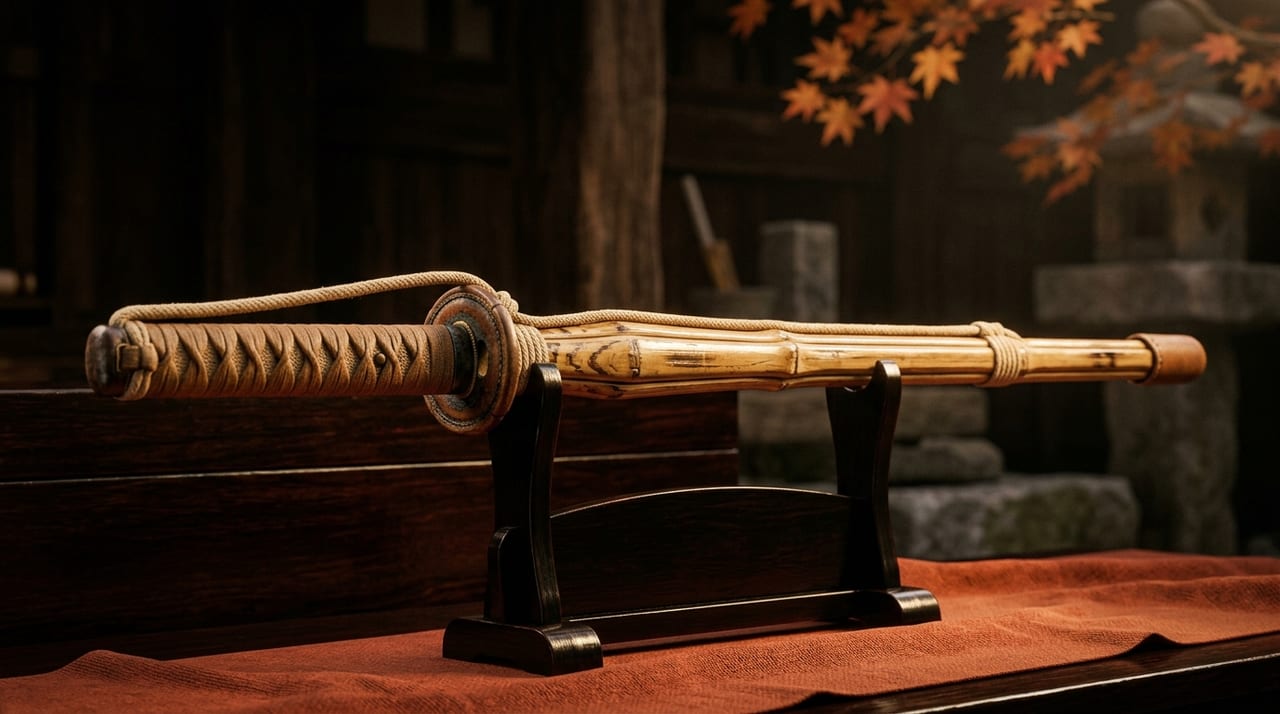 * Image is for illustrative purposes only.
Table of Contents
What is a Shinai?
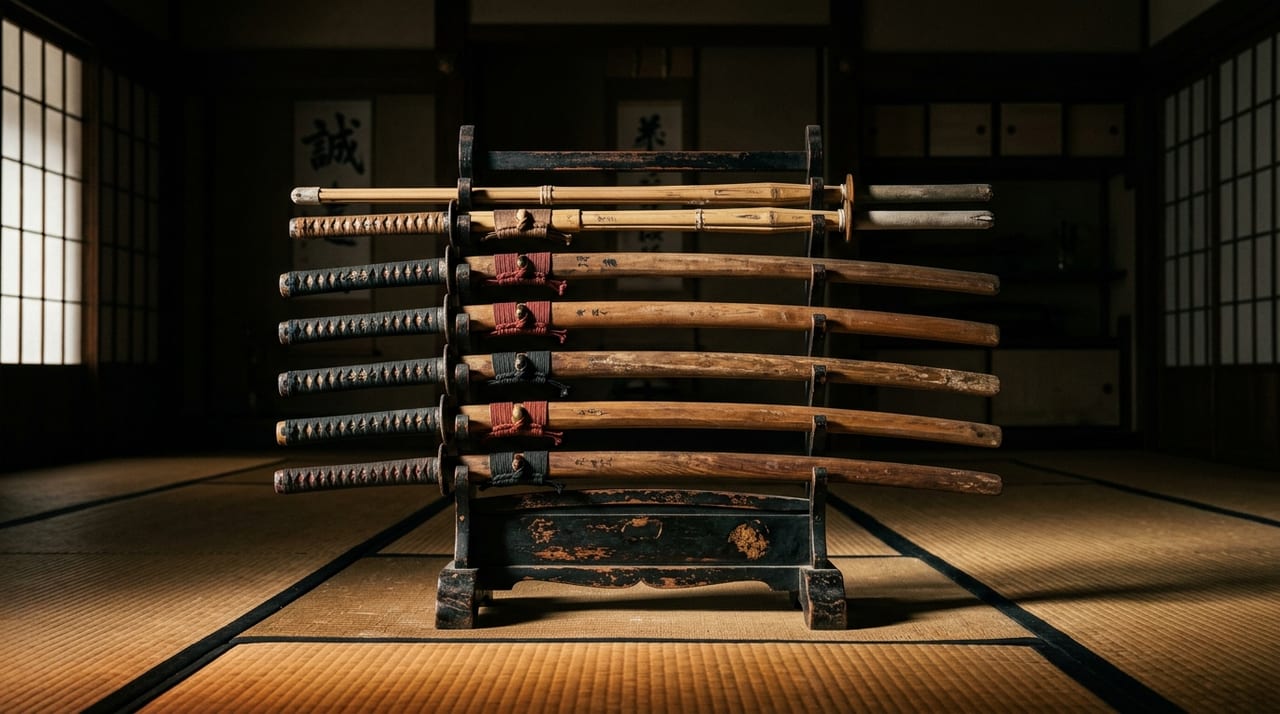
A shinai (bamboo sword) is a training weapon made of bamboo. In the pursuit of sword arts and sport kendo, it has developed as a safe alternative to real steel swords. The shinai is essential equipment for modern kendo, iaido, and jodo, and is an important element of Japanese martial arts culture.
Stages of Development of the Shinai
From the Edo Period to Early Meiji
The origins of the shinai date back to the mid-Edo period. Initially, practitioners of sword arts used tools made of bamboo fashioned after sword shapes to reduce the danger of using real swords. The shinai of this period was extremely simple, consisting merely of bundled bamboo.
From the late Edo period through the end of the shogunate, a swordsman named Togasaki Kashichi designed a more safe and practical shinai. Through this improvement, the shinai evolved from a mere safety device into a form suitable for practicing with real swords. It was during this period that the combination of a bamboo blade, a circular guard-like section, and a handle was established.
From Meiji to Early Showa
After the Meiji Restoration, kendo became central to the revival of Japanese martial arts. When kendo was introduced to school education, the standardization of shinai advanced rapidly. Standards for bamboo quality management, blade length, and weight were unified, and shinai with improved safety and durability were manufactured.
During this period, production areas became established as centers for shinai manufacturing. Particularly, bamboo craftspeople in the Kansai region developed high-level techniques and began supplying high-quality products.
From Showa to Modern Times
With the post-war sportification of kendo, the shinai became further standardized. Strict regulations by the All Japan Kendo Association were established, and only specific shinai could be used in official competitions.
Modern shinai manufacturing requires advanced techniques and quality control from bamboo selection through processing and finishing. Shinai craftspeople are said to be able to produce top-quality products only after accumulating decades of experience.
Structure and Types of Shinai
Basic Structure
The shinai is composed of multiple parts. The bamboo that forms the blade is called the "take" or "do," and typically consists of four bamboo slats woven together. These bamboo slats have a tsuba (circular protective section) at the base and gradually narrow toward the tip.
The tip of the blade is fitted with a leather piece to prevent the bamboo from splitting. The handle consists of a circular section called the tsuba and binding cord for gripping.
Classification by Length and Weight
Shinai are available in different sizes depending on the user's body size and age.
| Classification | Length | Weight | Features |
|---|---|---|---|
| Children's | approximately 90–100 cm | approximately 300 g | Designed for beginners; easy to handle |
| Women's | approximately 105–110 cm | approximately 400 g | Slightly shorter and lighter than standard |
| Men's standard | 110–120 cm | 500–550 g | Most common in official competitions |
| General use | 120 cm or more | approximately 600 g | For larger athletes |
Types of Materials
The characteristics of a shinai vary depending on the type of bamboo used.
- Madake: The highest quality type of bamboo. It is flexible and excellent in durability, used for high-grade shinai. Madake shinai have high investment value for practitioners and can be used for many years.
- Moso bamboo: Common material for shinai. Easier to obtain than madake and more affordable. A popular choice for sport kendo.
- Hachiku: Lightweight and easy to use, suitable for beginners. However, its durability is inferior to madake.
Differences Between Shinai and Real Swords
Although shinai and real steel swords may appear similar on the surface, there are fundamental differences.
The shinai is designed with safety and reversibility as priorities. It minimizes harm to the human body and can be easily repaired if damaged. Practitioners learn basic forms and footwork with the shinai before handling real swords.
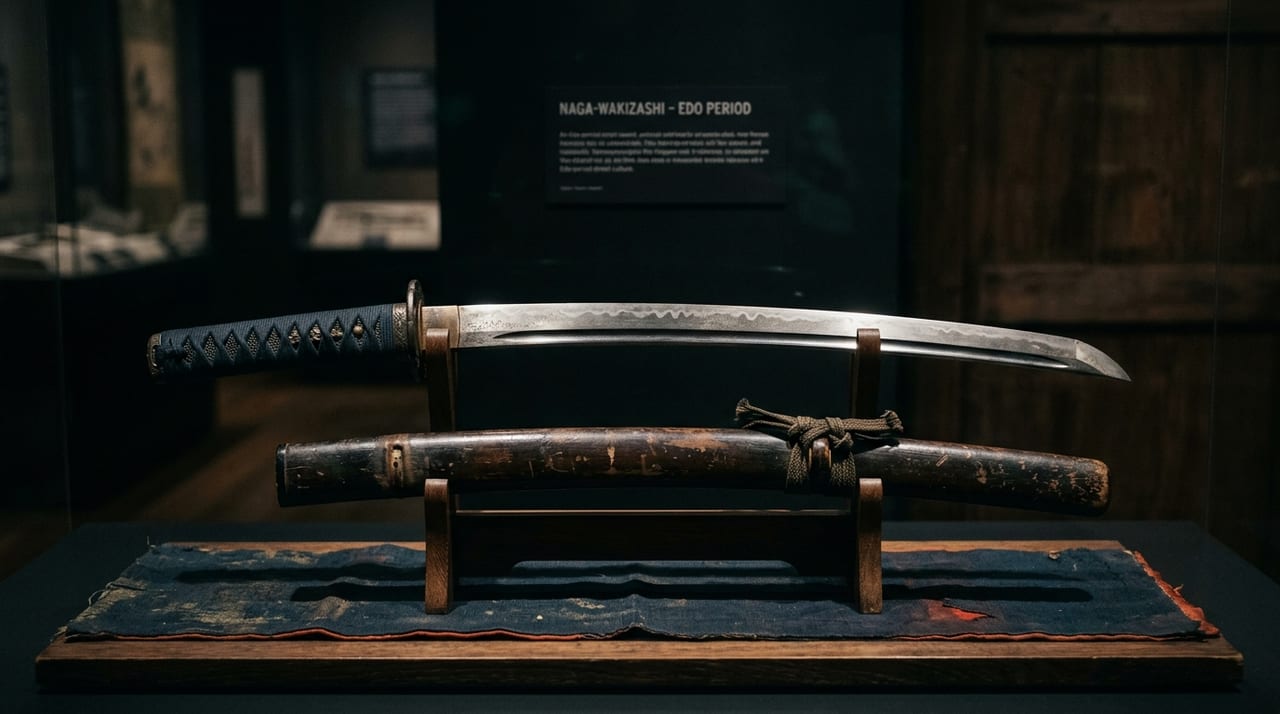
On the other hand, real swords are designed for actual combat or ceremonial use. To master characteristics that cannot be learned with a shinai—the weight of the blade, the movement properties provided by the sword's curve, and the actual sharpness—a real sword is necessary. Skilled practitioners recognize the entirely different sensations when handling a real sword.
Modern Shinai Culture
Sport Kendo and the Shinai
In modern Japan, kendo is widely practiced as a sport, and the shinai is its central tool. The introduction of kendo to school education and its practice as a club activity has led to rapidly increasing demand for shinai.
The specifications for shinai in sport kendo are very strict. In official competitions, only shinai approved by the All Japan Kendo Association can be used, and those that do not meet standards may be confiscated.
Shinai in Iaido
Iaido is a martial art performed solo through kata. In this case, practitioners often use an iaito, a sheathed practice sword, rather than a shinai, though beginners sometimes practice basics with a shinai.
Jodo and Bamboo Weapons
Shinai are also used in jodo (staff combat). The roku-shaku bo (approximately 180 cm), a bamboo staff, is made using shinai manufacturing techniques.
Craftsmanship in Shinai Manufacturing
Although shinai manufacturing has become increasingly mechanized in modern times, high-quality shinai still require craftspeople's handiwork.
Shinai manufacturing involves the following processes, each requiring the craftsperson's experience and skill.
- Bamboo selection
- Steaming bamboo to make it easier to process
- Shaving to the appropriate thickness
- Binding with cord
- Finishing and painting
- Quality inspection
In particular, the process called "hamekomi"—precisely assembling multiple bamboo slats—greatly affects the durability and performance of the shinai. This is a technique that can only be mastered after years of training.
Shinai and the Online Sales Market
With the spread of internet commerce, the way shinai are purchased has changed. Kendo enthusiasts around the world can now purchase Japanese shinai.
With the growing popularity of kendo overseas, shinai exports are on an increasing trend. High-quality products made by Japanese shinai craftspeople are gaining international recognition. However, low-quality, inferior shinai have also begun to circulate, making consumer knowledge increasingly important.
Shinai and Sword Culture
The shinai functions as an entry point for learning Japanese sword culture. Among those who become familiar with the shinai through sport kendo, many eventually develop an interest in Japanese swords themselves.
The fundamentals learned through shinai training—such as posture, stance, and footwork—directly apply when using real swords, and it can be said that the shinai and real swords are not opposed to each other but have a complementary relationship.