Sword Market Experts: Training the Eyes of Appraisers, Dealers, and Polishers
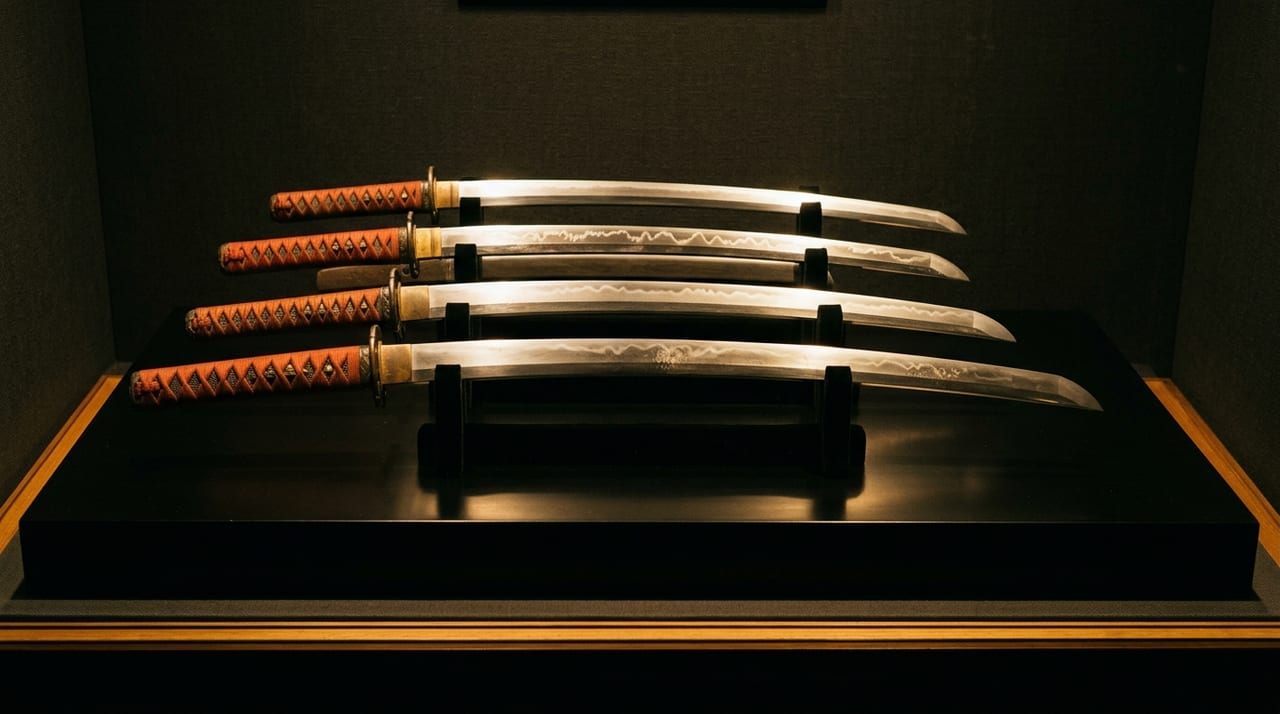 * Image is for illustrative purposes only.
Table of Contents
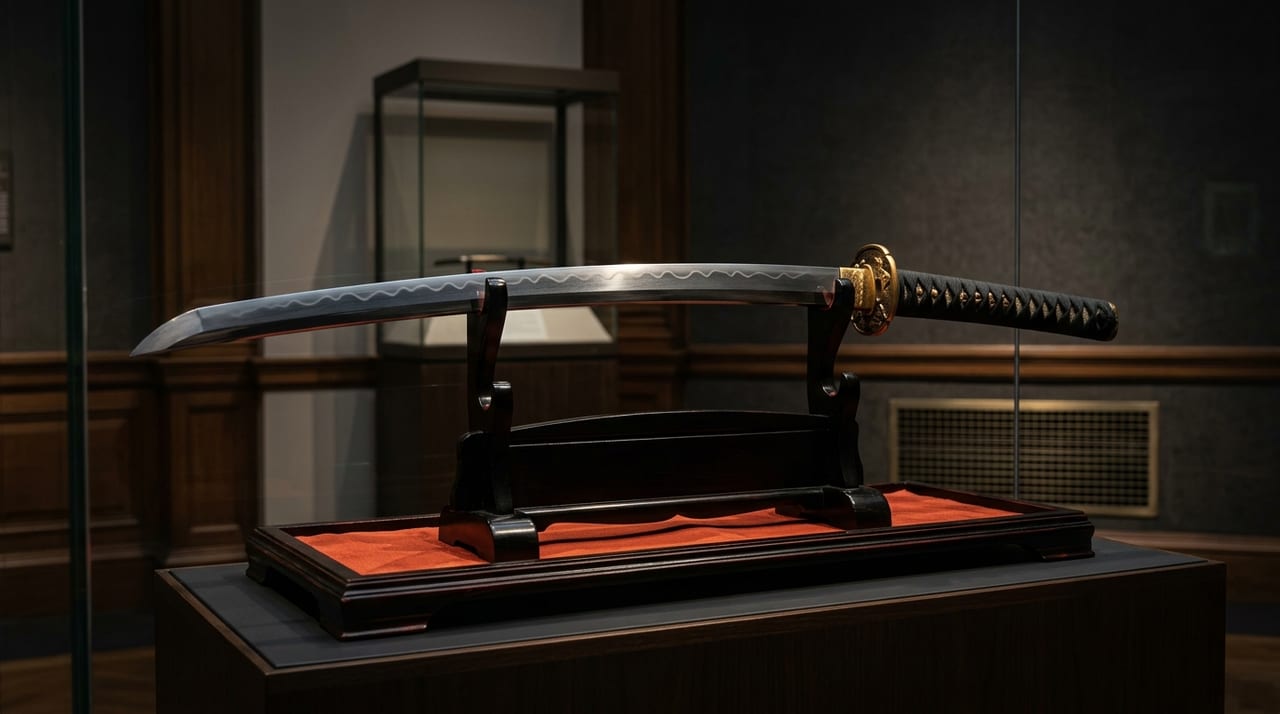
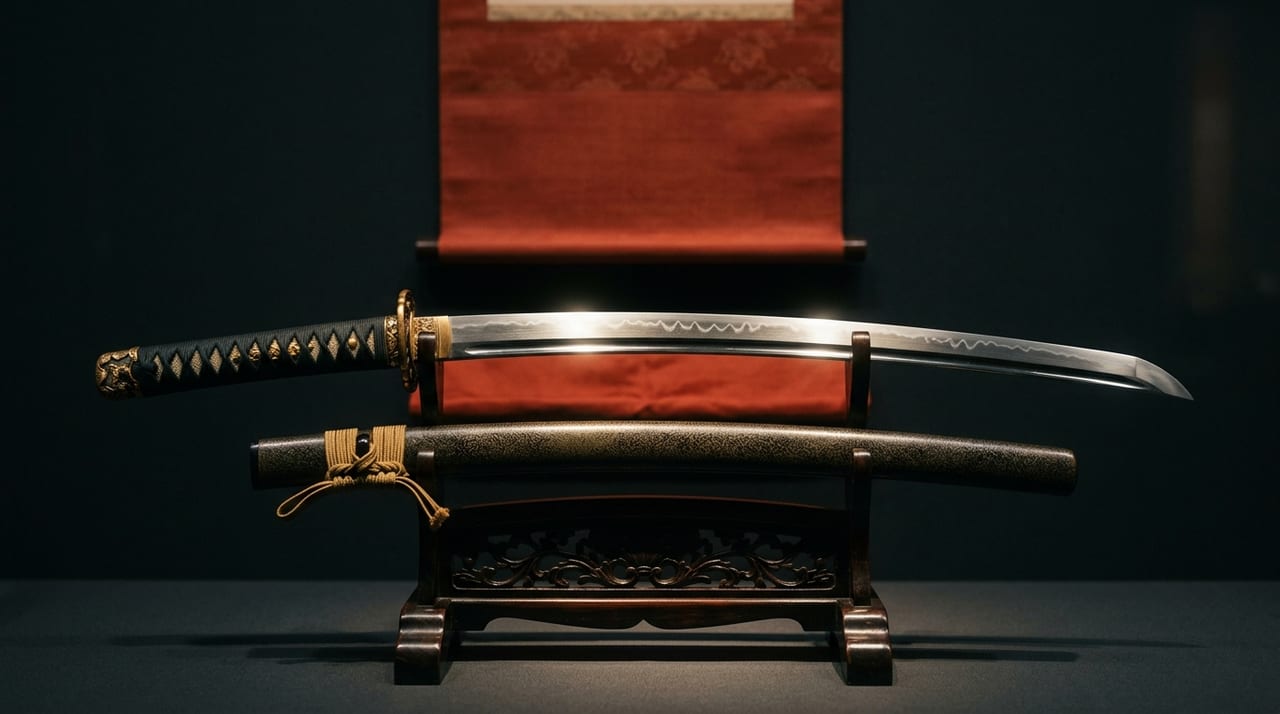
In the Japanese sword market, tens of thousands of blades circulate, from ancient swords dating back centuries to new swords from the Meiji and Showa periods. There are skilled craftsmen who distinguish authentic pieces from fakes, accurately determine their era, and set appropriate prices. They work as appraisers, dealers, and polishers (craftsmen who polish swords with whetstones), and their expertise is cultivated through decades of training. This article explains the roles of experts in the Japanese sword market and practical learning paths for developing discernment.
Professional Roles in the Japanese Sword Market
Multiple specialized professions exist in the Japanese sword market.
- Appraisers: Craftsmen belonging to organizations such as the Public Interest Incorporated Foundation Society for the Preservation of Japanese Art Swords (NBTHK) and the Japan Sword Appraisal Preservation Society (NTHK) determine the authenticity, age, and school of a sword based on extensive reference materials and practical experience. From the subtle grain patterns of the ji-steel (jigane), the luster of the nie in the hamon, the carving style of the signature on the nakago, they estimate which era and which master craftsman created the blade.
- Dealers (sword merchants): These merchants acquire swords from markets, auctions, and private collections, classify them into high-appeal categories, and sell them at appropriate prices. Their most important skill is "market sense"—the ability to instantly determine the price range of a particular sword—and those who possess this have competitive advantage in the marketplace.
- Polishers (whetstone craftsmen): Only through polishing can the true nature of a sword's ji-steel become visible. From experience handling thousands of blades, they intuitively recognize the quality of the hamon, the characteristics of the forging method, and temporal differences. They can often instantly distinguish whether a presented sword is an authentic work or a copy (a modern revival blade).
Techniques for Determining Authenticity Developed by Dealers
The foundation of a sword merchant's discernment lies in absorbing the "style" of different schools and periods into their body. For example, swords of the Soshu school and the Bizen school differ in their ji-steel grain patterns, the way the hamon stands, and the shape of the kissaki. The Soshu school is characterized by what is called "nie-deki"—fine, granular luster—while the Bizen school is characterized by what is also called "nioi-deki," a smooth hamon. Merchants train by burning hundreds of old swords into their memory until they can intuitively recognize the "face" of each school.
Next in importance is determining the authenticity of the mei—the signature carved on the tang of the sword. The mei is a crucial element proving the sword smith, but a fraudulent practice called "gimei" (false signature) also exists. Merchants must study how famous sword smiths carved their signatures and distinguish the subtle differences between authentic and false signatures. For example, when encountering a signature reading "Bishu Osafune Morimitsu," dealers must determine from the thickness of the characters, the depth of the carving, and the peculiarities of the handwriting whether it was carved later by someone in the Edo period as a false signature or carved by the smith himself as an authentic signature.
The distinction between "newly made swords" and "old swords" is also paramount for merchants. No matter how skillfully a newly made sword copies an old work, minute differences emerge. The color of the ji-steel, the way the hamon breaks after quenching, and the oxidation state of the metal on the tang serve as indicators distinguishing old swords from new ones. The traces of special techniques such as "kasane-yaki" or "yu-mizu-yaki" practiced by pre-war sword smiths become clearly visible after polishing.
Recognizing Characteristics by School and Period
To become a full-fledged expert in the Japanese sword world, one must understand the characteristics of the Five Schools (Yamato, Yamashiro, Bizen, Soshu, and Mino) to one's very core.
- Yamato school: Characterized by hard ji-steel and masame grain. The hamon is based on suguha, and the finishing is elegant. Multiple schools such as the Hoshō and Senju schools existed from ancient times through the Edo period.
- Yamashiro school: A Kyoto-centered tradition with the renowned Awataguchi and Sanjo schools. The ji-steel frequently shows itame grain, and the hamon is characterized by choji-ba and gunome-ba. The finish combines elegance with practicality.
- Bizen school: The largest production center with many sword smiths. The ji-steel is itame, and the hamon is characterized by the choji-ba of the Ichimonji school or the nie-deki of the Osafune school. Known for mass production, it encompasses a wide range of grades from common swords to those made for daimyo.
- Soshu school: Centered in Sagami Province (present-day Kanagawa Prefecture), where master smiths like Masamune worked. The ji-steel shows fine itame, and the hamon displays an elegant finish with fine nie standing prominently. This school was favored as a model by new sword smiths of the Edo period.
- Mino school: Flourished during the Sengoku period centered in Seki. Known masters include Magoroku Kanemoto. The ji-steel frequently shows mokume grain, and the hamon is characterized by midareba. It is valued as practical and durable.
Temporal characteristics are equally important. Old swords from the Kamakura period have long blades, strong curvature, and rounded kissaki called inokubi-kissaki. The Nanboku-Cho period transitions to a naka-kissaki with a narrower blade width. New swords from the Edo period have neat proportions and display a clear, refined color in the ji-steel. Recognizing this temporal "character" is the first step for a merchant.
Learning Paths and Practice Methods for Beginners
The learning path beginners should follow to develop discernment in Japanese swords is as follows:
1. First Stage: Acquiring Foundational Knowledge First, learn the names of sword parts, the basic characteristics of the Five Schools, and period classifications (ancient swords, old swords, new swords, very new swords). It is important to read through textbook-like works such as "Fundamentals of Sword Appreciation" and "Complete Guide to the Five Schools," and commit the terminology and concepts to memory.
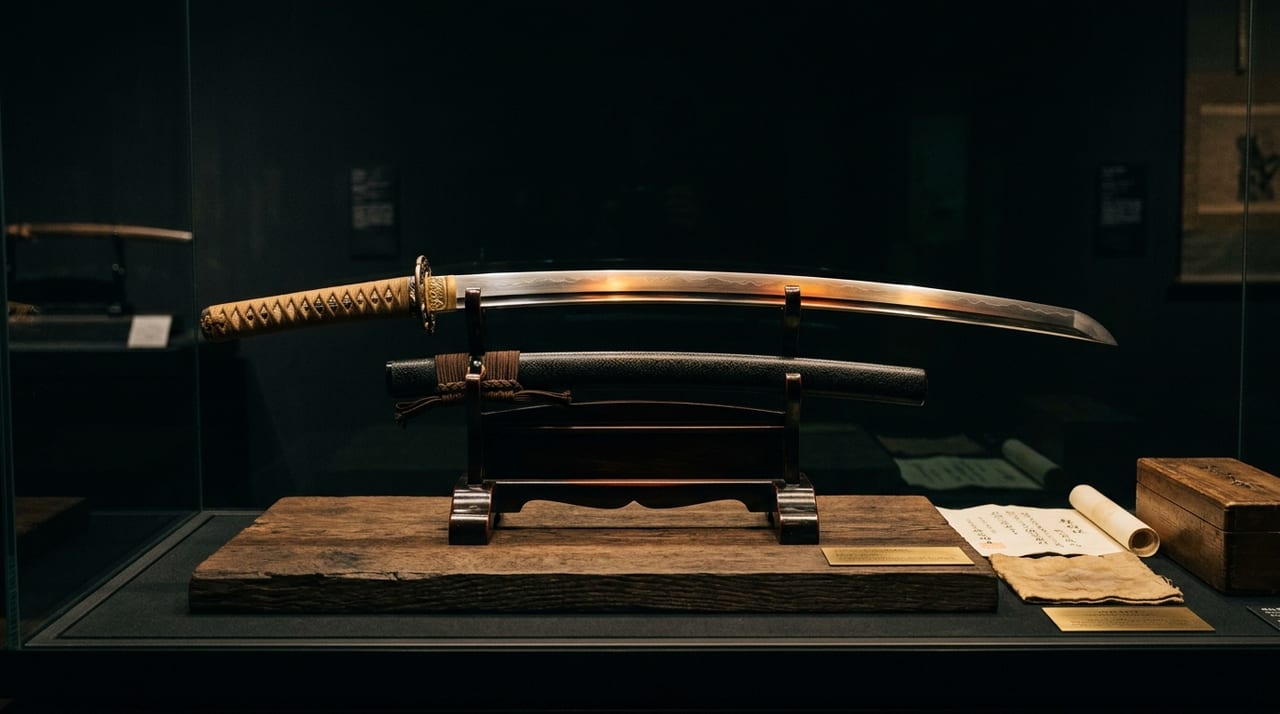
2. Second Stage: Observing Actual Objects Regularly visit museums and publicly displayed sword exhibitions, observing as many actual swords as possible, from old swords to new ones. The luster of the ji-steel, the way the hamon stands, the patterns of rust—things that photographs can never convey—are understood only through direct contact with actual objects. By comparing multiple swords from the same school, the "mannerisms" of that school become visible.
3. Third Stage: Studying Catalogs and Research Papers Read through catalogs from national art museums and papers from sword research societies. In particular, catalogs that provide detailed explanations of representative works by individual sword smiths are the finest teaching materials for understanding that smith's "character." By comparing multiple catalogs and noticing subtle differences in features between different swords by the same smith, the precision of one's discernment improves dramatically.
4. Fourth Stage: Participating in Markets and Auctions Actually visit Japanese sword markets and auctions, recording the estimated prices of displayed swords, dealers' evaluations, and final bid prices. By recognizing the degree of discrepancy between your own judgment and that of the market, you develop practical expertise. At the same time, through conversation with dealers and other enthusiasts, you acquire undocumented knowledge as well.
5. Fifth Stage: Experiencing Polishing If possible, witnessing sword polishing in a polisher's workshop and directly experiencing the changes to a sword before and after polishing is ideal. Only through polishing can you understand the process by which the true beauty of an old sword and the truth of its era are revealed.
Practical Tips
Merchants and appraisers who actually work in the market understand the following practical tips:
- First is observing "the color of the ji-steel." The ji-steel of old swords changes subtly in color over time. When an old sword from the Edo period is placed next to a newly made sword from the Meiji period, you can distinguish them instantly by the color of the ji-steel. This stems from the growth of oxidation layers over time and differences in iron-making technology of that era.
- Second is observing "traces of the quenching clay." During quenching, old swords had special clay applied to the blade for cooling, and traces of this clay remain subtly. Artificially reproducing this clay trace in newly made swords is extremely difficult, and these microscopic traces serve as criteria for determining authenticity.
- Third is observing "rust patterns." The rust on old swords forms naturally over time, and its patterns vary according to the quality of the ji-steel by the sword smith. While techniques exist to artificially apply rust to make new swords appear old, authentic rust and artificial rust can be distinguished microscopically.
The discipline of developing discernment is an endless path. Even accomplished merchants must learn new characteristics when blades made by sword smiths of an unfamiliar era appear. The specialists working in the Japanese sword market are craftsmen who, for their entire lives, face swords, cultivate their eyes, and continue to refine their expertise. Browsing many swords through online catalogs also serves as foundational training in developing such discernment.