Sword Culture of the Shōhō–Enpo Period — When Great Fires and the Ronin Problem Threatened Japan's Emerging Peace
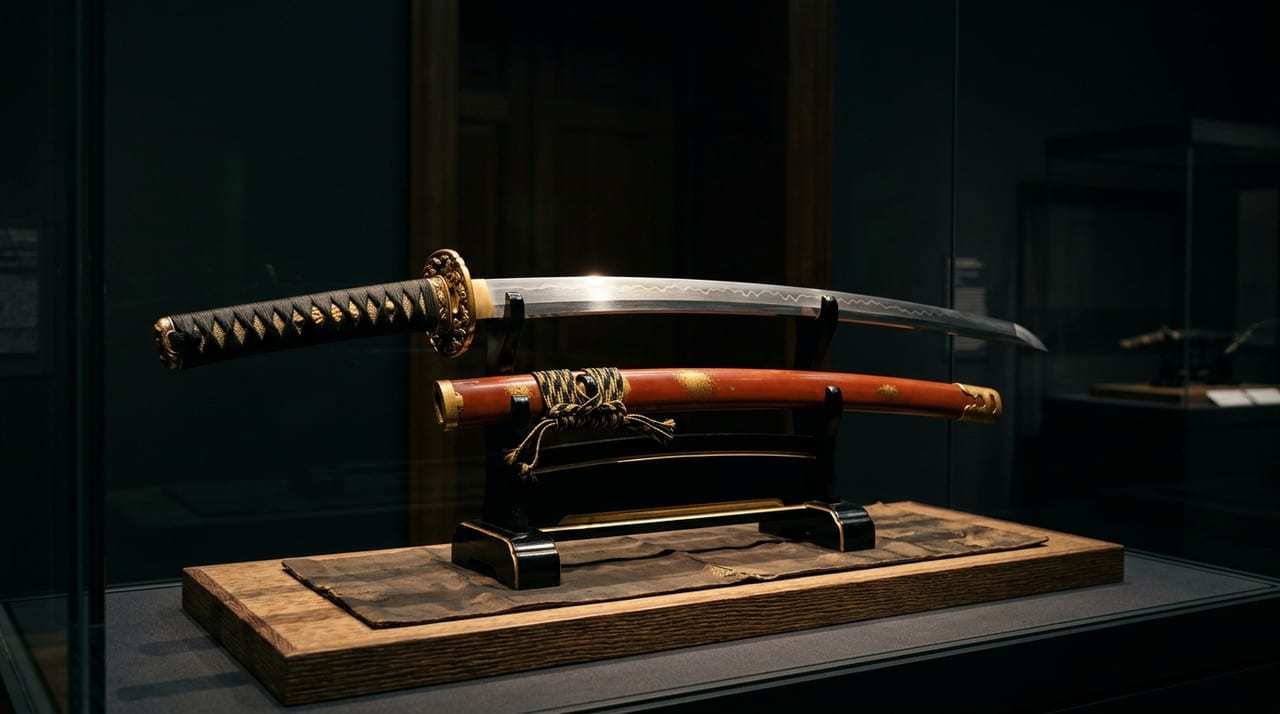 * Image is for illustrative purposes only.
Table of Contents
The roughly 40-year period from Shōhō 1 (1644) to Enpō 9 (1681) corresponds to a time when the Edo Shogunate's system of control took on its final form. From the late period of Tokugawa Iemitsu's reign through the reign of the fourth shogun Ietsuna, this era was sandwiched between the sword culture of the "Kan'ei period," which retained vivid memories of the Sengoku period, and the sword culture of the eve of the Genroku period, which presupposed a time of peace. This era was a transitional period in which the supply and demand surrounding swords and the social atmosphere were greatly shaken by two major incidents—the Great Meireki Fire and the Keian Incident. While considering only the era names, there were repeated rapid changes from Shōhō to Keian to Jōō to Meireki to Manji to Enpō, but in substance, this was a modest yet important period of several decades in which both the very face of Edo as a city and the manner of governance of samurai society were simultaneously questioned.
The Tens of Thousands of Swords Burned in the Great Meireki Fire
In the first month of Meireki 3 (1657), the Great Meireki Fire that occurred in Edo is known as one of the largest fires of the early modern period, burning much of the city and even destroying the Edo Castle donjon. While there are various theories about the number of deaths from this fire, it is said to have reached tens of thousands, and afterward, the destroyed donjon was never rebuilt and remains so to this day. According to the estimate of Itō Sanpei, a researcher of swords and sword fittings, the swords lost in this fire in Edo alone are said to have reached approximately 100,000. Edo, where the residences of daimyo and hatamoto and gokenin were densely concentrated, had many treasured swords inherited by successive lords, and these were all lost at once in the sea of flames.
The scale of this loss is symbolized by the records in the "Kyōhō Meibutsu-chō" (Kyōhō Register of Famous Swords) compiled under the editorship of Honami Mitsutada and others in Kyōhō 4 (1719). The register lists 168 famous swords considered the finest of the era, and it is recorded that 69 of them were lost in the Great Meireki Fire. Renowned famous swords are said to appear in the records of this fire, and some of them are as follows.
- Uesugi-gō ― Said to be connected to Uesugi Kenshin
- Ōkunitsuna ― Said to have been a treasure of the Ashikaga shogunal family
- Hōchō Tōshirō ― Said to have been transmitted to the Tokugawa shogunal family
While there are still many unclear points regarding the truth and detailed circumstances of the loss, the very fact that large numbers of swords transmitted through samurai families and accumulated in Edo were lost in a single night is thought to have given a profound shock to samurai society at that time.
The Shadow of the Keian Incident and the Rōnin Problem
Preceding the Great Meireki Fire, in Keian 4 (1651), the plot to overthrow the shogunate by Yui Shōsetsu and Marubashi Chūya, known as the Keian Incident (Yui Shōsetsu's Rebellion), was discovered. This plot was uncovered shortly after the death of Shogun Tokugawa Iemitsu and, though it ended in failure, gave the bakufu leadership a strong sense of crisis.
Behind this incident was an increase in rōnin (masterless samurai) who had lost their lords due to removal from power. Over half a century from the opening of Edo, as successive daimyo were eliminated, rōnin who had lost their means of livelihood were said to have lingered in Edo and elsewhere, becoming a breeding ground for social unrest. It is said that Yui Shōsetsu himself was revered by rōnin as a military strategist, and the gathering of discontented rōnin around him is also thought to have encouraged the spread of the plot. Many rōnin retained their status as sword-bearers even after losing their lords, and it is thought that their existence had some influence on the demand for swords and the distribution of martial equipment at the time.
The Relaxation of the Prohibition on Deathbed Adoption and the Shift from Military Administration
In response to the discovery of the Keian Incident, the shogunate began to position countermeasures against rōnin as an important policy issue. The "prohibition on deathbed adoption," which had been strictly enforced—a system that in principle did not permit a lord to adopt an heir on his deathbed to continue the family—was relaxed, and policy was redirected toward reducing sudden elimination of daimyo families.
This policy shift is considered one of the turning points from "military administration" that prioritized control through force to "civil administration" that aimed at stable governance through law and institutions. It can be seen that the very attitude of the shogunate was changing toward an era in which the continuation of the family and the maintenance of order were valued over military exploits on the battlefield. Confronted with the problem of rōnin that could not be controlled through intimidation alone, the shogunate developed a more long-term approach to governance, seeking to achieve social stability through flexible institutional arrangements.
The Replacement Demand for Lost Swords and the Movement of Swordsmiths
The large-scale loss of swords in the Great Meireki Fire is also said to have ironically become a factor in creating new demand for swords. The demand by samurai families who had lost inherited famous swords for replacement blades is thought to have been one factor supporting the demand for swords during the subsequent Kanbun Shintō period (Kanbun era, 1661–1673).
One swordsmith who symbolized this period was Nagasone Okisato, known in later generations as Kotetsu. Okisato, who was from Ōmi Province and had established himself as an armor maker, is said to have shifted to swordsmithing around age 50 in the early Meireki era and moved to Edo from Echizen. As the peaceful era continued, the demand for armor declined, and the change in atmosphere at the time—in which demand for swords increased among samurai society both in practical and possession aspects—may also have been behind such a shift by swordsmiths. Kotetsu subsequently became known as a representative swordsmith of Edo through the Enpō period, but the fact that the starting point of his activity was nearly the same time as the Great Meireki Fire is a coincidence that symbolizes the change in sword demand in this era.
As a Transitional Period Toward the Establishment of Peace
The era in which era names were repeatedly changed from Shōhō to Keian to Jōō to Meireki to Manji to Enpō, though appearing peaceful on the calendar, was actually a period that harbored both the accidental calamity of the great fire and the structural crisis of the rōnin problem. However, through the shogunate's policy shift following the Keian Incident and the process of recovery from the Great Meireki Fire, the embers of the Sengoku period were nearly completely extinguished during this period, and swords also moved from being tools of actual combat to becoming symbols of family status and samurai refinement, confirming their new position.