Mitokoromono: The Three-Piece Sword Fitting Set of Kozuka, Kogai, and Menuki
 * Image is for illustrative purposes only.
Table of Contents
What are mitokoromono?——The Concept of a Three-Piece Set of Sword Fittings
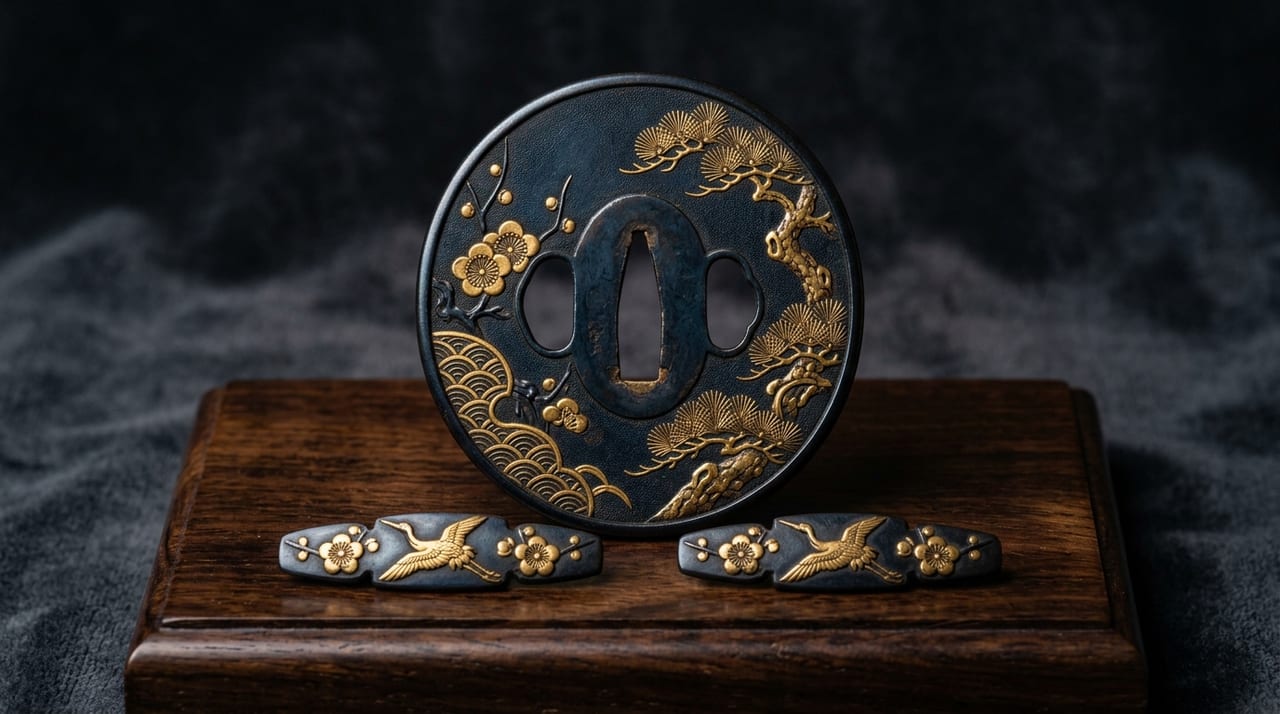
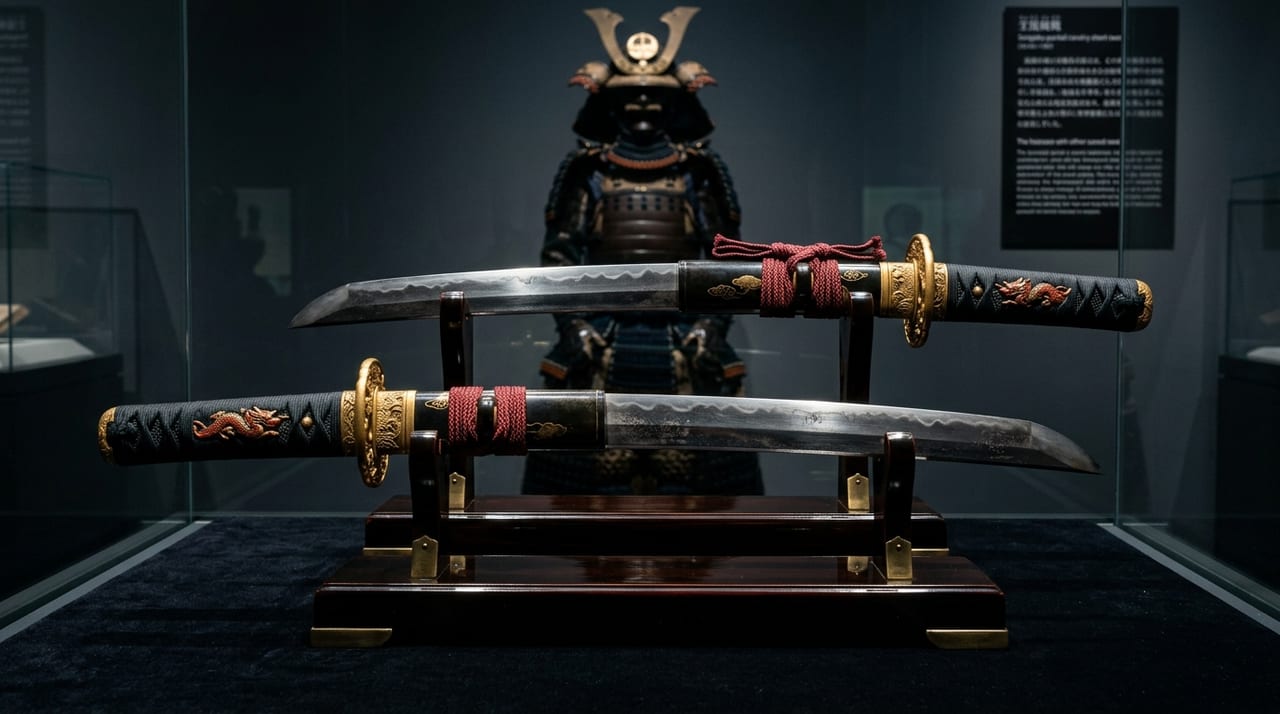
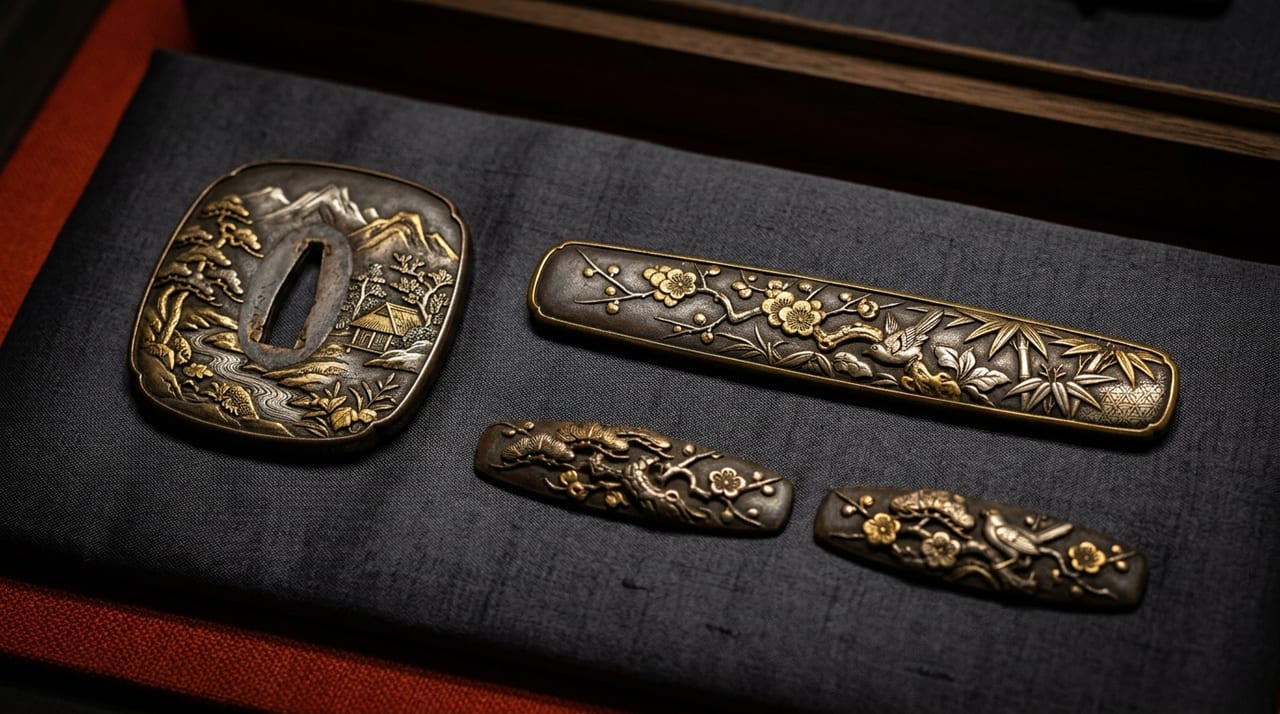
Mitokoromono refers to a classificatory concept that treats three types of sword fittings—kozuka (small blade ornamental handle), kogai (decorative hairpin-like ornament), and menuki (hilt ornament)—as a matching set. Each can function independently as a sword fitting, but the formal designation of "mitokoromono" is established only when three pieces unified by the same design and executed by the same maker come together. Apart from the quality of the blade itself, the concept of combining these three fittings has long been valued as an indicator of the formal quality of the entire koshirae (sword mounting). While the value of a sword is often discussed solely in terms of blade quality, when considering the entire koshirae that a warrior actually wore, it is the unified design of the kozuka, kogai, and menuki fittings that eloquently spoke to the owner's taste and social standing.
Three Tools that Comprise Mitokoromono——The Roles of Kozuka, Kogai, and Menuki
The three tools that comprise mitokoromono each have different functions and positions on the scabbard and handle.
- Kozuka: The metal ornamental fitting for the hilt of a small blade (kogata-na) that is housed alongside the scabbard, serving the practical function of securing a utility knife.
- Kogai: The metal ornamental fitting for a grooming tool (used to arrange the hair and maintain appearance) that is inserted into the opposite side of the scabbard.
- Menuki: Decorative metal ornaments attached to the grip of the hilt (tsuka), serving not only as ornamental but also as practical anti-slip function for the grip.
Although kozuka and kogai are mounted on the scabbard while menuki is mounted on the hilt, they are collectively referred to as mitokoromono because this classification presumes they are created under the same design scheme.
The Goto Family: The Foundation of Mitokoromono's Prestige
Essential to the history of mitokoromono is the prestigious Goto family, a renowned house of metalworkers descended from Gotō Yūjō of the Muromachi period. As the foremost "house carver" (iebori) serving successive shogunate families, the Goto family created numerous mitokoromono with formal and refined designs. In samurai society, mitokoromono given as rewards or gifts were not mere decorative items but carried meaning in expressing the relationship and status between giver and recipient; the Goto name functioned as a brand that guaranteed the high quality of mitokoromono. The lineage of house carvers was passed down through successive generations, and discerning the stylistic differences between each generation's work is considered one of the pleasures of appreciating and collecting mitokoromono.
The Aesthetic of Unified Design in Mitokoromono——The Value of Consistent Execution
The primary reason mitokoromono are highly valued is that three fittings—kozuka, kogai, and menuki—which differ in both placement and function, are unified through identical design and technique.
| Perspective of evaluation | When matched as mitokoromono | When assembled separately |
|---|---|---|
| Maker | Consistent design by the same maker | Makers often differ |
| Design unity | Design and materials complement each other | Lacks unity |
| Collecting value | Valued highly as a matched set | Valued as individual pieces |
The way the three pieces are unified through complementary designs tells the story of the formal quality of the entire koshirae and the aesthetic sensibility of its owner.
Perspectives on Mitokoromono in Collecting——The Difference Between Matched Sets and Assembled Combinations
From a collecting perspective, "matched sets" (soroi) of mitokoromono that originally shared the same production background are clearly distinguished from "assembled combinations" (toriawase) in which kozuka, kogai, and menuki of different origins were later combined. Discerning whether the three pieces constituted an original set—through examination of maker's marks, design unity, and provenance records—is a fundamental perspective in evaluating mitokoromono. It is not uncommon for only one of the three pieces to survive independently, in which case they are viewed and evaluated as separate sword fittings rather than as mitokoromono. There is also a pleasure in collecting that involves later tracking down the scattered pieces and reuniting them; however, even in such cases, it is worthwhile to record the difference in origin between whether they were originally a matched set or an assembled combination.
Conclusion
Mitokoromono is a classificatory concept that unifies three functionally different sword fittings—kozuka, kogai, and menuki—through a single design, and has developed as an indicator of the formal quality of the entire koshirae. Through the leadership of renowned metalworking houses such as the Goto family, mitokoromono established themselves not merely as a collection of functional fittings but as crafted objects embodying gift-giving and formal prestige. In collecting, it is essential to develop the ability to discern whether the three pieces originally formed a "matched set." It is through accumulating these discernments that mitokoromono transcends being a mere assemblage of components to establish itself as a craft discipline. For more detailed information about individual sword fittings, please also refer to Kozuka and Kogai (Decorative Fittings)——Small Ornaments of Sword Furniture Speaking to Samurai Aesthetic Sensibility and Practicality and The World of Menuki——Fine Metalwork Mounted on the Hilt and Functional Beauty Supporting the Grip.