The Sword Prop Business in Film and Period Drama — The World of Rental Swords That Support Production Sets and the Reality of the Industry
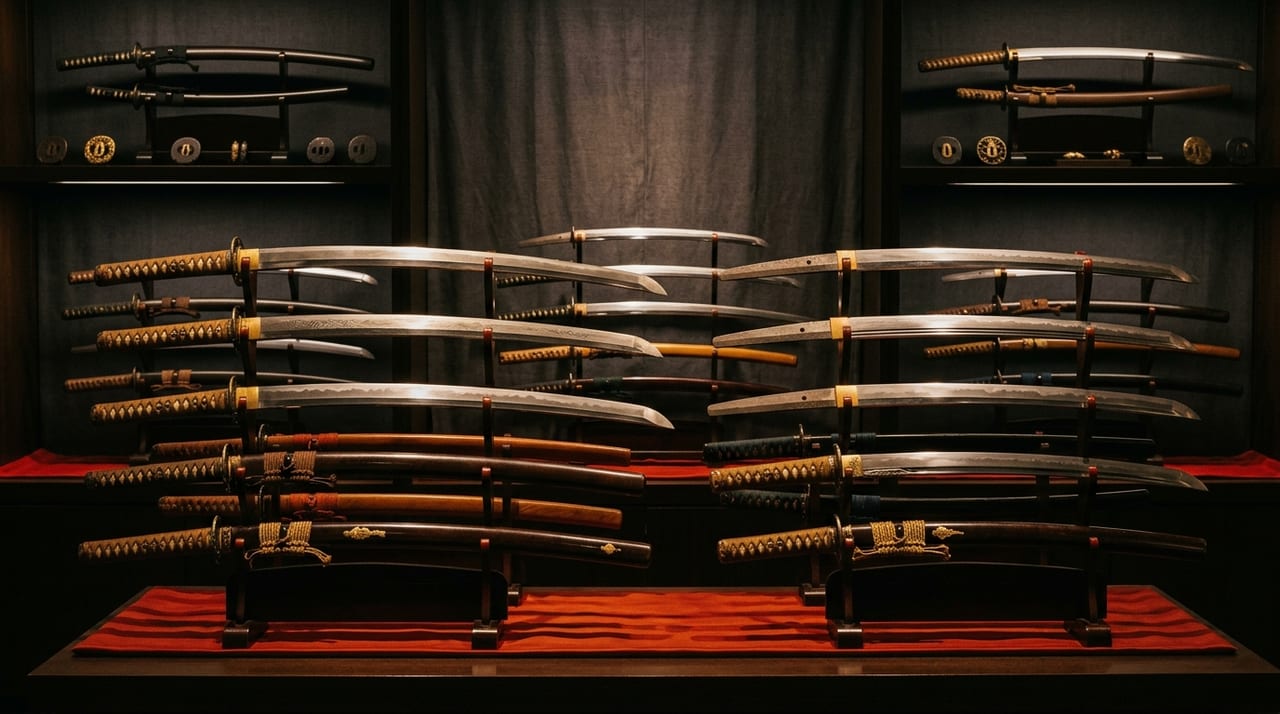 * Image is for illustrative purposes only.
Table of Contents
"The Real Thing" Is Required on Period Drama Sets
It is not only costumes and set design that support the visual beauty of period dramas. The "prop suppliers" and "art staff specializing in swords" who prepare and manage the swords worn at actors' hips and the blades that gleam in unsheathing scenes are what determine the persuasiveness of a production.
For large productions such as NHK Taiga dramas and Toei period films, specialist contractors are frequently involved in the procurement and management of swords. Rather than simply lining up "sword-like objects," accurate koshirae and hamon based on historical research are required, and screenwriters and art directors demand reproduction of blade shape, length, and fittings in accordance with historical fact.
Types of Prop Swords — Art Swords and Registered Swords
Swords used in filming can be broadly divided into two types.
Art swords (replica swords) are non-bladed swords with blades made of zinc alloy or resin; they require no registration and can be carried without restriction. They are widely used for action scenes and for the swords carried by large numbers of background soldiers. Modern art swords are finished with elaborate surface treatments to a level indistinguishable from the real thing on screen.
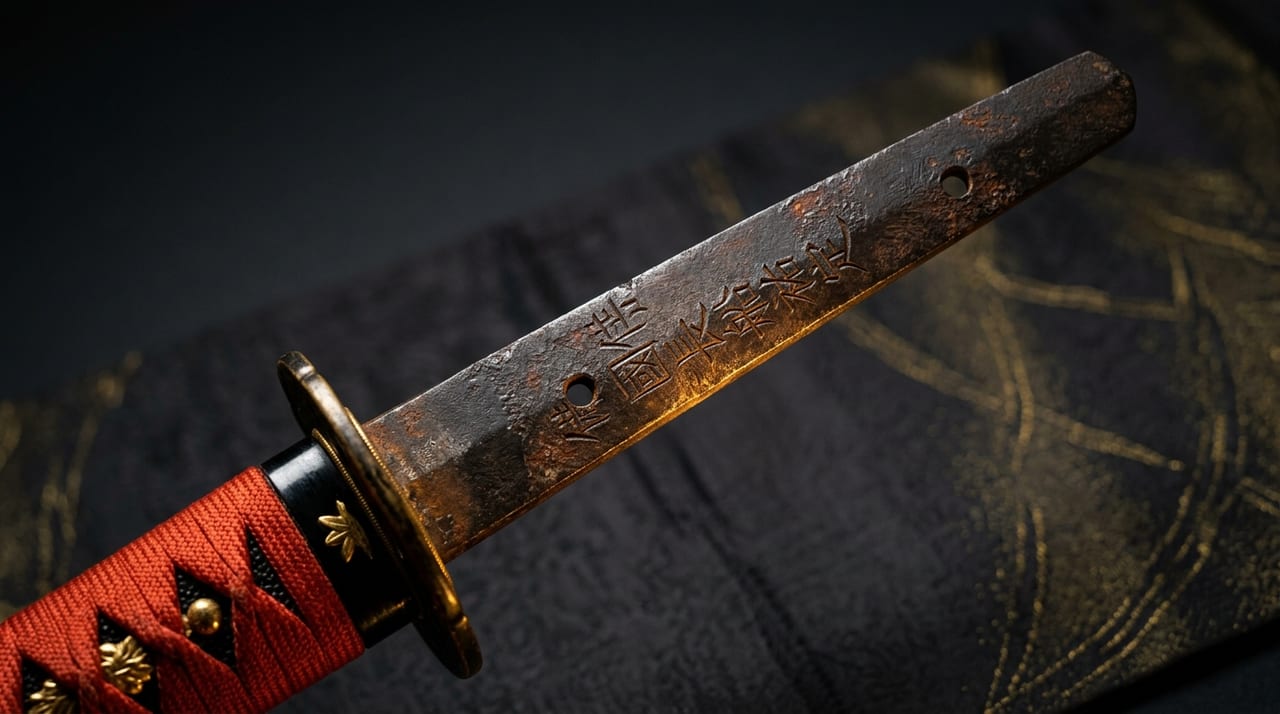
Registered swords (live blades) are genuine Japanese swords bearing a certificate of registration under the Firearms and Swords Control Act (Jūtōhō). They are used for cuts where texture is at issue, such as a static "large close-up of a drawn sword" or a "close-up showing the hamon." When registered swords are used in filming, the possessor of the sword incurs management obligations, so it is common for a specialist contractor to handle possession, storage, and transportation as a package throughout the filming period.
The two types are used with strict distinction. For intense action sequences, art swords superior in safety and durability are used; for cuts where the iron texture itself — the nie and nioi of the blade — is to be shown, live blades are used. It is standard practice on set for a single "sword" to be performed by multiple physical objects depending on the scene. The koshirae of the art sword is sometimes custom-made to match the live blade so that viewers perceive them as the same sword.
The Practicalities of Lending — From Procurement to Return
The work of a sword prop contractor begins with consultations with the art director and historical research supervisor. Requirements for each scene — such as "a combat sword from the 1560s" or "an uchigatana carried by a Bakumatsu patriot" — are sorted out, and the appropriate sword is arranged from the contractor's own inventory or through a network of cooperating sword dealers and collectors.
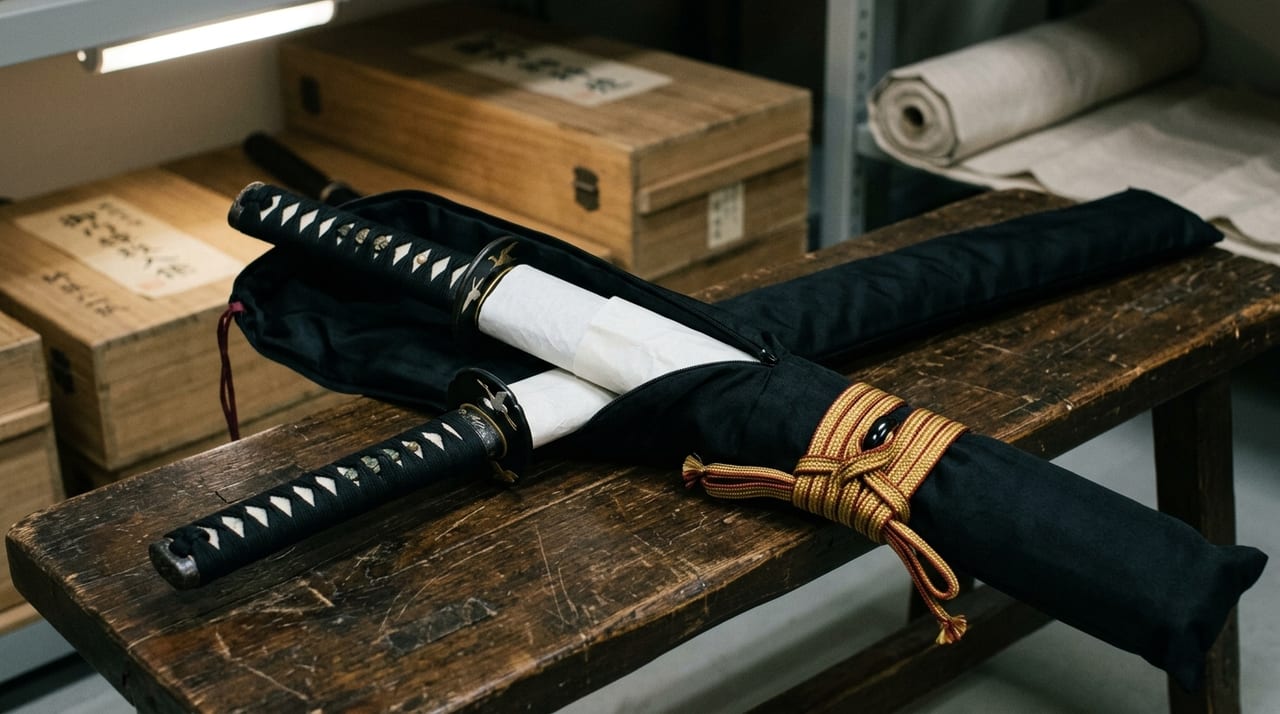
The regulations of the Firearms and Swords Control Act (Jūtōhō) apply to transportation, and the original registration certificate must accompany the sword. For long productions, storage space is set up within the studio and a management ledger recording the number of swords used and where each day is created. After filming concludes, the swords are returned to their owners with a condition check, and the contractor often bears the cost of cleaning and minor repairs.
Safety Management on Set
On days when live blades are brought to the set, the tension of management rises a notch. Standard on-set practice enforces the principle of "never leaving them out": the sword is brought out from storage immediately before the cut requiring it and immediately collected and put away once the director calls cut. Actors handle live blades in principle only for static cuts, and switching to art swords for actions such as swinging or clashing is standard.
A system is also established in which the responsible staff member records every withdrawal and return of swords, in order to prevent items being left behind during breaks and contact by unauthorized personnel. Because finger oil causes rust, the basic practices of sword preservation — not allowing the blade to be touched with bare hands and maintaining it with uchiko and oil after use — are applied on set exactly as they would be elsewhere. It is precisely this accumulation of unglamorous management that leads to the owner's trust and the next lending.
The Scale of the Industry and Its Players
Specialist sword prop contractors are few in number nationwide, with contractors based in Tokyo, Kyoto, and Osaka handling transactions with major video production companies. There are cases where sword dealers operate prop work as a side business, and cases where sword staff are employed at art production companies.
In recent years, demand for sword props has been on the rise due to live-action adaptations of history-themed anime and games and the expansion of sword-related content. On the other hand, the number of contractors able to respond is limited due to a shortage of successors and rising prices for registered swords held in inventory.
Expansion into Theater and Live Performance
Demand for sword props exists not only in film and drama but also in stage arts such as kabuki, Shinpa, and Takarazuka, and in tate demonstration events. Because the stage requires durability that can withstand repeated movements, theatrical swords designed specifically for the stage (takemitsu, aluminum swords, etc.) are often used, but live blades are sometimes brought in for the climax scenes of hit productions or for important folding stool displays.
The Intersection of Japanese Sword Collectors and the Film Industry
For sword collectors and sword dealers, lending swords to film productions has the aspect of "exposure" for their holdings. A sword that has appeared in a notable production earns one more page of provenance by that fact alone, and this can affect its value as a collectible. On the other hand, not a few collectors decline to allow their swords to be used in productions out of aversion to the risks of lending (damage, loss).
The trust relationship between contractors and sword dealers and collectors underpins the entire industry, and building that trust requires years of proven results and meticulous management. Training staff well versed in sword history and historical research, and maintaining networks within the industry, are the foundations that make this specialized business viable.
Checkpoints When Purchasing a Sword with a History of Film Use
Among the swords sold on online marketplaces, some claim a history of being lent to film productions. While this may appear attractive as part of a sword's provenance, the following points should be checked when considering a purchase.
- Whether supporting documentation exists: A history of film use cannot be verified by oral tradition alone. Check whether there is specific supporting evidence, such as lending records or documentation held by the seller. It is safer not to use unverified hearsay such as "it was apparently used in that production" as a basis for a price judgment.
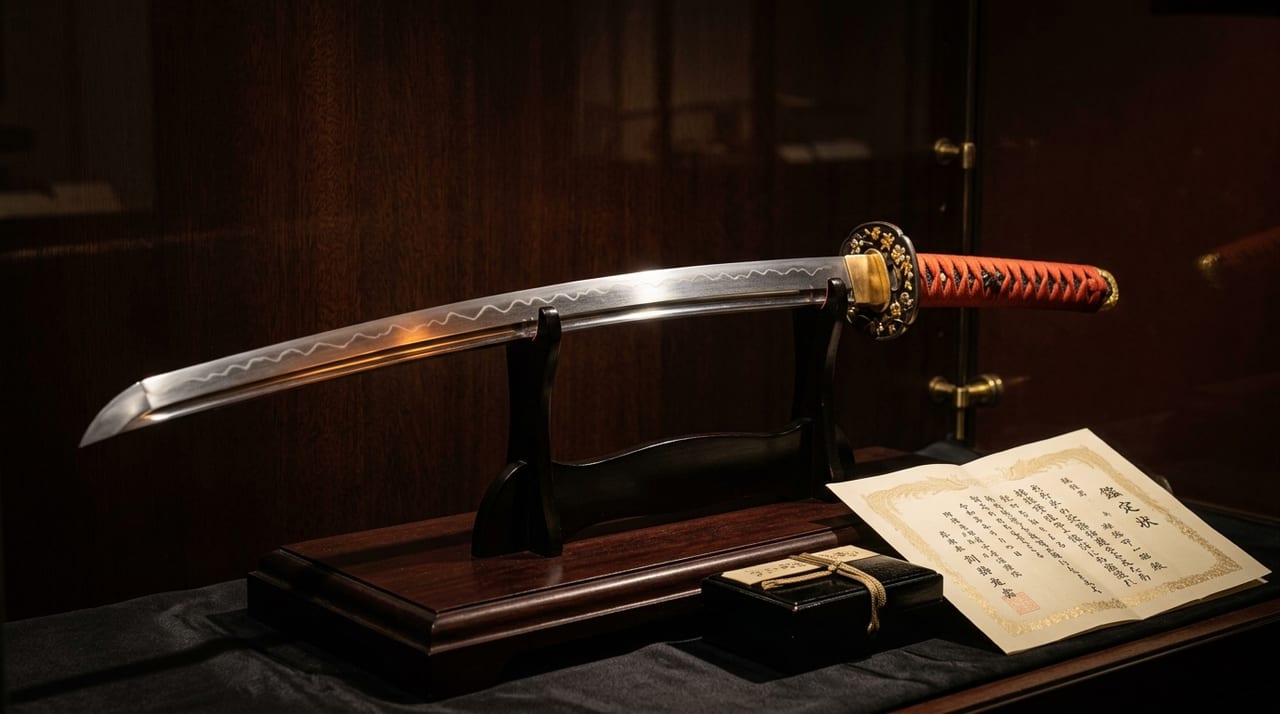
- Matching the registration certificate against the physical sword: Regardless of whether there is a history of film use, always confirm that the details on the registration certificate (type, length, sori, mei) match the physical sword. This is the most fundamental of fundamentals in Japanese sword transactions.
- Wear from use: A sword that has been repeatedly drawn and sheathed during filming may show hike (fine scratches) on the blade, loosening of the koiguchi, and wear on the koshirae. Do not judge from photographs alone; confirm the condition description in detail.
- The basis for value judgment: A history of film use is ultimately an additional anecdote; the essential value of a sword lies in its deki (quality of workmanship), its state of preservation, and its authenticity. If a sword is priced far beyond the market rate with its screen appearance as the primary basis, careful consideration is warranted.
Common Misconceptions and Points to Note
Here we organize the misconceptions that beginners in this field are liable to fall into.
First, "the sword that appeared on screen = a genuine Japanese sword" is not necessarily true. As described above, scenes with movement use art swords in almost all cases, and the use of live blades is limited. Second, art swords (replica swords) are not legally "sword-type weapons" and therefore have no registration certificate; conversely, an art sword cannot be sold under the label "live blade." A genuine sword with a steel blade will invariably come with a registration certificate — understanding this principle will protect one from misidentification and inflated sales claims surrounding prop swords.
The world of rental swords that support the production set is a fascinating domain where the culture of sword preservation and the film industry intersect. Focusing one's eyes on a single sword within a production will likely become another gateway into the appreciation of Japanese swords.