Standardizing the Sword in Edo Japan: How Shogunate Length Rules Shaped the "Josun" Standard
 * Image is for illustrative purposes only.
Table of Contents
Edo Shogunate Standardization of Swords—Convergence to "Teisun" and the Order of Blade-Bearing by Rank
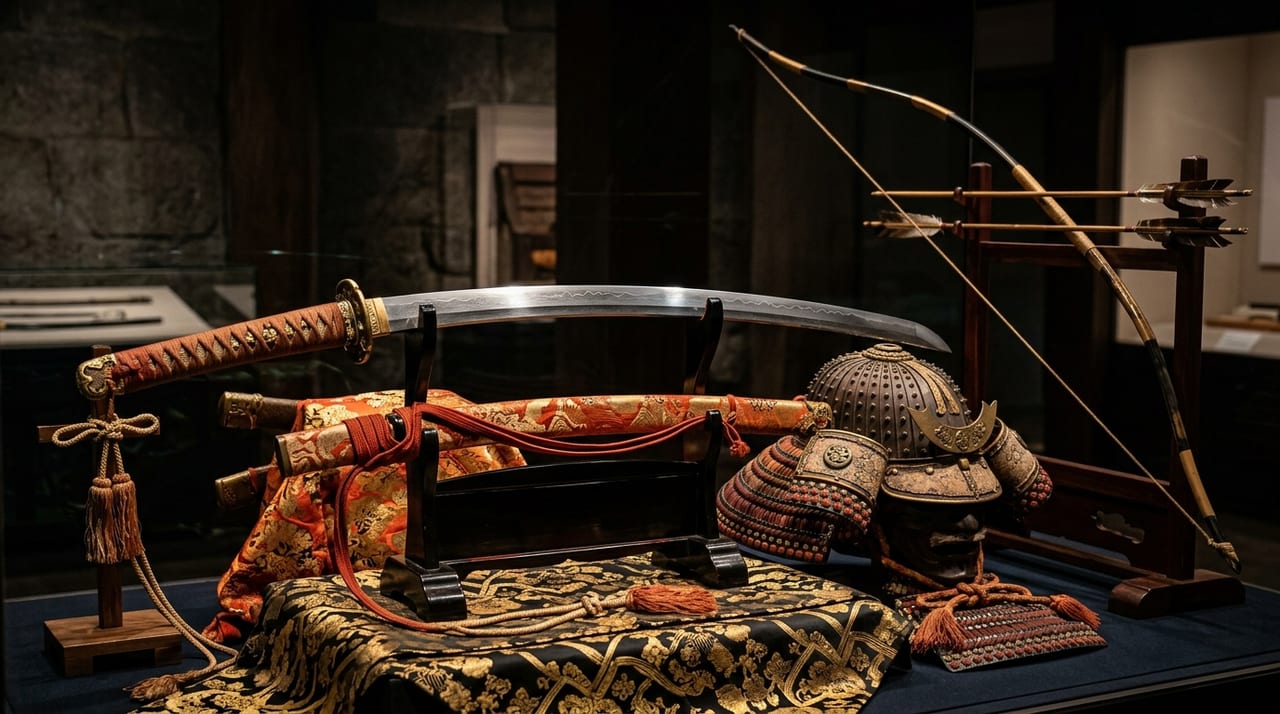
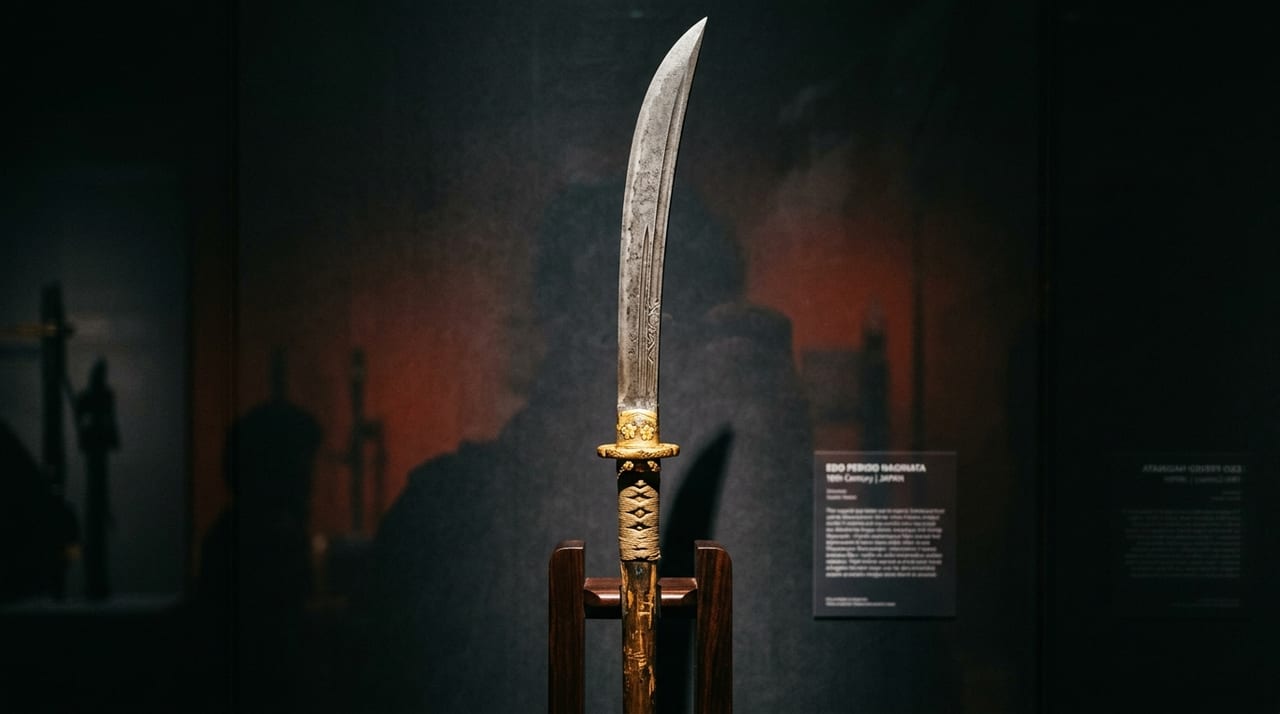
The length of Japanese swords has an inseparable relationship with the methods of warfare of each era. From the deeply curved tachi of the Heian and Kamakura periods, to the magnificent nagamaki and ōtachi of the Northern and Southern Courts period, and then to the practical swords of the Sengoku era, blade lengths repeatedly grew and shrank in response to changes in battlefield conditions. However, following the unification of the realm by the Tokugawa clan, the Edo period saw the length of swords gradually become constrained by shogunate regulations, and swords came to be ordered around a standard measurement—"teisun." This standardization was not merely a matter of weapon management; it was an attempt to inscribe the social order of the samurai warrior class into the physical form of the blade itself.
From the Battlefield to Status Symbols—How Peace Transformed the Sword's Role
During the Northern and Southern Courts period, the long tachi, with blade lengths of approximately three shaku (about 91 cm), were the primary weapons wielded by mounted warriors. However, when foot soldiers came to dominate warfare during the Sengoku era, the long tachi became cumbersome and difficult to handle. On the actual battlefield, the widespread practice emerged of trimming down the tang (nakago) side of existing long tachi to shorten their blade length through a process called "suriage," allowing them to be repurposed as more manageable uchitachi.
Following the Battle of Sekigahara, large-scale battles faded from view, and the samurai's sword transitioned from a tool of warfare to "sashinryō"—an item worn to embody and display one's social status. This was the fundamental condition that made the "standardization" of swords possible. With warfare eliminated, the length of a sword could be determined not by utility but by social order.
Shogunate Measurements and Status-Based Length Limits
The Edo shogunate established specific regulations regarding the blade length of samurai swords, with upper limits varying according to rank. These regulations became progressively stricter with each succession of shogun, and from the time of the fourth shogun Tokugawa Ietsuna onwards, the upper limits for uchitachi were set even shorter. Furthermore, individuals such as samurai retainers who were specially permitted to carry swords, despite not being samurai themselves, were subject to upper limits shorter than those of regular samurai—a finely differentiated system of discrimination through measurement.
The structure of these regulations can be summarized as follows:
- Samurai (hatamoto, gokenin, and domain samurai): Uchitachi had an approximate standard of two shaku three sun, with an established upper limit
- Special permit holders such as samurai retainers: A measurement shorter than the samurai upper limit was applied
- Farmers, artisans, and merchants (in principle): Sword-bearing itself was prohibited; one could not carry a sword without legitimate reason
This stratification demonstrates that the length of a sword itself functioned as a visible indicator of rank. In this designed society, one could discern a person's approximate social status merely by observing the sword at their side as they passed—whether they carried one at all, and if so, its length.
Teisun and Suriage—Bringing Existing Swords into Conformity with Standards
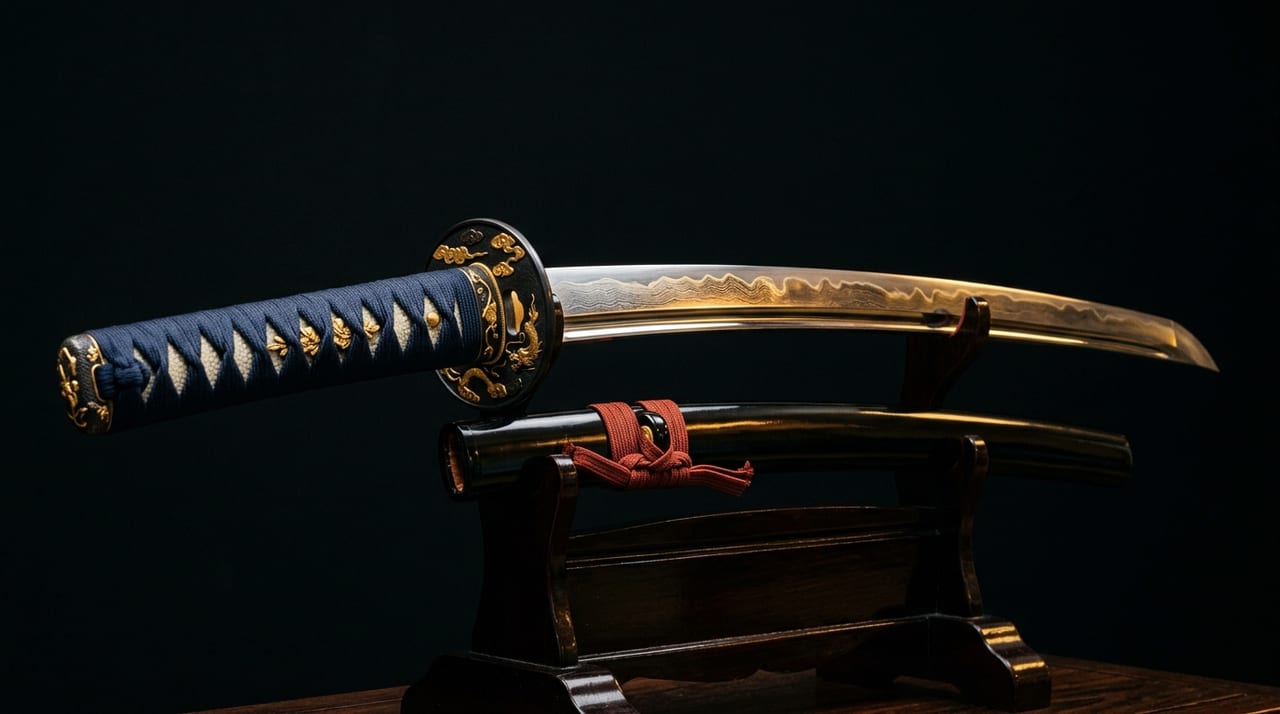
To comply with the shogunate's length regulations, from the early to middle Edo period, the process of suriage to shorten long tachi created during the Northern and Southern Courts and Sengoku periods became widespread. The "teisun" for uchitachi was roughly established as two shaku three sun five bu (approximately 71 cm), and it was not uncommon for large-scale suriage to be performed on old tachi, substantially trimming their tangs to fit within this range.
Suriage carried unavoidable consequences. The mei—the maker's signature carved into the tang—could be lost when the tang was shortened. Many of the swords today called "dai-suriage mumeizai" (great suriage unsigned) are former long tachi from the Northern and Southern Courts or Sengoku periods that lost their signatures in the process of being brought into conformity with teisun, making it difficult to identify their precise makers. However, examination based on the characteristics of the jigane and blade pattern continues to be performed today, allowing estimations of the era, school, and production region, and many swords that have lost their signatures continue to be valued as masterworks.
The phrase "brought into teisun through suriage" is a term still used in sword appraisal and explanation today, confirming that this standard measurement was widely recognized throughout the Edo period.
Daishō—Demonstrating Samurai Status Through Form
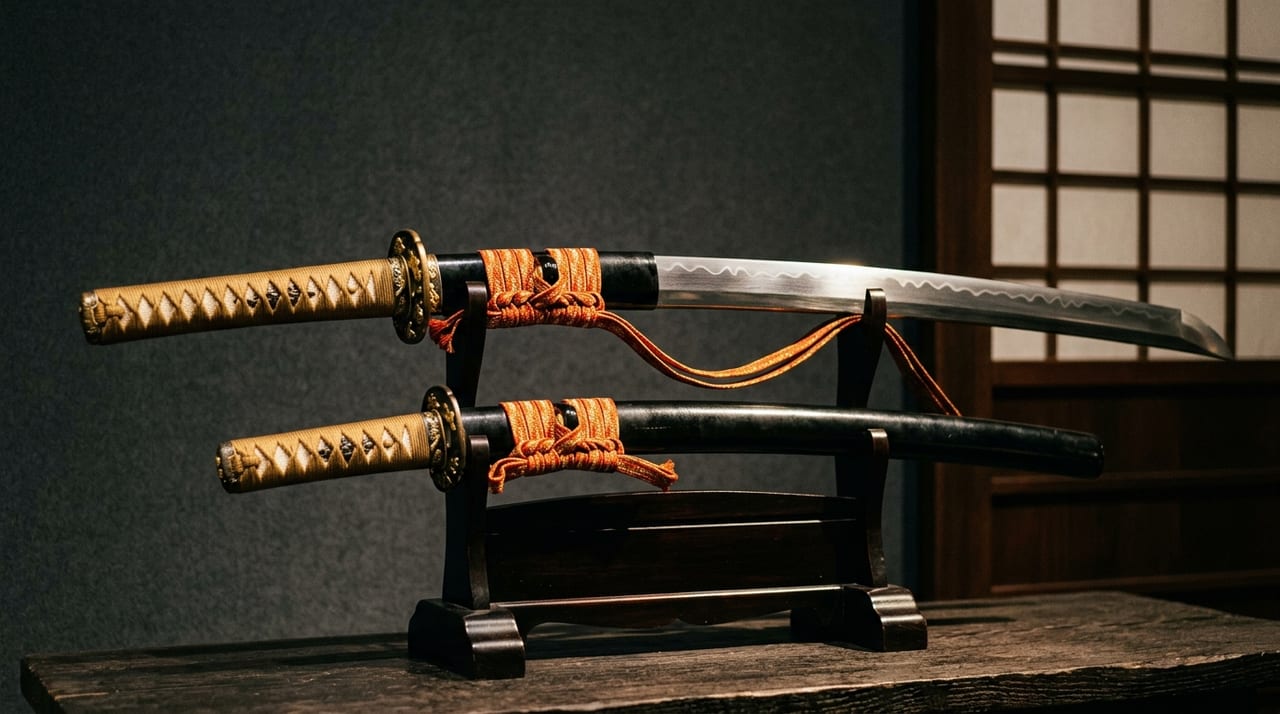
The "daishō"—the two-sword pairing of an uchitachi and wakizashi—that samurai wore uniformly became established throughout the Edo period as the fundamental external marker of samurai status. Wearing only one uchitachi (two shaku or longer) alone, a form called "ippon-sashi," was often considered the style of non-samurai. The two-sword arrangement itself served as evidence of samurai status.
The wakizashi (generally one shaku or longer but less than two shaku) was also subject to consciousness of measurement appropriate to rank and status, with the balance of a long uchitachi paired with a short wakizashi becoming the basic form of daishō that was widely shared. The appearance of bearing this combination at the waist formed part of formal dress for samurai in official settings, and was an indispensable formality at castle visits, daimyo processions, and official ceremonies.
Moreover, regarding not only the blade itself but also the koshirae (external fittings), the shogunate repeatedly issued regulations cautioning against excessive display. Restrictions were placed on overly elaborate metalwork and oversized tsuba, promoting frugality in samurai life generally, and attention was directed toward sword decoration in this context. Since the sword was a symbol of rank, this meant that the decorative qualities of its appearance were also connected to the maintenance of social order.
Myōji-taitō—Setting the Boundary of Exception at the Order's Edge
In principle, sword-bearing was prohibited for farmers, artisans, and merchants, but the shogunate and various domains would sometimes grant "myōji-taitō" (surname and sword-bearing privilege) to those who met certain conditions. This honor, which permitted both the use of a surname and the bearing of a sword, was granted to village officials (nanushi, shōya, etc.), wealthy merchants who made substantial monetary contributions to the shogunate, and individuals who achieved notable accomplishments in learning, filial piety, or agriculture.
Those granted myōji-taitō could appear in their local society with trappings equivalent to samurai, and this meant obtaining a certain degree of authority at the periphery of the social order. This system functioned in how the Tokugawa political system governed local society, serving as a means of incorporating economically and socially powerful groups into the framework of the order. Because sword-bearing was not merely a means of armament but a symbol of social status, this system could carry meaning.
What Teisun Tells Us—A Perspective for Reading Edo Swords
The standardization of Edo period swords—the regulation of lengths, the prevalence of suriage, the establishment of daishō as the standard, the mechanism of myōji-taitō—all of these reflect the design philosophy of Edo society in attempting to manage swords by connecting them to the social order. As the sword's role shifted from practical tool to symbol, its very "form" became a component of social order.
When viewing extant Edo-period uchitachi or old blades that have been brought to regulated standard length through suriage, the social order of the time is quietly inscribed in the blade length and decorative designs of the koshirae. Behind a single blade whose length falls within two shaku three sun lies the rank of the samurai who bore it, the regulations of the shogunate, and the skilled work of the polisher who performed the suriage. When examining swords by paying attention to their production era and blade length, the social structure of the age in which the blade lived comes into surprisingly sharp focus.