The Tenmaya Incident (1868) and the Sword — The Failed Night Attack on a Kishū Domain Samurai by Members of the Rikuentai and Kaientai
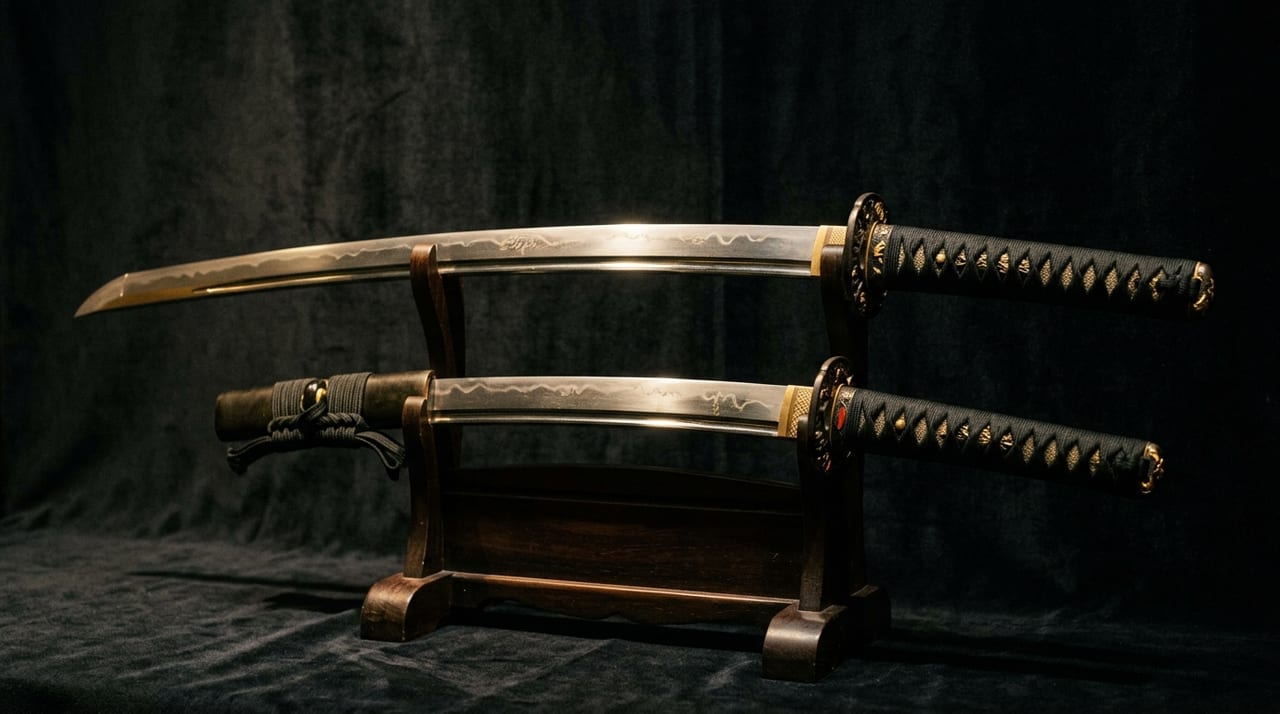 * Image is for illustrative purposes only.
Table of Contents
What Was the Tenmaya Incident — A Night Attack Born from the Aftermath of Ryōma's Assassination
On the night of the 7th day of the 12th month of Keiō 3 (January 1, 1868 in the Gregorian calendar), a sword fight that would be etched into Bakumatsu history took place at the inn "Tenmaya" on Aburanokōji in Kyoto. More than ten members of the Kaientai and Rikuentai broke in targeting Miura Kyūtarō, a samurai of the Kishū domain, but fell into a fierce melee with Shinsengumi members who had been stationed as guards, and both sides suffered casualties while the assassination ultimately failed.
These events, which by the Japanese calendar still belonged to Keiō 3, took place on the very eve of the Battle of Toba-Fushimi, which would break out the following month, during a period when Bakumatsu Kyoto was gripped by its final tension. At the very moment when Japan's political order was being rewritten from the ground up — following the Return of Political Power and the Proclamation of the Restoration of Imperial Rule — the fury and suspicion of the men who had lost Sakamoto Ryōma erupted in a single inn.
The Two Grudges That Gave Rise to the Incident — The Ōmiya Incident and the Iroha Maru Incident
To understand the Tenmaya Incident, one must grasp two events that occurred immediately before it.
The first is the Ōmiya Incident, which took place on the 15th day of the 11th month of Keiō 3 (December 10, 1867). This incident, in which Sakamoto Ryōma and Nakaoka Shintarō were cut down by an unknown assailant on the second floor of "Ōmiya," a soy sauce merchant on Kawaramachi in Kyoto, dealt an immeasurable shock to the members of the Kaientai and Rikuentai. Multiple theories about the culprit circulated even during the Bakumatsu period itself, with the Shinsengumi theory, Kishū domain theory, and Kyoto Mimawarigumi theory becoming entangled with one another. Many of the members grew increasingly convinced of the suspicion that the Kishū domain was involved.
The second was the Iroha Maru Incident, which occurred in the summer of the same year. Regarding the accident in which the steamship Iroha Maru of the Kaientai, led by Sakamoto Ryōma, collided with and sank after an encounter with the Kishū domain's warship Meikō Maru, Ryōma engaged in compensation negotiations with the Kishū domain. The person who stood at the forefront as the Kishū domain's representative in these negotiations was none other than Miura Kyūtarō. In the course of the negotiations, a fierce antagonism had developed between Ryōma and Miura, and for the members of the Kaientai, Miura was recognized as "the face of the enemy side."
Upon receiving news of the Ōmiya Incident, the members harbored the suspicion that "Miura might be the mastermind behind Ryōma's assassination," and began to lean toward taking direct action. This came to fruition in the form of a night attack on the Tenmaya.
The People Involved — A Confrontation Between Patriots and Swordsmen
The principal people involved in the incident can be organized as follows.
Attacking Side (Kaientai and Rikuentai)
- Mutsu Munemitsu (known at the time as Yōnosuke) —— later served as Foreign Minister in the Meiji government. At the time of the incident, he was a spirited patriot in his twenties
- Sawamura Sōnojō —— a Kaientai member who acted together with Sakamoto Ryōma
- Nakai Shōgorō —— lost his life in that night's melee
- Iwamura Seiichirō and Ōe Taku —— both core members of the Kaientai and Rikuentai
Guard Side (Shinsengumi)
- Saitō Hajime —— known as the captain of the Shinsengumi's Third Unit, and renowned for his swordsmanship
- Ōishi Kuwajirō —— a member who, alongside Saitō, served as the core of the guard detail
Miura Kyūtarō, who had requested the guards, sensed that danger was approaching him and had made contact with the Shinsengumi, which was responsible for maintaining public order in Kyoto. On the night of the incident, seven Shinsengumi members were stationed at the Tenmaya as guards, and this arrangement determined the structure of the ensuing melee.
The Course of the Melee — Blades Crossing in the Darkness of the Inn
In the dead of night, more than ten members broke into the Tenmaya and pressed toward the room where Miura Kyūtarō was. However, inside the building the Shinsengumi members met them in opposition, and a fierce sword fight began in the narrow corridors and tatami rooms.
The outcome of the fighting was as follows.
- Attacking side casualties: Nakai Shōgorō killed. Several others wounded
- Guard side (Shinsengumi) casualties: Miyakawa Nobuyoshi and Funatsu Kamatarō, 2 killed. 1 seriously wounded, 3 lightly wounded
- Target Miura Kyūtarō: Sustained sword wounds to his cheek and jaw, but survived
- Accompanying Kishū domain samurai: Miyake Seiichi and Seki Jinnosuke each lightly wounded
The goal of assassinating Miura was not achieved, and the attacking side withdrew bearing their casualties. The melee was resolved in a short time, ending in the grim outcome of 3 deaths between both sides combined.
Indoor Combat and the Sword — What the Bakumatsu Sword Fights Reveal
What the Tenmaya Incident reveals is the special combat environment of "indoor fighting" that Bakumatsu swordsmen faced. The width of corridors, the height of lintels, the complex layout of tatami rooms — combat in the enclosed space of an inn imposed entirely different conditions on the combatants compared to fighting in the open outdoors.
In outdoor combat, there is room to swing a blade while maintaining distance. However, inside an inn, the very space needed to swing a sword broadly is restricted. The reason why the easily maneuverable uchigatana and the highly mobile wakizashi were valued as practical choices in the indoor and alley sword fights that recurred in Bakumatsu Kyoto was also a product of this battlefield environment logic. The Shinsengumi, who served as guards, are said to have trained for precisely this kind of indoor combat, and had it not been for the valiant fighting of Third Unit captain Saitō Hajime and others, the outcome might have been different.
Records also note that in situations of assassination or surprise attack requiring close approach to an important person, the wakizashi, which could easily be concealed in one's breast, and the aikuchi with no tsuba (hand guard), were widely used. In situations like the Tenmaya Incident where guards had been stationed in advance, it is thought that shorter, more maneuverable weapons functioned as more practical arms than long swords.
The Bakumatsu Truth That the Incident Illuminates
The Tenmaya Incident occupies a unique place in Bakumatsu history in two respects.
The first is the fact that the retaliation was carried out without the truth of the Ōmiya Incident having been resolved. Conclusive evidence showing whether Miura Kyūtarō was involved in Ryōma's assassination was ultimately never produced thereafter. Direct action based on unconfirmed suspicion — this pattern aptly represents the nature of the political violence that recurred in Kyoto of that time. The Bakumatsu patriots were forced to make judgments amid conflicting information, and often drew their swords on no other basis than suspicion.
The second is the weight of the historical context that this incident occurred immediately before the opening of the Boshin War. Less than a month after the Tenmaya sword fight, in the 1st month of Keiō 4, the Battle of Toba-Fushimi broke out, and Japan plunged into a full-scale era of civil war. The Tenmaya Incident, in which personal vendetta and political suspicion became intertwined, was one of the last acts of individual violence of the Bakumatsu era, and immediately after it the age transformed in character from "the Kyoto of patriots" to "the battlefield of armies."
Miura Kyūtarō, who survived despite being targeted, continued to live on as a government official after the Meiji Restoration. Meanwhile the truth of Ryōma's assassination still has no established theory to this day, and the Tenmaya Incident has been etched into history as "a failed retaliation born of suspicion." The story of those who crossed blades for unverifiable suspicions in the midst of a turbulent age continues to quietly pose, for posterity, the fundamental absurdity of Bakumatsu violence.